

February 12th, 2026 | 14 min. read
Learn how to find the perfect refrigeration products with our Counter-Depth Refrigerator Buying Guide

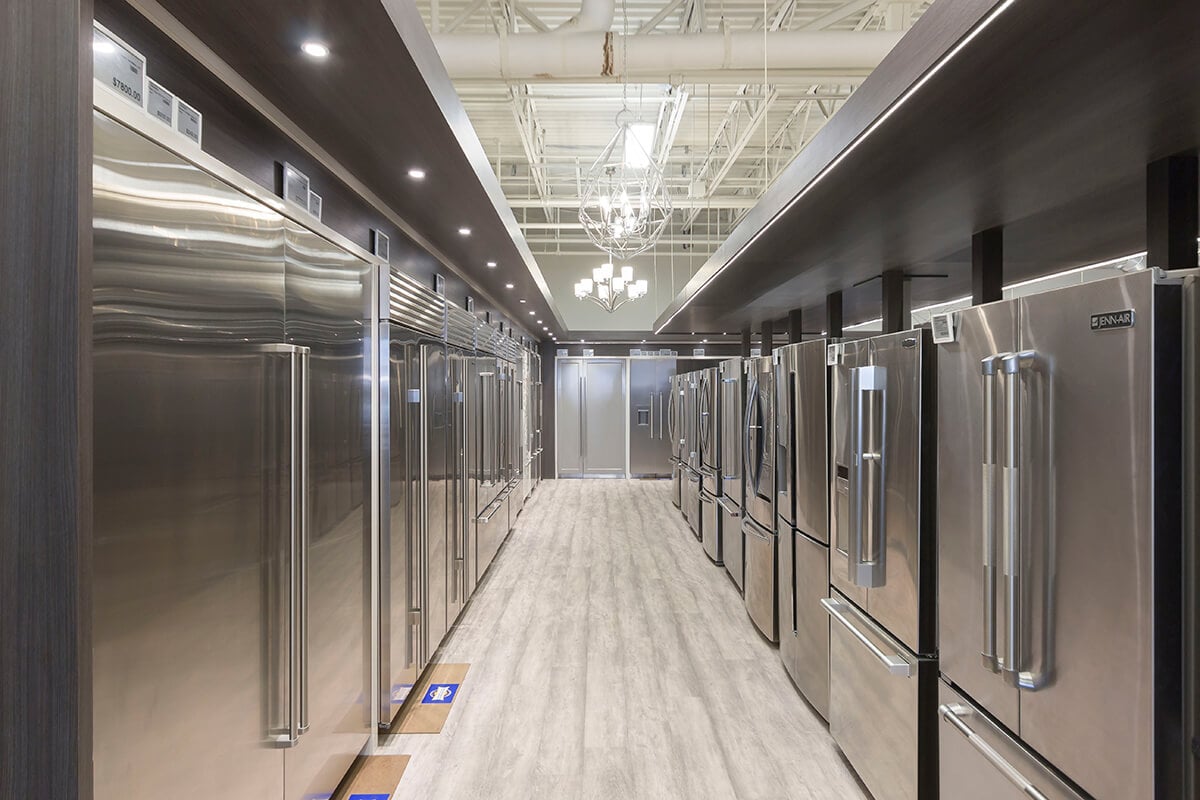
Buying a counter-depth refrigerator should be simple.
Instead, you are buried in features, finishes, and influencer opinions that all sound the same. What almost nobody talks about is what breaks.
That is where this article is different.
Last year alone, 33,190 appliance service calls were completed across Greater Boston, MetroWest, the South Shore, Cape Cod, and the Islands.
This guide tracks which counter-depth French door refrigerators were serviced and compares that to what was sold.
This is not a survey.
It is not a lab test.
It is not marketing.
It is real reliability data from real homes.

Whether you are replacing a refrigerator in Wellesley, remodeling a brownstone in Back Bay, or furnishing a seasonal home on Nantucket, this guide is designed to help you avoid the most common mistakes and choose a refrigerator that actually holds up.
What You’ll Learn in This Article
-
The most reliable counter-depth French door refrigerators for 2026 (33,190 service calls)
-
What breaks most (and what to avoid)
-
How long they last, and why service access matters locally
📌 Skip Ahead:
-
Most Reliable Counter-Depth Refrigerators for 2026 (Rankings)
- Final Takeaways
- Frequently Asked Questions
How Do We Measure Counter-Depth Refrigerator Reliability?
Reliability sounds subjective until you define it. Here, it is defined clearly.
Every year, appliance reliability is measured the same way: service calls divided by units sold equals the service rate.
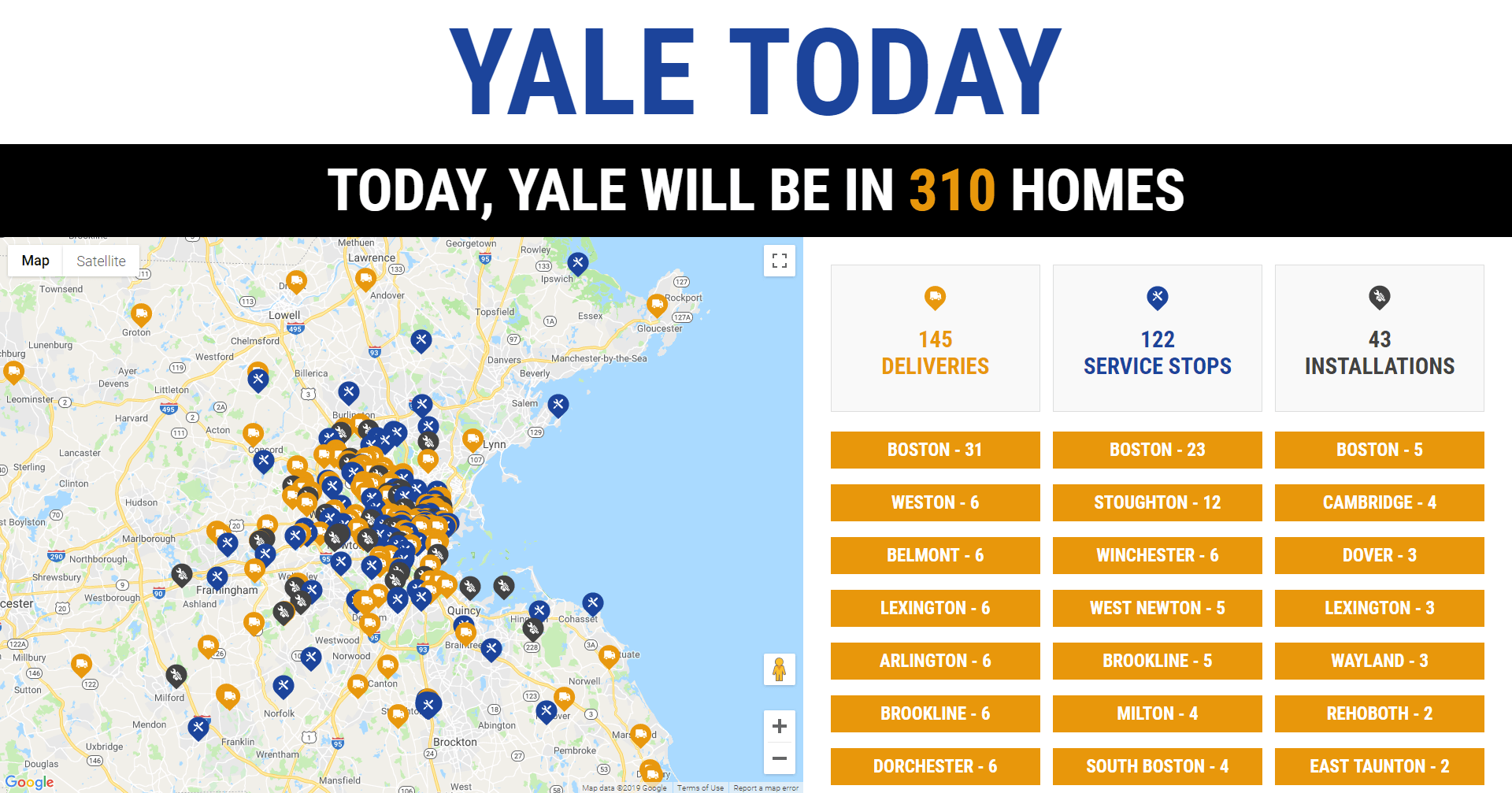
For this article, we analyzed 33,190 appliance service calls completed over a 12-month period, focusing specifically on counter-depth French door refrigerators sold and serviced.
In total, over 2,000 counter-depth refrigerators were included in this ranking.
Counter Depth Refrigerator Reliability for 2026
Here’s how the brands ranked for first-year service rates on counter-depth French door refrigerators:
What Counts in This Data
-
Refrigerators sold by Yale Appliance
-
Installed in homes across Greater Boston, MetroWest, the South Shore, Cape Cod, and the Islands
-
Service calls handled by an in-house service team
-
Issues reported within the first year of ownership
Each brand included met two minimum thresholds:
-
At least 150 counter-depth refrigerators sold
-
Enough volume to produce statistically meaningful results
Looking for answers about Counter-Depth Refrigerators?
Short on time? Download our free Counter-Depth Refrigerator Buying Guide.
The Most Reliable Counter-Depth French Door Refrigerators for 2026
LG: 10.1% Service Rate
LG currently holds the top spot for reliability in our 2026 data, but that statement needs context. A 10.1% first-year service rate is the best in this category.
It is also the highest “best” score of any major appliance category we track. Refrigerators are simply harder to make reliable than ranges, dishwashers, or laundry.
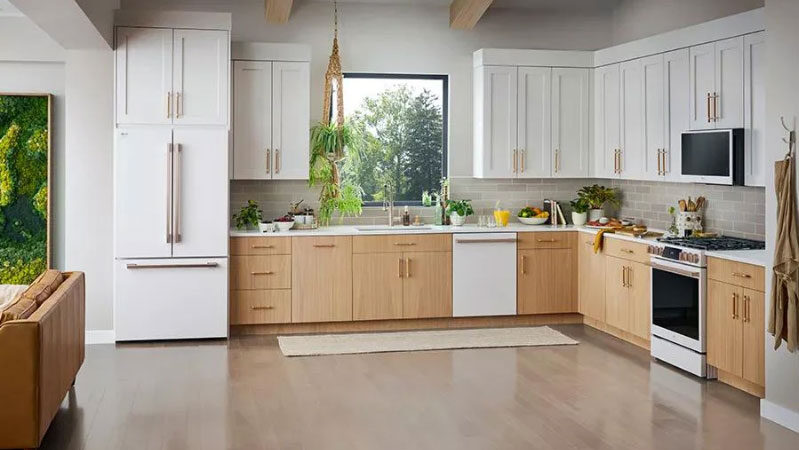
So yes, LG is number one. And yes, that should still surprise you.
Most people remember the linear compressor headlines from a decade ago. Some have also seen newer class-action stories resurface. The assumption is that nothing has changed.
The data says otherwise.
What Five Years of Service Data Actually Shows
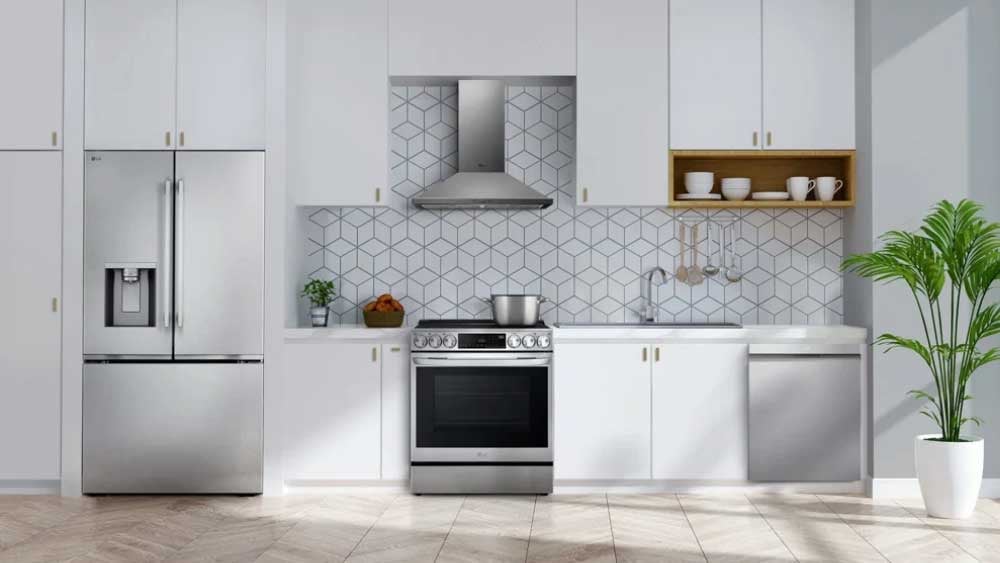
Looking beyond year one and across five years of service data, LG’s compressor failure rate is 1.1%. That number needs perspective:
-
Bosch is the lowest at about 0.4%.
-
Some brands exceed 2.5%.
-
The industry average sits uncomfortably in between.
Is 1.1% great? No.
Is 1.1% great? No. But in refrigeration, that’s closer to “normal” than people expect. The real question isn’t whether failures happen. It’s which brands have fewer of them.
What matters is relative risk, and LG is on the right side of that curve.
Why LG Is the Most Reliable in 2026
The core reason is simplicity.
LG’s current-generation linear compressor uses a different motion than traditional reciprocating compressors. It has fewer wear parts and fewer friction points over time.
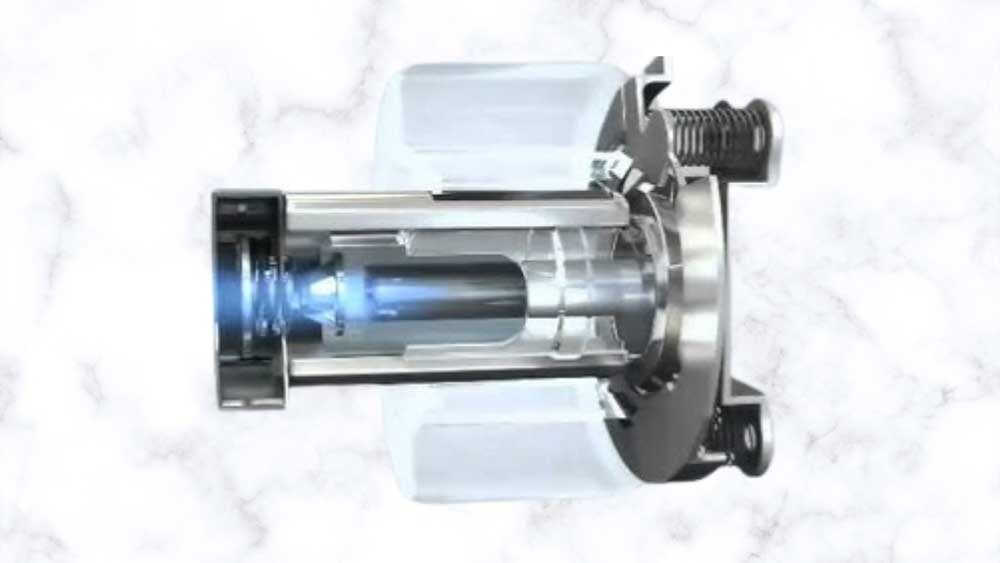 Fewer wear parts mean fewer early failures. This is not theory. It shows up in real service data.
Why Making Their Own Parts Matters
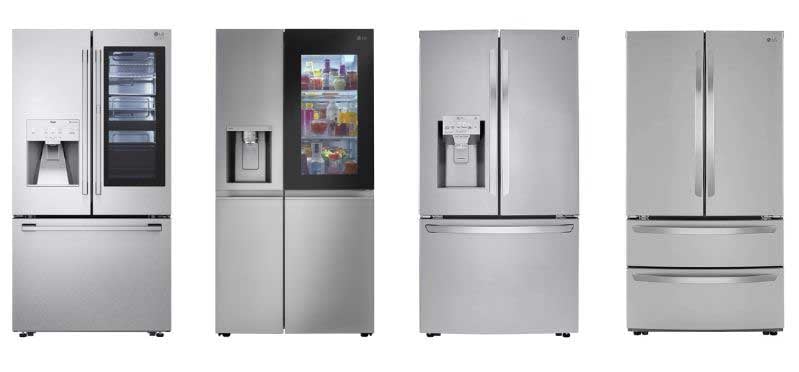
LG manufactures most of its own components.
That matters when something does go wrong. Repairs tend to be more straightforward, and long delays waiting on obscure parts are less common.
The Service Footprint Reality
Here is the trade-off most reviews ignore.
LG’s reliability is strong, but LG’s service footprint is smaller than some competitors.
Before we opened our Nantucket store, service on an LG refrigerator, or almost any brand, could stretch months. That was not a product issue. It was a service access issue.
Today, we install and service on Nantucket the same day or next day. That changes the experience entirely. Service access should always be part of your decision.
Verdict
If you want the lowest probability of early failure, LG is the safest counter-depth refrigerator you can buy today.
GE: 12.1% Service Rate
On Cape Cod and the Islands, service becomes a real constraint. There are fewer independent technicians, peak season books them out weeks in advance, and emergency service in July is not a given.
That reality changes how you should think about reliability.
GE’s advantage here is not that it breaks less. It is that there is a clearer path to getting it fixed.
What GE Counter-Depth Buyers Should Know in 2026
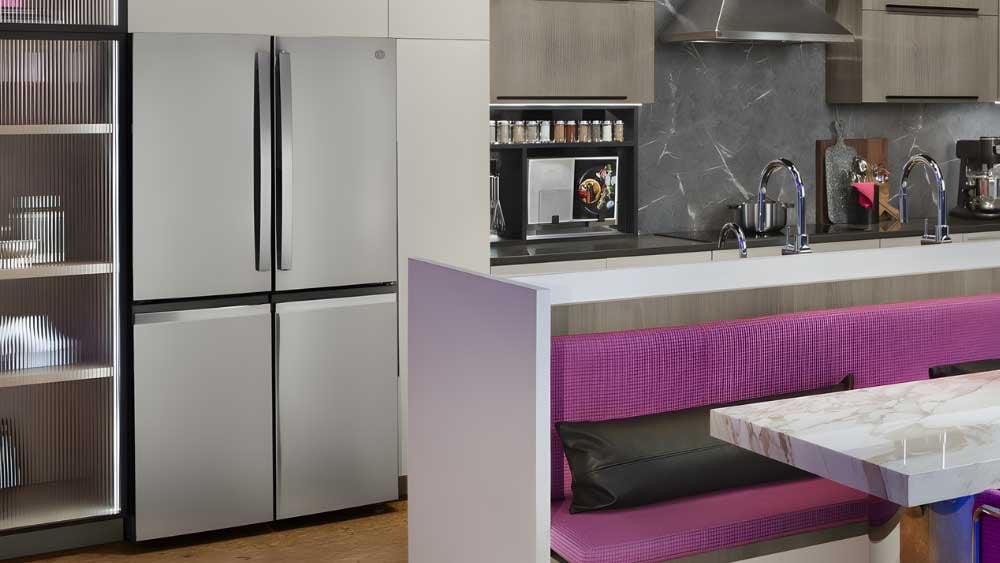
GE sells a lot of counter-depth French door refrigerators, especially in the common 36-inch size. You will see models with an external ice and water dispenser, and you will also see models without one.
That choice matters. An external dispenser adds parts that have to seal, open, close, and stay cold. More parts means more chances for a service call.
The Feature Catch Most Shoppers Miss
On select models, GE offers features that make day-to-day use easier:
-
TwinChill dual evaporators: Separate cooling for the fridge and freezer.
-
TurboCool and TurboFreeze: Drops temps fast after lots of door openings or loading groceries.
-
SmartHQ alerts: Lets you get notifications and adjust settings from your phone (on Wi-Fi models).
-
Hands-Free AutoFill (on some dispenser models): Fills a glass or bottle for you.
Just remember the downside. Features can make the fridge nicer to own, but they also add complexity.
If your priority is reliability, buy the simplest GE layout you can live with. In most cases, that means skipping the external dispenser.
Why Service Access Changes the Reliability Conversation

GE is one of the few major brands with a factory-controlled service network. In areas where independent service is scarce, that can provide real relief.
It gives homeowners and property managers another option when local technicians are unavailable.
That makes GE a practical choice for:
-
Seasonal homes
-
Rental properties
-
Homes where downtime matters
What the 12.1% Service Rate Means in Real Life
GE may not have the lowest failure rate in this category, but when something does go wrong, it's often easier to get service scheduled and the repair completed.
However. factory service quality can vary by region. You should always check local service reviews, especially in rural or island markets.
Verdict
GE makes sense on the Cape and Islands when service access is your top concern. Just make sure you understand who will actually show up when you need help.
Bosch: 12.7% Service Rate
Bosch does not win on headline reliability numbers. They win on how well food is preserved inside the refrigerator.
If LG’s strength is lower failure probability, Bosch’s strength is better temperature control and less system stress over time. That is why Bosch reliability looks different.
Why Bosch Approaches Reliability Differently
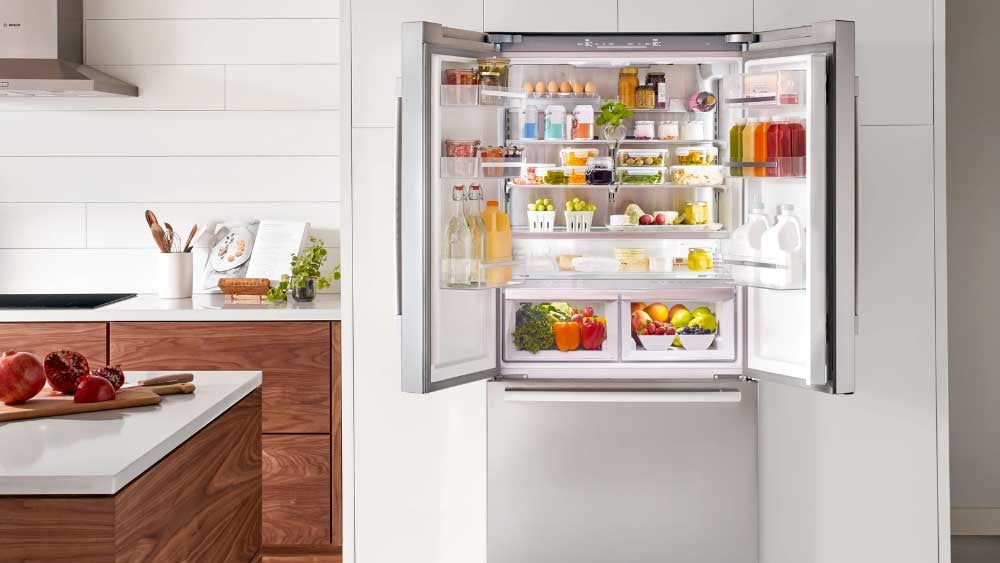
Most counter-depth refrigerators use one compressor to manage both the freezer and the refrigerator. Bosch does not.
Bosch uses two compressors and two evaporators. One system cools the freezer. One system cools the refrigerator. The air does not mix.
That matters more than most people realize.
In traditional designs, dry freezer air slowly migrates into the refrigerator. Over time, that dries out produce and forces the system to work harder to rebalance temperatures. It also requires defrosting warmer refrigerator air back in the freezer.
Bosch avoids that cycle entirely.
This is the same principle that built Sub-Zero’s reputation decades ago. Separate systems create more stable temperatures and reduce mechanical strain.
Why the Compressor Failure Rate Is So Low
Over five years of service data, Bosch shows a compressor failure rate of 0.4%, the lowest of any brand we track.
That is not an accident.
Each compressor does less work. Each runs more consistently. Each experiences less thermal swing.
Lower stress leads to longer life.
Why the 12.7% Service Rate Needs Context
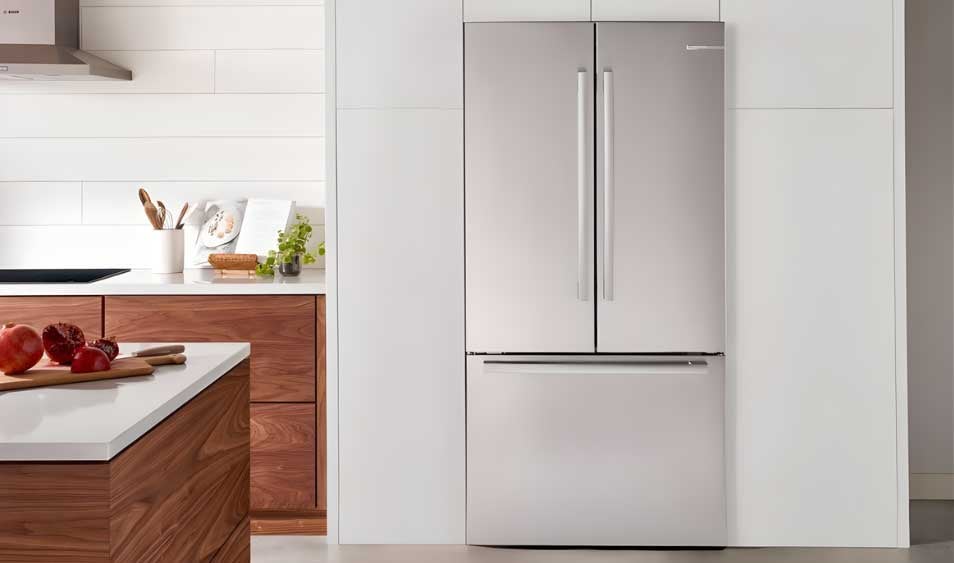
Bosch’s first-year service rate is higher than LG’s. That does not mean Bosch has more serious failures.
The key point is what breaks.
Bosch service calls are far more likely to involve:
-
Sensors
-
Software
-
User interface issues
They are far less likely to involve core cooling failures.
If you want the most reliable Bosch configuration, avoid the most failure-prone feature in refrigeration. Choose models with internal water dispensers and no through-the-door ice.
The Capacity Trade-Off
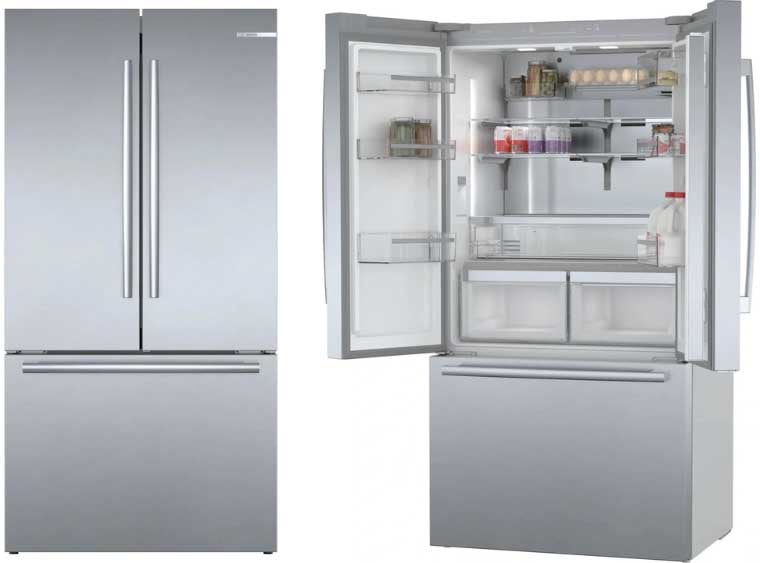
Bosch counter-depth refrigerators average about 20.8 cubic feet.
The category average is closer to 22.5 cubic feet. LG goes as high as 26.5 cubic feet.
If you shop frequently and care more about food quality, this is rarely an issue. If you stock up weekly for a large family, it can be.
Verdict
Bosch refrigerators are engineered to protect food first. They are not built to maximize capacity. They are built to maintain stable conditions with less mechanical strain.
If food freshness, temperature consistency, and a true counter-depth fit matter more than maximum storage, Bosch is one of the best counter-depth refrigerators you can buy in 2026.
LG vs. GE vs. Bosch:Which Is Right for You?
How to Read This Table
-
If you want the lowest chance of a problem, start with LG.
-
If you care most about getting it fixed fast, GE is often the safest choice.
-
If you care most about how food lasts, Bosch stands apart.
There is no single best refrigerator. There is only the best fit for how you live and how much risk you are willing to accept.

Which Brands Did We Leave Out, and Why?
Samsung
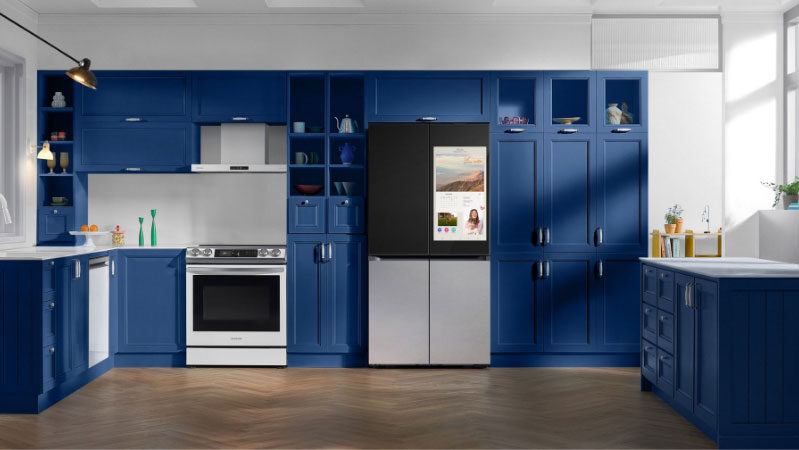
Samsung makes some of the most attractive refrigerators on the market.
The issue is not design. The issue is support at scale.
Samsung sells more refrigerators than anyone. That volume requires massive service infrastructure. In many New England markets, especially on the Cape and Islands, service coverage is inconsistent.
Before buying Samsung, you should confirm:
-
Who services the product
-
Typical response times
-
Parts availability in your area
Without reliable local service, even a good refrigerator becomes a problem.
Whirlpool Family
KitchenAid, JennAir, Whirlpool, Maytag, Amana
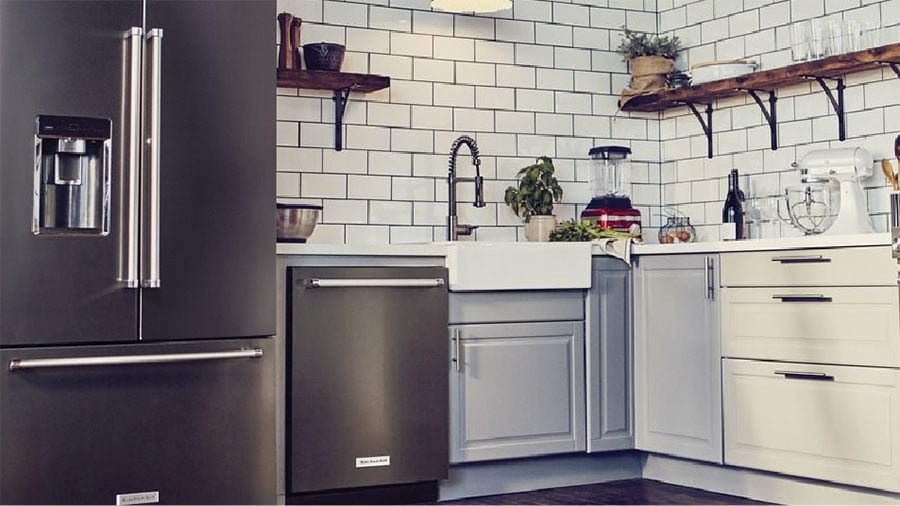
Support quality varies widely by region.
Designs tend to lag the category. Prices do not always reflect performance. Reliability is inconsistent across brands and models.
Some units perform fine. Others struggle. The variability makes them harder to recommend with confidence.
Why We Leave Brands Out
If a brand cannot consistently meet two standards, it does not make this list:
-
Predictable reliability
-
Predictable service access
That does not mean these brands never work. It means the risk profile is higher, especially in New England homes with tight installs, seasonal use, and limited service options.
Why Do Counter-Depth Refrigerators Break, and Which Designs Fail First?
To fit flush with cabinetry, manufacturers redesign almost everything: airflow, door geometry, ice routing, and electronics. What you gain in aesthetics, you often lose in mechanical forgiveness.
Here is what actually drives service calls, and what those problems look like in real kitchens.
What Causes the Most Problems in Counter-Depth Refrigerators?
Ice is made in a freezing environment. Water is dispensed through a warm one.
Between the two is a long chute, motors, flaps, seals, heaters, and sensors that must stay airtight, avoid condensation, prevent freezing, and avoid leaking while running 24 hours a day.
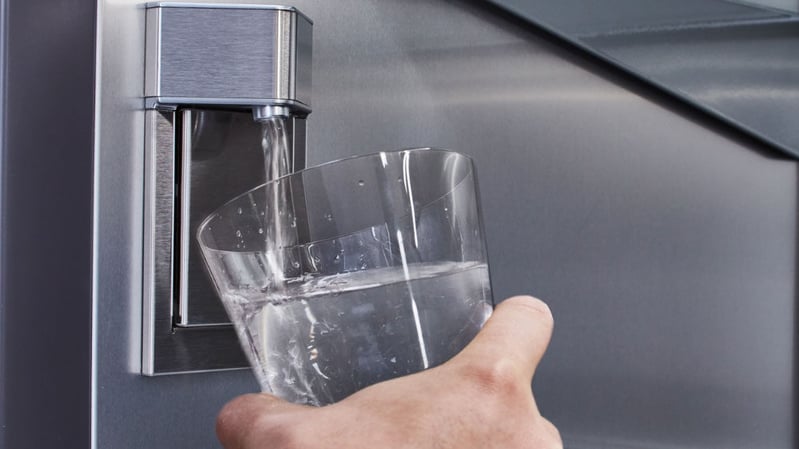
It works, until it does not.
Most dispenser-related service calls are not catastrophic, but they are frequent: jams, leaks, error codes, and door alignment issues. They add up fast.
This is why refrigerators with internal ice makers and internal water dispensers consistently have lower service rates.
Which Designs Generate More Early Service Calls?
Modern counter-depth refrigerators are feature-heavy by design, and every added feature is another potential failure point, especially when features live in the door.
Examples include:
-
Multiple evaporators
-
Multiple fans
-
Touchscreens
-
Control boards
-
Wi-Fi modules
Each feature adds convenience. Each also adds another place something can fail, especially when electronics are exposed to heat, moisture, vibration, and constant use.
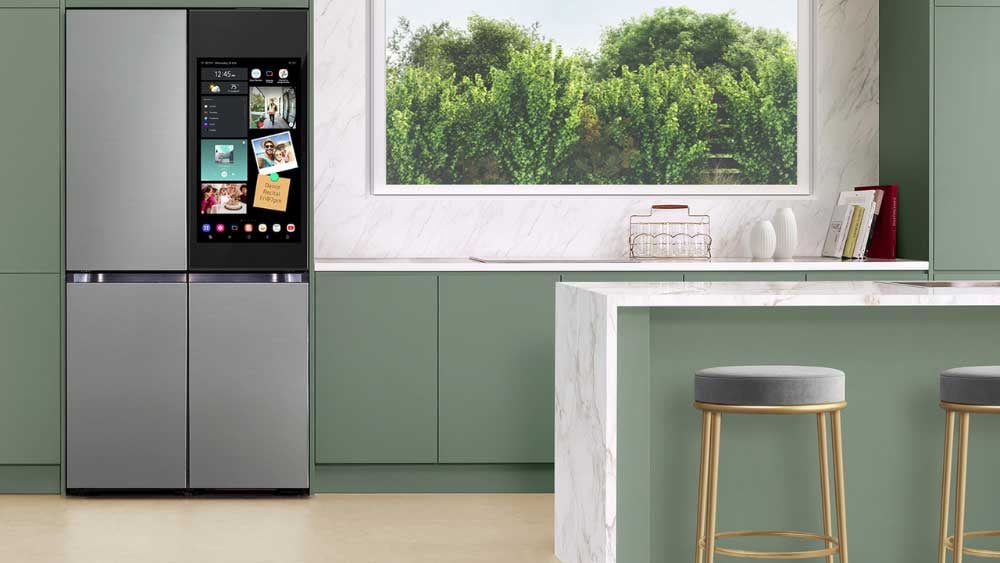
Designs that tend to generate more early calls:
-
Counter-depth models with external ice and water dispensers
-
Units with door-mounted electronics and touchscreens
-
Feature-heavy multi-zone cooling paired with lots of smart tech
Designs that tend to generate fewer early calls:
-
Internal ice makers
-
Simpler door construction
-
Fewer electronic components exposed to heat and moisture
This design reality is what separates the brands at the top of this list from the rest.
How Do Tight Fits Create More Service Calls?
Counter-depth refrigerators are designed to fit flush. That leaves little room for error.
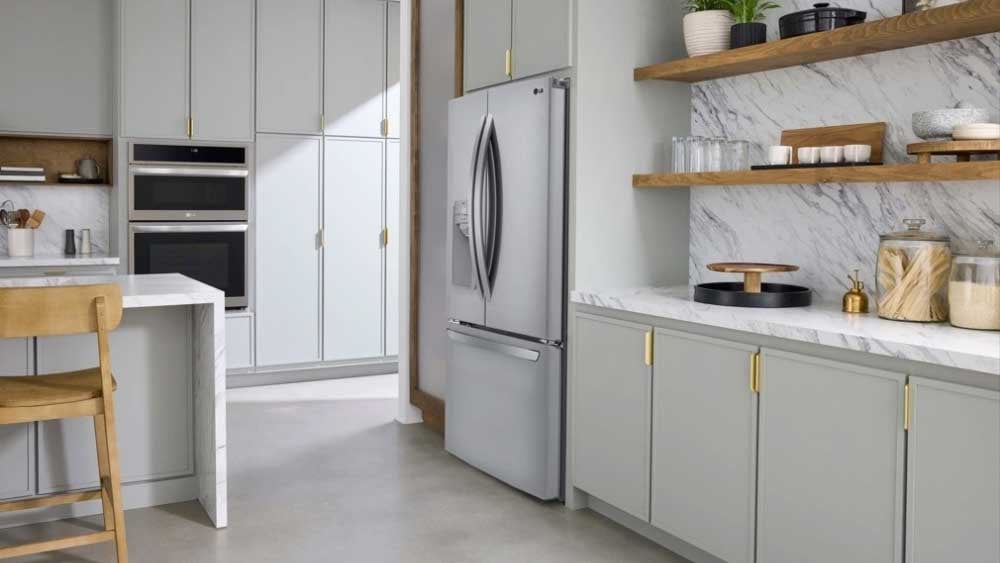
Small installation issues can create big problems:
-
Poor airflow behind the unit
-
Doors rubbing cabinetry
-
Improper leveling affecting ice makers
-
Heat buildup around the compressor
Many so-called product failures are installation problems that surface weeks later.
What Problems Show Up Most Often in Real Homes?
Based on service data, these are the issues that show up most often.
Ice Makers Not Making or Dispensing Ice
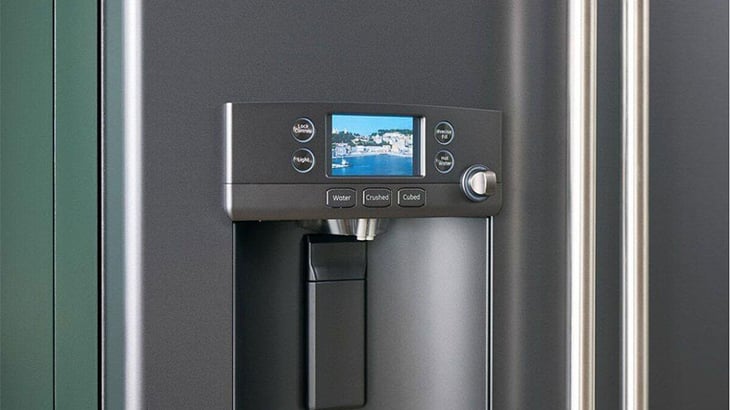
This is the most common service call, especially on models with external dispensers.
Typical issues include:
-
Ice clumping or jamming
-
Slow production
-
Leaks at the door or connection points
-
Error codes triggered by sensors or heaters
-
Temperature Inconsistency
Complaints usually sound like this:
-
“The freezer is fine, but the refrigerator is warm.”
-
“Produce keeps wilting.”
-
“Milk freezes in the back.”
These issues are often caused by:
-
Blocked internal vents
-
Sensor calibration problems
-
Overpacked shelves
-
Door seal alignment
Counter-depth refrigerators have less interior space, so airflow matters more. Small changes can have a bigger impact.
Noise Complaints
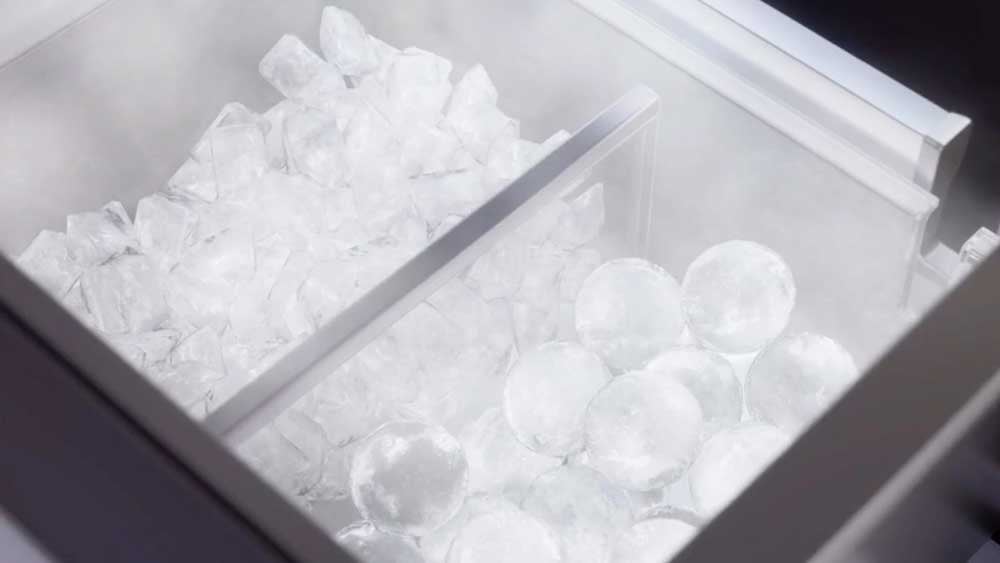
Modern refrigerators are more efficient than older models. That efficiency comes from compressors running longer at lower speeds. The result is more audible operation.
Most noise complaints are normal behavior:
-
Fans cycling
-
Compressors ramping up and down
-
Ice dropping into bins
True mechanical noise is far less common than perceived noise.
Compressor Myth (Quick Reality Check)
Despite what you may read online, compressors are usually not the first thing to fail early. When compressor issues do happen in year one, they are typically covered and repairable.
How Long Should a Counter-Depth Refrigerator Last?
This is one of the most common questions we hear. The honest answer is not comforting, but it is realistic.
Most counter-depth refrigerators last 7 to 12 years.
Some last longer. Some fail sooner.
The idea that modern refrigerators routinely last 20 to 25 years is outdated.
Why Has the Lifespan of Counter-Depth Refrigerators Shortened?
Refrigerators work harder than any appliance in your home.
They run 24 hours a day. They manage temperature and moisture constantly. They rely on electronics more than ever before.
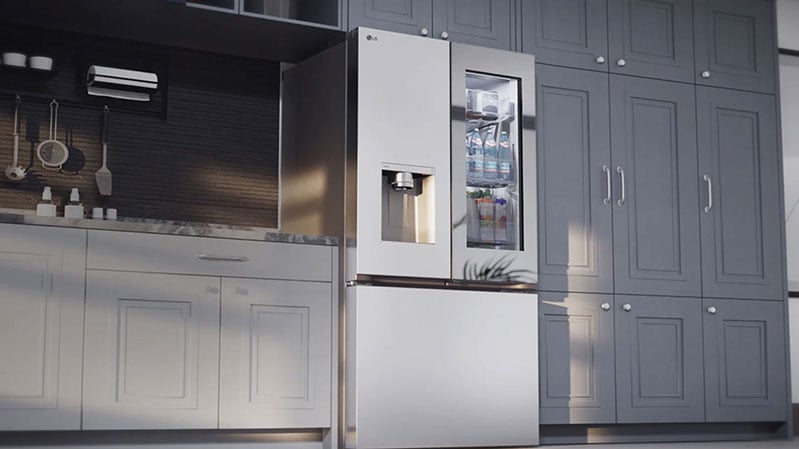
Add counter-depth constraints, tighter airflow, and complex features, and lifespan shortens.
This is not brand-specific. It is category-wide.
How Can You Reduce Risk and Extend the Life of a Counter-Depth Refrigerator?
You cannot eliminate risk, but you can reduce it.
-
Avoid through-the-door ice and water when possible
-
Do not overload shelves
-
Make sure the refrigerator is properly leveled
-
Buy from a dealer who services what they sell
The last point matters most.
Refrigerators do not usually die suddenly. They decline.
Access to competent service is often the difference between a repair and a replacement.
Why We Use First-Year Service Rates, and What This Data Does (and Does Not) Tell You
You may wonder why this article focuses on first-year reliability instead of three-, five-, or ten-year data. The reason is accuracy.
Warranty service happens in the first year. After that, tracking gets unreliable for reasons that have nothing to do with the product itself:
-
Homeowners move
-
Builders leave job sites
-
Some people use third-party service
-
Some do not realize who to call
What we can measure with confidence is early failure, which is when:
-
Manufacturing defects appear
-
Installation-related issues surface
-
Complex features fail first
It is also why appliances tend to fail most often at the beginning and end of their lifespan. The first year is where clean, consistent data exists.
Why Our Rates Can Be Lower Than National Averages
At Yale, warehousing and delivery are controlled in-house. Those are two of the biggest sources of early appliance issues in this industry.
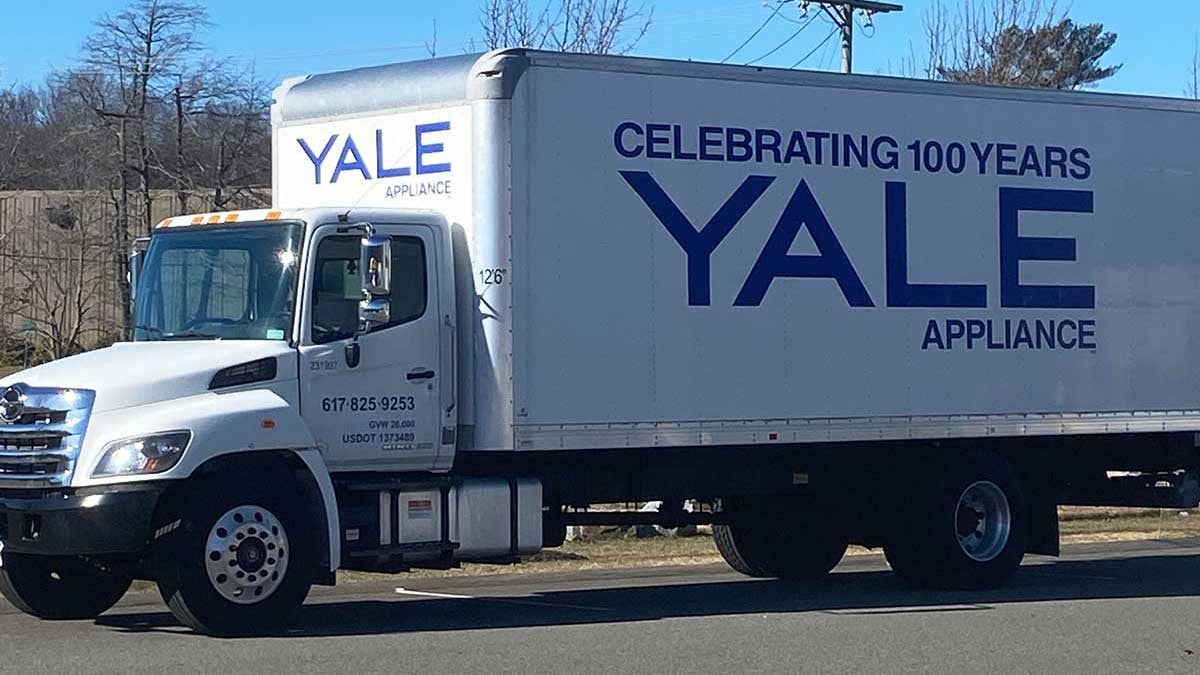
Because of that, these service rates reflect product reliability, not damage or problems introduced before the refrigerator reaches your kitchen.
So yes, our numbers are often lower than national averages. That does not make the rankings less relevant. It makes them more precise.
The comparison between brands still holds. If anything, it shows how these refrigerators perform when poor handling is removed from the equation.
What This Data Tells You (and What It Does Not)
This data tells you:
-
Which brands have fewer early failures
-
Which designs generate more service calls
-
Which features increase repair risk
This data does not guarantee:
-
That your refrigerator will never need service
-
That a higher service rate means a bad product
Most refrigerator issues are repairable. Reliability is about probability, not perfection.
Final Takeaways: What to Remember Before You Buy
If you take nothing else away from this article, remember this.
-
Counter-depth refrigerators are harder to make reliable than other appliances.
-
LG has the lowest first-year failure rate in 2026.
-
GE offers the shortest path to resolution when service is needed.
-
Bosch delivers the best temperature control and food preservation.
-
External ice and water dispensers create the most service calls.
-
Service access matters as much as the brand itself.
There is no perfect counter-depth refrigerator—only the best match for your kitchen and your access to service.
If you want help choosing the right model, or you want to understand which designs make sense for your home, talk to someone who will still be there after the sale.
That is when these decisions really matter.
Counter-depth refrigerators look amazing, but they're more complex than standard-depth models. These quick answers cover what breaks, what lasts, and which brands make the most sense.
Additional Resources
Download the Yale Counter-Depth Refrigerator Buying Guidewith features, specs, and inside buying tips for regular, pro, and integrated counter-depth refrigerators. Over 1 million people have read a Yale Guide.
Related Articles:
- How to Buy a Refrigerator: The Ultimate Guide
- Best Counter-Depth Refrigerators
- 3 Reasons to Never Buy a Counter-Depth Refrigerator
- French Door vs. Side-By-Side Counter-Depth Refrigerators
Most Reliable Appliances Series:
- Most Reliable Appliance Brands
- Most Reliable Dishwashers
- Most Reliable Top Load Washers
- Most Reliable Front Load Washers
- Most Reliable Compact Washers
- Most Reliable Gas Cooktops
- Most Reliable Induction Cooktops
- Most Reliable Electric Ranges
- Most Reliable Induction Ranges
- Most Reliable Freestanding Gas Ranges
- Most Reliable Professional Gas Ranges
- Most Reliable Wall Ovens
Looking for answers about Counter-Depth Refrigerators?
Choosing a new refrigerator can be a confusing and time-consuming experience. We've taken the pain out of the decision process with our Counter-Depth Refrigerator Buying Guide.
Why Should You Trust Us?
It seems that every appliance review has nothing but glowing comments about almost every product, yet you read customer reviews and they are almost universally bad.
We are here to fill in the disconnect. We'll give you the best features, and the drawbacks as well, including reliability based on over 33,000 calls performed by our service team just last year. Our goal is to give you ALL the information so you know what's right for you.
Please consider subscribing or adding to the conversation in the comments below. We appreciate you stopping by.
A Note About Pricing
Pricing on this blog is for reference only and may include time sensitive rebates. We make every attempt to provide accurate pricing at time of publishing. Please call the stores for most accurate price.
Topics:
