

If you're reading online appliance reviews to pick your next kitchen, you're going to drive yourself crazy.
Here's what I mean. Same Reddit thread, same dishwasher, two opposite verdicts:
"We have a one-year-old 800 Series and it's awesome. Everything gets super clean, it is easy to maintain, and we have not had any issues. Highly recommended."
— Reviewer A, Bosch 800 Series dishwasher¹
"Our 800 series died after 20 months. I've been hand washing dishes the past 1.5 months because (1) there are no certified Bosch appliance repair companies in my medium-sized city, and (2) no one has [any] clue what's wrong with it. Four attempts to fix it. ... I'd never buy Bosch again given this experience."
— Reviewer B, Bosch 800 Series dishwasher²
One reviewer is delighted. The other is done. Neither is lying.
If you're about to buy a whole kitchen of appliances, this kind of disagreement isn't just annoying. It's paralyzing.
This is where the internet stops helping and starts hurting.
Welcome to review fatigue, 2026 edition. The internet can't pick your dishwasher, and no amount of scrolling will change that.
What You'll Learn
-
Why two buyers of the same appliance leave opposite reviews, even when both are telling the truth.
-
The five real reasons appliance reviews contradict each other, including the one nobody talks about.
-
Why satisfied owners rarely post, and what that means for the research you're doing right now.
-
How to tell signal from noise when you're buried in Reddit threads and YouTube reviews.
-
Why "just read the reviews" is a broken strategy, even when the reviewers are honest.
In this article
This Article in 30 Seconds
-
Why reviews contradict each other: Each one is a sample size of one. One machine, one house, one installer, one service experience. And happy owners rarely post.
-
What the reviews are actually telling you: Real people had real problems. That part is true. What's rarely true is that the appliance is what failed.
-
What to do about it: Read reviews for patterns, not verdicts. Then read Part 2 of this post, where we get into what's actually going on.
Buried in reviews and not sure what to trust? Download our free Appliance Buying Guide. Plain English, no pitch. Over 1 million downloads.
The Contradictions Are Everywhere
Pull any popular appliance thread. You'll see the same pattern over and over:
Same Appliance, Opposite Reviews
| The "Love It" Review | The "Hate It" Review | |
| Bosch 800 Series Dishwasher | "We have a one-year-old 800 Series and it's awesome. Everything gets super clean, it is easy to maintain, and we have not had any issues. Highly recommended."¹ | "Our 800 series died after 20 months. I've been hand washing dishes the past 1.5 months because (1) there are no certified Bosch appliance repair companies in my medium-sized city, and (2) no one has [any] clue what's wrong with it. Four attempts to fix it. ... I'd never buy Bosch again given this experience."² |
| Wolf Dual Fuel Range | "Wolf is totally worth it. Gas cooktop and electric ovens, you’ll be very happy." ³ | "Wolf is a solid brand, but its cook performance features don't compare to those of a Thermador Star burner or a Bluestar Nova burner." ⁴ |
| LG French Door Counter-Depth Refrigerator | "I've had the LRFLC2706S Max for 2 years and it has worked perfectly. ... The Max is the quietest refrigerator I've ever been around. I'm very happy with it." ⁵ | "I'd take many brands over LG. Was two for two with defective LG appliances" ⁶ |
| Samsung Bespoke Refrigerator | "Absolutely zero issues. Bespoke fridge and dishwasher for over a year. They are beautiful installed and so easy to keep looking brand new. Plenty of room/options on how to configure the refrigerator and the water pitcher in the beverage door is such a great feature." ⁷ | "Do not purchase! Woke up at 4 am to the water alarm going off. Kitchen flooded- floors destroyed! Fridge is only 3 years old and so is the kitchen but the alarm saved our cabinets." ⁸ |
| Speed Queen Washer& Dryer | "SQ lover here. New set downstairs, 15 year old used set upstairs to replace a fancy, but leaking, Samsung set. I’ll never go back." ⁹ | ".It's been nothing but problems so far; Dryer rumbling on start up and door not staying put when opened, water leaking from the detergent tray (like, A LOT of water). It's been serviced twice already in 48 hours, with another appointment set up for next week. VERY disappointed in the quality. Regretting such an expensive purchase." ¹⁰ |
These aren't edge cases. These are the top search results when you type each brand name.
For the record, our own service data on LG compressors puts the five-year failure rate at about 1.1% — real, but a long way from "most will fail." This is exactly the kind of thing reviews get wrong.
None of These Reviewers Are Lying

And here's the important part: none of these reviewers are making things up.
They all had real experiences. The Samsung owner really did come home to a spoiled fridge. The Speed Queen repairman really did find cheap control boards.
So how can all of them be telling the truth?
Because they are each describing one machine, in one house, installed by one crew, serviced by one technician.
That's a data point. It's not a verdict on the brand. And the internet has no mechanism to separate the two.
Five Reasons the Same Appliance Lives Opposite Lives
| What Causes It | Why the Review Whipsaws | |
| Manufacturing variance | Some factory lemons exist, but it's overblown | One unlucky unit gets amplified across the internet |
| Selection bias | Happy owners don't post reviews | The angry and the ecstatic drown out the quiet majority |
| Installation quality | A bad install makes a good machine look broken | Reviewers rarely know the difference |
| Service experience | Fast service breeds love, slow service breeds hate | Same machine, different memory |
| Shorter lifespans | Energy standards forced a redesign of modern appliances | More owners hit end-of-life in the first decade |
Where This Perspective Comes From
Yale Appliance is the reference point in this piece, so you should know the scale we're working with.
We cover a small footprint: Eastern Massachusetts, Cape Cod, Nantucket, Rhode Island, and Southern New Hampshire. Nothing outside that.
In 2025 alone, that small footprint generated over 33,190 service calls and over 13,500 installations.
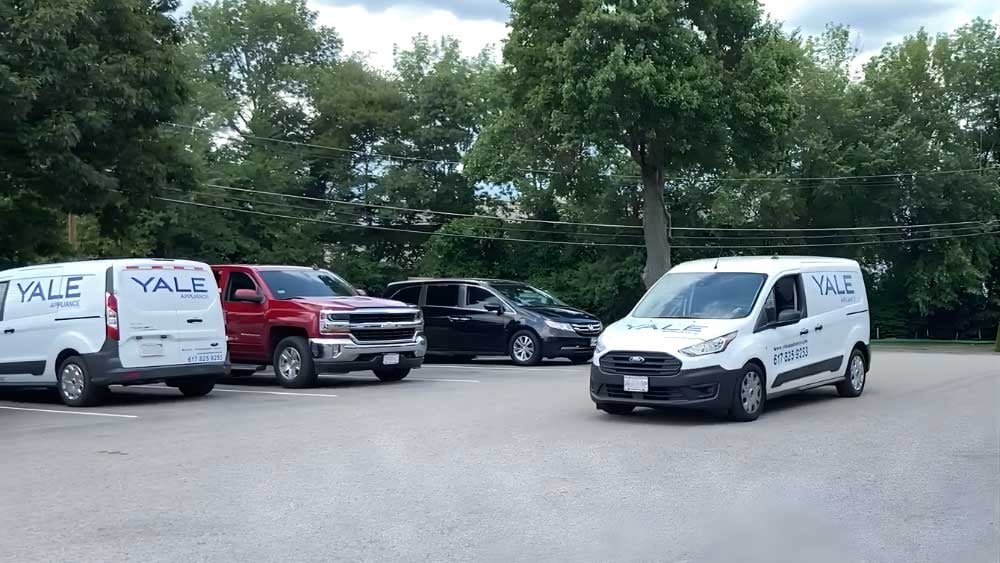
We run 50 service technicians on the road and 14 installation crews to keep up. Even then, we can't take on as many customers who bought from other stores as we'd like to.
The demand for competent service outruns what any single dealer can handle.
When a dealer tells you service and installation are unnecessary, these are the real numbers from a very small area.
Why Does the Same Appliance Get Called "Bulletproof" and "Garbage" in the Same Week?
⚡ Quick Answer: Because each review describes one machine, in one house, with one installer and one service experience. Five factors explain why the same appliance can live opposite lives online.
Reason 1: Manufacturing Variance Is Real, But Smaller Than You Think
⚡ Quick Answer: Real factory variance exists, but it's a rounding error compared to the gap between a five-star and a one-star review.
You hear this one a lot: "Every factory produces lemons."
There's some truth to it, but it's far overblown for the reviews you're reading.
A factory producing 10,000 identical units doesn't accidentally make one that lasts 30 years and one that dies in 18 months.
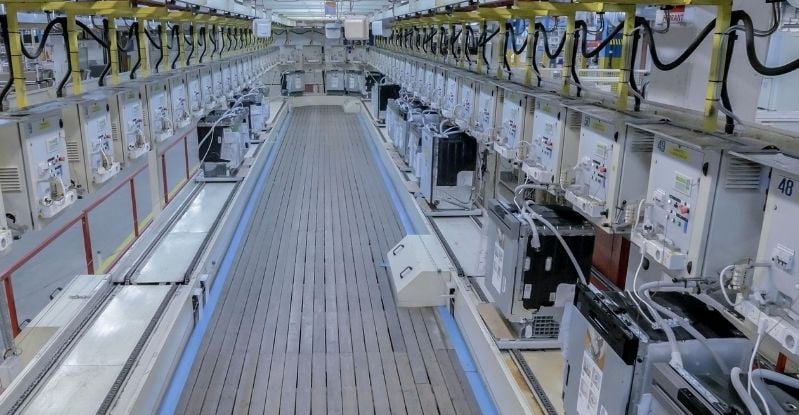
Tolerances are tight. Parts are the same. Real manufacturing variance exists, but it's a rounding error compared to the chasm between a five-star and a one-star review.
Something else is doing that work.
Reason 2: Happy People Don't Write Reviews
⚡ Quick Answer: Satisfied owners rarely post. What you read online is heavily weighted toward the angry and the ecstatic, with the quiet majority missing from the picture.
This one matters more than any of the others, and most people don't think about it.
Your Last Dinner Out
The food was fine. The service was fine. Did you rush home to post a five-star Yelp review?
Of course not. You only log on when something was either spectacular or infuriating.
Appliances Work the Same Way
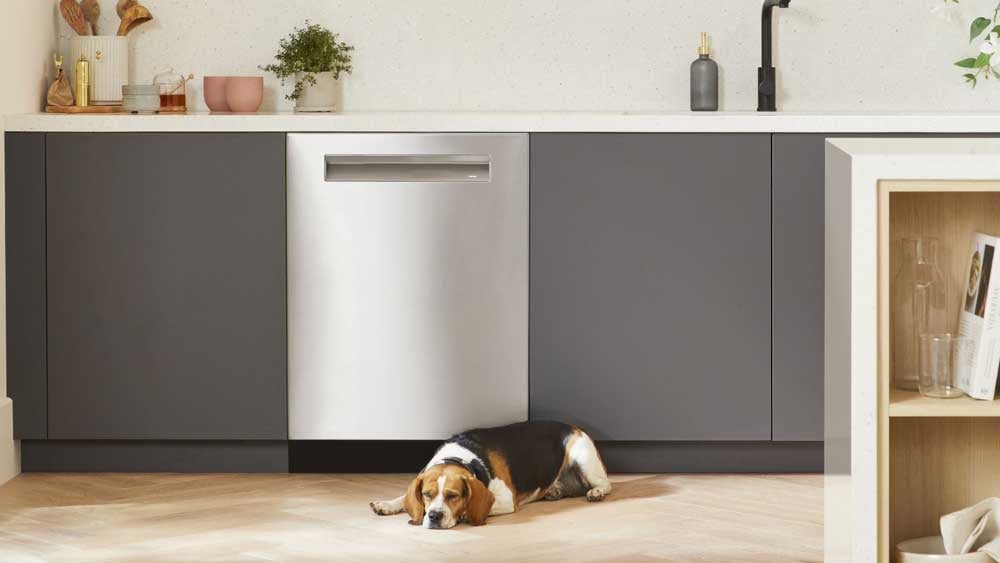
A dishwasher that quietly does its job for eight years doesn't inspire a keyboard moment.
One that fails at month 14, rattles the dishes off the rack, or sits broken for six weeks waiting on a part? That's when the Reddit post gets written.
What you're reading online is heavily weighted toward the angry and the ecstatic. The quiet 80% in the middle, the people whose appliances are just fine, aren't there.

That's not a flaw in the internet. It's how humans behave. But it means your research is skewed before you click anything.
If you remember nothing else from this post, remember this:
The absence of complaints is not the absence of owners. It just means the owners don't have anything to say.
Reason 3: Installation Is the Hidden Variable
⚡ Quick Answer: The vast majority of leaks, walks, and rattles blamed on the appliance are actually installation problems. The reviewer almost never knows the difference.
The single biggest determinant of whether your new appliance performs the way the brochure promised isn't what you'd think.
It's not the brand. It's not the price. It's not the star rating.
It's who took it off the truck and bolted it into your kitchen.
What Installation Problems Look Like in the Reviews
A dishwasher that leaks. A washer that leaks. A washer that spins out of control, or literally walks across the laundry room floor.
In our service data, these almost always turn out to be installation problems, not product problems.
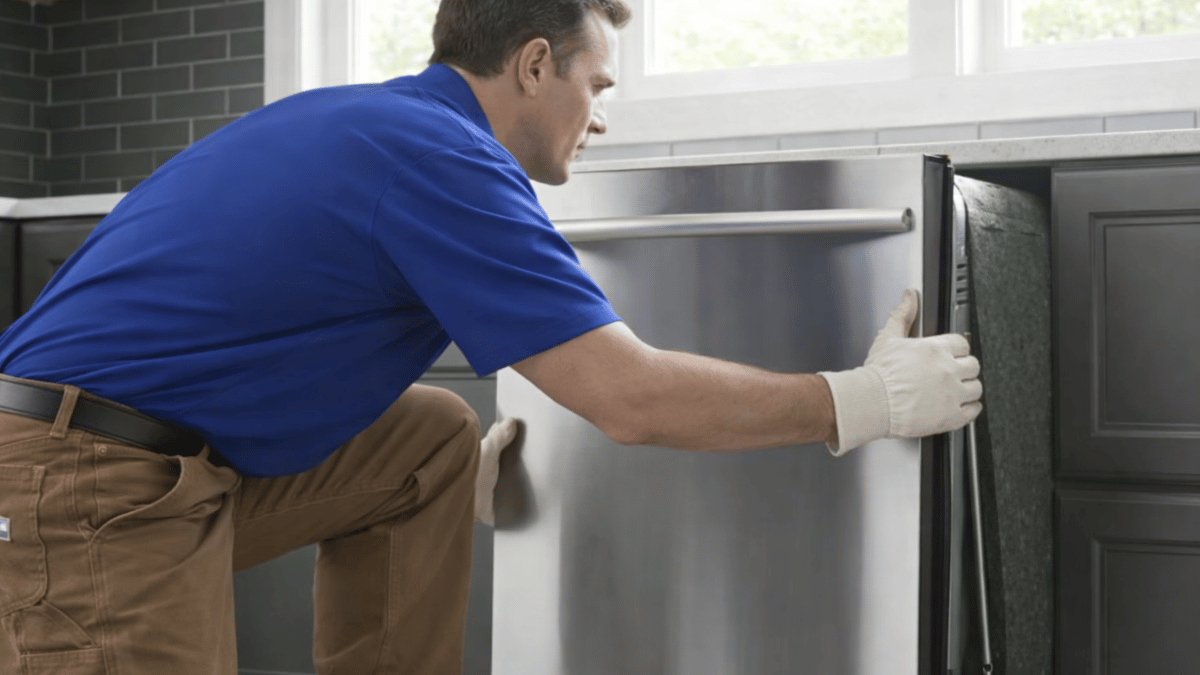
Yet it's the product that gets named in the one-star review.
The truth is usually a sag in the drain line, a washer that wasn't balanced on the floor, or a fridge that was never leveled against the tile.
The machine gets blamed. The installer gets to move on to the next house.
This is one of the reasons the same appliance can earn a five-star from one buyer and a one-star from another. They got different installers. Neither reviewer knows it.
🔍 Read more: What To Do When Your Appliance Purchase Goes Horribly Wrong (From a Retailer Who’s Seen It All)
Reason 4: Service Experience Shapes the Memory
⚡ Quick Answer: Same machine, different service response, opposite reviews. Most "reliability" differences between brands are actually service-response differences.
If your warranty call is answered in 48 hours, you write a different review than if your part is on backorder for six weeks.
Same machine. Different verdict.
The actual failure rate of most appliances is comparable across similar price tiers.
What isn't comparable is how long you wait, how easy it is to reach someone, how soon the part arrives, and whether the tech who shows up is competent.

Two buyers with the same broken fridge can have wildly different stories.
One says "Brand X stood behind the product, total peace of mind." The other says "Brand X is a nightmare, never again."
Both are honest. Both are right. And both are describing service, not the product.
The industry has a problem. Most product reliability differences between brands are actually service-response differences, based on what happened to the product on the way to your home, not the product itself.
🔍 Read more: Appliance Service: Why Most Stores Skip It & How to Protect Yourself
Reason 5: Modern Appliances Don't Last as Long as They Used To, and That Part Is Actually True
⚡ Quick Answer: Modern appliances do die sooner than the ones in your parents' basement, but not as dramatically as the threads suggest. A well-made modern appliance still runs 10 to 15 years, and saves enough on energy to more than offset the shorter lifespan.
Here's the place the internet isn't entirely wrong.
The Maytag In My Mother's Basement
I grew up in Needham. My mom had a Maytag top-load washer, a matching dryer, and an Amana top-mount refrigerator.
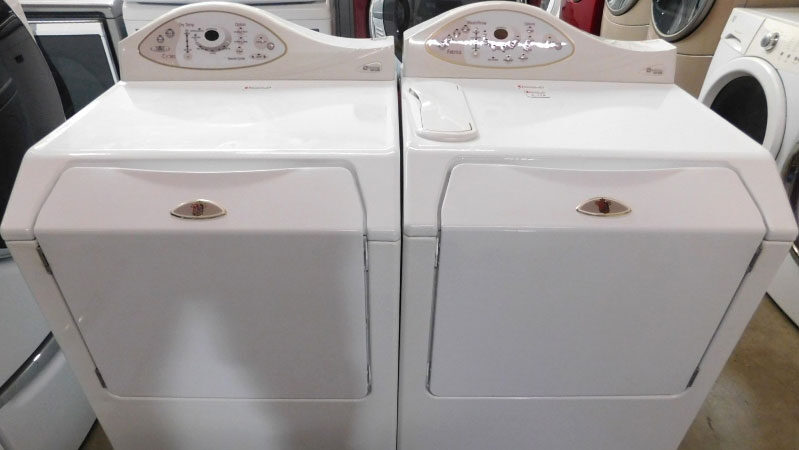
We moved out of that house twenty years later. All three appliances were still running. Not quietly, not elegantly, but running.
Good news for nostalgia. Now the tradeoff.
Those appliances used far more electricity than any modern equivalent.
In today's money, in Massachusetts, the gap between my mom's vintage Amana refrigerator and a current Energy Star equivalent is probably $300 or more a year on your electric bill.
Over a decade, that's two to three new refrigerators.
Why the Tradeoff Exists
The industry traded some longevity for efficiency, and not entirely by choice.
Manufacturers have to comply with federal energy standards, and hitting those targets means redesigning the products from the ground up.
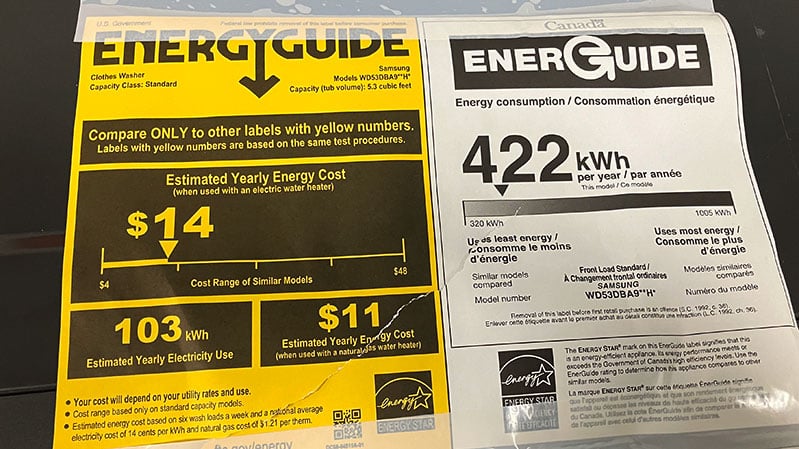
Refrigerators are the clearest example. They use a fraction of the electricity they did 25 years ago.
That's a genuine win for your electric bill. It also means the machines are more complex and less forgiving than the overbuilt analog ones they replaced.
The Real Picture
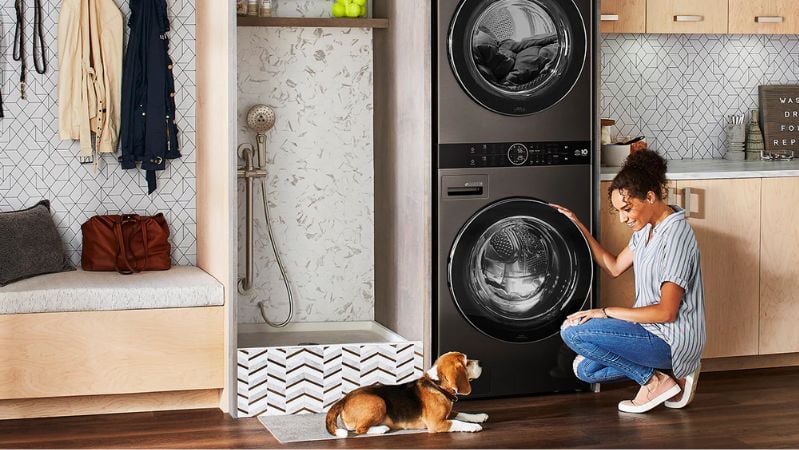
A well-made modern appliance, properly installed and serviced, still runs 10 to 15 years.
That's not forever, but you should not expect forever anymore.
The reviews are over-weighting shorter lifespans.
Modern appliances do die sooner and need more maintenance than the ones in your parents' basement, but not nearly as dramatically as the threads suggest.
And nobody talks about the lower cost of operation, which over a decade is often more than the cost of the appliance itself.

So What Do Online Appliance Reviews Actually Tell You?
⚡ Quick Answer: The reviews are honest but skewed, often misdiagnosed, and over-weighted toward shorter lifespans. The result is a picture that's both true and misleading at the same time.
Let's pull this together.
-
The reviews are honest. The people writing them really did have the experience they describe.
-
The reviews are skewed. The happy owners aren't there to balance the picture.
-
The reviews are often misdiagnosing the problem. Installation and service problems get written up as product problems, because the reviewer can't tell the difference.
-
The reviews are over-weighting short lifespans. Modern appliances do die sooner, but the threads exaggerate how badly, and ignore the operating-cost savings that more than offset it.
Put it all together and you get a picture that is both true and misleading at the same time.
These customers had real problems. The real problem is almost never what the review says it is.
Live within an hour of Boston, Framingham, Hanover, Norton, Hyannis, or Nantucket? Come spend 15 minutes with the models you're considering, running side by side. No appointment needed. Or if you want someone waiting for you, click here for a personalized appointment.
How to Read Reviews Without Losing Your Mind
⚡ Quick Answer: Read for patterns, not verdicts. Weight the specifics, discount the tone, and remember that most "bad appliance" reviews are really bad installation or bad service stories.
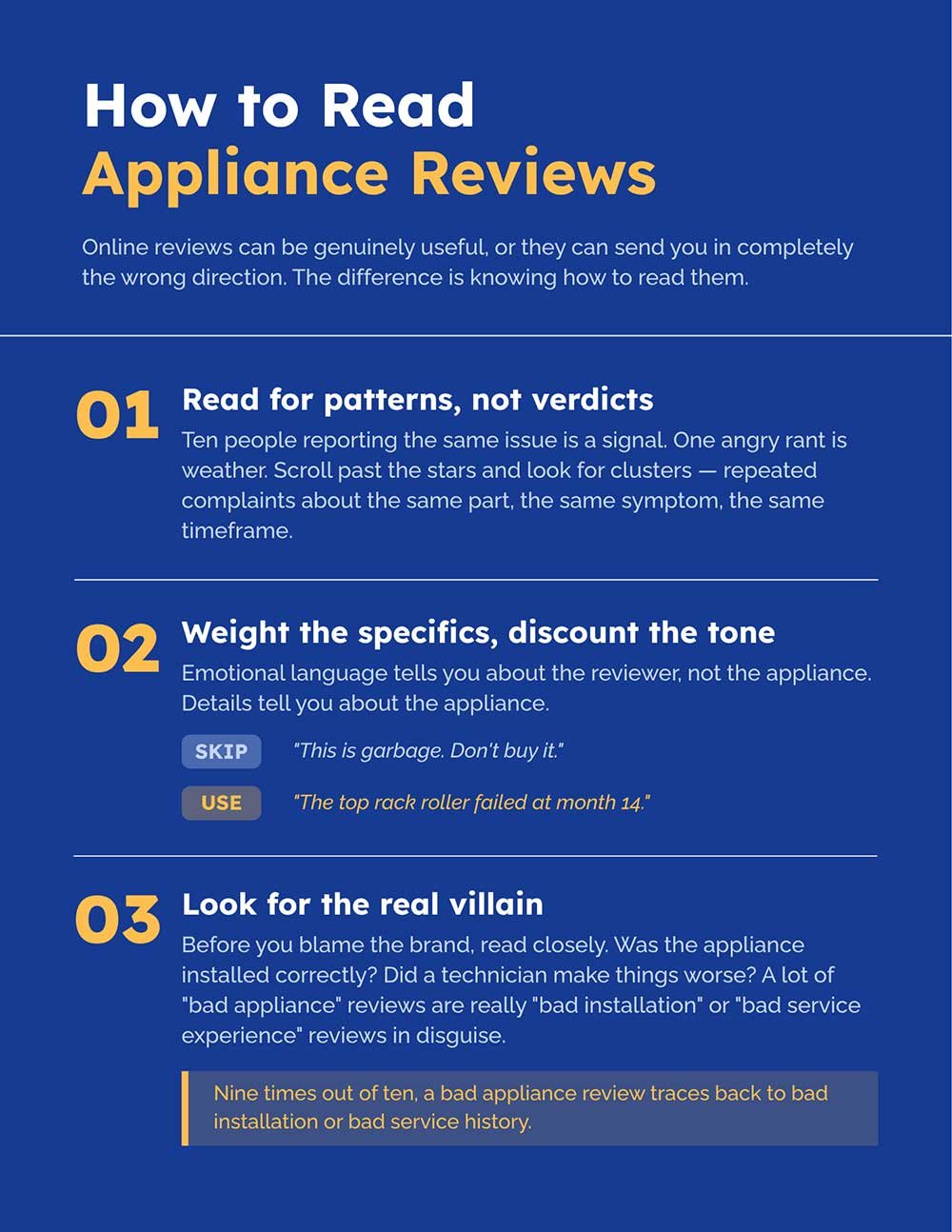
Four practical rules:
-
Read for patterns, not verdicts. Ten people reporting the same issue equals signal. One angry rant equals weather.
-
Discount the tone, weight the specifics. "This thing is garbage" tells you nothing. "The top rack roller failed at month 14 and no one came to fix it" tells you something.
-
Assume the happy owners are silent. A 3.7-star product with 40 reviews might have 10,000 quiet owners who never logged in. Factor them in.
-
Notice what the reviewer is actually describing. Nine times out of ten, a "bad appliance" review is really a bad installation or bad service story. Read for the real villain.
Bottom line
Stop trying to find the perfect appliance in the reviews. It isn't there. Find the dealer who will install it correctly and service it quickly.

That's what actually separates a five-star owner from a one-star one. The brand on the box matters far less than the people behind it.
What's Next
⚡ Quick Answer: Part 1 covered what you can know about appliance reviews. Part 2 covers what you can actually do about it, including why things keep going wrong even when buyers spend more.
If you've made it this far, you understand why the reviews contradict each other.
Part 1 covered what you can know about appliance reviews. Part 2 covers what you can actually do about it.
Because here's the thing buried under all five of these reasons:
The angry reviewers aren't wrong to be angry. They bought an appliance. Something really did go wrong.
The question is what went wrong, and why it keeps happening to so many people, even when they buy the expensive brands.
🔍 Read more: Why Your Kitchen Happiness Has Less to Do With the Appliance Brands Than You Think

Sources
Quotes in this post are drawn from public Reddit discussions in r/Appliances. Excerpts condensed for space; context and attribution preserved.
Footnotes
-
¹ Comment on "Are the new Bosch dishwashers really worse?" r/Appliances, Reddit, August 2025.
-
² Comment on "Are the new Bosch dishwashers really worse?" r/Appliances, Reddit, September 2025.
- ³ Comment on "Is Wolf worth the stretch?" r/Appliances, Reddit, 2025.
-
⁴ Comment on "Is Wolf worth the stretch?" r/Appliances, Reddit, January 2026.
- ⁵ Comment on "LG Counter-Depth Max Refrigerator LRFLC2706S," r/Appliances, Reddit, April 2025.
-
⁶ Comment on r/Appliances discussion, Reddit, November 2025.
- ⁷ Comment on "Samsung Bespoke fridge, any love?" r/Appliances, Reddit, November 2025.
- ⁸ Comment on "Samsung Bespoke fridge, any love?" r/Appliances, Reddit, December 2025.
- ⁹ Comment on "Is Speed Queen hype or real? Trying to get good..." r/Appliances, Reddit, February 2026.
- 10 Comment on "Is Speed Queen hype or real? Trying to get good..." r/Appliances, Reddit, February 2026.
Additional Resources
Get the free Yale Appliance Buying Guide. It has features, specs, and inside tips to all the brands like Sub-Zero, Thermador, Bosch, and Miele. It covers built-ins, counter depth, freestanding vs. slide-in, and much more (plus a ton of good product shots). Well over 1 million people have read a Yale Guide.
Related Articles:
- Appliance Service: Why Most Stores Skip It & How to Protect Yourself
- Are Appliance Extended Warranties Worth It
- The Best (and Worst) Places to Buy Appliances

Why Should You Trust Us?
It seems that every appliance review has nothing but glowing comments about almost every product, yet you read customer reviews and they are almost universally bad.
We are here to fill in the disconnect. We'll give you the best features, and the drawbacks as well, including reliability based on over 33,000 calls performed by our service team just last year. Our goal is to give you ALL the information so you know what's right for you.
Please consider subscribing or adding to the conversation in the comments below. We appreciate you stopping by.