

TL;DR: Buy the Right Range in 5 Steps
If You Read Nothing Else, Know This: Do not start with brand or price. Start with size, fuel type, venting, and how you cook, then choose the brand with the best local service.
There are thousands of ranges from hundreds of manufacturers, so it is easy to feel overwhelmed and start with brand or price.
That is also how most people end up with the wrong range.
The better approach is to start with a simple decision template, not the brand name.
In this article, you will learn a step-by-step process to choose the right range based on your kitchen, your venting, and how you cook.
Follow these steps first, and choosing the right range gets much easier.
Most People Buy the Wrong Range. Follow These 5 Steps to Choose the Right One
Step One: Size and Configuration
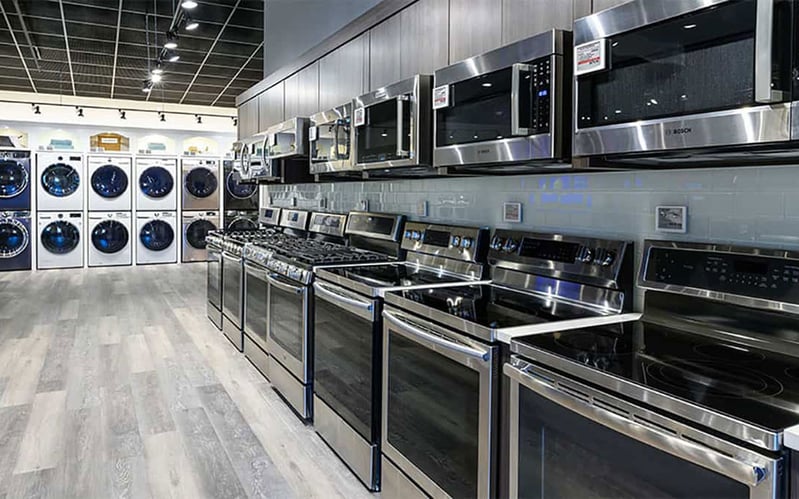
This part is basic, but it is still where a lot of people get tripped up. You start with size and configuration. Measure the width of your existing range. That is the first step.
Ranges come in 20 or 24 inches, usually for apartments, then 30, 36, 48, and 60 inches.
But about 85 percent of homes have a 30-inch range. That is the standard.
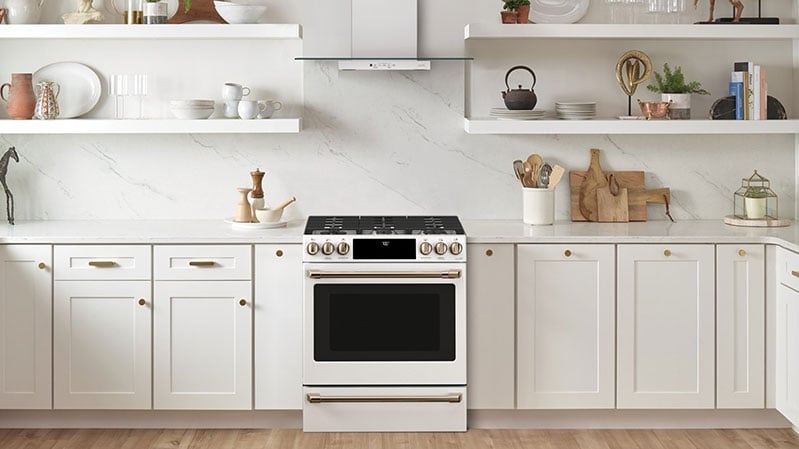
Next is configuration and controls. Are the controls in the front or in the back? Functionally, they are interchangeable. Aesthetically, front controls look a little cleaner.
The exception is a slide-in range. It looks like a front-control range, but the cooktop overlaps the countertop.
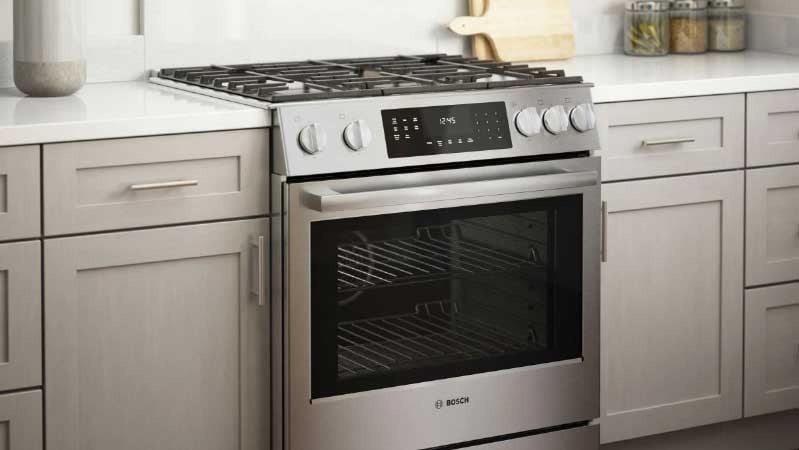
That changes how it installs and how it looks, and it can require some minor cabinet work. You need to know that before delivery.
Right now, only Bosch and Samsung make true slide-in ranges.
Get the size and configuration right first. Everything else comes after.
Note: Before you buy a larger range, check the delivery path. In many parts of Boston, landings are not wide enough to deliver a larger range. I had to hire a crane company for my apartment in Boston. A common problem in the suburbs is when the island is built too close to the range and installed afterward. I just ran into that issue in Duxbury.
🔍 Read more: Freestanding vs. Slide-In vs. Front-Control Ranges
Step Two: Gas vs. Induction vs. Electric
This is especially important now if you plan on converting from gas to induction.
Everyone is familiar with gas. You turn it on, you see the flame, and it just works. You can even light it during a power outage with a match or a lighter.
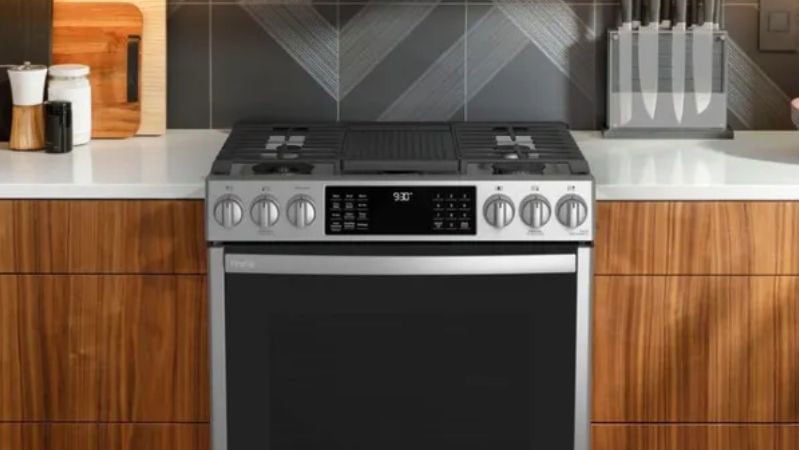
Gas is also better for roasting and boiling than electric. From an electrical standpoint, gas is simple. It only needs about 12 amps, far less than induction or electric.
Induction is different. It needs more power. An induction cooktop usually requires at least 30 amps, and a full induction range is typically 50 amps.
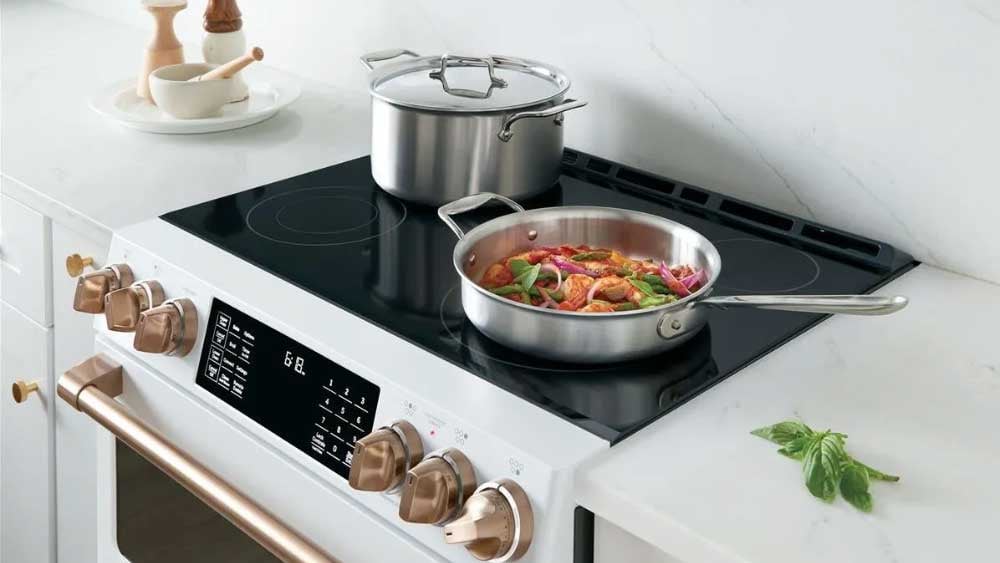 That is something you want to know early, because your home may need an electrical upgrade, including wiring and a different outlet. In Massachusetts, the cost of an electrician to upgrade the electric, wiring, and panel is $3,500.
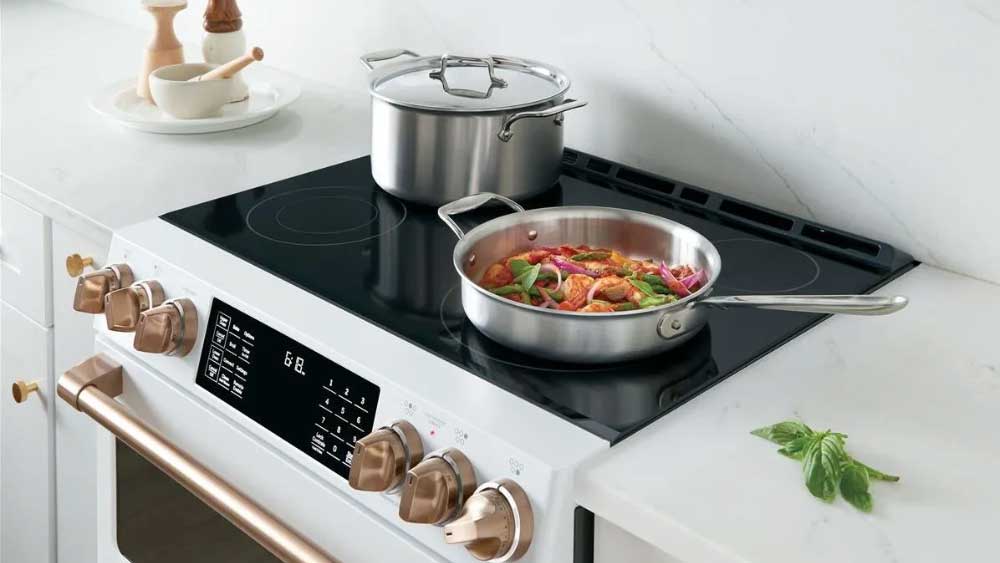
Induction is faster. It simmers better and is more precise. It is also more child-safe because the surface does not stay as hot after you shut it off. It is easier to vent and easier to clean because spills do not bake onto the surface.
The trade-off is that you cannot use induction during a power outage. Induction also tends to need more service over time than a gas or standard electric range.
Electric is similar to induction in that you are cooking on a glass surface with elements underneath.
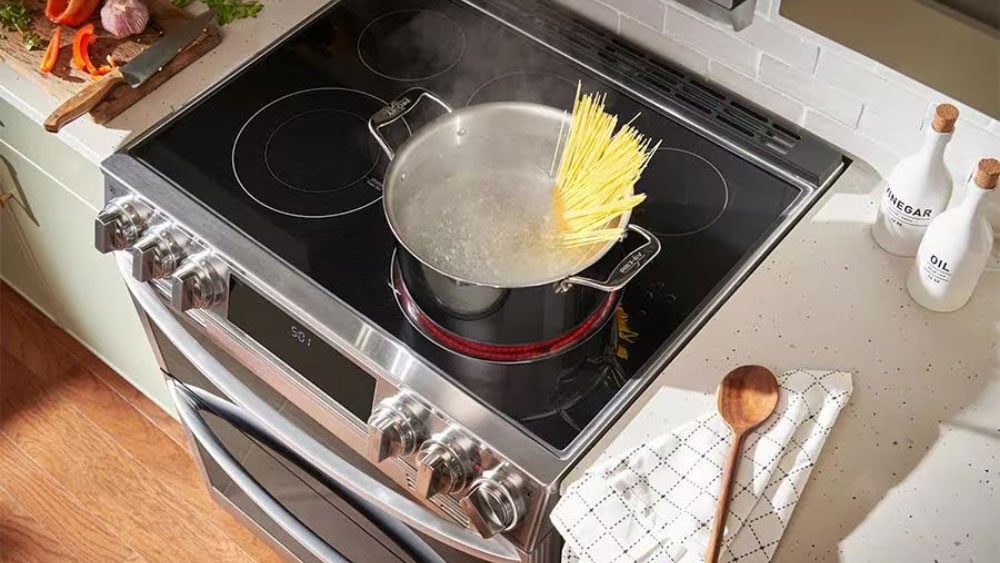
But you lose the speed, precision, and easy cleanup you get with induction.
🔍 Read more: Induction vs. Gas Cooking: A Quick Guide to the Pros and Many Cons of Both
Step Three: Venting
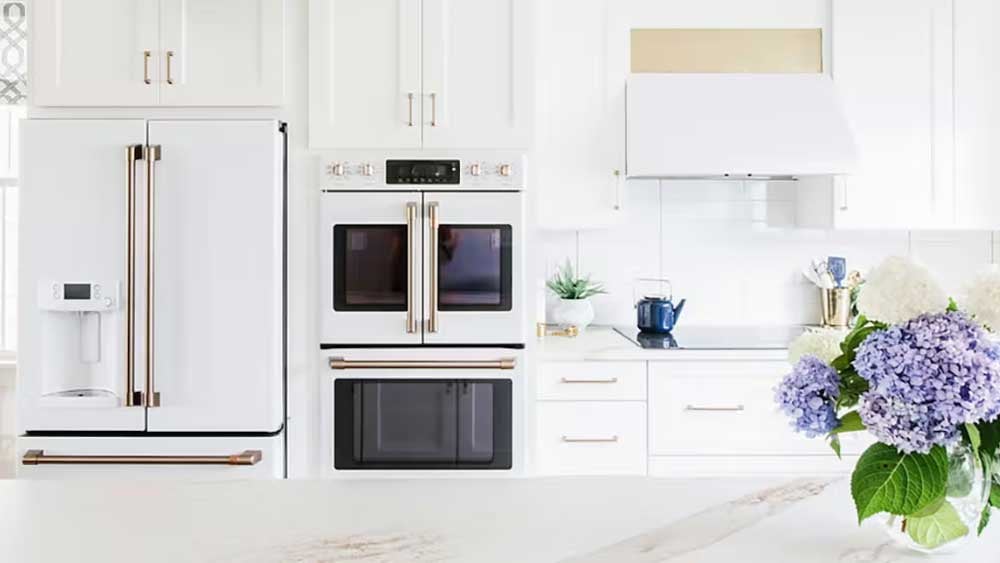
Before you learn features, we need to talk about your venting.
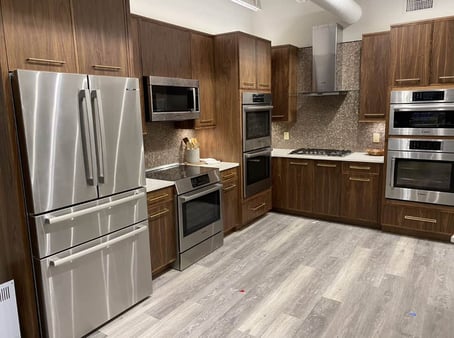
What do you actually have over the range right now? Is it a real hood that vents outside? Or is it a over-the-range microwave or a recirculating hood that just filters air and blows it back into the kitchen?
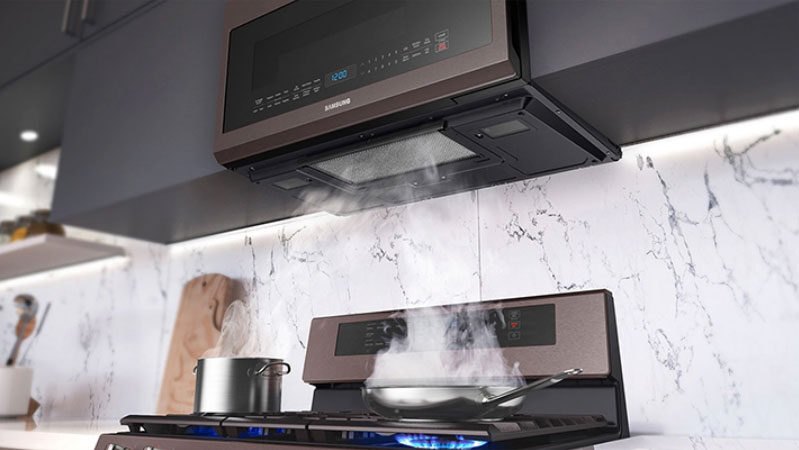
If you have recirculating or limited venting, power becomes a consideration. Most ranges today have at least two high-output burners on the front.
That also means you probably should not be looking at a pro-style range or anything with a lot of burner output.
With limited venting, electric or induction usually makes more sense than gas because you are not dealing with the same heat or byproducts, like carbon monoxide, nitrogen dioxide, formaldehyde, and particulate matter.
The other question is whether you can improve the venting. Can you add a better hood? Can you vent outside? Can the ductwork support it?
Note: Installing a vent to the outside includes a wall cap, so check in Beacon Hill, Back Bay, and Brookline to make sure this does not violate any historic district requirements.
🔍 Read more: How to Choose the Best Kitchen Range and Range Hood
Step Four: How You Actually Use the Range
So far, you have resisted the urge to buy a range based on the color of the knobs. That is great.
Now it is time to ask how you actually use the range. What do you cook in it, and what do you cook on it?
Think about a normal week. Are you mostly reheating, cooking quick dinners, or doing a lot of baking? Or is this more about weekends, holidays, and entertaining?
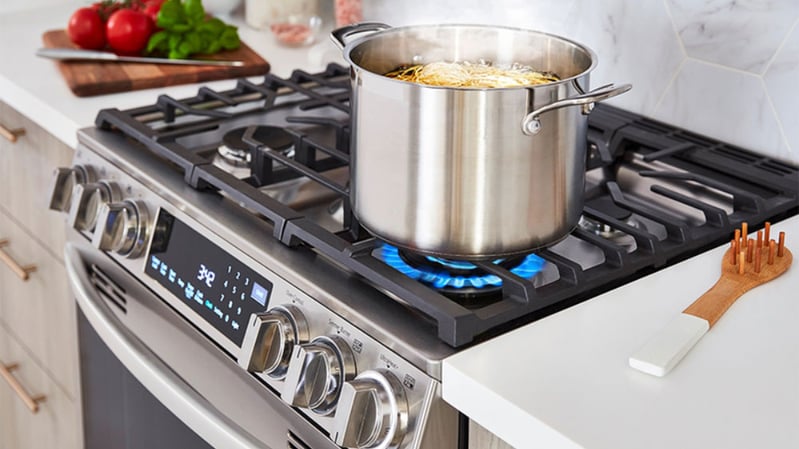
Do you want something basic? A larger oven? More high-output burners? Do you want steam-assist functionality to help with things like baking bread?
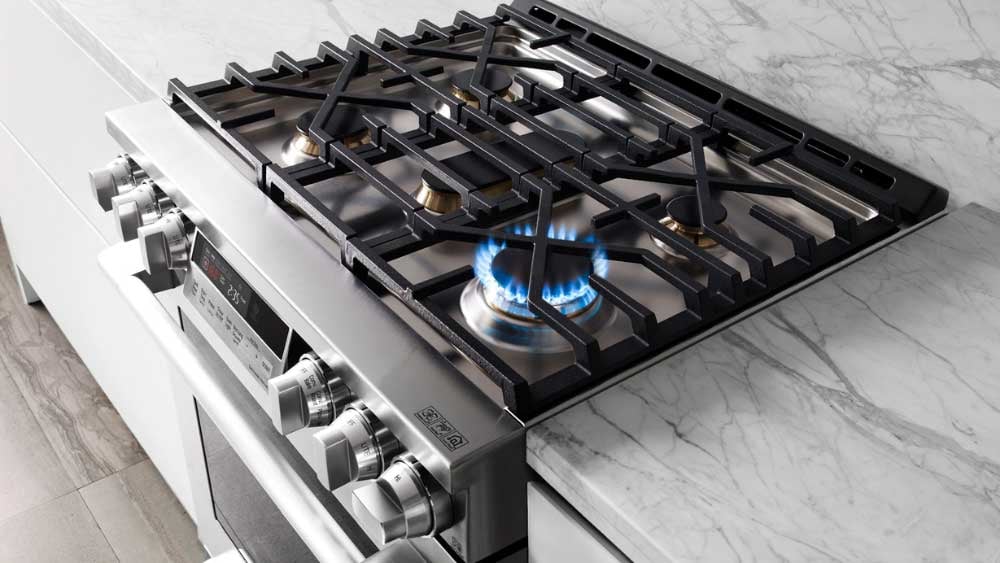
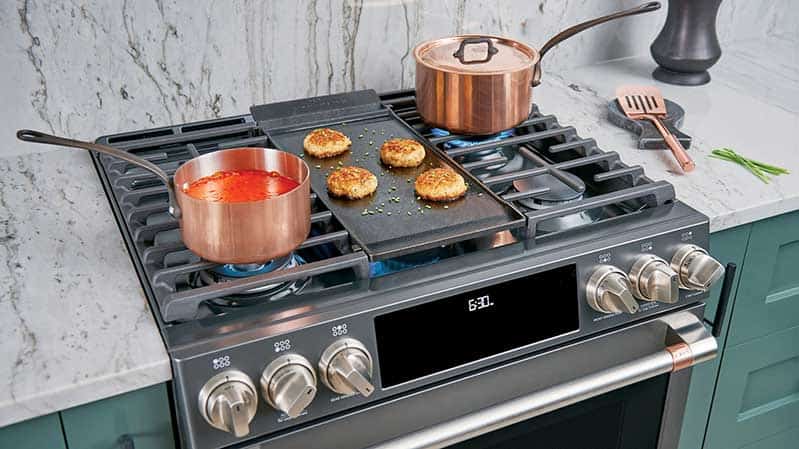
Do you like to grill or use a griddle? A lot of 30-inch ranges have good griddle options today.
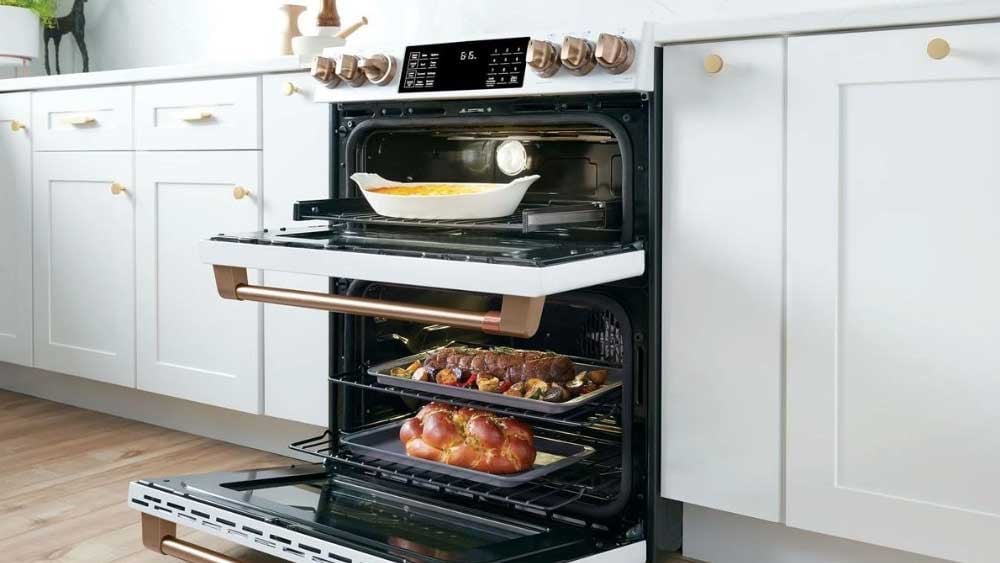
Do you want double ovens? And if you do, what are you cooking? If it is turkeys, you are bending down. If it is casseroles, that setup is mostly waist-high, which is perfect for that type of oven.
All of these questions matter. How you use the range, or how you plan to use it, should determine the brand, not the other way around.
Step Five: Picking the Brand
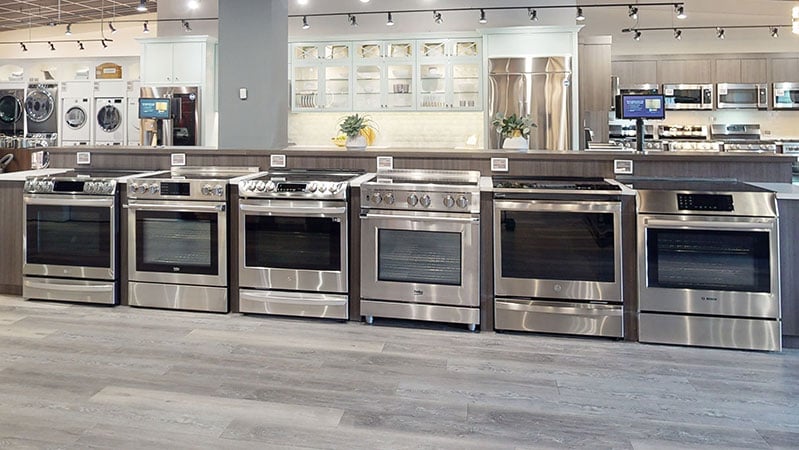
Now you are finally ready to pick a brand, and you are doing it based on how you use the range, not some clever marketing.
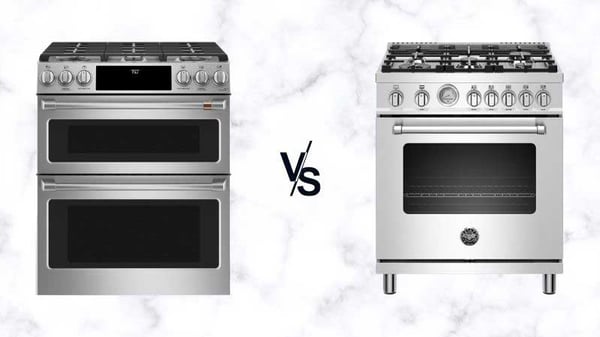
Before you buy, you should have at least three solid options. We always recommend comparing at least three.
Once you have those options, the decision usually comes down to service. Not national service. Local service. Who actually fixes the range in your area.
Because it does not matter how good the range is if you cannot use it. And it does not matter how good the brand is if no one local can service it.
So, when you are choosing between those options, look for the brand with the best local service.
Final Takeaways
Those are the five steps.
If you want to see how these choices play out in real life, start with our guides to the best gas ranges and the best induction ranges.
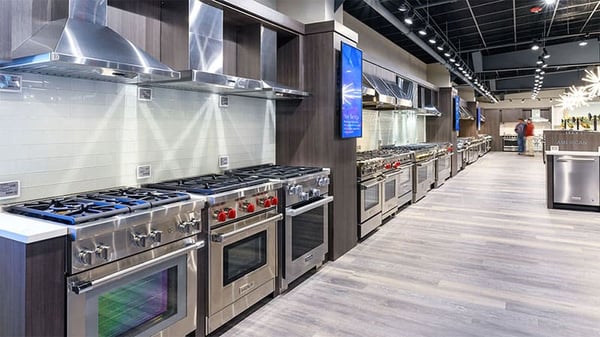
If you are in the Boston area, we have six locations. An hour in the showroom can save you about twenty hours of research online.
If you want help narrowing your options, schedule a showroom visit and compare the right ranges side by side.
Additional Resources
Educate yourself before you buy. Get our detailed Pro Range Buying Guide and compare all gas versus dual fuel ranges from brands like Thermador, Viking and Wolf. Over a million people have made smarter kitchen choices with our guide.
Related Articles:

Why Should You Trust Us?
It seems that every appliance review has nothing but glowing comments about almost every product, yet you read customer reviews and they are almost universally bad.
We are here to fill in the disconnect. We'll give you the best features, and the drawbacks as well, including reliability based on over 33,000 calls performed by our service team just last year. Our goal is to give you ALL the information so you know what's right for you.
Please consider subscribing or adding to the conversation in the comments below. We appreciate you stopping by.