

The Short Version
Between June 1 and August 1, 2026, six major appliance manufacturers (ASKO, GE, KitchenAid, LG, Whirlpool, and Bosch/Thermador) are raising prices 3.5% to 12%, driven largely by a new 25% Section 232 tariff on imported appliances.
Unlike past cycles, signed contracts are no longer being honored, with some packages jumping 8% to 12% between contract and delivery.
Three steps protect a 2026 kitchen project:
-
Buy before June 1.
-
Pay with a credit card.
-
Ask your retailer to warehouse your appliances until installation.
If you're planning a 2026 kitchen, the next 60 days will shape your budget more than the next six months will.
Six manufacturers are raising prices inside the same window this summer, and unlike COVID, signed prices are no longer guaranteed to hold.
Retailers with thin margins and no warehouse space are absorbing increases they can't afford, and some won't survive it.
This article explains what's driving the increases, which brands and percentages are involved, why tariffs are only part of the story, and the three concrete steps that protect your project from whatever the rest of 2026 brings.
📌 Skip Ahead
What's Happening to Appliance Prices in 2026

Six major manufacturers have announced price increases between June 1 and August 1, 2026.
-
ASKO: 10% effective June 1
-
GE, Café, Profile, and Monogram: 7% to 11% effective June 15
-
KitchenAid: 3.5% to 6.5% effective July 9
-
LG: 6% effective July 1
-
Whirlpool: approximately 4% effective July 9, on top of a 10%+ promotional increase already executed in April
-
Bosch and Thermador: 8% to 12% effective August 1, dishwashers excluded for now
All raising prices inside the same 60-day window. All in roughly the same magnitude.
These Increases Are On Top of 2025 and COVID
This isn't a one-time shock. It's the third wave in five years.
Manufacturers raised prices across 2025. Before that, the COVID supply-chain era brought multiple rounds of increases starting in 2020.
Most of those original supply-chain problems have been resolved. The prices that came with them have not.
What Whirlpool Said About Its Own Industry
On Whirlpool's Q1 2026 earnings call, CEO Marc Bitzer described the company's April price increase as the largest in more than a decade, at over 10%.
Bitzer added that the broader environment is a "perfect storm" of falling consumer sentiment, declining demand, and what he termed irrational industry pricing.
Whirlpool is a domestic manufacturer, the most insulated from tariffs of any major player. It's still raising prices anyway.
Why Tariffs Are Driving the Increases
In April 2026, the federal government updated Section 232 tariffs to impose a flat 25% rate on imported appliances.
Every Bosch dishwasher, every LG refrigerator, every Miele oven, every ASKO range entering the country now carries that duty.

Whirlpool estimates the tariff impact on its own North American business at roughly 5% of net sales. The same company estimates the impact on competitors at 10% to 15%.
Worth noting: KitchenAid is a Whirlpool brand. Its 3.5% to 6.5% July increase lands inside the same range as every other manufacturer raising prices this summer. Whirlpool's own April and July increases run ahead of that 5% figure too.
Some of that may reflect other input costs. Some of it likely reflects pricing for the worst-case tariff scenario.
The harder problem is that nobody knows whether the 25% rate holds, rises, or gets renegotiated next quarter. Manufacturers are pricing for the worst case.
Signed Contracts Are Being Voided

Builders mostly, and some homeowners, who locked in pricing months ago are being told the contract no longer holds. The manufacturer adds 8% to 12% on top of the negotiated number. The retailer has no way to absorb it.
A $150,000 signed package can become a $165,000 invoice between contract and delivery.
Even during COVID, signed prices were honored. In 2026, that doesn't seem to be the case.
Pricing Pressure Hits Retailers and You
Appliance retailers operate on a 5% to 7% margin in a good year. The retailers who also service what they sell operate on less than that, because service loses money. Running a service department costs another 1% to 3% off the margin.
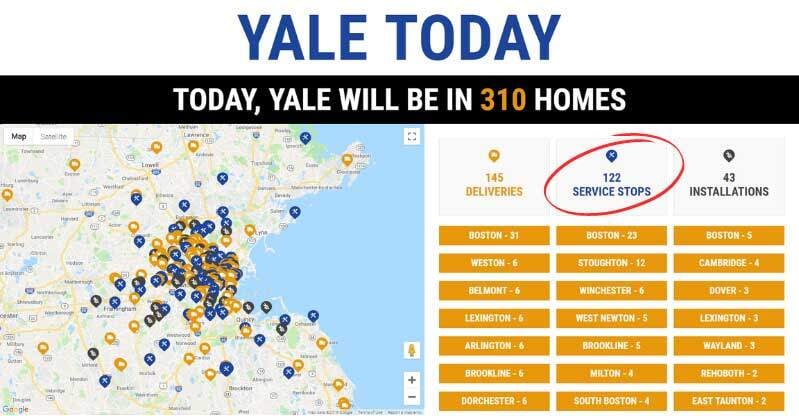
At Yale, 33,190 service calls in 2025 were a marketing expense, not a departmental loss. It's also the reason we don't advertise.
The first problem is the price increases themselves. When manufacturers raise prices 6% to 12% inside a 60-day window, retailers have to warehouse the inventory at the old price or absorb the increase on existing orders.
Most retailers don't have warehouses.
That leaves them absorbing massive price increases on business they've already booked.
The second problem is what's happening to demand. Industry demand fell 7.4% in Q1 2026, according to Whirlpool's reporting. Fewer customers, thinner margins, and retroactive price increases, all hitting a retailer at the same time, are going to break a lot of dealers, especially the ones without warehouses.
It also affects you, with higher prices, longer waits, and the elevated risk that your retailer can't perform.

How to Protect Your Kitchen Project
Buy early.

If your kitchen is installing in October, order your appliances now.
A package bought before June 1 sits below five separate price increases. A package bought in September sits above all of them.
Pay with a credit card.

The tariff increases are largely being absorbed by retailers, and honestly, most retailers can't afford to absorb them for long. If a retailer takes your deposit and fails to deliver, your credit card company is the only practical path to recovering the money. Bank transfers, checks, and ACH offer no equivalent protection.
Be especially careful of unusually large cash discounts. During COVID, certain dealers offered aggressive cash discounts knowing they were heading out of business. The discount looks like a deal in the moment. It looks different when the dealer closes before delivery and the deposit is gone with them.
A credit card charge can be reversed. A cash payment to a closed business cannot.
Ask your retailer to warehouse your order.

A retailer with its own warehouse can take delivery from the manufacturer at today's price and hold the appliances until your installer is ready.
This locks in your pricing. It also takes you out of the next round of increases.
Get the lock-in terms in writing.
Ask specifically whether your retailer will honor your signed price if the manufacturer raises theirs.
Some will. Some won't. The answer tells you how much risk you're carrying into the project.
What Yale Is Doing Differently in 2026
We are honoring signed prices for our customers.
When a manufacturer raises us mid-contract, we absorb it on jobs already booked. We can do this because we have a 220,000-square-foot warehouse where we've already placed the orders we've booked.

The appliances are here. The pricing is locked. Future manufacturer increases don't apply to inventory we already own.
We also warehouse appliances at no charge for customers whose projects aren't ready.
Order in May, install in October, pay May's price.
The Honest Caveat
None of this makes 2026 a great year to remodel.
The bigger problem is uncertainty.
Here's the lesson from COVID: the price increases that came with the supply-chain crisis were never rescinded. The supply chain calmed. The prices stayed.
That's how appliance pricing tends to work. Prices go up, they rarely come down, and the increases announced in any given year tend to stick.
Which means predicting the back half of 2026 is hard. Predicting 2027 is harder.
If you can't delay your project, the steps above are how you reduce your exposure to whatever the rest of 2026 brings.
What to Do Next
If you're planning a 2026 kitchen, the most useful next step is a conversation with your cabinet shop and your appliance dealer. They can walk you through the options so you can make an informed decision before prices go up.
If you're in greater Boston, from Worcester to the Cape and Nantucket, or in Southern New Hampshire and Rhode Island, book a showroom visit at one of our six stores: Boston, Framingham, Hanover, Norton, Hyannis, or Nantucket.
Bring your plans.
We can show you options and current prices without rushing you.

Additional Resources
Before you spend a dime, learn the facts from over 33,000 service calls, discover which brands are actually reliable, and see how to time your purchase for the best price. More than 1 million people have trusted the Yale Appliance Buying Guide - now it's your turn.
👉 Download Your Free Appliance Buyer's Guide Today.
Related Articles:

Why Should You Trust Us?
It seems that every appliance review has nothing but glowing comments about almost every product, yet you read customer reviews and they are almost universally bad.
We are here to fill in the disconnect. We'll give you the best features, and the drawbacks as well, including reliability based on over 33,000 calls performed by our service team just last year. Our goal is to give you ALL the information so you know what's right for you.
Please consider subscribing or adding to the conversation in the comments below. We appreciate you stopping by.