
You’ve probably wondered what really separates a $40,000 luxury kitchen from an upscale one at half the cost.
Is it just brand names, or are there real differences in how they cook, cool, and clean?
In this guide, we’ll walk through the brands in each tier, the biggest feature differences, and how much they usually cost.
You’ll also see when to buy, how to buy, and how to mix high-end and affordable choices without breaking your budget.
By the end, you’ll know what each option includes so you can plan the kitchen that fits you best.
What You’ll Learn
Which brands are considered luxury vs. upscale
-
How ranges, refrigerators, and dishwashers differ
-
What accessories drive the biggest price gaps
-
How to budget for each tier
-
When and how to buy smart
-
How to mix high-end and affordable pieces in one kitchen
Luxury vs. Upscale Appliances: What’s Worth the Upgrade?
If you want built-in refrigeration, bigger cooking formats, and specialty accessories, luxury is the upgrade tier.
If you want a premium look and solid performance without the built-in investment, upscale is often the smarter value.
| Luxury Appliances | Upscale Appliances | |
| Typical Brands | Sub-Zero, Wolf, Thermador, Miele, Monogram, BlueStar, Viking | Bosch, LG Studio, GE Profile, Café, Samsung |
| Refrigerator | Built-in or fully integrated | Counter-depth |
| Range | Pro-Style range (gas or dual fuel). 36-60-inch options | Front-control range, 30 inches |
| Dishwasher | Panel-ready or fully integrated | Standard or panel-ready |
| Accessories | Steam ovens, speed ovens, built-in coffee, wine columns | Not typical |
| Appliance budget | $35,000-$100,000+ | $9,000-$20,000 |
What Do “Luxury” and “Upscale” Really Mean for Appliances?
When people say luxury or upscale, they usually mean the appliances.
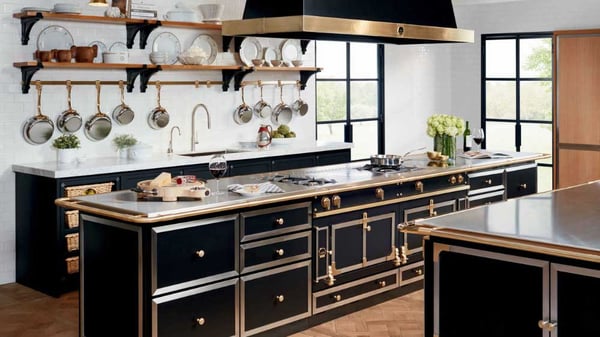
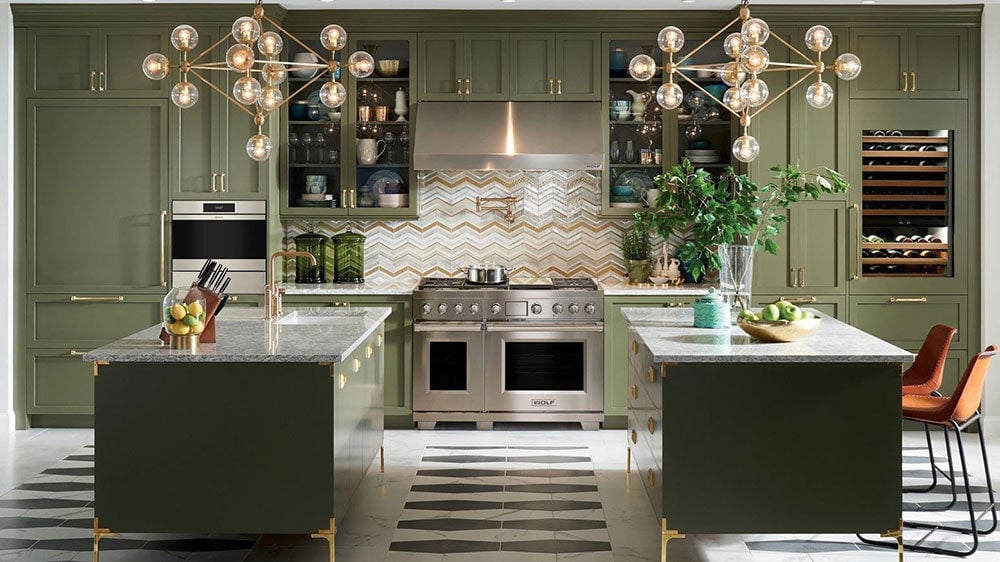
Luxury kitchens use brands like Sub-Zero, Wolf, Miele, and Thermador. You’ll see pro-style ranges, built-in refrigerators, and extras like steam ovens or built-in coffee systems.
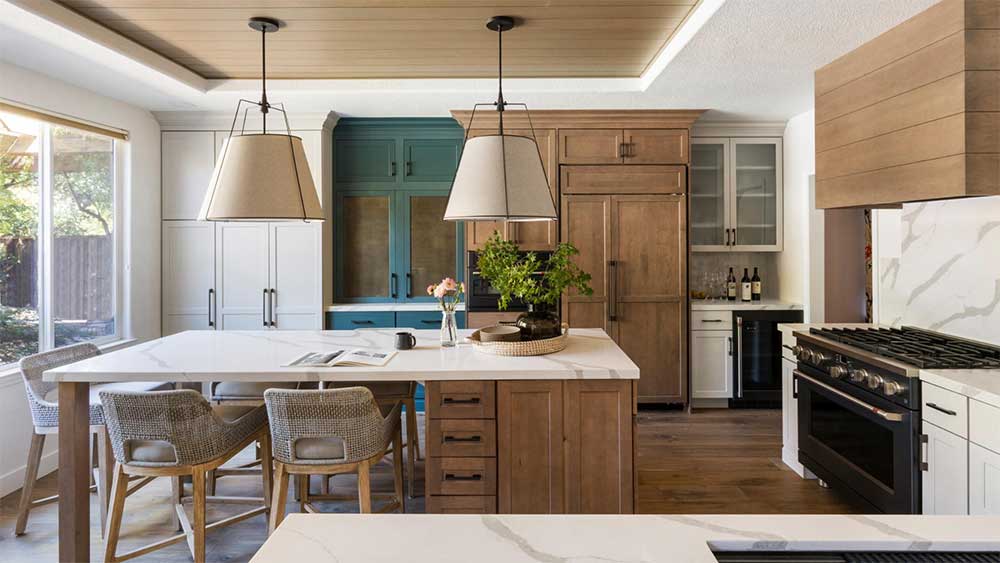
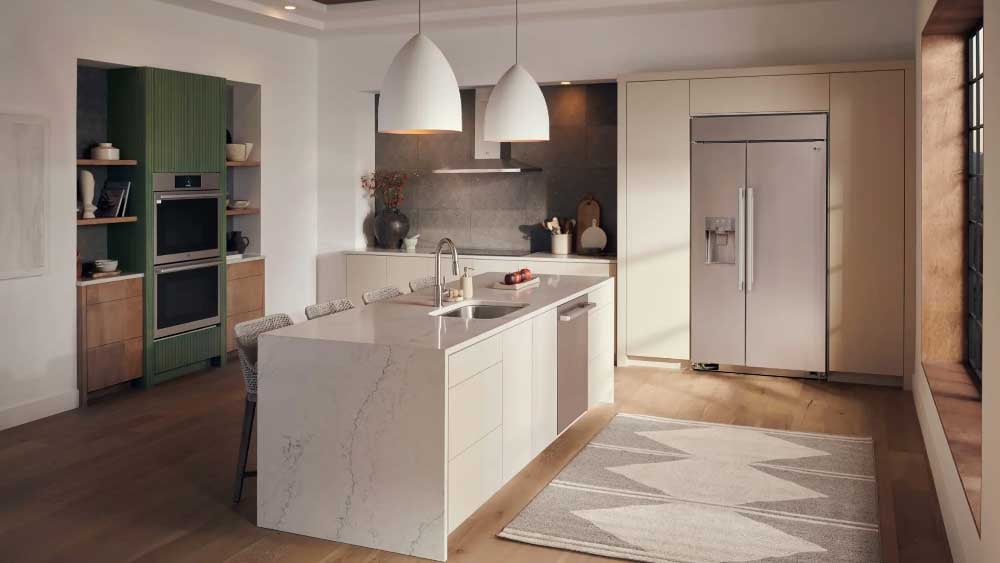
Upscale kitchens use brands like Bosch, Café, LG Studio, and GE Profile. You’ll see counter-depth fridges, front-control ranges, and fewer extras.
Both can look great. The real difference is how much size, layout, and feature flexibility you want.
Where Should You Start When Choosing a Range?
The range is usually the first appliance you should choose. It sets the tone and layout for the rest of the kitchen.
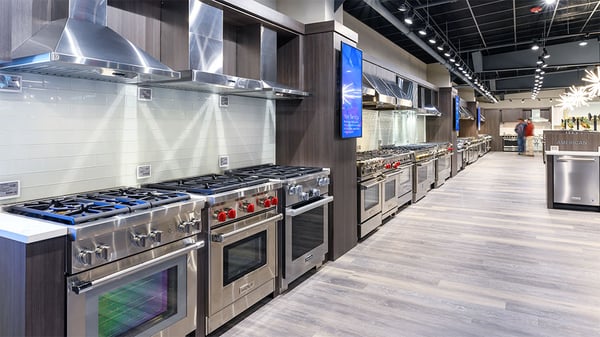
In luxury kitchens, that often means a pro-style range or a rangetop with wall ovens. Sizes start at 30 inches but often jump to 36, 48, or even 60 inches.
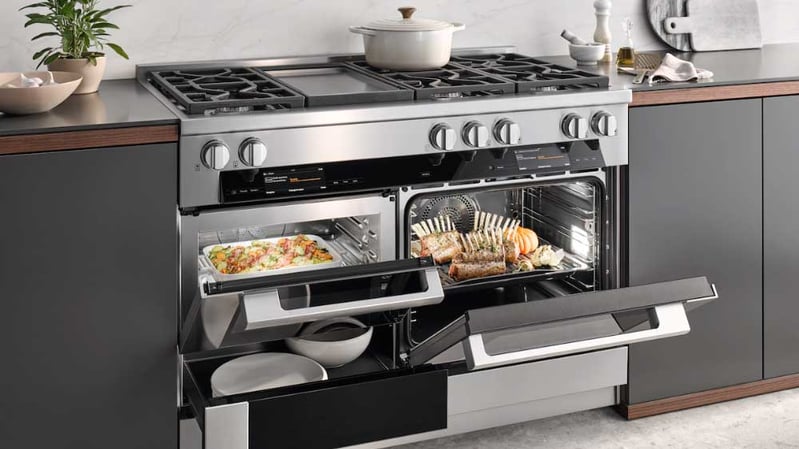
Burners are typically between 15,000 and 25,000 BTUs, and the extra width allows for grills, griddles, and French tops.
Some ranges include steam, speed, or steam-assist ovens built right in.
Upscale kitchens usually stick with 30-inch front-control ranges. They fit standard cabinets and are simpler to install.
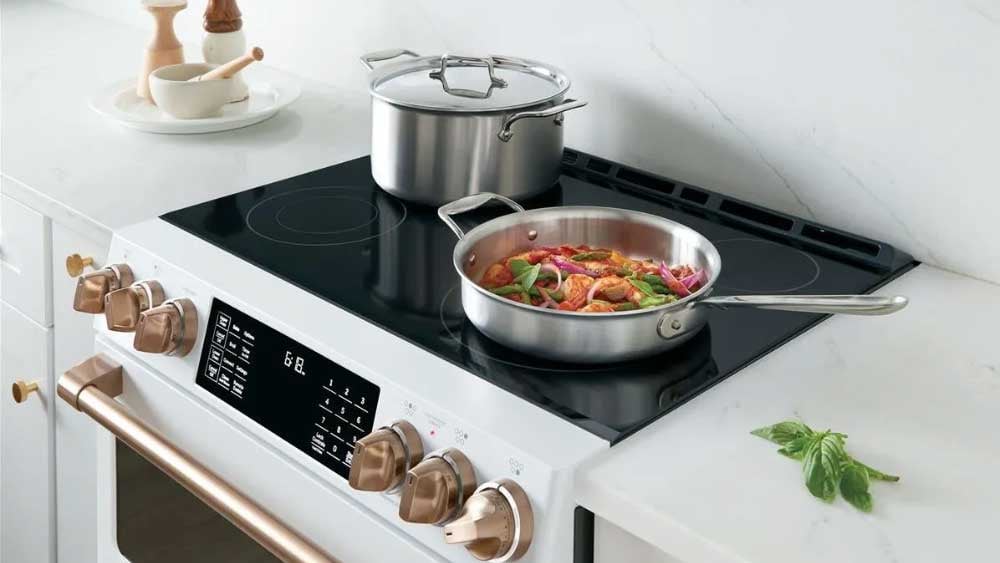
They can still be powerful, and some have 20,000 BTU burners and double ovens in the same footprint.
The difference isn’t just power. It’s whether you want more size, more layout options, and more flexibility.
🔍 Read more: How to Choose a Professional Range: Complete Feature-by-Feature Breakdown
Should You Buy a Range or a Rangetop With Wall Ovens?
You can do either in a luxury or upscale kitchen, but this choice affects layout more than any other.
A range combines the cooktop and oven in one unit. A rangetop with wall ovens splits them into separate zones.
Go with a range if you want a simpler layout or you’re working in a tighter space.
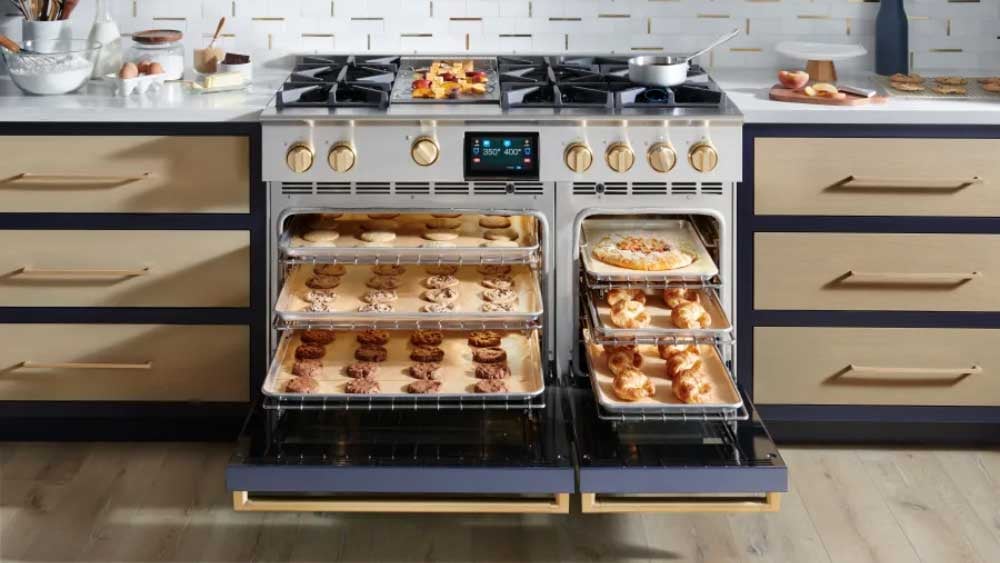
It’s also easier to install and takes up less cabinetry. In tighter Boston condos, ranges are more common because you’re usually working with less wall space and fewer zones.
Go with a rangetop and wall ovens if you want more flexibility.
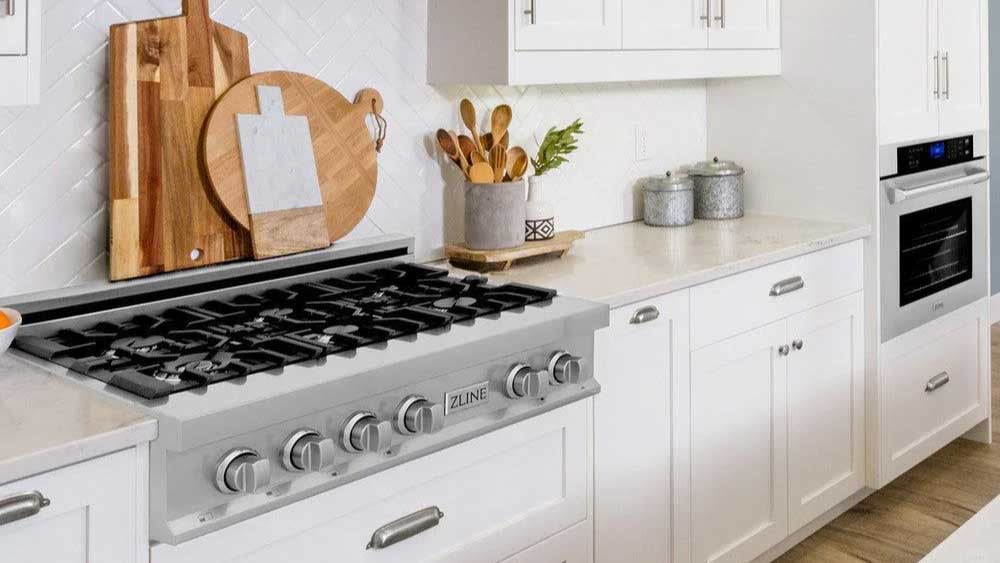
You can add steam or speed ovens, and you won’t have to bend to reach the oven. It’s more common in larger suburban homes where space and layout allow for more zones. This setup costs more and takes more planning.
There’s no right answer. It depends on how you cook, how you use the space, and what your kitchen allows.
🔍 Read more: How to Choose Between a Wall Oven and Cooktop vs. a Range
Why Is Ventilation a Step You Shouldn’t Skip?
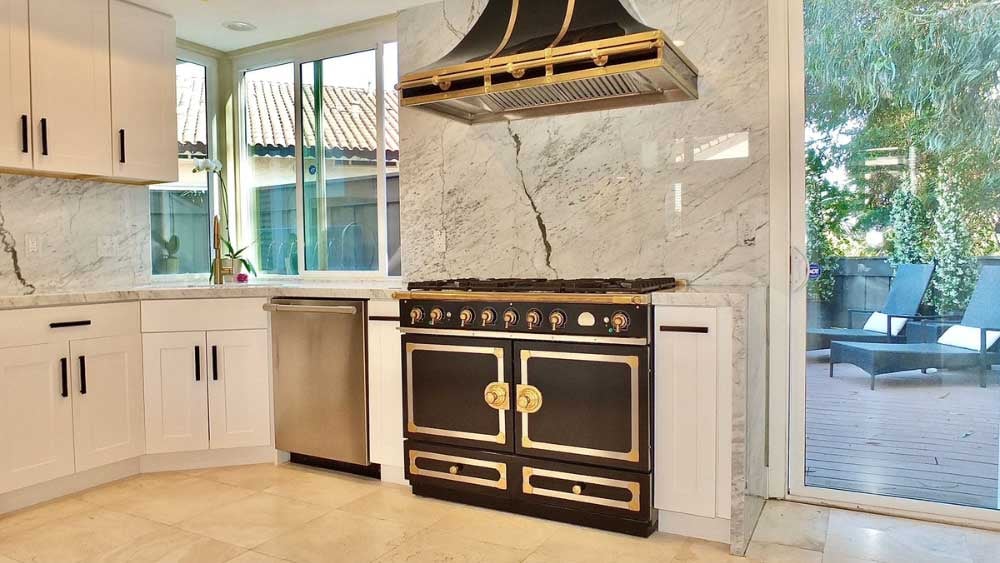
Ventilation matters more as cooking power goes up, and if you’re adding a pro range, you need a vent that can keep up.
It should match the width of the range, be at least 24 inches deep, and about 18 inches tall.
In luxury kitchens, people often build a wood mantle hood and install a liner inside. It looks clean and blends into the design.
In upscale kitchens, people often default to over-the-range microwaves, a low-profile hood, or a chimney-style hood. We don’t recommend over-the-range microwave ovens. They’re not strong enough to vent real cooking.
What you want is a hood that covers the front burners and pulls smoke and grease out fast, not one that just recirculates air back into the kitchen.
Why Are Refrigerators the Cornerstone of a Luxury Kitchen?
Refrigerators, like ranges, often set the tone for the kitchen because they take up the most visual space.
In luxury kitchens, refrigerators are usually built-in or fully integrated. That means they’re installed into the cabinetry, not slid into an opening.
Some have compressors on top, like classic Sub-Zero models. Others are fully flush with no visible seams.
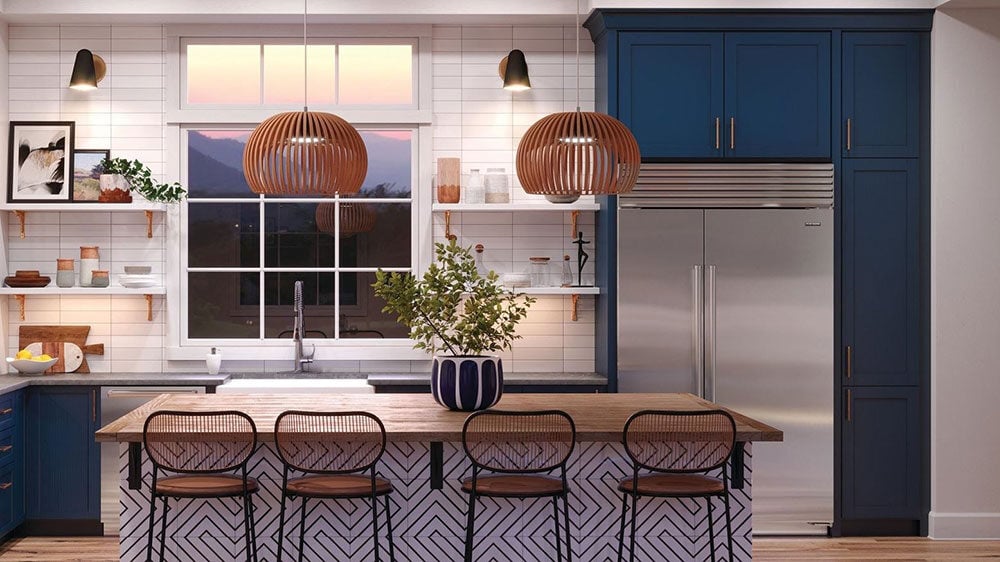
They’re taller and shallower than standard fridges, and they’re designed as part of the kitchen layout from the start.
In upscale kitchens, you’ll usually see counter-depth refrigerators. They’re freestanding but made to align more closely with the cabinets.
Most are limited to 36 inches wide, and they’re easier to install and cost much less.
Luxury refrigerators often range from $15,000 to $25,000 or more, while entry-level counter-depth models can start around $1,700 to $4,500.
Which Appliances Are Least Different Between Luxury and Upscale Kitchens?
Some appliances don’t change much from upscale to luxury, and dishwashers and microwave drawers are at the top of that list.
Dishwashers
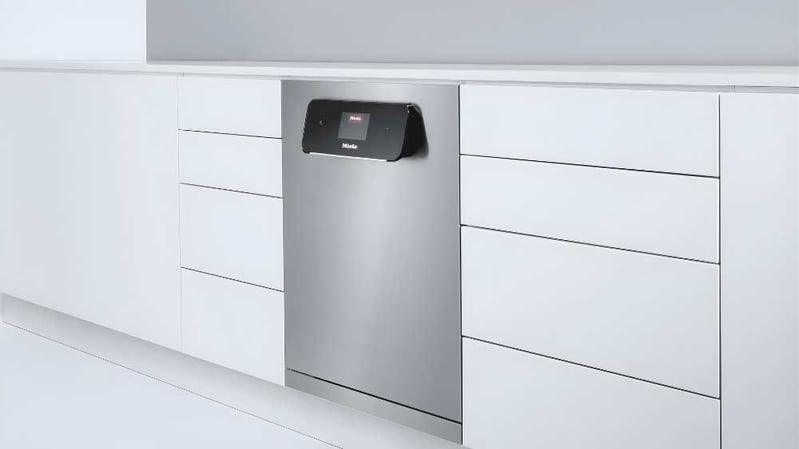
Yes, you can spend $4,400 on a Miele, but most buyers don’t.
Cleaning performance, rack layouts, and cycle times are similar across brands. What you’re really paying for is finish and quietness.
In upscale kitchens, dishwashers usually run $1,000 to $1,500. In luxury kitchens, we see more in the $1,500 to $2,500 range.
For most buyers, the upgrade here is about quieter operation and a more premium finish, not a dramatic jump in cleaning performance.
Microwave Drawers
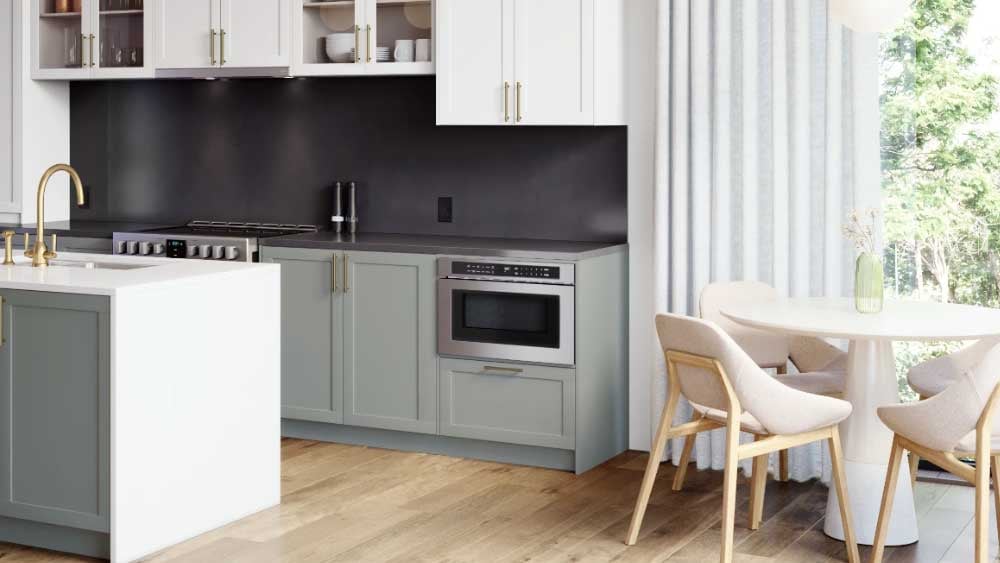
All microwave drawers are made by Sharp. The difference is mostly branding and style.
You’ll see them in both luxury and upscale kitchens, and most cost between $1,000 and $1,500.
Luxury buyers often choose a matching brand. That helps qualify for rebates or keep the look consistent.
Which Appliances Are Common in Luxury Kitchens?
These appliances aren’t always essential, but they’re common in luxury kitchens and often used more than expected.
Combi Steam Ovens
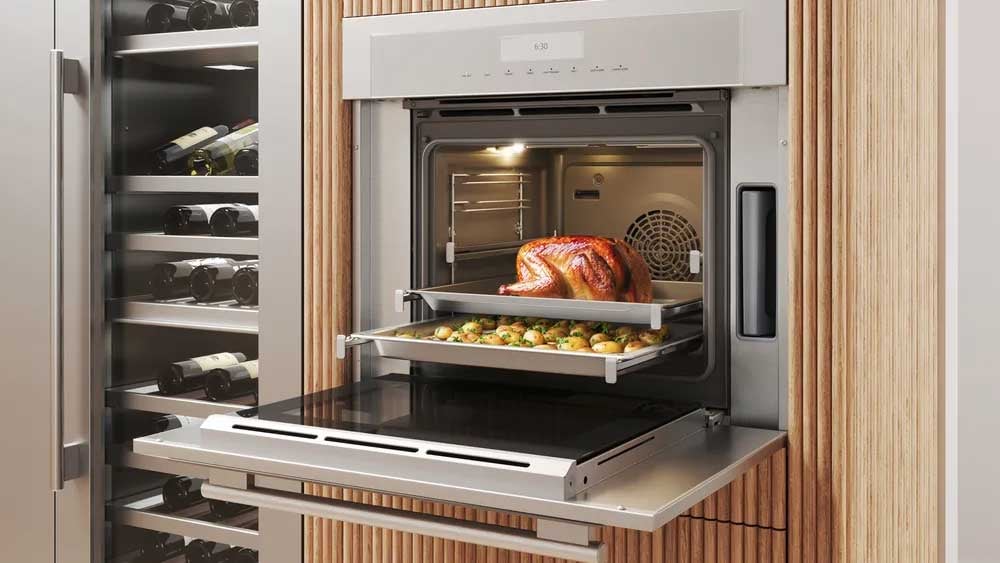
Steam ovens add moisture back into food. They’re great for reheating, baking, vegetables, and fish. Once it’s in the kitchen, most people use it more than a regular oven.
Typical budget: $6,000 to $9,000
Speed Ovens
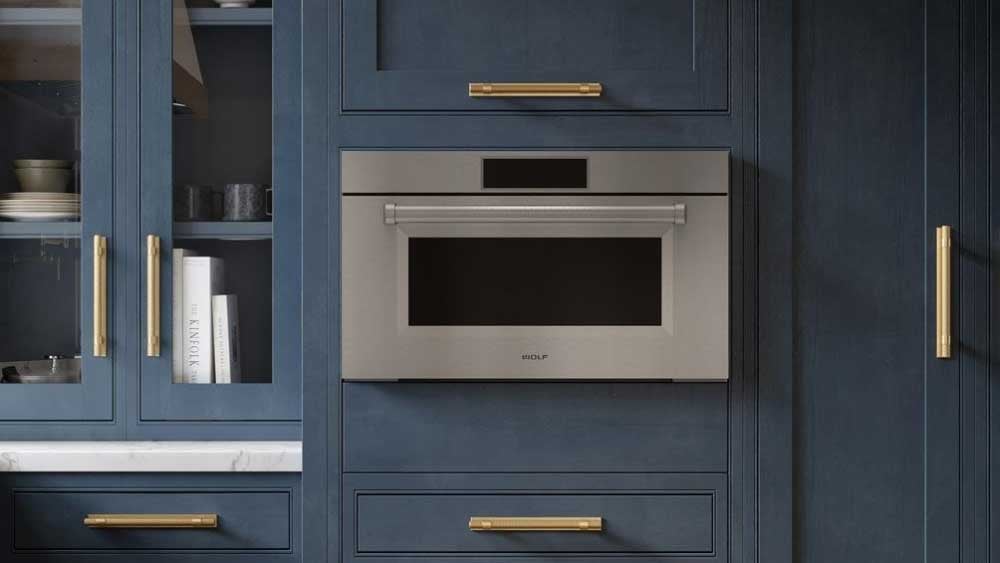
Speed ovens combine microwave and convection cooking. They heat fast and cook more evenly than a microwave. Some people use a speed oven more than their main oven.
Typical budget: $4,000 to $6,000
Wine Columns

Wine columns install like refrigerator columns. They’re planned into the kitchen layout from the start.
Typical budget: $10,000 to $20,000
Undercounter Wine Refrigerators
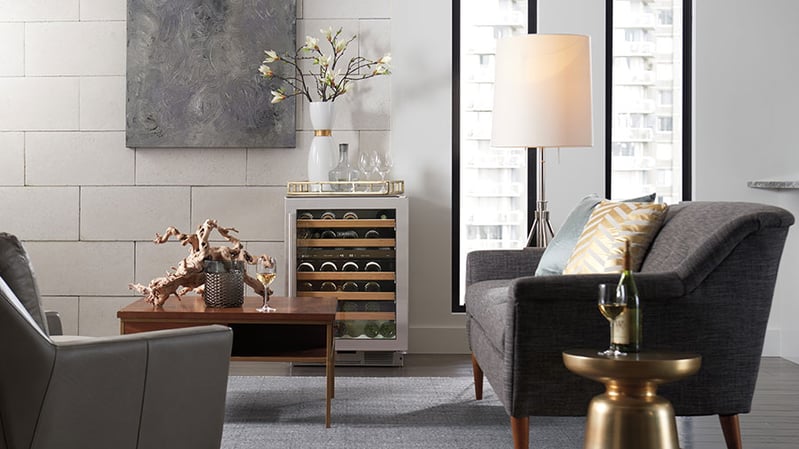
These fit a standard 24-inch opening, so they’re easier to add in most kitchens.
Typical budget: $4,000 to $7,000
Built-In Coffee Systems

Built-in coffee makers are a lifestyle choice. If you drink coffee every day, you’ll use it constantly.
Typical budget: $6,000 to $8,000

How and When Should You Buy Appliances?
How Should You Buy?
For both luxury and upscale appliances, you save more when you bundle one brand. Rebates and package pricing are built into the system.
With brands like Thermador, if you buy a qualifying cooking product, you get a free dishwasher. Add their refrigerator, and they’ll include a free hood too.
Monogram and JennAir offer tiered rebates, up to $4,500. Upscale brands do the same, just at lower dollar amounts.
When Should You Buy?
Luxury appliance packages run all year and have for 20 years. You don’t need to time it.
Upscale appliances follow the retail calendar. Look for extra savings during President’s Day, July 4th, Tax-Free Weekend, and Black Friday.
🔍 Read more: When Is the Best Time to Buy Appliances?
How Can You Mix Luxury and Upscale Appliances Without Overspending?
You can mix luxury and upscale appliances and still get exactly what you want without spending a fortune. Here are a few common ways people do it.
Pro Ranges Without a Luxury Price

Pro ranges from Thermador, Monogram, and JennAir are often priced between $5,000 and $6,000.
With current programs, those ranges often include a free dishwasher or a credit toward another appliance. Net of the dishwasher, the effective cost of the range is closer to $4,300.
That’s not much more than a typical front-control range, which often sells around $3,000.
You will need to upgrade the hood. Instead of a standard hood, you’ll need a more pro-style hood. That usually adds $500 to $1,000.
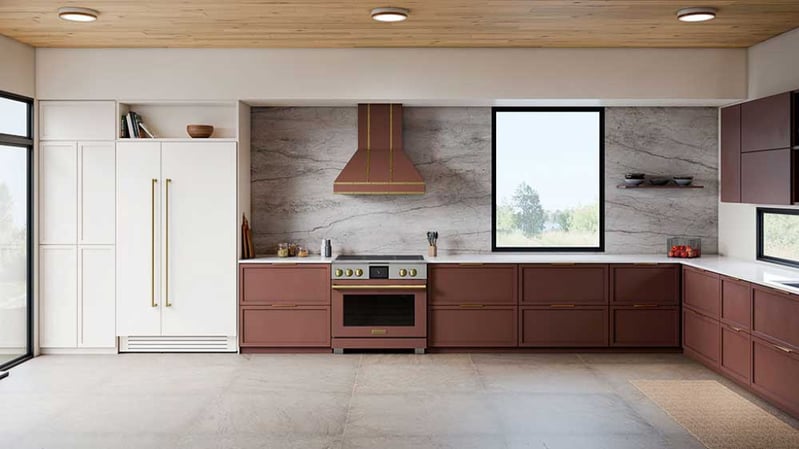
All in, upgrading from a front-control range to a pro range with proper ventilation typically adds about $2,000 to the total budget.
Integrated Refrigerators Without Going Full Sub-Zero
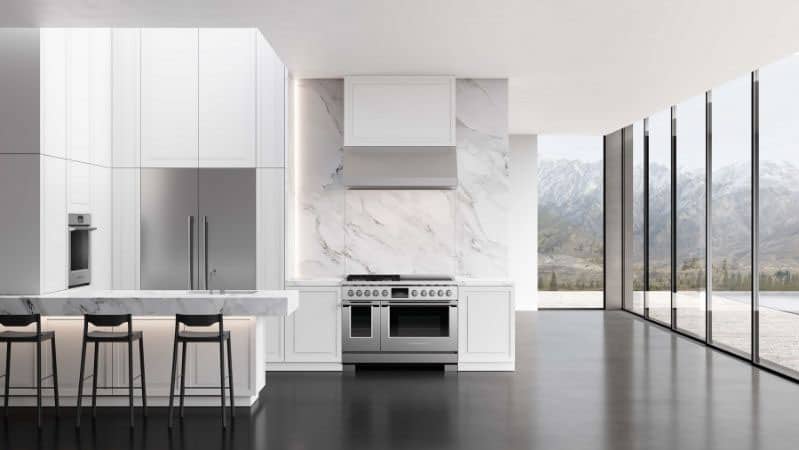
If you like the seamless, panel-ready look, you don’t have to jump straight to Sub-Zero.
Fisher & Paykel offers integrated refrigerators starting around $7,000. That’s less than half the cost of a similarly sized Sub-Zero built-in.
If you want something larger, Fisher & Paykel also offers wider, more pro-style integrated models around $10,000.
Compared to a typical upscale counter-depth refrigerator, that’s usually an add of about $3,000.
Luxury-Style Ventilation Without Luxury Cost

In luxury kitchens, you often see wood hood mantles.
The internal liner, blower, and controls are usually the same components used in standard pro hoods. Those components typically cost $1,000 to $1,500.
The real expense is the custom wood hood itself, not the ventilation system.
🔍 Read more: The Hidden Costs of Luxury Appliances and How to Avoid Them

Does a Luxury Kitchen Increase Resale Value?
This is the most common question we hear.
According to real estate data for 2026, a high-end kitchen remodel can add an average of nearly $29,000 to a home's resale value.
However, whether it’s worth it depends on your home’s price point.
-
The 10% rule: Your total kitchen renovation should typically cost about 10% of your home's value. If you put $80,000 worth of Sub-Zero and Wolf appliances into a $400,000 home, you won’t see that money back.
-
The neighborhood standard: In luxury markets like Back Bay or the Boston suburbs, buyers expect to see names like Sub-Zero or Thermador. Choosing a lesser brand in a luxury home can actually hurt your resale speed.
-
High-ROI features: Features like steam ovens and induction ranges are currently seeing the highest “value-add” boost in real estate listings, often increasing asking prices by 3–5%.
Luxury appliance brands are more recognizable than almost any other premium feature in a home.
Advertising Sub-Zero or Miele usually pulls more attention than a Jacuzzi tub or Baldwin hardware.
Which Brands Actually Stay Running?
Contrary to popular belief, a higher price tag doesn’t always mean fewer repairs. These year-one service rates show which brands stayed running most often.
2026 Most Reliable Appliance Brands
Year 1 Service Rates (Lowest Service Rate to Highest)
| Service Rate | Tier | Key Strength | |
| LG | 5.5% | Upscale | Laundry & Dishwashers |
| Miele | 7.4% | Luxury | Dishwashers |
| Gaggenau | 7.7% | Luxury | Wall Ovens & Cooking |
| GE Profile | 8% | Upscale | Reliable Service Network |
| Bosch | 8.7% | Upscale | Dishwashers (800 Series) |
🔍 Read more: The Most Reliable Appliance Brands
Final Verdict: Is Luxury or Upscale the Better Choice?
Luxury and upscale appliances both work well. The difference comes down to cooking style, layout, and how much flexibility you want.
Luxury gives you more size, more options, and more room to customize. You pay more for that.
Upscale gives you solid performance in a standard footprint. It costs less and is simpler to plan.
You don’t have to pick one or the other. You can mix both. Upgrade where it matters, and save where it doesn’t.
What Should You Do Next?
Want to see the most luxury and affordable luxury kitchens in New England? Click here to schedule a personalized appointment at any one of our six stores. Choose the time that works best for you.
Still figuring out what fits your space, style, and budget? Download our free Yale Appliance Buying Guide and get the clarity you need. No fluff, just facts.

Why Should You Trust Us?
It seems that every appliance review has nothing but glowing comments about almost every product, yet you read customer reviews and they are almost universally bad.
We are here to fill in the disconnect. We'll give you the best features, and the drawbacks as well, including reliability based on over 33,000 calls performed by our service team just last year. Our goal is to give you ALL the information so you know what's right for you.
Please consider subscribing or adding to the conversation in the comments below. We appreciate you stopping by.