
I always think of Willy Wonka when a customer brings up downdrafts.
They are always excited because they have found a way to cook without blocking their view of the outside.
Just like Wonka, right before that gum turned Violet into a blueberry, I try to warn them:
"No! Please, stop!"
If you are looking for someone to tell you downdrafts are a great idea, this is not that article.
What you will find are the specific downdrafts we recommend, what they cost, and the trade-offs behind each pick.
At the end, I will also show you the better way to vent a kitchen when your layout allows it.
Let's dive in.
📌 Skip Ahead
- Best Built-In Downdraft Cooktops for 2026
- The Only Downdraft Range in Production in 2026
- Every Downdraft Option for 2026, At a Glance
- Why Downdrafts Don't Work in Modern Kitchens
- If You Must Buy a Downdraft, Buy This: A Separate Pop-Up
- What We Actually Recommend: An Overhead Hood
- Final Recommendation
Best Built-In Downdraft Cooktops for 2026
Fisher & Paykel makes the best built-in downdraft cooktop on the market.
The cooktop side is still feature-limited compared to a stand-alone unit at the same price.
You lose the high-wattage center boost element. You lose full-surface induction.
You give up cabinet space for the blower. Prices are not low, either.
The Best Built-In: Fisher & Paykel CID364DTB4 ($6,949)
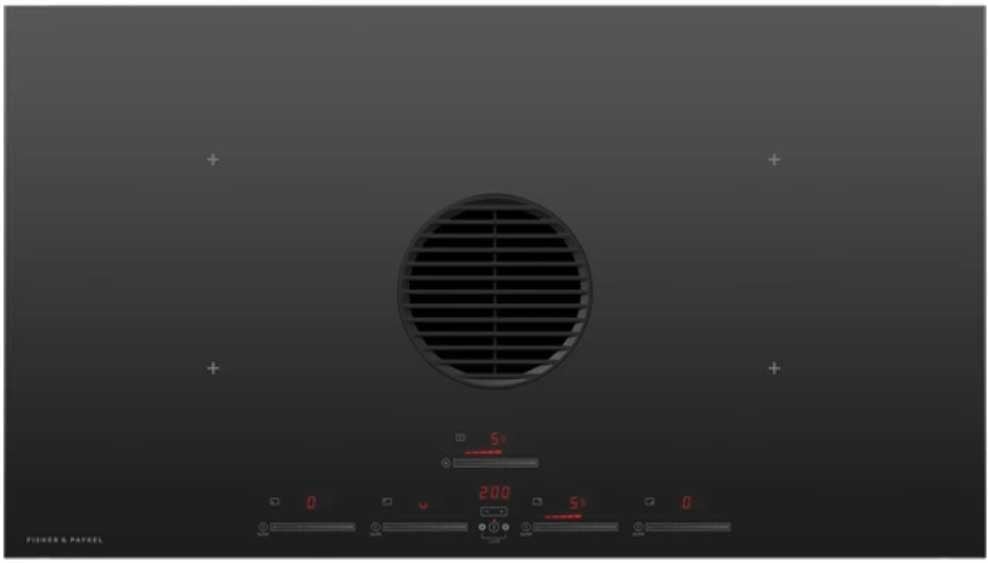
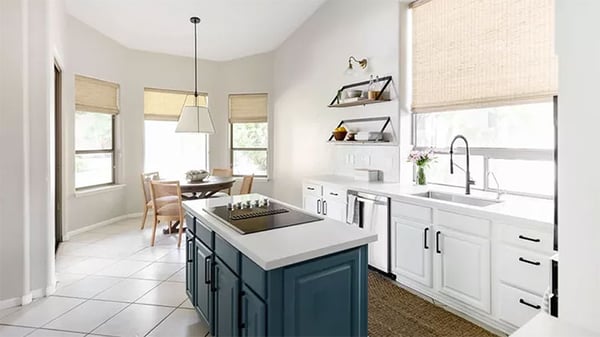
This is a 36-inch induction cooktop with integrated downdraft ventilation.
The ventilation is the best on the built-in market, but that is a low bar.
The integrated vent delivers 413 CFM, on the weaker side for serious cooking. A proper overhead hood for a 36-inch cooktop runs 600 to 900 CFM.
Nine fan speeds and a boost setting help. The grease filter tray slides out for cleaning, and the cooktop installs raised or flush with the counter.
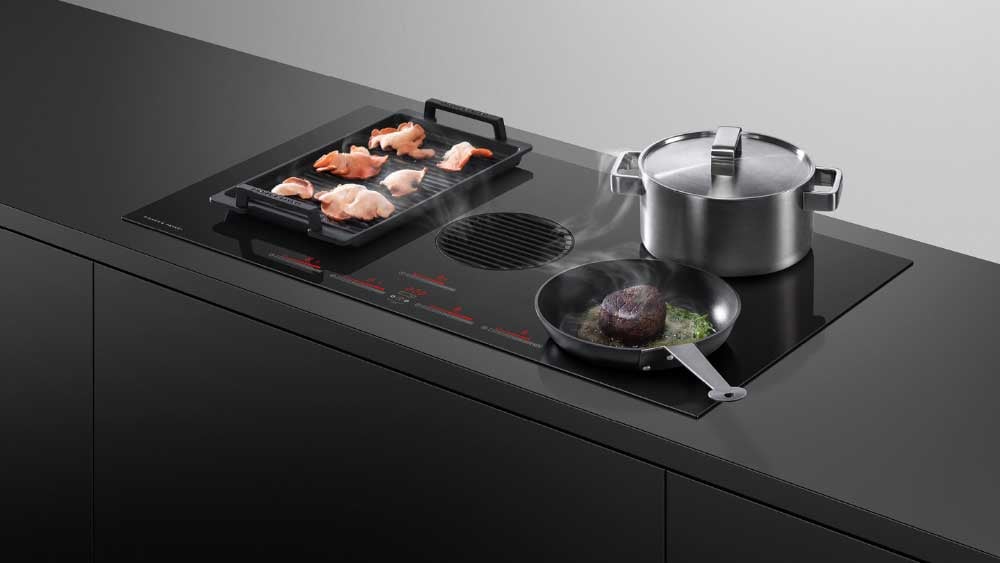
The cooking side gives you four induction zones plus a bridge function that combines two zones into one larger area.
A power boost setting is available on each zone for fast boiling.
Where It Falls Short
The cooktop side cannot match what a stand-alone induction cooktop offers at the same price.
No 7,000-watt center element. No full-surface induction or other premium features.
At $6,949, you are paying a meaningful premium for the integration. That same budget buys a more capable cooktop paired with a separate downdraft.
Best For: You want the cleanest built-in look and prefer a single unit over a separate cooktop and downdraft.
The Default Gas Option: JennAir JGD3430GS ($2,999)
JennAir 30” JX3 Gas Downdraft Cooktop JGD3430GS
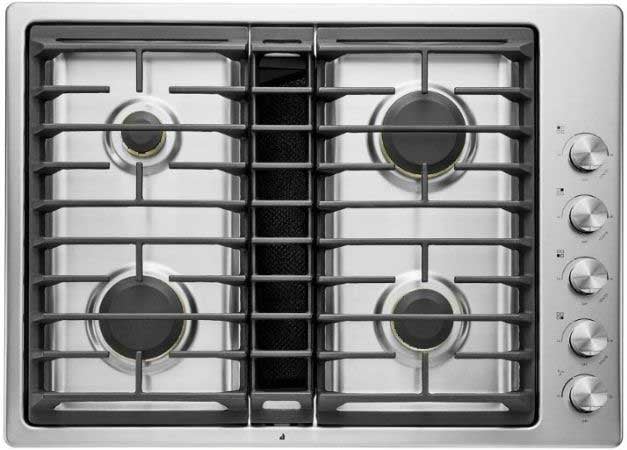
If you need gas plus a built-in downdraft, the JennAir JGD3430GS is the default option. It is the only gas built-in downdraft cooktop in production.
It is a 30-inch gas cooktop with four sealed burners.
The high burner reaches 17,000 BTU, with a 15,000 BTU burner alongside it, so you can sear a steak fast and stir-fry without dropping heat.
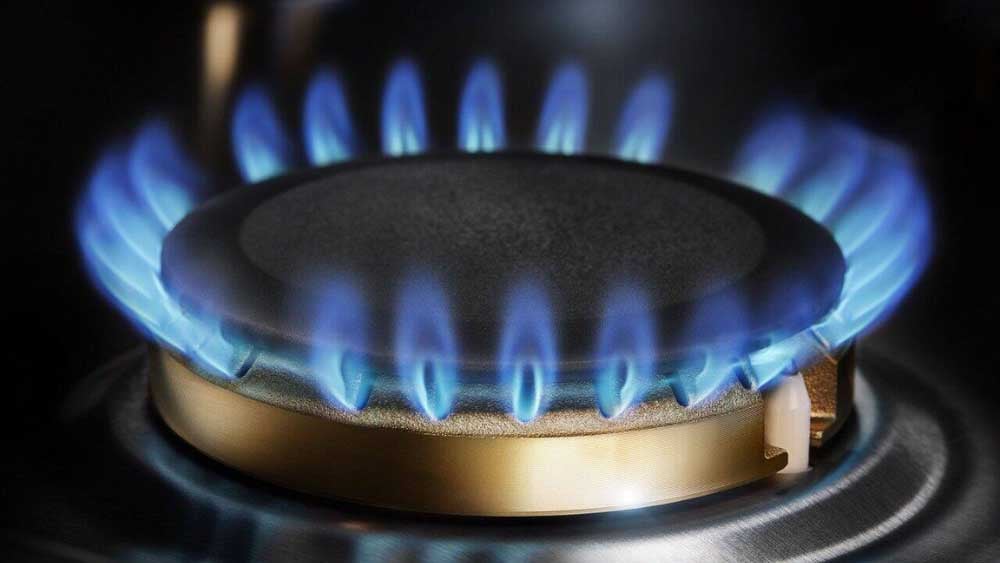
A 5,000 BTU low burner handles melting butter, tempering chocolate, or holding a sauce without scorching it.
The built-in downdraft runs at just over 300 CFM across three speeds. At low to medium heat the system is adequate. Maybe.
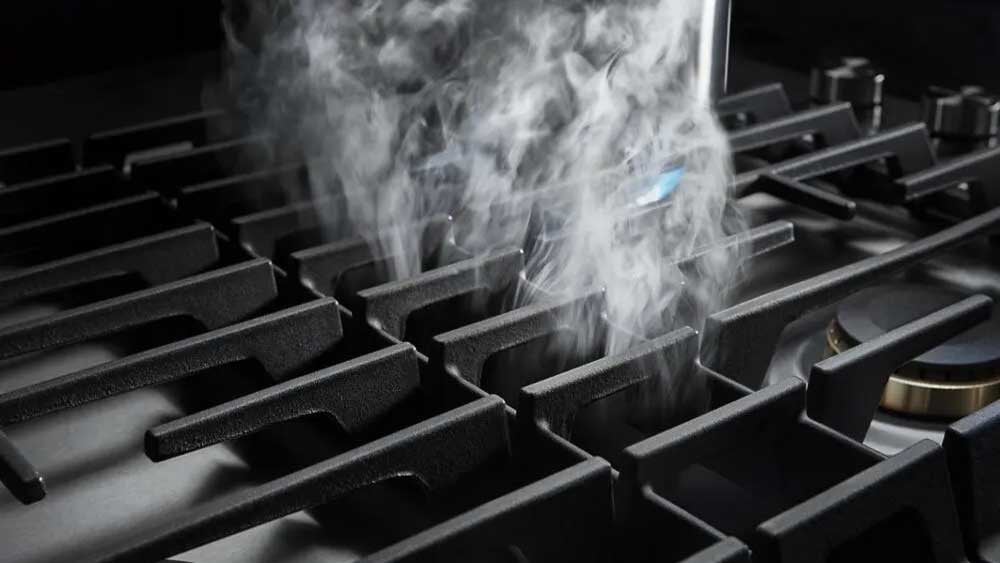
A 36-inch version (JGD3650GS) is also available with five burners and the same vent.
Gas plus a downdraft is the hardest combination for any vent to handle. If you have the choice, induction is the easier partner for a downdraft.
Best For: You need gas plus a built-in downdraft on an island or peninsula.
🔍 Read More: Induction vs. Gas Cooking: The Pros and Many Cons of Both
Best Premium Separate Downdraft: BEST D49M30SB ($2,350+ plus blower)
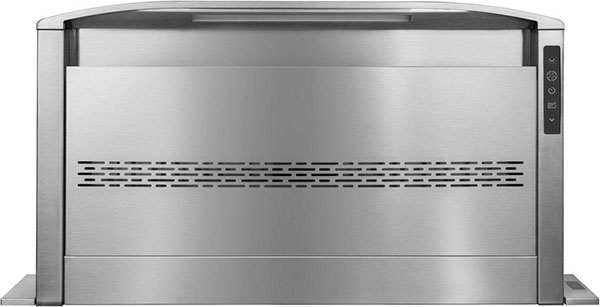
The BEST D49M30SB is the most capable pop-up downdraft we sell. The brand name is BEST, made by Broan.
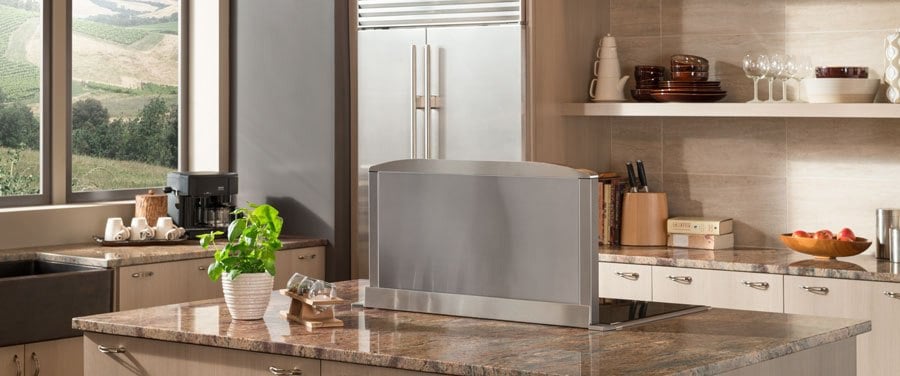
It rises 18 inches above the counter when running. That 18-inch rise gives it a capture area no built-in downdraft can match.
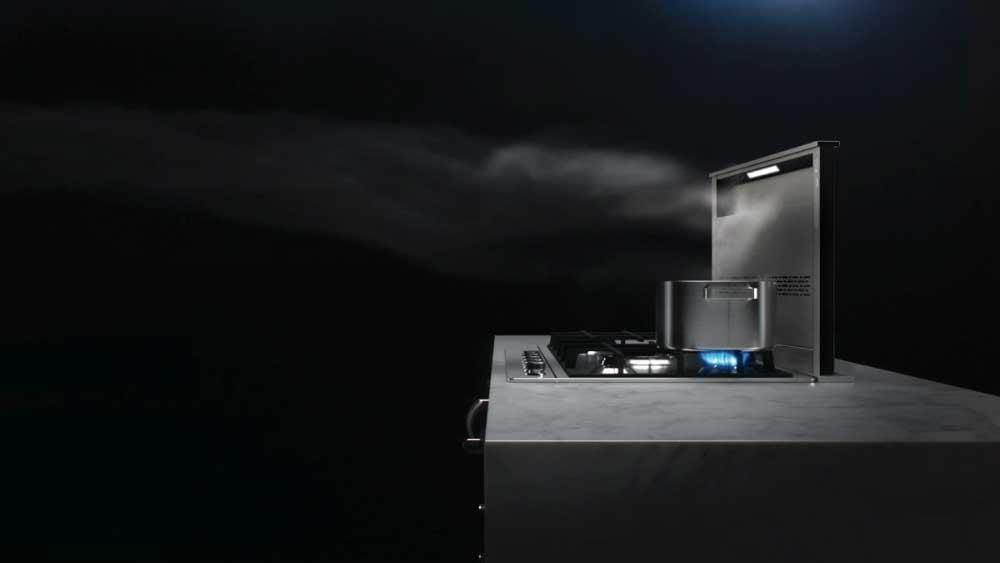
It is available in 30-inch, 36-inch, and 48-inch widths. The internal blower delivers up to 650 CFM.
With the larger EB15 external blower ($1,585 additional), the system reaches 1,650 CFM.
Best For: Open-plan island installs where you want the highest-output separate downdraft paired with the cooktop of your choice.
Best Lower-Cost Separate Downdraft: Broan-NuTone Eclipse 273003 (~$1,500)
Broan-NuTone Eclipse Series Downdraft Range Hood 273003
.jpg?width=376&height=563&name=Broan-NuTone-Eclipse-Series-Downdraft-Range-Hood-273003-(1).jpg)
If the BEST unit is more than you need, the Broan-NuTone Eclipse 273003 cuts the price roughly in half.
It is a 30-inch pop-up downdraft (a 36-inch version, the 273603, is also available) with a 500 CFM internal blower and variable speed control.
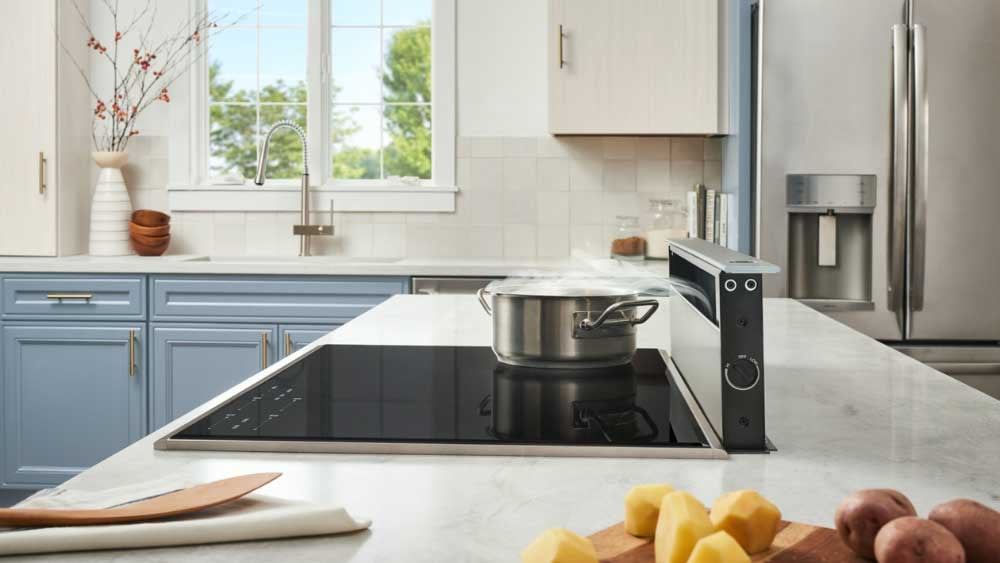
The Eclipse will not match BEST's downdraft on rise height or external blower options.
Best For: A less expensive downdraft with lower output. Right for moderate cooking or a second kitchen.
The Only Downdraft Range in Production in 2026
JennAir JES1750ML ($4,299)
JennAir Rise Electric Downdraft Range JES1750ML
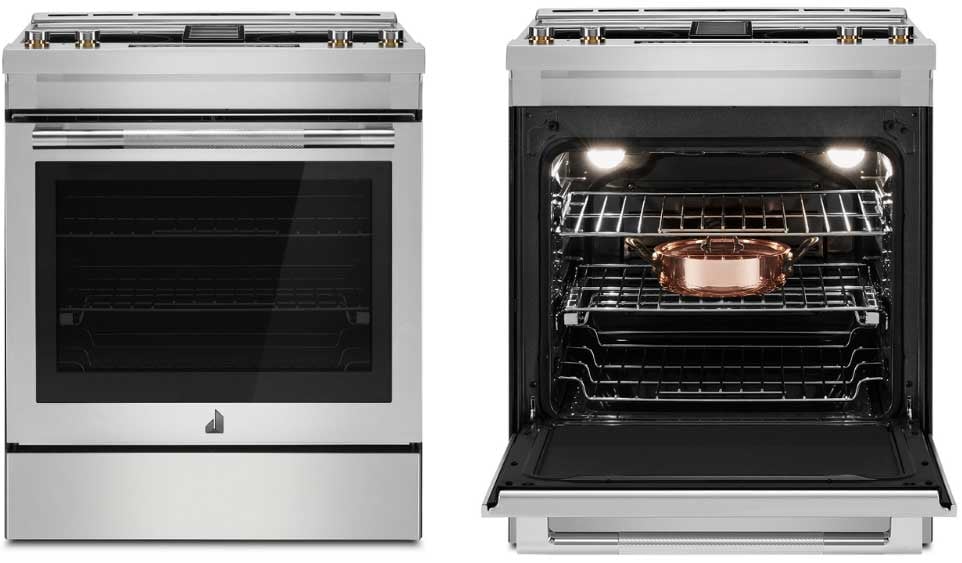
This is a 30-inch slide-in electric range with a built-in downdraft.
The oven is 6.2 cubic feet with convection baking, steam-based self-cleaning, and a smooth-glide rack.
The cooktop has four smoothtop elements, a flat glass surface with the burners underneath.
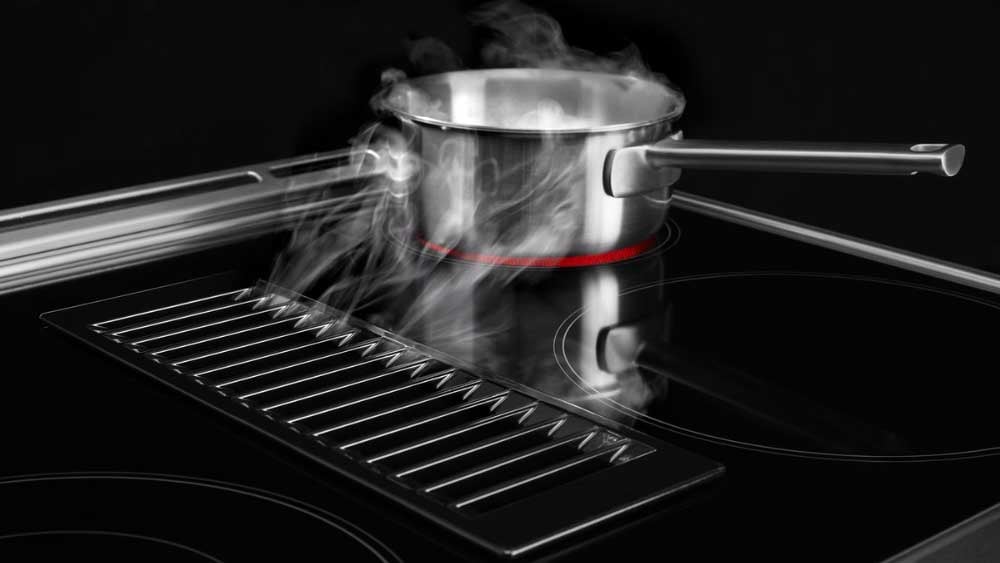
One element switches between 12-inch and 6-inch sizes depending on whether you are using a small pan or a stockpot.
This range is incredibly similar to the revolutionary downdrafts JennAir introduced in the 1980s. I remember those.
Over 40 years later, this range lacks the steam assist, intuitive cooking, and enhanced output of the other luxury ranges.
Not to be harsh, but the revolution is over. Buy this only if you are replacing an early version.
Trade-Offs to Know
At high heat, the vent will lose the fight on front-burner smoke.
There is also no Wi-Fi or smart-control suite, which is unusual at this price.
Best For: You are renovating and replacing an existing downdraft range where re-ducting overhead is not feasible.
Every Downdraft Option for 2026, At a Glance
We go worst-positioned to best: the only downdraft range first, then built-in downdraft cooktops, then the separate pop-up we recommend most.
Why Downdrafts Don't Work in Modern Kitchens
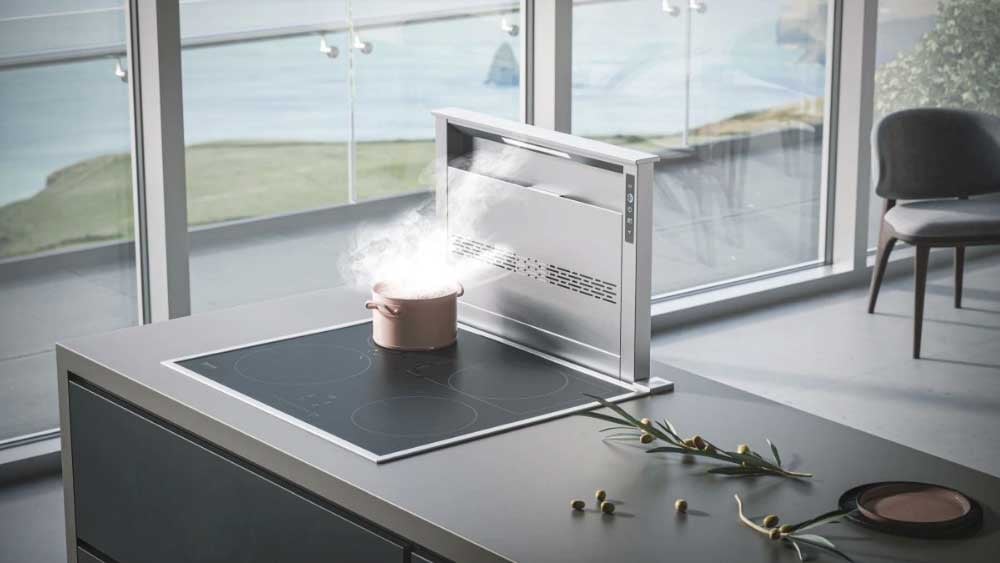
Downdrafts are on my list of appliances you should not buy.
If you are building a new kitchen, buy an overhead hood instead: better performance, better air quality, long-term use.
A downdraft is a last-resort choice for existing construction where a proper hood is not possible.
Here is why it matters. Cooking produces carbon dioxide, carbon monoxide, formaldehyde, and particulate matter.

These are not just smells. They are harmful particles that linger in your home without good ventilation.
Today's homes are sealed tighter than ever, so whatever you cook off stays inside longer.
That is exactly when ventilation has to work, and exactly where a downdraft falls short.
There is a lot to it, and it starts with how venting works. Three things shape how well any downdraft performs:
- CFM (cubic feet per minute) · how much air the vent moves. More is better.
- Capture area · where above the cooktop the vent can actually draw smoke from
- Duct run · how cleanly the exhaust reaches the outside
Read these once and the product sections below will make more sense.
How Venting Works, and Where Downdrafts Fall Short
A downdraft can technically hit a high CFM number. Most run from 330 to 1,500. But CFM alone does not tell the full story.
An overhead hood has a wide capture area because it sits above the rising heat.
A downdraft has almost no capture area because it sits beside the cooktop.
Your front burners do most of the cooking, and they generate most of the smoke. A downdraft sits behind them and pulls sideways.
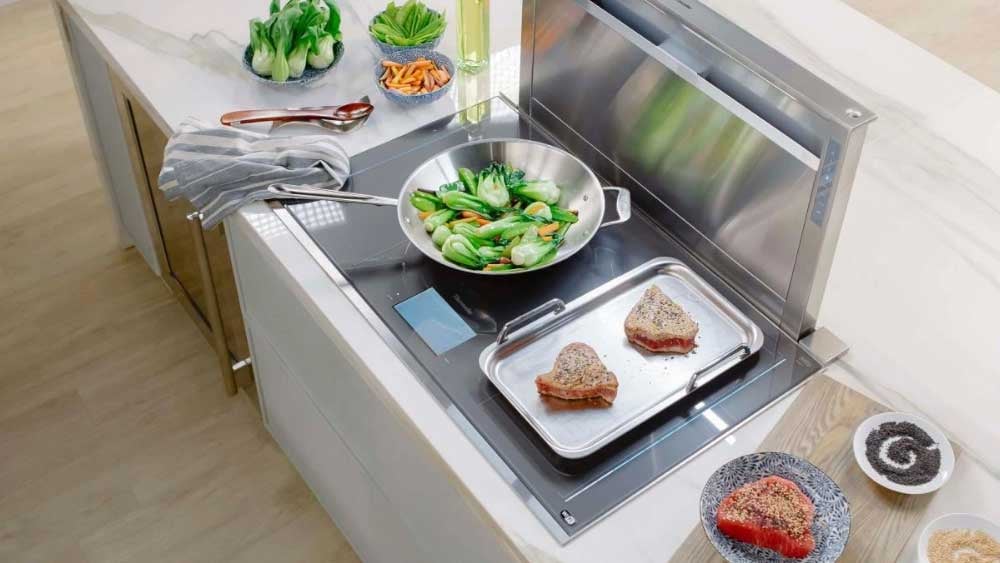
If you are stir-frying on the front burners, that smoke billows right past the downdraft and into your kitchen.
That is why a higher-output blower does not fully solve the problem. The vent is in the wrong place for the smoke.
There is a third strike. A downdraft reverses the natural upward flow of hot air, which forces extra bends and elbows into the ductwork.
Every elbow cuts airflow and efficiency, so even a high-output blower loses ground before the air ever reaches the outside.

If You Must Buy a Downdraft, Buy This: A Separate Pop-Up
Why a Separate Downdraft Beats a Built-In
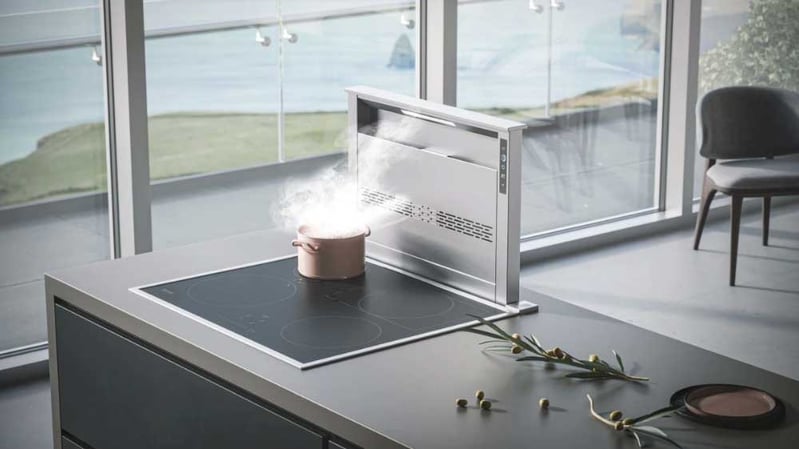
A separate downdraft is more capable. Pop-up units rise 16 to 18 inches above the counter when they run.
That rise gives them a real capture area, which is what every built-in downdraft is missing.
Blower options improve too. Stand-alone downdrafts often support external roof or wall blowers, which deliver higher airflow and run quieter than an internal blower built into a cooktop.
The trade-off is install complexity. You are buying two units, and the installation must coordinate the cooktop, the downdraft, and the ductwork.
What We Actually Recommend: An Overhead Hood
If you are past the design phase or the layout is locked in, skip to the Final Recommendation.
If you are still in the planning phase, here is what to know.
Why an Overhead Hood Beats a Downdraft
A 36-inch overhead hood at 600 CFM will out-capture a 1,000 CFM downdraft. The reason is simple.
Smoke rises. The hood sits above the cooktop where the smoke is already going.
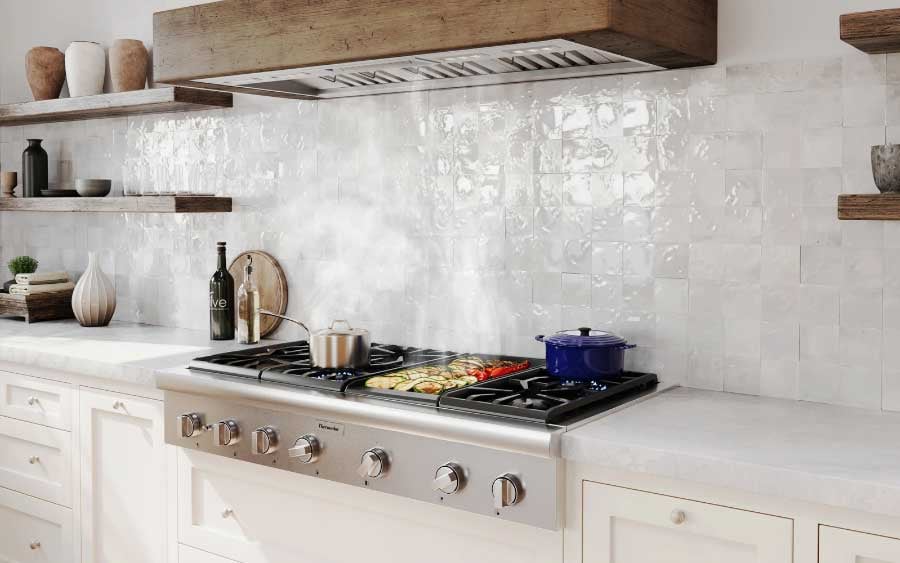
Duct runs are also better. A wall-mounted hood usually vents straight up through the roof or straight back through an exterior wall.
Both routes are short, with no elbows and minimal airflow loss.
Where to Put It: Wall First, Island If You Must
In new construction, don't leave venting to chance. You have two good options, and both beat a downdraft.
First, move the cooktop against an exterior wall and use a wall-mounted hood. This is the stronger performer and the simpler duct run.
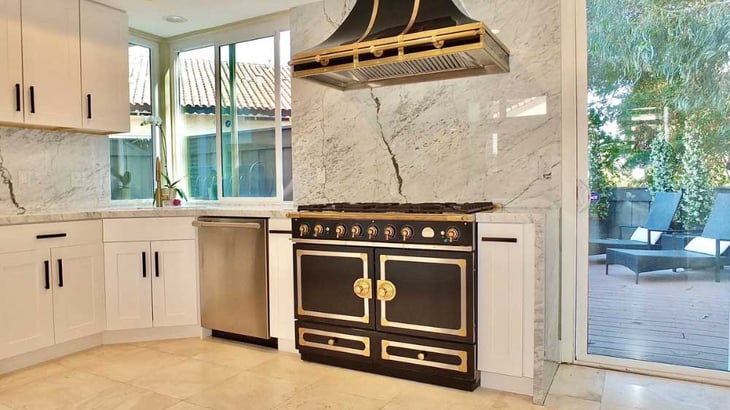
You can wrap the hood in a wood enclosure or order it in stainless or a custom finish to match your kitchen.
Second, if the cooktop has to stay on the island, use an island hood that hangs above it. It still captures rising smoke the way a downdraft never will, though it is a more visible fixture in the room.
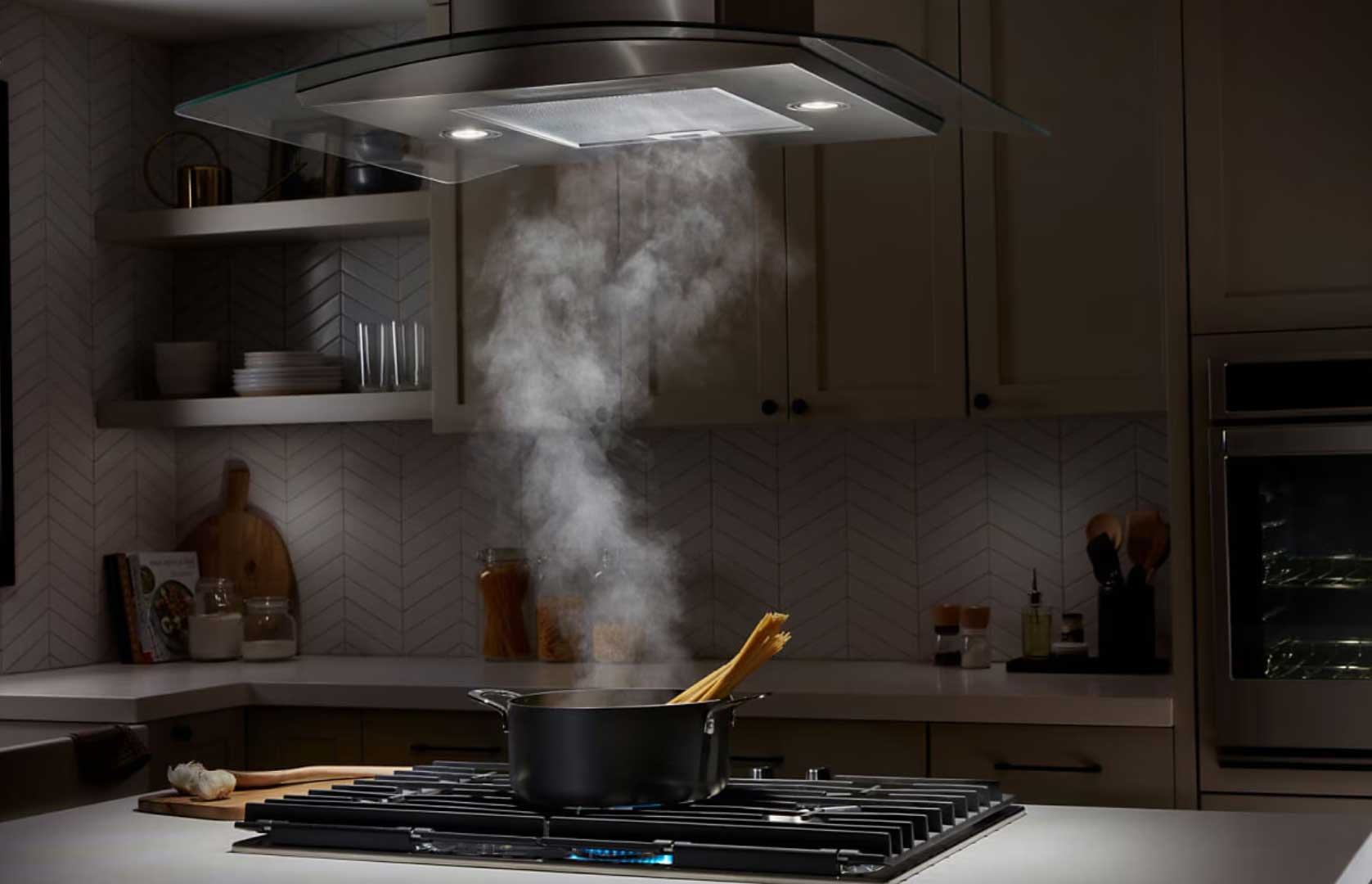
If the island was only for sightlines, ask your designer whether the sink can go there instead. Sinks do not generate smoke. Cooktops do.
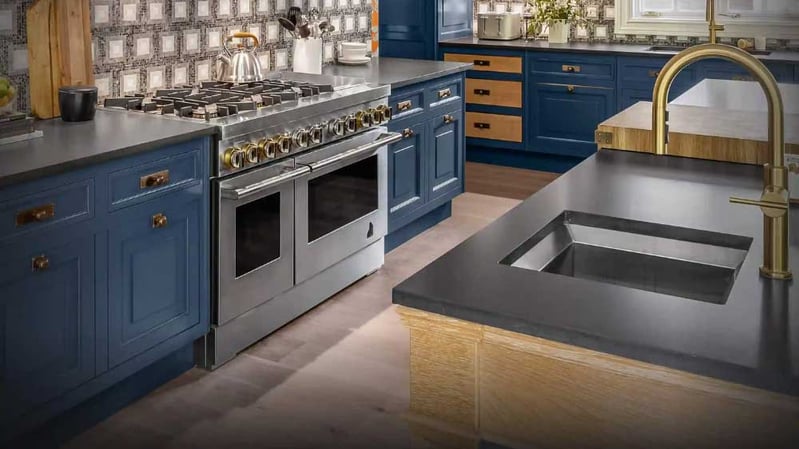
Most downdraft installs we see are kitchens where this swap was never considered. When it is on the table, the result is a much better-ventilated kitchen with no loss of design intent.
🔍 Read More: The Ultimate Guide to Proper Kitchen Ventilation

Final Recommendation
Here is the buying path we recommend for a downdraft in 2026.
-
BEST D49M30SB pop-up downdraft ($2,350+ plus blower). For most kitchens, this is the pick. Install it behind any induction cooktop you choose. The 18-inch rise gives you real capture.
-
Fisher & Paykel CID364DTB4 ($6,949). If you want a built-in unit, this is the best one available. You are paying a premium for the integration and giving up cooktop features in the process.
-
JennAir JES1750ML ($4,299). If you need a downdraft range, this is the only option in production.
-
Broan-NuTone Eclipse 273003 (~$1,500). For a lower budget, pair any 30-inch cooktop with this unit. A real separate downdraft at a lower price.
Remember the warning at the top of this article. If you are still in the planning phase and can move the cooktop against an exterior wall, do it.
An overhead hood will outperform every option above and keep the sightline you were trying to protect.
That is the answer we give in the showroom, and it is the one to build your kitchen around when the layout allows it.

Additional Resources
Download the our Ventilation Buying Guidewith features like ducting, the proper CFM for professional ranges, downdrafts, and much more. Over 1 million people have read a Yale Guide.
Related Articles

Why Should You Trust Us?
It seems that every appliance review has nothing but glowing comments about almost every product, yet you read customer reviews and they are almost universally bad.
We are here to fill in the disconnect. We'll give you the best features, and the drawbacks as well, including reliability based on over 33,000 calls performed by our service team just last year. Our goal is to give you ALL the information so you know what's right for you.
Please consider subscribing or adding to the conversation in the comments below. We appreciate you stopping by.