

You came here to compare induction and electric, and so does almost everyone.
The trouble is that the comparison doesn't quite exist, because induction is electric.
Both plug into the same kind of outlet. Both heat a pan without a flame, the way gas does.
Radiant is the proper name for the regular electric smoothtop you're picturing, and it's what induction is really up against.
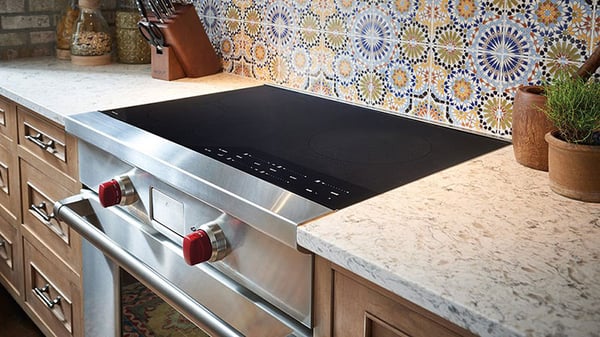
The two often come in the same black glass, from the same manufacturer, in the same footprint, on the same showroom shelf.
The difference sits entirely beneath the surface, and it shows up in how you cook, how fast you boil, how you clean up, how low you can simmer, and whether the upgrade is worth your money.
In this article
What's Actually Different Under the Glass?
The whole difference is how heat reaches your food, and it's worth thirty seconds of physics, because everything else follows from it.
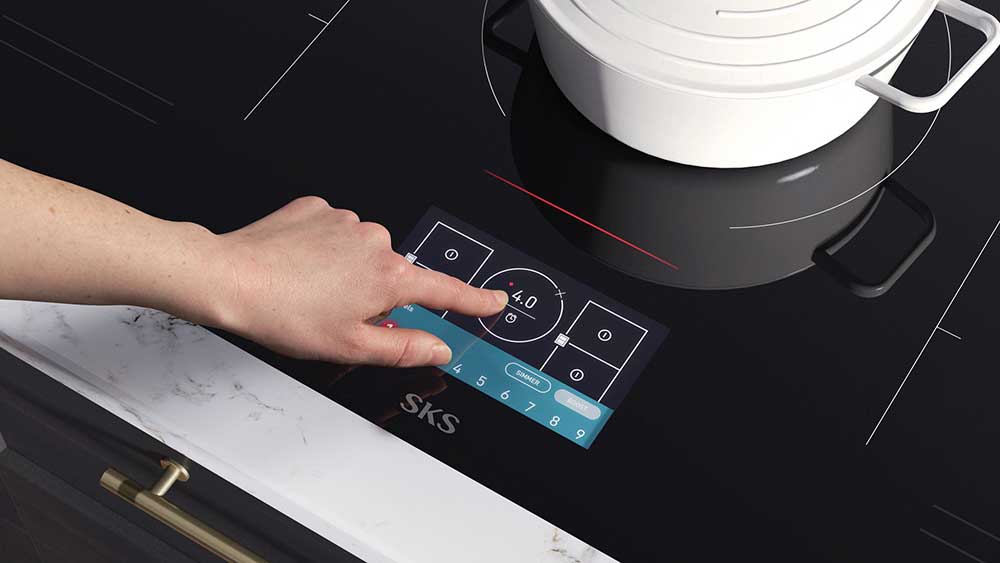
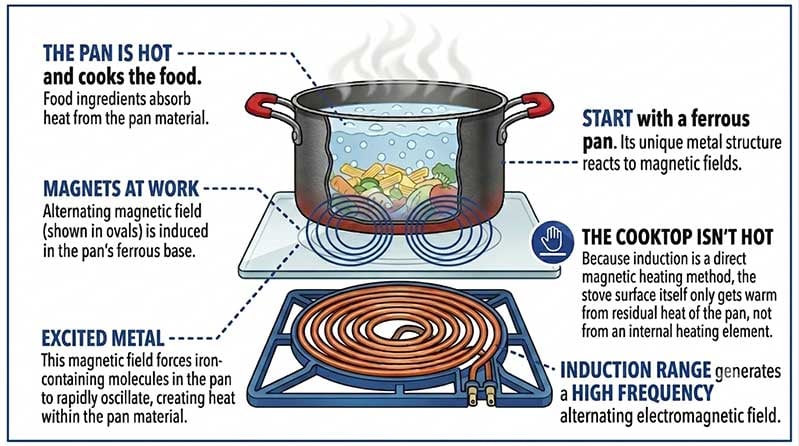
Induction uses magnets. An electromagnetic field excites the metal in your pan, and the pan itself heats up and cooks the food. The cooktop isn't hot. The pan is.
Radiant electric is the old way, and it works as it always has. A coil under the glass heats up, the coil heats the glass, the glass heats the pan, and the pan cooks the food.
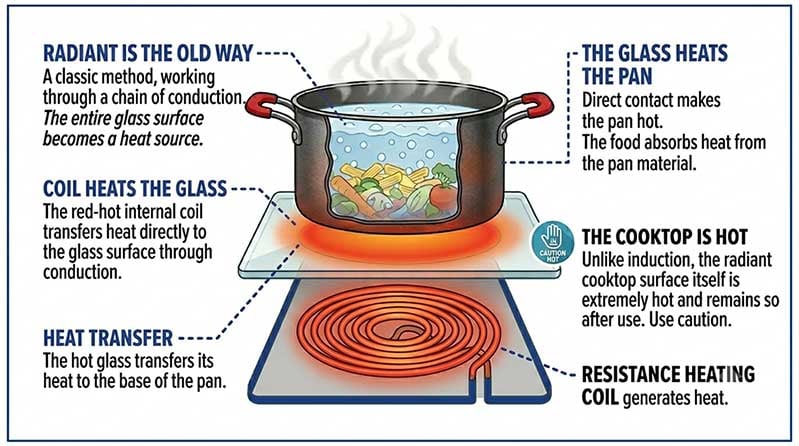
That's four handoffs versus one, and that gap is the entire story.
Which Is Better, Induction or Radiant?
Induction wins on performance. Radiant wins on price and simplicity.
| Induction | Radiant | |
| Boil Speed | Faster than radiant and gas | Slower; heat climbs through the glass first |
| Simmer | Instant response, the standout | Lags; glass and coil keep cooking |
| Cleanup | Cool glass, stains wipe off | Hot glass bakes stains on |
| Child Safety | Surface stays comparatively cool | Glass gets hot and stays hot |
| Price | A couple thousand and up | Around $600 |
| Cookware | Magnetic pans only | Any pan works |
| Repair | More electronics | Simpler, cheaper |
If you cook seriously and want control, choose induction. If you want the lowest price and zero fuss, choose radiant.
Which Boils Faster, Induction or Electric?
Induction puts energy straight into the pan, so you get a faster boil than radiant and even gas. There's no glass to warm up first and no waiting for heat to climb through the coil, then the glass, then the pan before it reaches your water.
The newest induction burners also push far more wattage than they used to, which widens the gap further. There's more on that toward the end.
🔍 Read more: The 3 Fastest Induction Cooktops
Which Cooktop Simmers Better?
Everyone talks about how fast induction boils, but the simmer is the bigger story, and you probably won't expect it.
On induction, you go from a hard boil to a gentle simmer the instant you turn it down. The pan responds immediately, because there's nothing else holding heat.

Radiant can't do that. Turn it down and the coil has to cool, then the glass, then the pan. Your pan keeps cooking while all three slowly come down, which affects whatever you're trying to simmer.

For anything that needs real control (melting chocolate, reducing a sauce, holding a low temperature), induction simmers better than radiant or gas.
Which Is Easier to Clean?
The induction surface doesn't get anywhere near as hot as radiant or gas. It can warm up over time as heat from the pan passes into the glass, but it's never the heat source.

On radiant, the glass itself heats up, and that's what cooks your pan.
So when you spill on radiant, the hot glass bakes the mess on, and it's much harder to clean. On induction, you're usually just wiping a cooler surface.
Is Induction Safer Than Electric?
Induction works by magnetism, and the burner needs a metal pan on it before anything heats up. No pan means no heat.
A child pressing the controls, a hand on the glass, a dish towel falling across it: none of that produces heat on its own.
Now say a pan has been heating and you lift it off with your child right next to the range. It's still harder to get burned, because the glass isn't as hot as an electric or gas surface, though it isn't burn-proof.
A pan that's been cooking has a hot bottom, and the glass underneath picks up that heat over time.
The danger we worry about as parents is a burner left glowing hot by accident, nothing on it, with a curious toddler nearby. On radiant or gas, that happens. On induction, it doesn't.
What Does Our 2025 Service Data Say About Induction?
The story splits in two, and the split matters before you buy.
Induction cooktops are among the most reliable appliances we sell. In 2025, standalone induction cooktops needed service on just 5.0% of units, well below the 8.3% average across every appliance we carry.
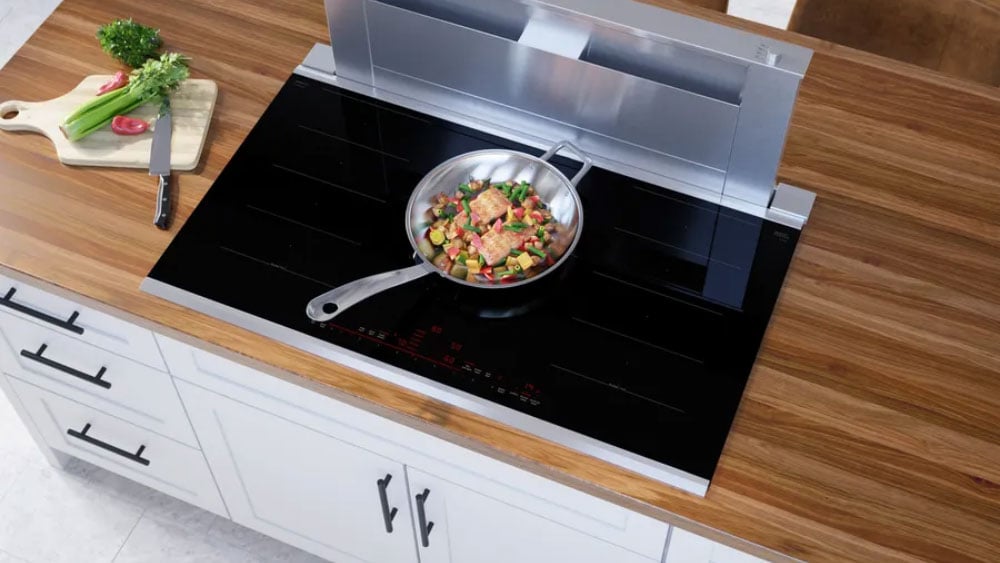
The best are remarkable. Bosch ran a 1.9% first-year service rate, SKS came in at 2.6%, Gaggenau at 2.7%, and Thermador at 3.9%. For a cooktop, that is about as reliable as appliances get.
Induction ranges are a different story, and the reason is the wiring, not the cooking. In 2025, induction ranges needed service on 8.7% of units. Here's how the three compare:
| Appliance (2025) | First-Year Service Rate |
| Induction cooktops | 5.0% |
| Radiant electric ranges | 6.2% |
| Induction ranges | 8.7% |
An induction range pulls up to 50 amps. That heavy draw, combined with the electronics packed into a single appliance, leaves the control board exposed. A power spike or voltage surge can take out the panel, and that's an expensive repair.
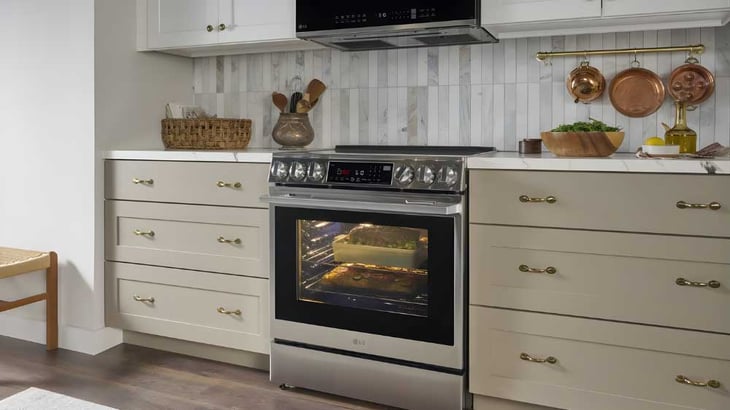
It is rarely the induction cooking that fails. It's the electronics around it.
Where you buy matters as much as what you buy. When a control board goes, you want a dealer who services what they sell, not a phone number that puts you on a list.
🔍 Read the full brand-by-brand breakdown in Most Reliable Induction Cooktops for 2026 and Most Reliable Induction Ranges for 2026.
Still Not Sure Which Induction Brand Is Right for You?
Download the Yale Induction Cooking Buying Guide. It includes brand profiles, the questions to ask before you buy, and the FAQs we hear most on the showroom floor, for both cooktops and ranges.
Over 1 million people have downloaded a Yale guide.

Where Does Electric Still Win?
Induction takes performance, no question. But radiant has three real advantages you should know before you default to induction.
Price Is the Big One
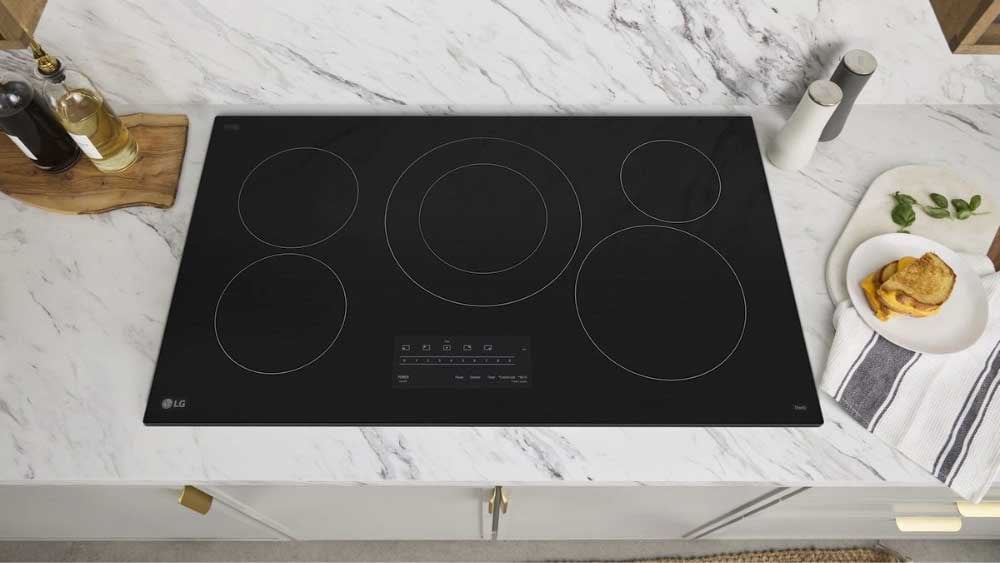
A radiant cooktop runs around $600. A decent induction cooktop is at least double, and for a better brand it's $2,000 and up.
It's the same story on ranges. A good self-cleaning radiant range is around $800. The comparable induction range is $2,000 to $2,500.
If you're comfortable cooking on a radiant stove, saving the money rather than upgrading to induction is a good option.
Your Pans All Work
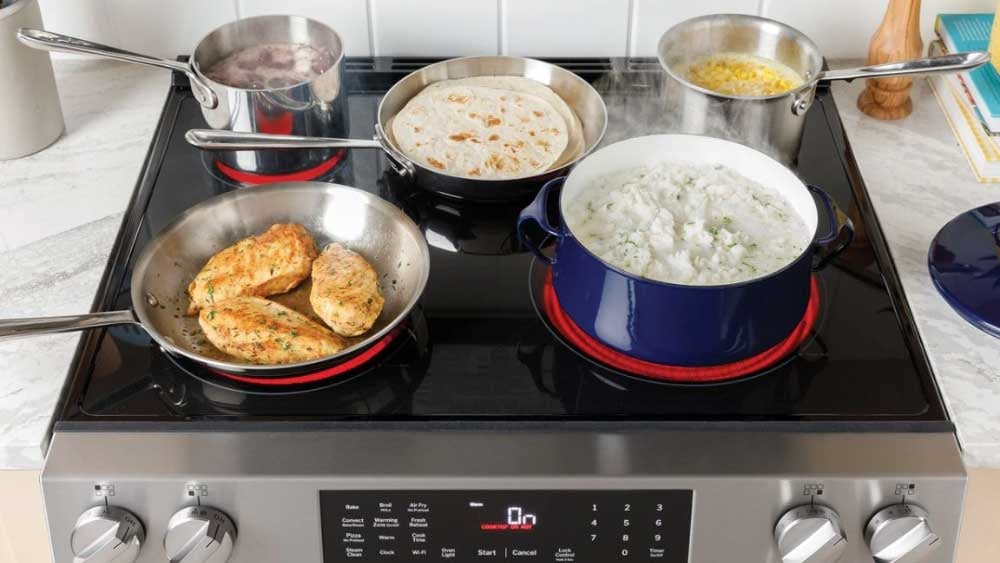
You read a blog like this one, buy an induction range, bring it home, and half your cookware doesn't work. The pans need enough metal to activate the magnets, and a lot of what you own won't.
Radiant heats anything you put on it. The cookware you love stays in the kitchen, while induction can send some of it to the donation box.
It's an Easier Fix
Here's the part the specification sheets skip: we're in an industry where most dealers don't service what they sell.
It's hard enough to get someone to look at a radiant range, and that's a basic repair, because a radiant element is a simple part.
Induction is more complicated. When something goes wrong, getting a standard electric range fixed is easier than getting an induction one fixed.
🔍 Read more: The Most Reliable Electric Ranges
Is Installing Induction a Big Deal?
It depends entirely on what you cook with now.
Coming From Electric, It's Easy
Your electric range already runs on a 240-volt circuit, usually 40 or 50 amps, and induction needs the same thing. Most of the time it's a straight swap: pull the old one, set the new one, plug it in. If your panel needs a small update, that's a minor job, not a project.
Coming From Gas, It's a Real Job
A gas range only plugs into a standard outlet for the igniter, so it has no heavy 240-volt circuit to reuse. Going from gas to induction means running a new 240-volt line from your panel to the kitchen.
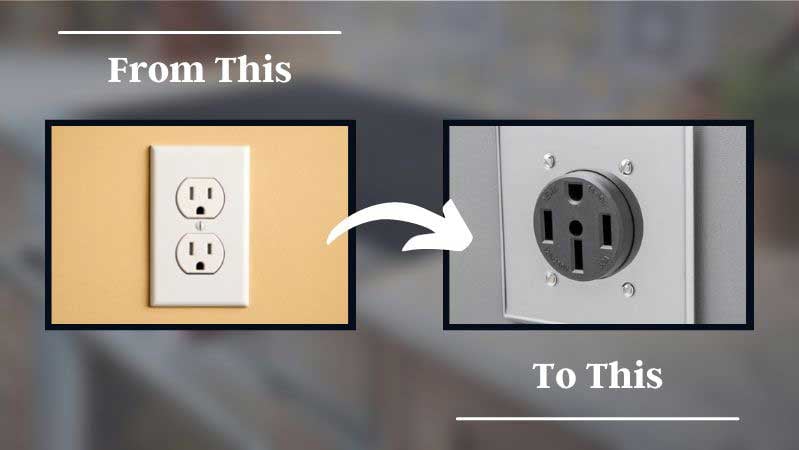
That means an electrician, a permit, and, depending on the distance and your panel, real money.
🔍 Read more: 6 Steps to Convert Your Gas Range to Induction
Need a Stove in a Hurry?
We deliver same day, next day, and within 48 hours, from Worcester to the Cape, Southern New Hampshire, and Rhode Island.

Where Is This All Heading?
Electric is not evolving, and that is not a knock. It is what it has always been: consistent, reliable heat. If that is what you want, radiant will keep doing it for the next twenty years.
Induction is the side that is changing, because it is the technology now replacing gas in kitchens across the country. That shows up in three ways.
Power Keeps Climbing
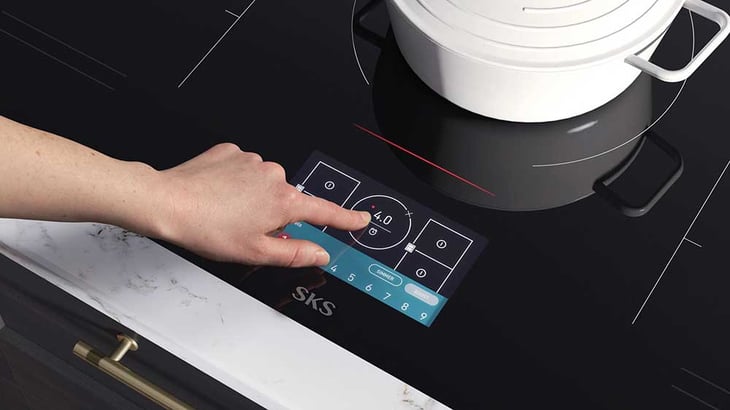
We have been testing this for years. On an older showroom setup, we ran a 3,700-watt induction burner against a commercial-grade gas burner, and induction won.
That was entry-level induction. The high end now is a different conversation. Recently we put a 7,000-watt induction burner against a 23,000 BTU gas burner, one of the most powerful residential gas burners made.
Induction boiled a gallon of water in about three and a half minutes, while the gas burner took roughly thirteen and a half. Induction finished almost ten minutes ahead.
The ratings keep creeping up:
- LG now runs a 4,300-watt element.
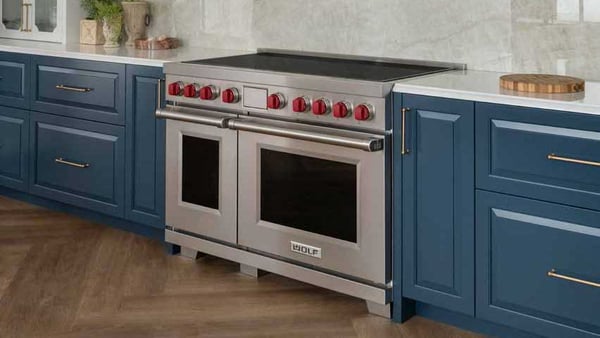
- Wolf and Fisher & Paykel reach 5,500 watts.
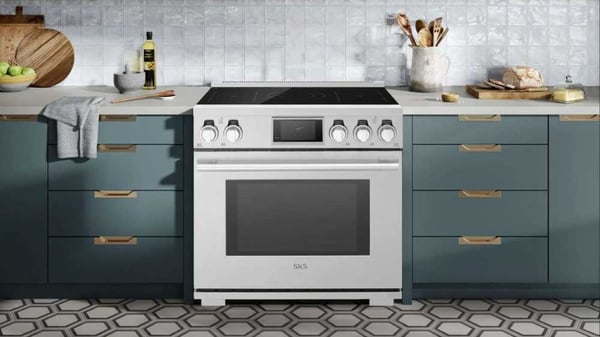
- SKS reaches 7,000 watts.
- BlueStar bridges two zones into a single 7,400-watt cooking area.
- Impulse has a battery-fed element that hits 10,000 watts.
You also get far better griddle and bridge burners. If you cook with an oddly shaped pan or a long griddle, induction now gives you room to work that radiant never offered.
That battery also answers the question that has always haunted electric cooking: what happens when the power goes out? A standard induction or radiant cooktop dies in an outage, but the Impulse keeps cooking on its battery.
The Brands Tell the Same Story
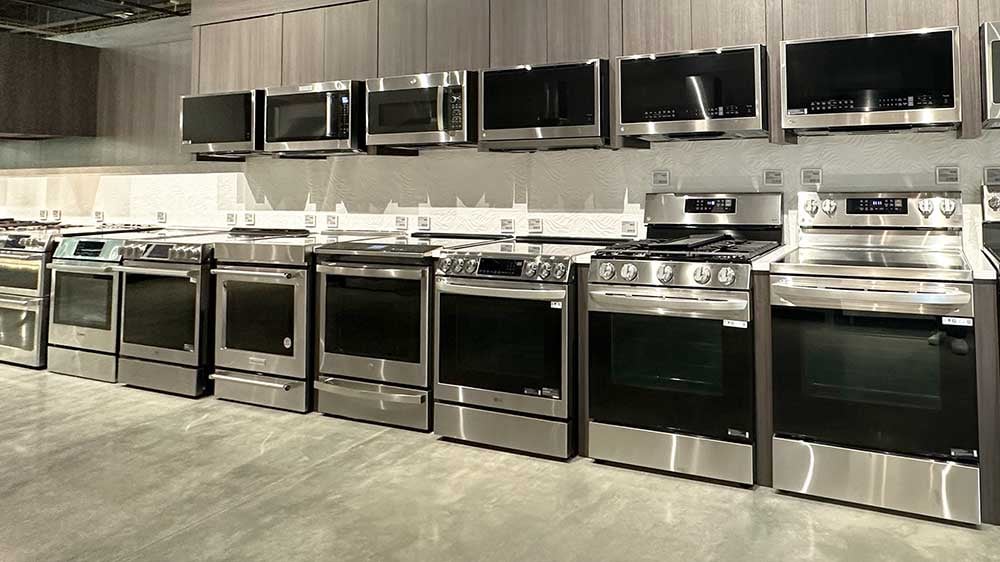
The radiant names have stayed the same: LG, Samsung, GE, and Frigidaire. They all make induction too. But the innovative brands (Wolf, Miele, BlueStar, SKS, and Impulse) build induction only. The serious cooking is happening on the induction side, and that's where the brands are putting their effort.
Induction Also Comes in Sizes Radiant Never Offered
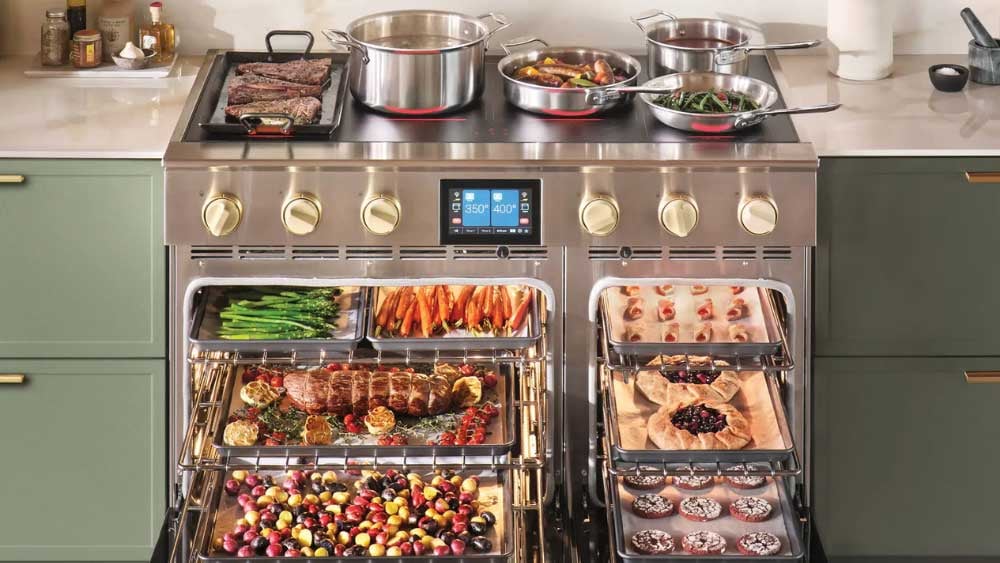
Radiant is a 30-inch appliance, and it always has been. Induction comes in 30, 36, and 48 inches, so it fits the kind of kitchen you're probably planning.
So the real divide is simple. Induction is heading toward more power, more technology, and more capability every year. Radiant is staying where it is, which makes it the value choice. Neither is wrong, but they're moving in different directions, and the direction matters for a kitchen you intend to keep.
🔍 Read more: The Best Induction Ranges for 2026
See Induction in Action
Reading about a simmer isn't the same as watching one respond.
Stop into any of our six showrooms: Boston, Framingham, Hanover, Norton, Hyannis, or Nantucket. Or if you'd rather have someone ready and waiting for you, book a showroom consultation, and we'll be expecting you.

Additional Resources
Read our Induction Cooking Buying Guide for features, buying tips, and ratings of every available induction cooking product in the market. Well over 1 million people have read a Yale Guide. Induction is our most popular.
Related Articles:

Why Should You Trust Us?
It seems that every appliance review has nothing but glowing comments about almost every product, yet you read customer reviews and they are almost universally bad.
We are here to fill in the disconnect. We'll give you the best features, and the drawbacks as well, including reliability based on over 33,000 calls performed by our service team just last year. Our goal is to give you ALL the information so you know what's right for you.
Please consider subscribing or adding to the conversation in the comments below. We appreciate you stopping by.