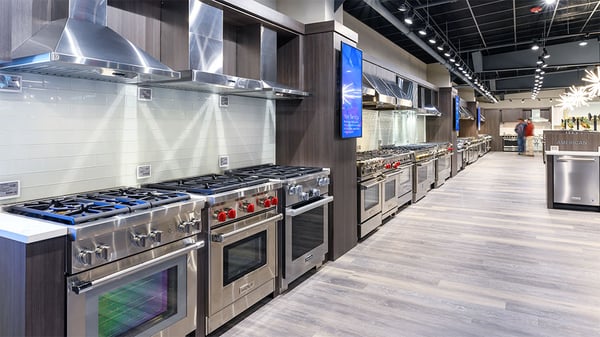

4 Appliance Brands in Decline for 2026: Maytag, Dacor, JennAir, and Viking
September 29th, 2026 | 21 min. read
The Short Version
Maytag, Dacor, JennAir, and Viking all led their categories once, and three of them still cost what genuinely good brands cost. Maytag is now a rebadged Whirlpool. Much of Dacor is Samsung engineering. JennAir has had one meaningful update in twenty years. Viking is the only one with a real path back, under new ownership since February 2026.
Four Brands Living on Old Reputations
You are probably considering one of these four brands for your next kitchen, not knowing that their best days are well behind them.
The first has not been independent in twenty years. It is the saddest business story I have encountered: a once-great company reduced to a label.
Maybe a designer suggested one of them. Maybe you remember the name from your parents' house.
These four brands are trading on reputations they earned decades ago, and in three cases you are paying luxury money for it.
Two of them anchor this article. Viking and Dacor are the clearest cases, because each had a specific product failure that cost it the category.
Here is what you'll learn:
- What actually happened to Maytag, and why the badge is all that is left
- Why Dacor's original engineering stopped mattering
- How JennAir spent twenty years standing still
- Where Viking fell behind, and why its new owners change the math
- The innovation problem all four of them share
- What to buy instead, and the one mistake that ruins a luxury kitchen
- Whether a declining brand can ever come back, and the one that already did
The Four Brands at a Glance
| Category | Maytag | Dacor | JennAir | Viking |
|---|---|---|---|---|
| What it led | Laundry durability | Wall ovens and dual fuel | Downdraft cooking | Professional ranges |
| What changed | Sold to Whirlpool, 2006 | Bought by Samsung | Shelved for twelve years | Stopped improving |
| Owner now | Whirlpool | Samsung | Whirlpool | Composition Brands |
| Still does well | Nothing. It is a rebadged Whirlpool. | Infrared gas broiler | Culinary center | Colors and name recognition |
| Do we sell it | ✗ | ✗ | ✗ | ✗ |
| Buy instead | LG or Speed Queen | Wolf or BlueStar | Wolf or Thermador | Wolf, BlueStar, or Miele |
4 Appliance Brands in Decline for 2026
Three of the four below are luxury brands, and that matters more than anything else in this article. A declining value brand is a bargain. A declining luxury brand charges you the same price a genuinely good brand charges.
Maytag Washers, Dryers, and Dishwashers
⚡ Quick Answer: Maytag today is a Whirlpool product with a Maytag badge. The company that earned the "never needing repair" reputation was sold to Whirlpool in 2006, and the engineering that built that name went with it.
Maytag was the best manufacturer I ever did business with at Yale Appliance.
I grew up in Needham, and my parents had a set of Maytag washers and dryers that lasted close to twenty years.
When I started selling appliances in 1986, the "never needing repair" line held up.
The products were solid rather than spectacular, which was exactly right. Nobody needs a spectacular washer. You need one that washes consistently for years.
All of it was built, designed, and engineered in Newton, Iowa.
The dishwasher loaded plates on the top rack and still got everything clean, driven by three full spray arms.
Even their disposers could seemingly chop through nails.
The Maytag Neptune and the Mold You Could Not Reach
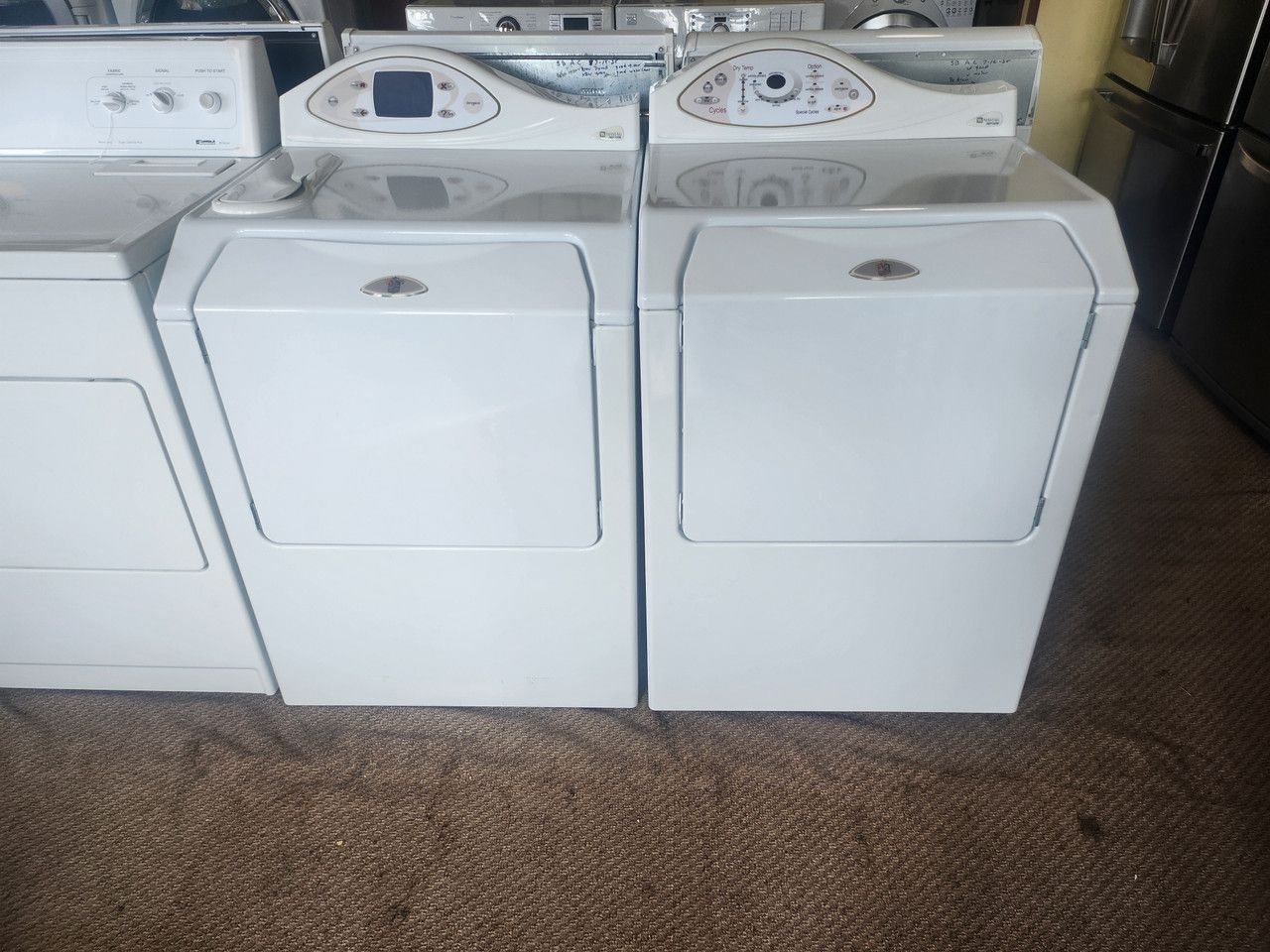
A change in leadership brought a change in direction, and the result was the worst product ever introduced in this industry.
The Maytag Neptune was the first front-load washer to go mainstream in the United States. The tub was slanted, which genuinely made it easier to load.
The problem was a gap between the drums that collected water, and standing water in a sealed cavity creates mold.
You could not clean it, because you could not reach the water.
Most of the mold complaints people still attach to front-load washers trace back to that machine.
Modern machines are now gasketed and sealed to prevent that issue. Mold now stems from standing water in the front gasket.
I have run front-load washers from Electrolux, Miele, and Maytag for twenty years with no mold. I wipe the gasket and leave the door open between washes.
The Neptune was not the only failing product of that era.
There was a three-in-one range that would not fit a standard cabinet opening, and a "Wide-By-Side" refrigerator that should have been designed as a French door.
What Happened to Newton, Iowa
By 2006 the company was worth a fraction of what it had been ten years earlier, and Whirlpool bought it.
What happened to the town and the people is sadder still. Maytag was the employer in Newton, Iowa, and Newton was a thriving union town.
After they left, it became almost a ghost town.
Today a Maytag is just a Whirlpool machine with a Maytag badge on it.
Buy instead: LG front-load washers run a 2.7% first-year service rate, the lowest in the category and well under our 8.3% overall appliance average. Our most reliable appliance brands report has the full table.

Dacor Dishwashers and Dual Fuel Ranges
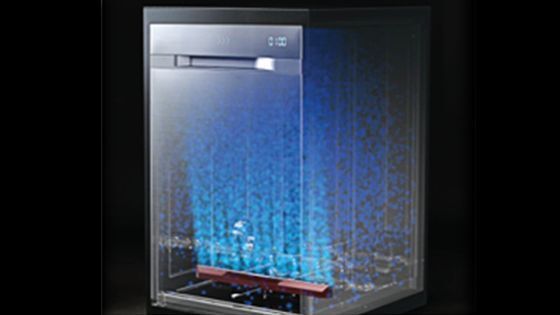
⚡ Quick Answer: Dacor's dishwasher is the clearest measure of what the brand lost. It used to engineer its own, and the WaterWall it sells today is a Samsung with a Dacor badge. The refrigeration went the same way after Samsung acquired the company.

Start with the dishwasher, because nothing shows the decline more plainly.
Dacor built its own European-style dishwasher for years. The one you buy now is a Samsung wearing a Dacor badge, and the WaterWall name came with it.
That is the whole story of this brand in one appliance. The engineering that made Dacor worth paying for is not Dacor's anymore.
Dacor deserves more credit than it gets for what came before.
The first 30-inch wall oven was a Dacor design, and so was the first pure convection oven.
For years they operated as an independent company out of California. They built genuinely original products rather than variations on somebody else's.
The Dual Fuel Range Nobody Has Copied Since
Dacor built the first true dual fuel range, and they built it in a way nobody does today. They paired an electric convection oven with an infrared gas broiler.
That infrared gas broiler is still better than the electric broiler in almost every dual fuel range sold today. It remains the most interesting thing the brand ever marketed.
They made unusual choices elsewhere too. Instead of cramming eight burners onto a 48-inch range, they gave you six, so larger pots fit between them more easily.
What Samsung Ownership Changed
Dacor's problem was not the products. It was everything happening around them.
Thermador, Miele, BlueStar, and above all Wolf kept getting better through the same period.
Wolf built the best dual fuel oven in the category. Miele added automatic cooking controls where you select the food, enter the weight, and press start.
BlueStar pushed output to 25,000 BTU with a thousand color options.
A smaller independent could not fund that pace, and Samsung bought them.
Since then the distinctive engineering has thinned out. The triple cooling and much of the refrigeration technology is Samsung's, wearing a Dacor badge. The WaterWall dishwasher is a Samsung.
The ranges are still unique, and I will not pretend otherwise. The difficulty is that Dacor now asks luxury money without a clear reason to choose it over a better-known brand that has kept investing.
Buy instead: Wolf for oven performance and versatility, or BlueStar if the appeal was Dacor's willingness to build something unusual.
BlueStar offers roughly a thousand colors, six trim packages, and both open and sealed burners. That is the closest thing on the market to Dacor's old spirit.
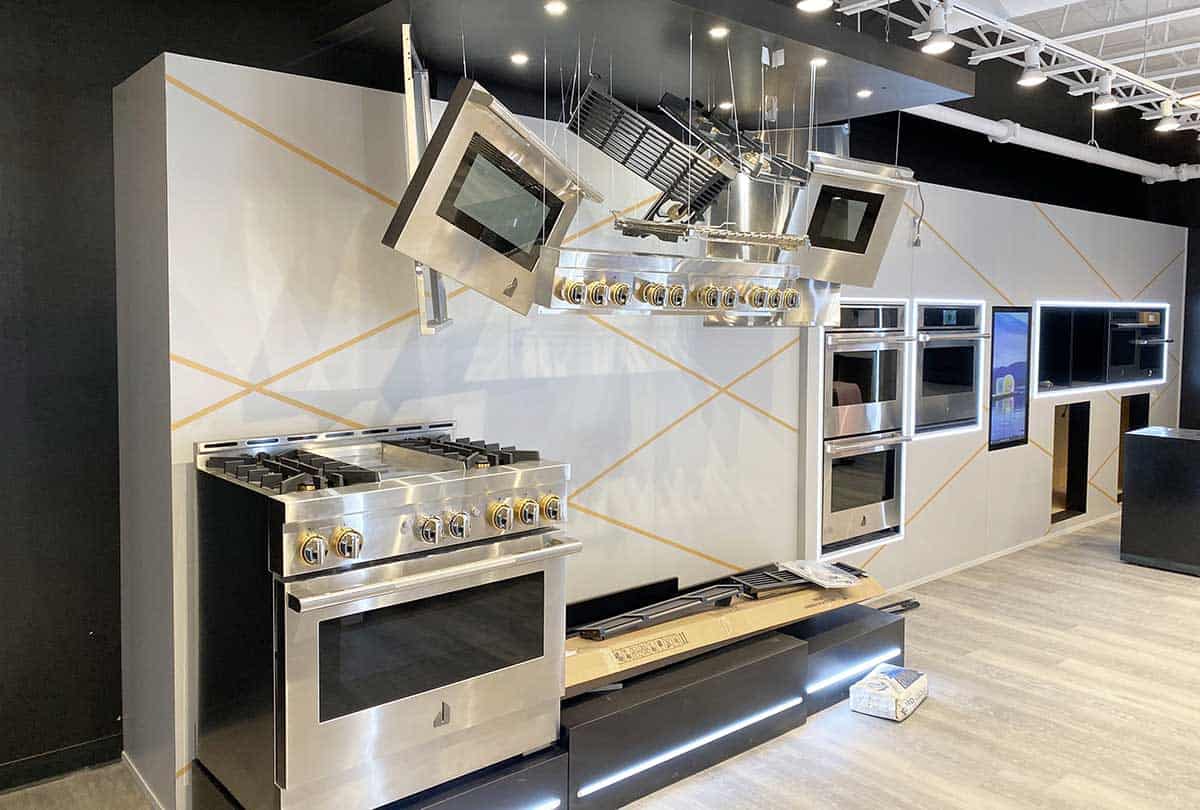
JennAir Ranges and Wall Ovens
⚡ Quick Answer: JennAir has received one meaningful update in twenty years. Maytag owned the brand while it was fighting the Neptune fallout. Whirlpool then left it dormant from 2006 until a 2018 relaunch, and that relaunch is now eight years old.
If you wanted a high-end kitchen in 1986, there were two names: Thermador and JennAir.
JennAir's claim to fame was the downdraft range. You could put a cooktop almost anywhere, including an island, without designing a hood into the room.
It also came loaded. You could add an electric griddle, spare burners, a fryer, and even a set of induction burners for $495, which was remarkable at the time. It was the Swiss Army knife of ranges.
The Downdraft That Never Vented Well
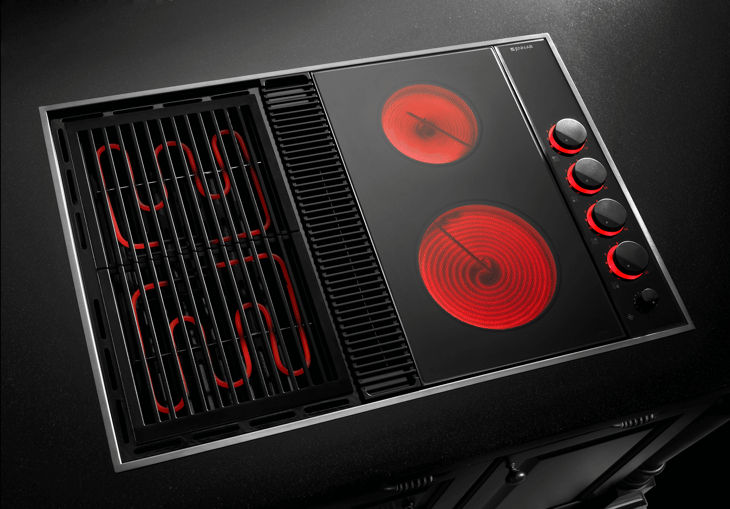
Then came the Expressions series. The cooktop looked clean and sat beautifully in a kitchen.
It never vented well, and venting was the entire reason the brand existed.
Maytag owned JennAir by that point, and Maytag was busy fighting the Neptune fire described above. JennAir got ignored.
Whirlpool bought Maytag in 2006, and JennAir didn't relaunch until 2018. That is twelve years of nothing.
The relaunch of the wall oven and pro range was real, and both were competitive when they arrived. That launch is now eight years old. Twenty years, one update.
Meanwhile BlueStar, Wolf, and Thermador kept moving.
The gap shows up in details you only notice after you own the thing. JennAir and Viking both use chromium-plated griddles, while SKS uses solid chromium.
Those wear very differently over years of use. On the refrigeration side, the obsidian interior is styling rather than substance.
To be fair, JennAir is not a bad product, and we graded it a strong B this year. The culinary center is a genuinely good idea. It shows you what medium rare actually looks like, so you choose a result instead of a temperature.
Today, we're talk about best wall ovens. Are we doing just conventional wall ovens, steam or speed or any of that stuff? Okay. What do we get first? Let's start with Miele first. I really like Miele. I like all their wall ovens. I love their steam oven a lot because you can cook, you can a whole meal, so it ends at the same time because they prompt you. What I like about their wall ovens is you can add moisture. Now, most of what people buy is electric, great for baking, very even. But if you're roasting, it's not so good. You're drying stuff out. With those dry hams and turkeys, it's not what you're looking for. So Miele allows you to add some moisture to it. So you're actually cooking on the roast side a lot better than you would in just straight dry heat. And it's so intuitive. I love their controls. I love their presets. You hit a button, gives you time, temperature, adds moisture. There's automatic modes for whatever it is you want to cook. I think it's a great oven. Yeah, the MasterChef is great. Just so easy to use. I mean, such an intuitive touchscreen. Like you said, so many great features there too. And just convenience like a wireless temperature probe, being able to leave the racks in there for self cleaning. It's a very convenient oven, everything from cooking to maintenance. They've really done a nice job with that oven. Yeah. What do think as a ranking there? Oh, I'd say it's an A. I'd say an A too. Certainly going to sit at the higher end of a price point, but absolutely definitely an A there. Let's go to BlueStar next. Every wall oven is almost universally electric for whatever reason. And I don't understand, gas is moisture better for roasting. And you've got an infrared broiler, which is the same as that sear element on that high end grill. If you broil or roast, a gas oven is what you want and you got less amperage, it's only twelve amp. I like BlueStar because it's a thousand different colors. You have the fifteen thousand BTU boil on it. If you roast, it's great. Where it lacks has none of the intuitive controls we just talked about, Miele. Not a lick of it. It's got single convection, but you get a thousand colors and six trims. So it's really a unique piece. Everyone gets stainless steel, but seventy five percent of our customers get a color than stainless when they buy BlueStar. So there's some value in that. The downside too is if you see it, I think they need to redesign it. It's too boxy. It sticks out too far from the And the corollary is if you like to bake, gas is not as consistent. So you're not baking as well on gas as you would in electric. So for that, think for uniqueness, it's an S. And even in their electric versions, the way they have some controls, it certainly doesn't give you anywhere near the guided cooking. It's very minimal electronic controls there. Some unique features too, like the French door wall oven is nice, Easy to access, being able to get inside and in and out of the oven. And if you get an island like like here, you're not if you're walking past between the wall of an island, you don't have to dodge a door going down. That's why it's so popular commercially. There's a lot going out there, but if you like to bake and you want something a little more streamlined, this probably isn't the well oven for you. I'd give it a good B. Absolutely. Next, let's talk about Gaggenau. They've just launched their new expressive series. Yeah, we used it. We cooked in it. Wow, that is a good oven. That is probably the best oven to cook. They have nine modes. They have a new control, single control dial, and then umpteened hundreds of options. So you can really cook anything. You can control the heat between top, bottom, fan, for any type of food group you can do. The rotisserie really We use the rotisserie with two chickens and some vegetables underneath it. This is fantastic. And the nice thing about this is the look. It's like everything you're going to buy is like some kind of combination of stainless and black, unless you buy a color. But this is completely different. It's mirrored glass with industrial stainless. It's a beautiful oven, really beautiful. Problem is that it's only a single oven and it's thirteen thousand dollars But in terms of function, this is the best well oven we sell. For value, probably a B, but for function, this is an S. Yeah, certainly a big upgrade in controls from their previous four hundred series. They have some of that intuitive guided cooking there, not quite to the level ease of use of maybe like a Mieleor a Wolf, like we're gonna talk about as well, but certainly have upgraded that from where they were before. But if you definitely like to get into the cooking process and you're looking for precise cooking, like you said, with the bake and the broil elements, and then in the steam ovens, really being able to have that precise I seem to in grade two. Truly unbelievable and really gives you the most precise cooking of any oven we carry, no question. What do you think? It's really an S wall oven. Certainly for the price, maybe I'd say an A just because of price point, but certainly I'd say an A. Yeah. S if you're looking for the best wall oven regardless of price. Let's talk Wolf next. I have them in my house. I have the steam oven over a single oven, which I recommend. Steam's great. The reheat function's super simple. It's got the gourmet that figures everything out. On the oven, you tell it when to cook, and it figures out time temperature rack position. And I love their convection system. It's twin like Miele, they got extended elements. So really big is great, top to bottom. I like this wall oven. I mean, I have it. It's great. Steam oven's good. I think Miele with that menu cook, where you get everything finished at the same time might be slightly better, but this is a good wall oven too. Absolutely. And really what I like with Wolf too is like they give you, like a lot of brands do, but they give you three distinct designs, but they're all featured the exact same way. So you can kind of get that professional look with more of the bulky handle and knobs, a transitional with a slim handle and no knobs, or truly contemporary with just the kind of a push to open, but they all give you that all those same features. The convection is awesome, like you said, and it gives you a little bit of a deeper oven too. It's kind of concave in the back. So you have a little bit more room there. And what I like about their steam oven too is, you see some bigger ones with like, with the Miele, how they have a kind of a taller steam oven, but Wolf's is the widest steam oven. So really, as far as wide pans, you can fit a lot in there, even though it looks a little shorter than maybe some of the others. What do you think? I'd probably go an S with Wolf. What do you think? I like the gagging a little better, but the value is better on Wolf. I would say A or S. All right, next one. Let's go with Viking. Viking was the original French store company. They were owned by a commercial company, Middleby, who kind of spun them off into their own kind of brands. But I don't see a lot from them in terms of steam, speed. The Walvin is just it's got the large convection fan. I think that's good. They've got the French door, which is good, kind of pricey for what it is. Good name, some color, seventeen different colors, but we don't sell it. So I don't have any insight into reliability. This is a good B, I would say. What about you? I'd probably agree there. And you know, the fact that we don't sell it, we don't see a lot of the back end in service. And that's obviously a huge part of all of these as well, is being able to fix it in service. Because as much as we love all these products at times, you got to make sure you can fix it and none of them are perfect. So how about Monogram next? Monogram makes two of the best wall ovens we sell that nobody really considers. And I never really thought about it until our chef started, but the Advantium five in-one oven, you get speed ovens by any brand, but what makes this different, and it's actually less expensive on the Advantium side, is it's got the halogen. And halogen is a very hot light bulb, so it's good for crisping. So that five in-one Advantium is great. Now you could buy it in the monogram name or any other names, but that's a really good oven to buy. It's not expensive. The other one is the hearth oven. That hearth makes pizza in two minutes. That's really cool. Goes up to thirteen hundred degrees, so you can really crisp food, make desserts in it. It's got a really good interface to it, So I like those two. The Walbens don't strike me as, you know, a stylistic point of view, they're nice, but they're nothing overwhelming from a technology that can help you standpoint the way Miele or Wolf is. But for those two products, they're actually an S. The rest of the line, would say is a B. I'd give Monogram a B. What do think? Yeah, would agree there. They have that precision cooking in their ovens, which gives you some of the guided cooking, but certainly nothing to the level of what we've talked about already and nothing that really makes them stand apart. The hearth oven is really cool. Like I said, you can do so many different things with it that a lot of people don't think of. You mentioned obviously pizza, the dessert, sticking a cast iron pan in there for skillets and things like that. You can really do a lot there. And I think that's really untapped. And certainly the speed oven. Yeah, absolutely. Very unique there. No question. The most unique speed oven on the market. What do you think? I agree that I think their wall ovens are a B, I think an A with their speed ovens. The hearth is just so unique, I would absolutely give it an A just because it's really their own. So what's a total grade, do you think? Probably, I'd it a low A. High B, low A. Nah, I can live with that. How about SKS next? This is a really interesting brand. You got steam assist and speed in the same oven, although you can buy it in Well, you can't buy it in studio. It's not around anymore. Will be signature, but yeah. They make technology simple. I don't have a problem with their steam ovens being plumbed because my Wolf is plumbed. I think it's very intuitive. I like the company a lot. It gets a three year warranty. I haven't played around with it in a while. I don't think it's as intuitive as a Miele. Single convection. I think there's only going to be a few companies in the luxury market next ten years. I'm willing to bet that they're one of them. Yeah, and they really do a good job with their speed oven and adding that kind of burst of steam into the regular wall oven as well. And it's easy to use. It has the reservoir there that you fill and it just gives you that little bit of moisture so you're not drying out. So it's not gonna be a full steam oven, but for the value too, it does give you a lot of features like that. So, what are thinking of? I'm thinking there, just as far as value features, control, They are a technology company at the end of the day, so I think they do a really good job with the controls, ease of use. I would give them an A. Okay. Can live with that. Last one, JennAir. We haven't sold JennAir in a while, but I used to love their cuisine center. Yeah, I guess I still do. You have a culinary time, time, temperature, but it gives you what what does medium rare look like? Only JennAir will tell you, but you kind of know anyway. Medium, medium rare, it gives you that functionality of Miele and Wolf. They have twin convection, and they give you the pictures of what everything looks like when it comes out. I really like that. In terms of the other ovens that we talked about, I don't think they're as advanced as a Miele, Wolf, Gaggenau. I think you have better choices, but certainly I'm not sure what their prices look like now, but certainly I consider them. I know we don't sell them, so I'm kind of talking through both sides, but not a bad product, kind of a B level you know, with some interesting features. Overall, a good convection system too. They have that B2 convection versus side by side. It's kind of top to bottom. And we've heard that that does provide pretty good even heat throughout the oven and has been a very good convection system over the years. So I agree there. And, you know, something we don't carry as well, but I agree with a big. Strong b. Yeah. And that's it? That's it. If like these ranking videos, hit the like and subscribe. We'll have more in the future, and thanks for watching.
Buy instead: Wolf or Thermador if you want the high-end kitchen JennAir used to represent. If the downdraft was the draw, please consider an overhead hood instead.
Viking Professional Ranges and Refrigeration
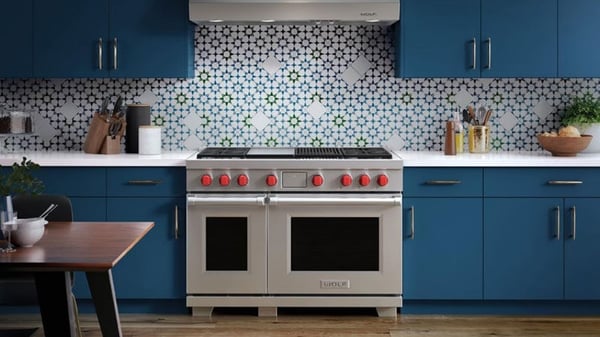
⚡ Quick Answer: Viking invented the professional range category and held more than half the market. Then it stopped improving the range while every competitor moved. New ownership took a controlling stake in February 2026, which makes Viking the only brand here with a credible path back.
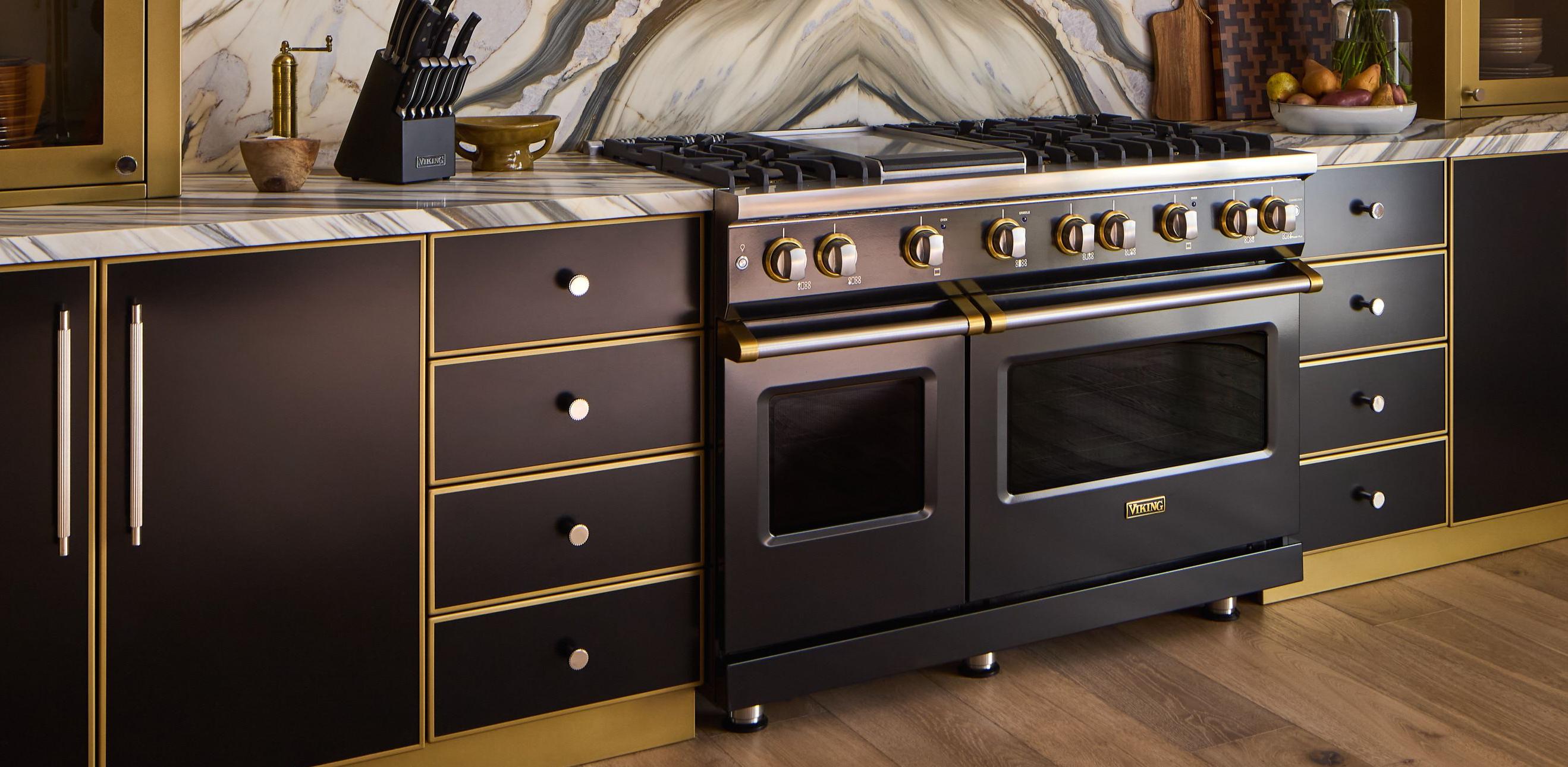
Viking created the professional range category in the late 1980s, and for a while they owned it outright. More than one in two professional ranges sold were Vikings.
They also had colors, which is easy to underrate now. Back then your choices were white, black, or stainless, and stainless was still a novelty.
A forest green Viking with brass trim was something you wanted in your kitchen, and it was more powerful than anything else available.
How BlueStar, Wolf, and Miele Passed Viking
Then Viking made the one mistake a category leader cannot make. They did not improve the range, and everybody else did.
Wolf added a dual fuel range and Wolf Gourmet controls, which calculate time and temperature from the cut of meat and how you like it cooked.
BlueStar passed Viking on nearly every measure that shows up on a spec sheet:
| BlueStar | Viking | |
|---|---|---|
| Colors | About 1,000 | 17 |
| Max burner output | 25,000 BTU | 23,000 BTU |
| Broiler | 1,850-degree infrared | Standard |
Miele's MasterChef controls do what Wolf Gourmet does, and they add steam assist for moisture in a dual fuel oven.
SKS built a sous vide bay directly into the range and added steam assist. It runs on a platform that needs only a 400 CFM hood.
None of that is exotic anymore. It is what a professional range at this price is expected to include.
The Viking Refrigerator Is What Really Hurt Them
The refrigerator did more damage to Viking than the range ever did. As I have said before, refrigeration and dishwashers have been an issue for the brand for a long time.
The product problems were bad enough. The strategic damage was worse.
Going after built-in refrigeration put Viking straight at Sub-Zero, and Sub-Zero noticed. Sub-Zero answered by buying a gas range company of its own, which is how Wolf ended up under the same roof.
Think about what that means. Viking's refrigerator did not just underperform. It helped create the competitor that now sets the standard in professional cooking.
After years of trouble, refrigeration and dishwashers were both outsourced. Refrigeration now comes from Fhiaba in Italy, and the dishwashers come from Beko in Turkey.
Viking is also moving refrigeration manufacturing away from its Greenwood, Mississippi plant to refocus that facility on cooking equipment.
On repairs I will stay inside what I can support. Viking carries a long-standing industry reputation for high service rates.
I want to be precise that this is industry reputation, not a number we measured, because we do not sell the brand.
What I will say with confidence is that parts availability on older professional equipment is a real problem. Our technicians recommend replacement over repair on aging Viking units more often because the part simply is not available at any price.
To be fair, Viking is not a bad range, and we graded it a good B this year. It is still the original French door wall oven company. It offers 17 colors against Wolf's three, and it carries a 3-year warranty.
What Composition Brands Ownership Could Change
Viking is the one brand on this list I would not write off.
In February 2026, 26North Partners took a 51% controlling stake in Middleby's residential kitchen business, in a deal valued at $885 million. That business includes Viking, La Cornue, U-Line, and AGA Rangemaster.
Middleby retained 49%, and the joint venture was renamed Composition Brands.
A brand that was one division inside a commercial foodservice conglomerate is now the main event for its owners. That is the first structural reason in decades to expect Viking to invest in the product again.
Buy instead, for now: Wolf for the best dual-fuel oven, BlueStar if colors and output were the appeal, or Miele for the best automatic controls. Our Wolf versus Viking comparison goes model by model.
Why Do Once-Great Appliance Brands Decline?
⚡ Quick Answer: All four had an innovation problem. They either stopped innovating or innovated the wrong things, and then they did not fix the problems they created.
These four companies had an innovation problem. They either did not innovate at all, or they innovated the wrong things.
Viking owned its category so completely that standing still felt safe, and it pushed into refrigeration instead of fixing the range. Dacor stayed original but could not fund the pace once the competition got serious.
Maytag changed leadership, changed direction, and shipped products nobody had asked for. JennAir sat on a shelf for twelve years inside a larger portfolio.
Then they did not take care of the problems they caused. The Neptune is the clearest case. It created the mold reputation that still follows front-load washers, and there was never a fix.
Meanwhile the competition got better from both directions.
The names you already know kept investing. Sub-Zero and Thermador are not coasting on anything.
The names you may not know moved faster still. BlueStar and SKS are the two that keep showing up in our showrooms with something genuinely new, and most people have never heard of either one.
That gap matters more in professional cooking than almost anywhere else. It is genuinely hard for brands in this category to differentiate.
When every competitor is within a few thousand BTU and a touchscreen of the others, a brand that stops moving falls behind quickly and visibly.
Here is the part I want you to hold on to. A declining value brand is still a bargain, because the price falls with the product.
Three of the four brands above are sold as luxury, and their prices have not come down to match what you now get. You are paying Wolf money for a range that stopped competing with Wolf a decade ago.
What Should You Buy Instead?
⚡ Quick Answer: For laundry, LG and Speed Queen post the lowest service rates we measure. For professional cooking, Wolf, BlueStar, Miele, Thermador, and SKS all offer more current technology at comparable money.
These are the brands we sell and service ourselves, so the recommendations below come from real ownership history rather than a spec sheet.
| If you were considering | Buy this instead | Why |
|---|---|---|
| Maytag laundry | LG or Speed Queen | LG front-loads run 2.7% and Speed Queen dryers 2.3% (the lowest rates in each category) |
| Dacor or Viking ranges | Wolf | Best dual fuel oven performance with twin convection and Wolf Gourmet controls |
| Dacor's unusual configurations | BlueStar | Roughly a thousand colors with 6 trims and 25K BTU on open or sealed burners |
| JennAir's guided cooking | Miele | Automatic controls plus steam assist with 21 cooking modes and 16 bread modes |
| A rebate-driven luxury package | Thermador | ExtraLow burner control and the One-Two-Free program |
| Precision cooking or a tight hood spec | SKS | Built-in sous vide bay with steam assist and a 400 CFM hood requirement |
Wolf is one of the most reliable brands we sell. I will leave it at that rather than publish a number, because our dealer agreement does not allow it.
What Is the Biggest Mistake When Buying a Legacy Luxury Brand?
⚡ Quick Answer: Buying a brand nobody local can fix. Many of the premium brands people covet do not employ a single service technician in your region. On older professional equipment, the part is often unavailable at any price.
The number that decides this: we completed more than 33,000 service calls over the past 12 months across Massachusetts, southern New Hampshire, and Rhode Island. The pattern never changes. The machine you end up happy with is the one that got fixed quickly.
This is the mistake that ruins expensive kitchens, and it has nothing to do with the spec sheet.
You will probably need one or two repairs over the life of a professional range. If nobody local services your brand, you could be waiting months rather than days.
Ask three questions before you sign anything. Who services this brand where I live? How long is the current wait? Are parts still stocked for a unit this age?
That last question is the one people skip. Our technicians' number one reason for recommending replacement on an aging appliance is not repair cost. It is that the part is no longer available.
Can a Declining Appliance Brand Come Back?
⚡ Quick Answer: Yes, and Monogram is the proof. It was a dead brand until Haier bought GE Appliances in 2016 and re-energized the line. The owner has to be an appliance company that actually wants the luxury end of the market.
There is a silver lining here, and it is worth ending on.
Monogram was a dead brand. Then Haier bought GE Appliances in 2016, and the line came back to life.
The reason is the owner. Haier is an appliance company first, so the luxury end of the GE lineup got real money instead of being treated as a badge to harvest.
That is the whole test. A brand recovers when somebody who cares about appliances buys it and spends on the product.
It is also why Viking is the one brand on this list I would not write off. As of February 2026 it is no longer a division inside a commercial foodservice company. It is the main event for its new owners, and that is the same setup that saved Monogram.
Dacor and JennAir both sit inside parents with bigger priorities, so I would want to see the investment before I believed it.
Maytag is the one with no path back. Their time is twenty years gone. The engineering, the plant, and the town are all gone with it, and what is left is a badge on somebody else's machine.
Frequently Asked Questions
These are the questions we hear most often about these four brands. Short answers here, with the full reasoning in the sections above.
Viking makes a competent range, and our own hosts graded it a good B this year. It offers 17 colors and a 3-year warranty. The issue is value rather than function, because it costs roughly what Wolf, BlueStar, or Miele cost while offering less current technology. New ownership as of February 2026 gives it a real chance to close that gap.
No. We do not sell any of the four, which is why this article gives you industry history rather than our own service rates. All of our published reliability data comes from units we sold and then repaired ourselves.
26North Partners holds a 51% controlling stake in the former Middleby residential kitchen business. The deal closed in February 2026 and was valued at $885 million. Middleby retained 49%, and the combined business was renamed Composition Brands. Viking sits alongside La Cornue, U-Line, and AGA Rangemaster.
Samsung. Much of Dacor's refrigeration technology, including triple cooling, is Samsung engineering under a Dacor badge, and the WaterWall dishwasher is a Samsung product.
No. Whirlpool acquired Maytag in 2006, and the Newton operation that designed and built those machines is gone. A Maytag today is a Whirlpool product carrying the Maytag name.
Not the way the Maytag Neptune was. That machine trapped water in a gap between the drums where you could not reach it, and it created the reputation. Modern machines are gasketed and sealed, so what mold there is comes from standing water in the front gasket. Wiping the gasket and leaving the door open between washes prevents it.
JennAir builds a competent product, and our own hosts graded it a strong B this year. The culinary center is genuinely useful. The problem is age rather than quality, because the wall oven and pro range launched in 2018 and have not been meaningfully updated since. We do not sell JennAir, so we have no reliability data on it.
They share an owner. Maytag acquired JennAir, Whirlpool acquired Maytag in 2006, and Whirlpool owns both names today. That shared history is exactly why JennAir was left dormant for twelve years while Maytag dealt with its own problems.
Related Resources
Why Should You Trust Us?
It seems that every appliance review has nothing but glowing comments about almost every product, yet you read customer reviews and they are almost universally bad.
We are here to fill in the disconnect. We'll give you the best features, and the drawbacks as well, including reliability based on over 33,000 calls performed by our service team just last year. Our goal is to give you ALL the information so you know what's right for you.
Please consider subscribing or adding to the conversation in the comments below. We appreciate you stopping by.
Steve Sheinkopf is the third-generation CEO of Yale Appliance and a lifelong Bostonian. He has over 38 years of experience in the appliance industry, and he is a trusted source of information for consumers on how to buy and repair appliances.
Steve has also been featured in numerous publications, including the
New York Times,
Consumer Reports,
The Boston Globe,
Bloomberg Radio, the
New York Post,
The Wall Street Journal, and
Entrepreneur, for his knowledge of how to buy appliances and appliance repair.
Steve is passionate about helping consumers find the best appliances for their needs, and he is always happy to answer questions and provide advice. He is a valuable resource for consumers who are looking for information on appliance buying, repair, and maintenance.
Despite being the worst goalie in history, Steve is a fan of the Bruins and college hockey, loves to read, and is a Peloton biker. The love of his life is his daughter, Sophie.
A Note About Pricing
Pricing on this blog is for reference only and may include time sensitive rebates. We make every attempt to provide accurate pricing at time of publishing. Please call the stores for most accurate price.
Topics: