


TL;DR: Why Your Range Hood Doesn't Work
Range hoods fail for two reasons: they don't cover the front burners, or they try to pull smoke downward instead of capturing it from above. To fix it, follow three rules: match your blower power (CFM) to your range output, use a hood at least 23 inches deep and 18 inches tall for proper capture, and keep your duct run as short and straight as possible.
You'd think the biggest risk in a kitchen project is choosing the wrong brand. Thermador versus Wolf. Sub-Zero versus True.
That's almost never where things actually go wrong.
The appliance most people get wrong is the range hood.
It's easy to overlook, easy to undersize, and expensive to fix once the cabinets are in.
In this article, I'll show you why most hoods don't work, the two most common mistakes we see, and the three rules that fix the problem every time.
📽️ Prefer a video? Watch Steve explain why kitchen ventilation matters more than ever in modern homes and the three rules to get it right, from blower power and capture area to ducting design.
📌 Skip Ahead;
Why Does Your Range Hood Matter More Now Than Ever?
⚡ Quick Answer: Today's ranges are at least twice as powerful as they were in the 1970s, and modern homes are too airtight for cooking pollutants to escape on their own. Without the right hood, that air stays in your house.
My mother cooked on an old Caloric gas range. High-low style. Burners on top, an oven below, and an oven above.
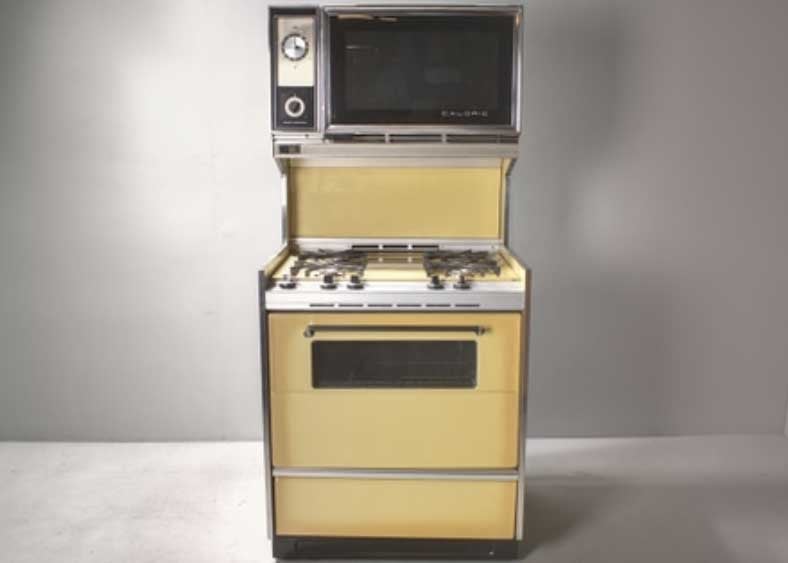
There was a small hood mounted on top. I don't even remember it being turned on.
Honestly, it didn't matter that much back then. The burners weren't that powerful, and houses naturally drafted air. You cooked, and the air just left.
Today, that's a completely different story.
Today's ranges are at least twice as powerful as what my mom cooked on in the 1970s.
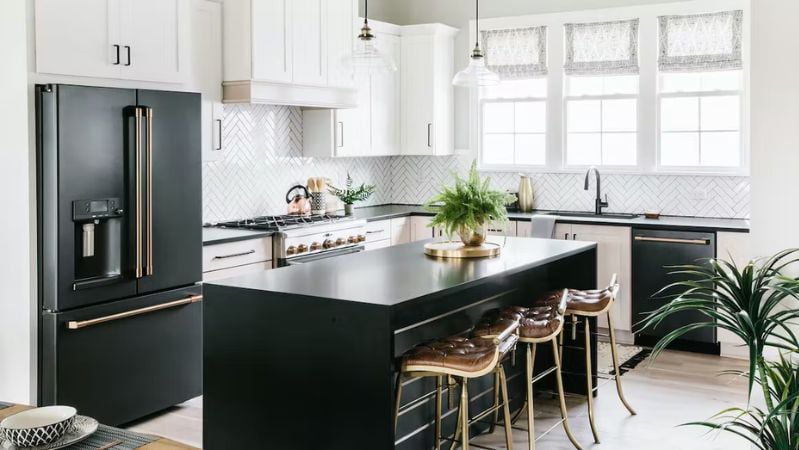
And houses are completely different. They're tighter, with better windows and better insulation. That's great for energy efficiency, but it also means the air doesn't leave your house anymore.
And that air isn't just smoke and grease. If you have a gas range, it can include carbon monoxide, nitrogen dioxide, formaldehyde, and fine particulate matter.
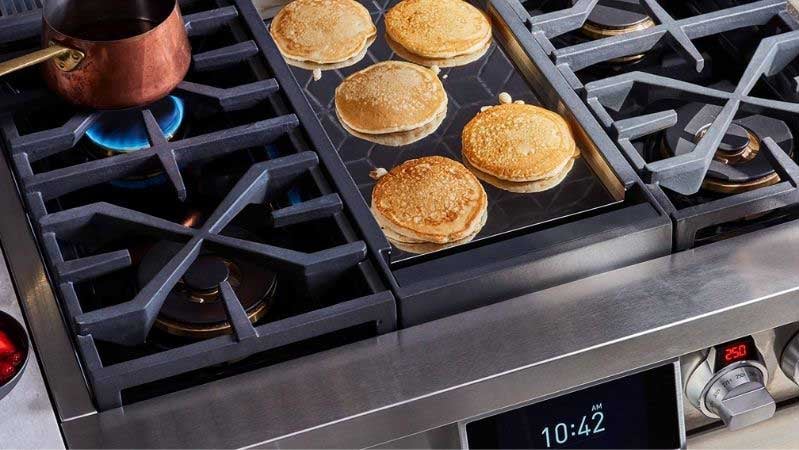
That's not air you want to breathe every day. The problem is most hoods aren't designed to actually remove it.
Why Doesn't Your Hood Cover the Front Burners?
⚡ Quick Answer: Most hoods and over-the-range microwaves are too shallow to capture smoke from the front burners, where most of your cooking actually happens.
You cook on the front burners. They're the most powerful burners on the range, up to 22,000 BTU even on non-professional models.
But the range hood above them usually doesn't cover those burners. So the heat, smoke, grease, and airborne compounds move past the hood and into your kitchen.
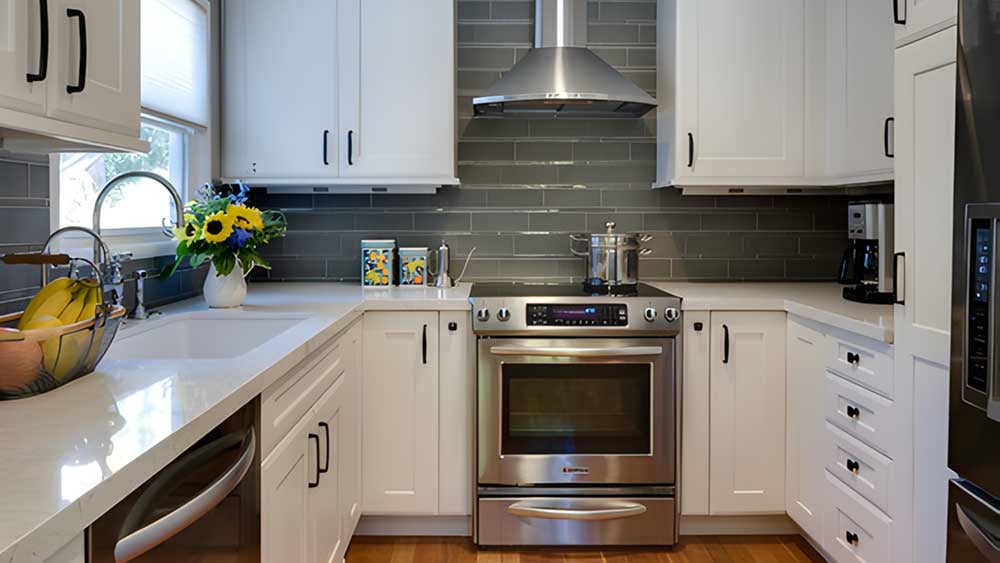
This is especially true with over-the-range microwaves. Most are only 16 inches deep. Some of the newest models introduced last year are only 12 inches deep.
They simply don't reach the front burners.
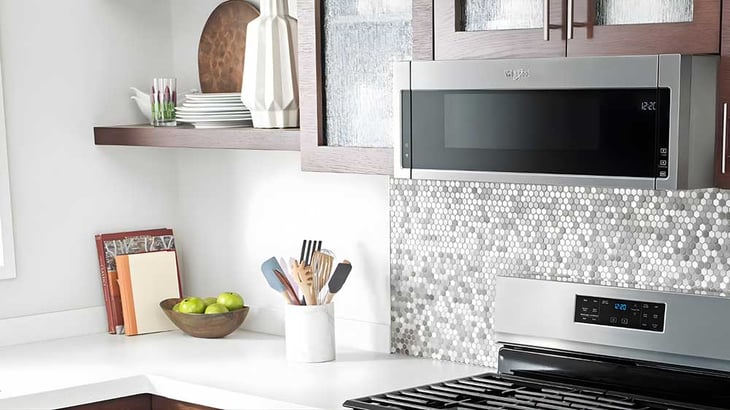
To work properly, a hood needs to be about 23 inches deep.
That gap between 12 or 16 inches and the 22 to 23 inches where your front burners sit is where the smoke escapes. Every time you cook.
🔍 Read more: Appliances You Should Not Buy in 2026
Why Doesn't Downdraft Ventilation Work?
⚡ Quick Answer: Downdrafts look clean and modern, but hot air rises. A small downdraft vent behind the cooktop cannot capture smoke, grease, and steam effectively.
Downdrafts are popular because they keep a clean sightline to a window or let you put a range on an island. That looks great. But hot air, smoke, and grease don't go down. They rise.
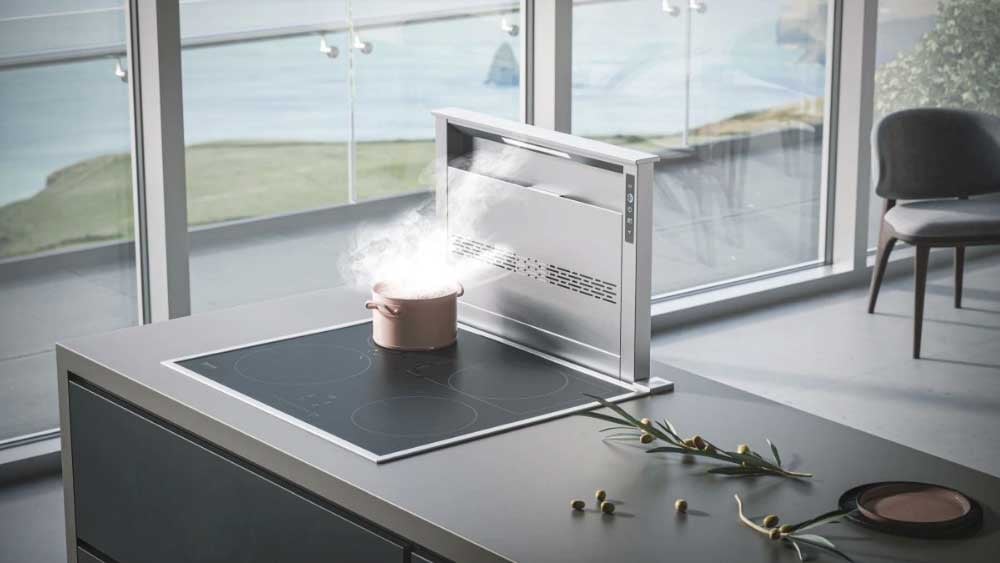
A small downdraft plenum can't capture that air. And it can't force it through elbows and long duct runs underneath the floor.
Have you ever seen a downdraft in a restaurant?
Yet manufacturers keep introducing new downdrafts and shallow hoods every year. They look modern, but they're completely inadequate for the way you actually cook.
🔍 Read more: 5 Kitchen Vents You Should Never Buy (And Why)
The 3 Rules for a Range Hood That Actually Works
⚡ Quick Answer: A hood that works follows three rules: enough blower power (CFM) for your range, a capture area deep and tall enough to trap smoke before it escapes, and a short, straight duct run to move the air outside.
Venting properly is actually simple if you follow three rules.
Rule 1: Blower Power (CFM)

CFM stands for cubic feet per minute. It measures how fast the blower can move air out of your kitchen.
The higher the number, the more cooking heat, smoke, and grease it can handle.
For example, an 1,100 CFM hood can exhaust a small room of air every minute. That kind of power is designed to keep up with the front burners on a 36, 48, or even 60-inch range.
Your CFM needs to match what your range actually produces. A powerful range with a weak hood is just decoration.
Rule 2: Capture Area
This is the part most people get wrong.
The hood has to cover the front burners. To do that, you need depth. At least 23 inches deep and about 18 inches tall.
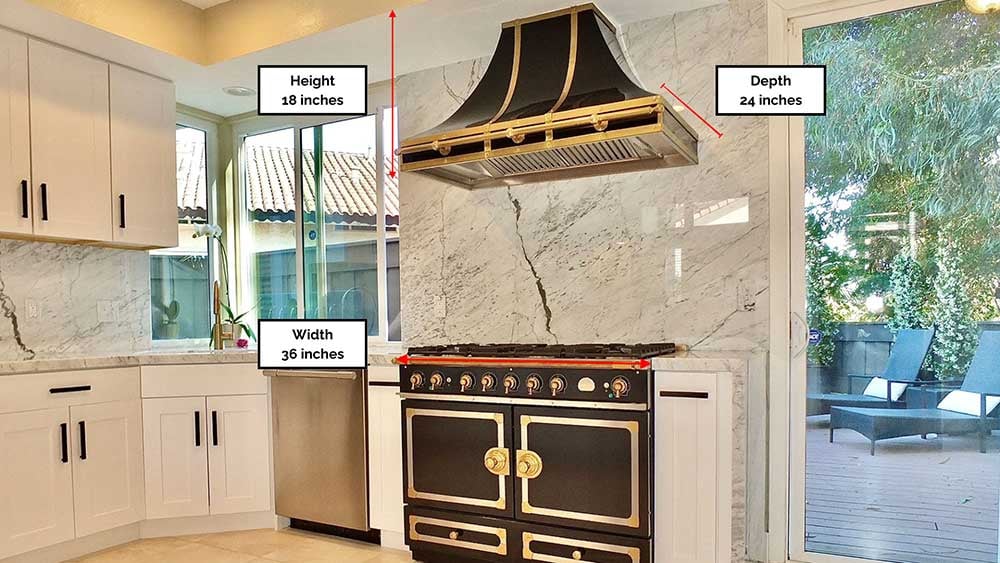
That's true regardless of brand. When you burn something or create a lot of smoke and grease, that depth creates a capture area. The hood traps the smoke first. Then the motor evacuates it.
Those two have to work together.
A powerful blower without enough capture area just moves the air that's already behind the hood. The smoke from the front burners still escapes.
Rule 3: Duct Run
Your duct run has to make sense. The farther the air has to travel, the less efficient the system becomes. Every elbow and extra foot of duct reduces performance.
That's another reason downdrafts don't work. The air has to travel down, under the floor, and then back out. Too many turns, too much distance.
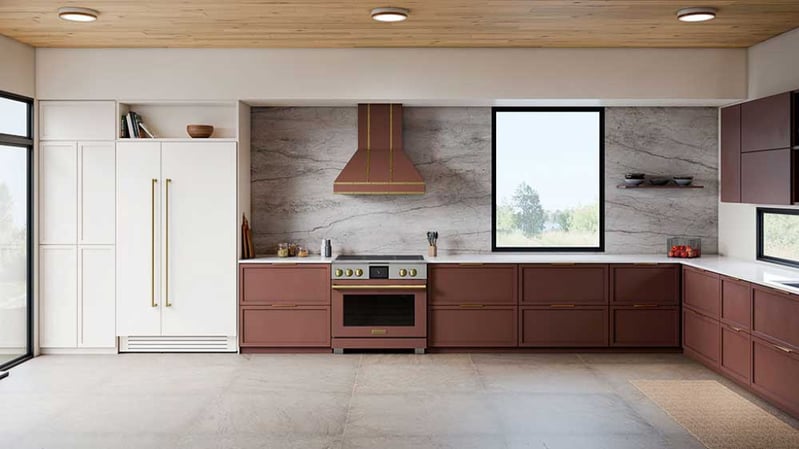
Ideally, you vent straight up through the ceiling or straight out the back wall. One of those two. If you follow those three rules, the hood works.
🔍 Read more: The Ultimate Guide to Kitchen Ventilation
Can a Proper Hood Still Look Good in Your Kitchen?
⚡ Quick Answer: Yes. A properly sized hood can be covered with tile, built into a wood surround, or matched to your cabinetry. Performance and design are not mutually exclusive.
A working hood doesn't have to look like a restaurant.
You can cover it with tile, build a wood hood around it, or match it to your cabinetry and your design. It doesn't have to be stainless. You have options.
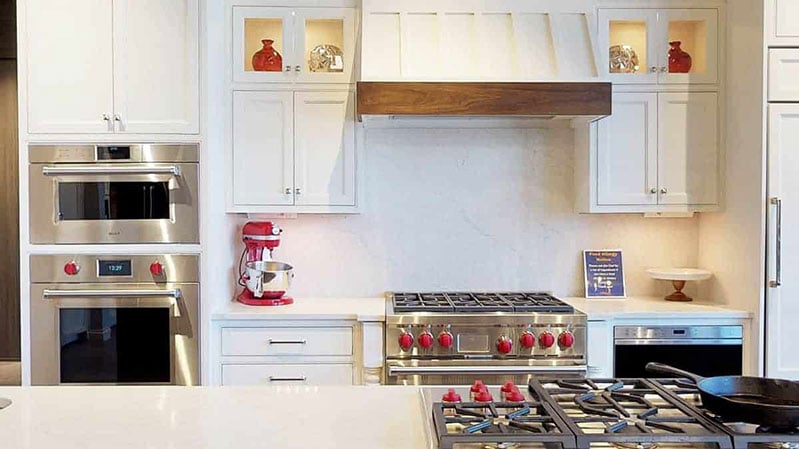
The only requirement is that the hood behind the design follows the three rules. Get the CFM, capture area, and ducting right, and you can make it look however you want.

Final Takeaways
⚡ Quick Answer: Most hood problems come down to not enough depth, not enough power, or too long of a duct run. Fix those three things and the hood works.
The range hood is one of the most overlooked appliances in a kitchen project. People spend weeks choosing a range and minutes choosing the hood.
That's how you end up with smoke in the kitchen, grease on the cabinets, and air quality problems you can't see.
Before you finalize your kitchen plan, check three things: your hood's CFM matches your range output, the capture area covers the front burners, and the duct run is short and straight.
If your current hood isn't doing the job, it's almost always one of those three. And once the cabinets are in and the ductwork is set, fixing it gets expensive fast.
Get the ventilation right early. Everything else in the kitchen is easier to change later.
Additional Resources
Get the Yale Ventilation Buying Guide with features, specs, and inside tips for every brand and hood type. Well over 1 million people have read a Yale Guide.
Related Articles:
- How to Vent Your Kitchen Range
- How High Do You Hang a Range Hood?
- 4 Kitchen Hoods You Should Not Buy
- Best Ventilation Hoods for Professional Ranges

Why Should You Trust Us?
It seems that every appliance review has nothing but glowing comments about almost every product, yet you read customer reviews and they are almost universally bad.
We are here to fill in the disconnect. We'll give you the best features, and the drawbacks as well, including reliability based on over 33,000 calls performed by our service team just last year. Our goal is to give you ALL the information so you know what's right for you.
Please consider subscribing or adding to the conversation in the comments below. We appreciate you stopping by.