

The Short Version
The best professional BBQ grills for 2026 are Kalamazoo Hybrid Fire, Lynx, DCS Series 9, Hestan, and Caliber. There's no single winner. The right grill depends on how you cook, where you live, and what you'll spend.
-
For the deepest flavor: Kalamazoo Hybrid Fire ($25,995+). The only grill that adds real wood and charcoal flavor without giving up gas convenience.
-
For precision searing: Lynx with the Trident infrared ($6,299+), in the gas-plus-sear configuration. Skip the all-sear version.
-
For the best balance of performance and price: DCS Series 9 ($7,799+). Competent across the board at less than half the Kalamazoo price.
-
For design-driven outdoor kitchens: Hestan ($6,299+). 12 California-inspired colors and a 50-pound rotisserie. Harder to get and more expensive in 2026.
-
For a view-forward kitchen: Caliber, now True Caliber ($5,929+). Fully retractable lid and nearly 100 finish combinations. Less peak BTU than the other four.
-
For homes on saltwater: Kalamazoo Marine-Grade ($35,000–$40,000) or Blaze Marine-Grade ($5,000–$10,000). Both grills are built in true 316 stainless.
One thing most buyers underestimate: the grill itself is only 75% of the decision. Gas line sizing, install quality, service access, and ongoing care make up the rest.
I had my first barbecue of the season last Sunday for nine people. I cook on a professional grill at home, after years of using one.
Here's what you should know: the grill itself is the easy part. What separates a grill you love in year seven from one you regret in year three has almost nothing to do with the brochure.
It has to do with how you cook, where you live, and who will show up when something breaks.
This guide covers the five professional grills worth considering in 2026:
-
Kalamazoo
-
Lynx
-
DCS Series 9
-
Hestan
-
Caliber
Yale sells all five. Our technicians service all six. Our chef and I cook on them. The recommendations here come from that, not from the spec sheets on the internet.
📌 Skip Ahead
The Grill Is 75% of the Decision
Most grill roundups treat the grill like it's the whole story. It isn't.
The grill itself accounts for 75% of your outdoor cooking experience.
The other 15% is gas line sizing, install quality, where the grill lives, who services it when something goes wrong, and how you care for it once it's yours.
A $25,000 Kalamazoo on a bad install will frustrate you more than a $7,000 DCS on a good one.
A few things worth knowing before you fall in love with a specific brand:
Gas Line
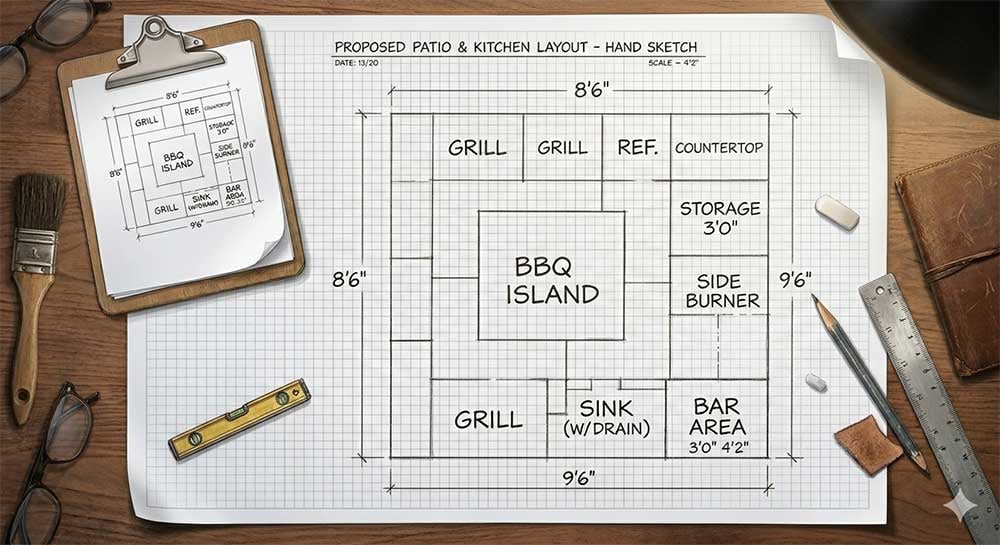
Professional grills with 25,000 BTU burners often need a 1-inch gas line, not the standard 1/2-inch most homes are plumbed for.
If your line is undersized, your burners will never hit their rated output and you'll spend the rest of the grill's life wondering why it doesn't sear like the demo.
Weight
.jpg?width=799&height=450&name=LiveAbode-Features-Hestan-Outdoor-Built-In-Grills%20(1).jpg)
A built-in Kalamazoo weighs 360 pounds. Hestan and Lynx are lighter but still substantial.
Your deck, island, or counter needs to be built to hold it.
Service Access
Built-in grills get installed once and serviced for the next 15 years.
If the installer doesn't leave proper access for the gas connection and the burner assembly, every future service call costs more and takes longer.
Care and Maintenance
The worst thing that can happen to a grill is rust, and preventing it is mostly habit.
Before cooking, resident chef Steve Shipley recommends heating the grill, brushing the grates, and wiping them down with a lightly oiled towel. Use a grill brush, never a wire one.
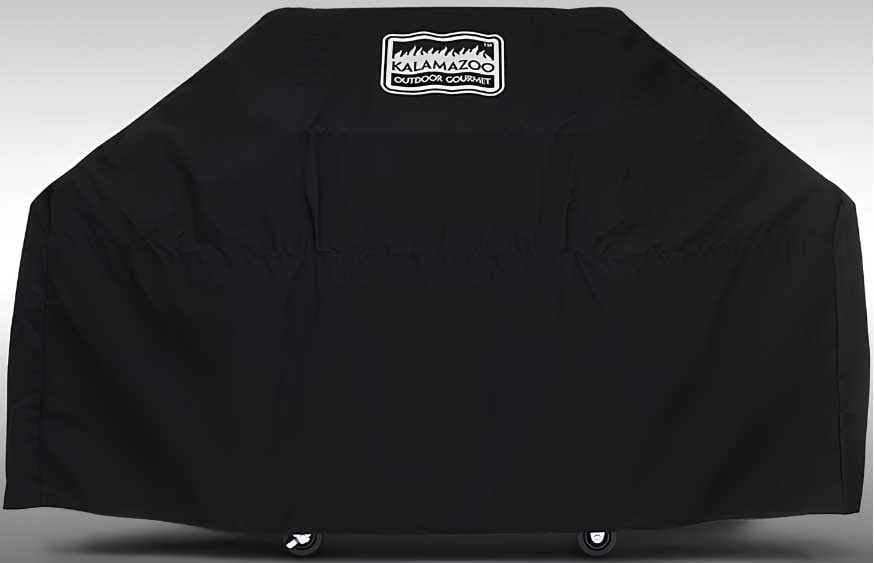
The cover matters as much as anything else you do. Always make sure your grill has one. "But you never put a cover on hot," Shipley says. "... You let it cool down first because the cover will shrink. It'll be like vacuum sealed."
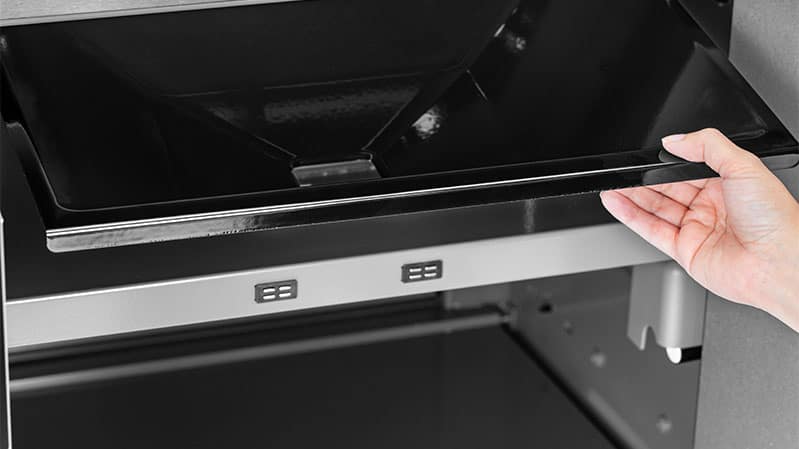
And if rain gets into an uncovered grill, pull the grease trap before cooking again. Otherwise it's full of water and grease that have to go somewhere.
"If you're not pulling out that grease trap, which is filled with water now," Shipley says, "you'll wonder why your dog is spending so much time out there licking it."
This is also why where you buy matters more than what you buy. Anyone can sell you a Kalamazoo.
The question is whether they can install it correctly, service it in year four, and stock the parts when something fails.
The Best Professional Outdoor BBQ Grills for 2026
Quick Answers
Six grills, six different reasons to buy. Here's the at-a-glance comparison before we get into the detailed breakdowns.
| Starting Price | Sear Method | Rotisserie | Smoker/Charcoal | Marine-Grade Option | Best For | |
| Kalamazoo Hybrid Fire | $25,995+ | Wood/charcoal up to 1,200°F | Yes, dual infrared | Yes (hybrid) | Yes (316 stainless) | Deepest flavor, hybrid cooking |
| Lynx | $6,299+ | Trident infrared burner | Yes | Optional smoker box | No | Fast, precise searing |
| DCS Series 9 | $7,799+ | Dedicated 24,000 BTU sear burner | Yes, infrared option | Yes, removable | No | Best balance of performance and price |
| Hestan | $6,299+ | Sear burner options | Yes, 50 lb capacity, hidden motor | No | Partial (321 stainless) | Design-driven outdoor kitchens |
| Caliber | $5,929+ | 20,000 BTU Crossflame burners | — | — | No | Open, hoodless view |
1. Kalamazoo Hybrid Fire: The Flavor Argument
Kalamazoo K750HB
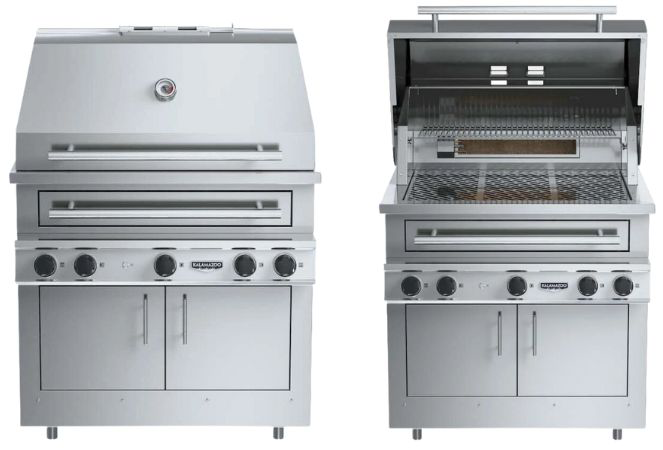
Starting at $25,995. Hybrid gas, wood, and charcoal. Hand-built in Michigan.
Last Sunday I cooked steak, burgers, hot dogs, and potatoes on my grill for nine people. The steak came out perfectly charred. The burgers were fast. Everything was hot and even.
But here's the honest part. Professional gas grills cook fast and hot. They sear well. What they don't do is add flavor.
Gas tastes like heat. That's all you're getting.
Kalamazoo is the only grill in this group that solves that. The Hybrid Fire lets you cook on gas for speed, then add wood or charcoal in the same firebox for flavor and texture.
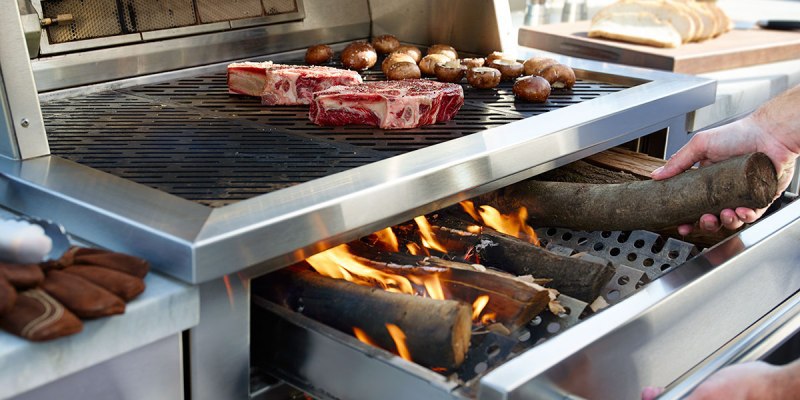
DCS and Lynx offer charcoal accessories, but they're add-ons. Kalamazoo is built around the hybrid concept from the burner up.
Why Kalamazoo Cooks Better Than Other Professional Grills
Kalamazoo's firebox is deeper than any other grill in this group.
That extra depth creates natural convection: hot air circulates around the food instead of just blasting it from below.
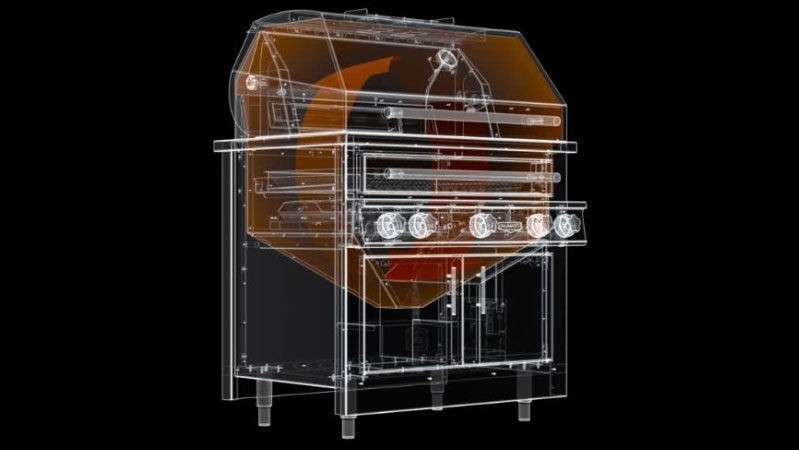
You get more even cooking and the food picks up more smoke flavor from the wood or charcoal.
The burners output 26,500 BTU each, which is competitive on paper. The difference is what happens when you add the wood and charcoal.
With both fuels engaged, the grill hits 1,200°F. That's hotter than any infrared sear burner on the market.
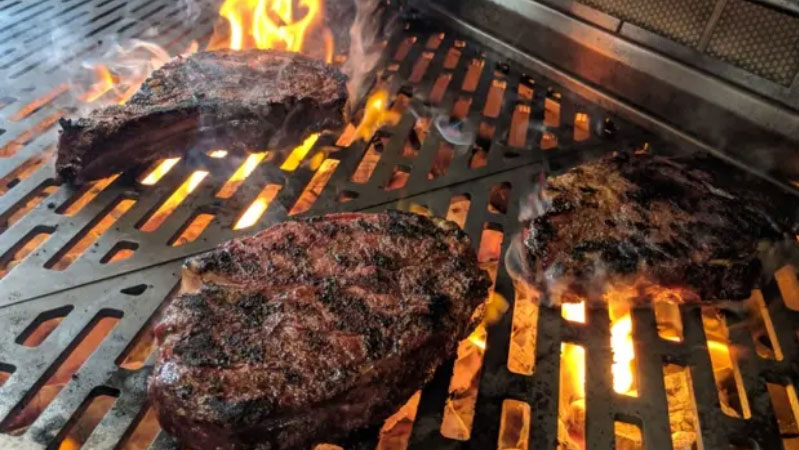
Shipley would tell you that having the capability isn't the same as using it well.
"If you ever tried a regular roasted turkey, then you try to smoke turkey. You take your first bite, and if it kinda like bites you back, you've added too much smoke," he says.
The goal isn't to dominate the food. It's to add something subtle. "I always tell people when they cook that it should be the type of thing where you taste one of my dishes or you taste it like a dessert, and they say, 'there's something in there. I don't know what it is. But it's good.'"
That's what Kalamazoo offers that no gas grill can. The option to add the "I don't know what it is" layer when you want it.
Use it well and your guests can't name it. Use it badly and the food bites back.
Kalamazoo Drawbacks: What You Give Up at This Price
This grill is expensive. The flagship K750HB starts at $25,995, and the marine-grade version pushes that to $35,000 to $40,000.
The non-hybrid marine-grade model starts at $19,000. The hybrid freestanding starts at $22,000.
If you grill burgers on a Tuesday night and you're not going to use the wood or charcoal, you're paying for capability you won't touch.
Lead time is also real. Each Kalamazoo is built to order in Michigan. Plan on two months minimum.
And honestly: if you don't care about flavor beyond what gas can deliver, this is the wrong grill. Buy a DCS or a Lynx, spend the difference on the rest of your outdoor kitchen, and you won't miss anything.
The Kalamazoo Marine-Grade Option for Cape Cod and Nantucket
Kalamazoo makes a marine-grade version in 316 stainless steel. It adds $10,000 to $15,000 to the price.
It's worth it if you're on saltwater. We had a Kalamazoo marine-grade on display outside our Dorchester showroom, off Dorchester Bay, for six to eight years.
When we finally moved it, the body was pristine. A little rust had crept in around the knobs. That was it.
If you don't want to spend $35,000 to $40,000 on a grill, Blaze makes a marine-grade alternative in the $5,000 to $10,000 range.
You don't get hybrid fire. You don't get the BTU output. But you get a real 316 stainless build that will outlast anything else in its price range near saltwater.
More on the coastal question later in the article.
Buy Kalamazoo if
You want gas convenience plus real wood and charcoal flavor in one grill, you're going to use both fuels, and the budget is there.
Skip Kalamazoo if
You mostly grill on weeknights, you don't care about smoke flavor, or you'd rather put $15,000 toward a better outdoor kitchen build.
2. Lynx with Trident Infrared: The Searing Argument
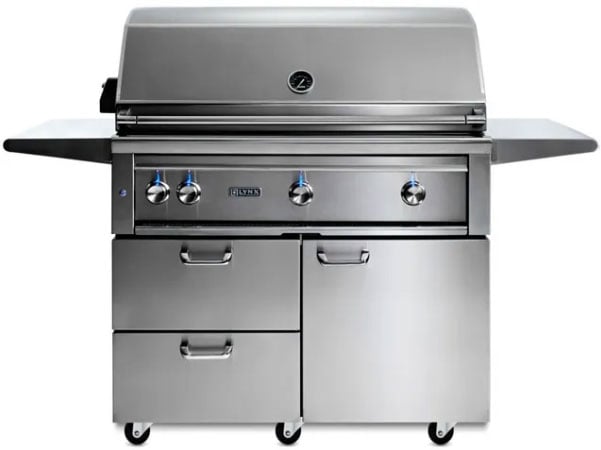
Starting at $6,299. Best-in-class infrared sear burner. Available in 9 colors.
If Kalamazoo is the flavor argument, Lynx is the precision argument. And Lynx earns its place in this conversation because they pioneered the professional grill category. Most of what every other brand here does well, Lynx did first.
Over the years they've made two improvements that still matter.
Why Lynx Ceramic Burners Outlast Stainless and Brass

Most professional grills run stainless or cast brass burners. Lynx runs ceramic.
Two real-world benefits.
Ceramic doesn't weather, so the burners hold up better over years of outdoor exposure.
The burner ports face downward instead of up.
When you're grilling steak, burgers, and hot dogs at the same time and grease is dripping everywhere, the ports stay clear. Fewer clogs, fewer flare-ups.
The Lynx Trident Infrared Sear Burner: What Makes It Different
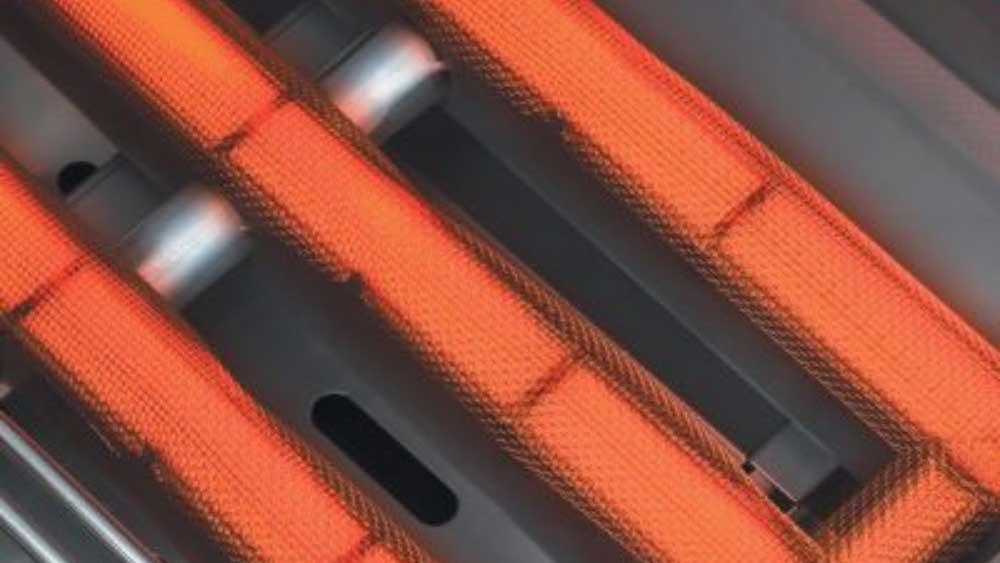
This is the real reason to buy a Lynx. The Trident delivers direct, even heat across the entire searing surface and ranges from 300°F to 1,000°F.
That range is what separates it from most infrared burners.
You can sear a ribeye at 1,000° and then drop to 400° to char vegetables or fruit, on the same burner, without moving food around the grill.
Infrared is a direct sear, not the diffused heat you get from gas, so the precision is real.
Our chef Shipley's first instruction on any sear burner: don't max it out. "These are hot grills," he says. "Halfway up on that gauge is more than hot enough to sear things."

The technique matters more than the temperature.
"There's really two types of grilling: direct heat and indirect heat. ... You're taking a New York strip, and you're hitting it on top of that searing feature itself. You get that little crust on it. You flip it over, but then you move it to the other side to finish cooking. Because there's no heat underneath it."
That's the right way to use a Trident. Sear hard for the crust, move it off the infrared to the gas side, let it finish without burning the outside before the inside catches up.
Which is also why the configuration you buy matters, and most people buy the wrong one.
Don't Buy the All-Sear Lynx: One Configuration Warning
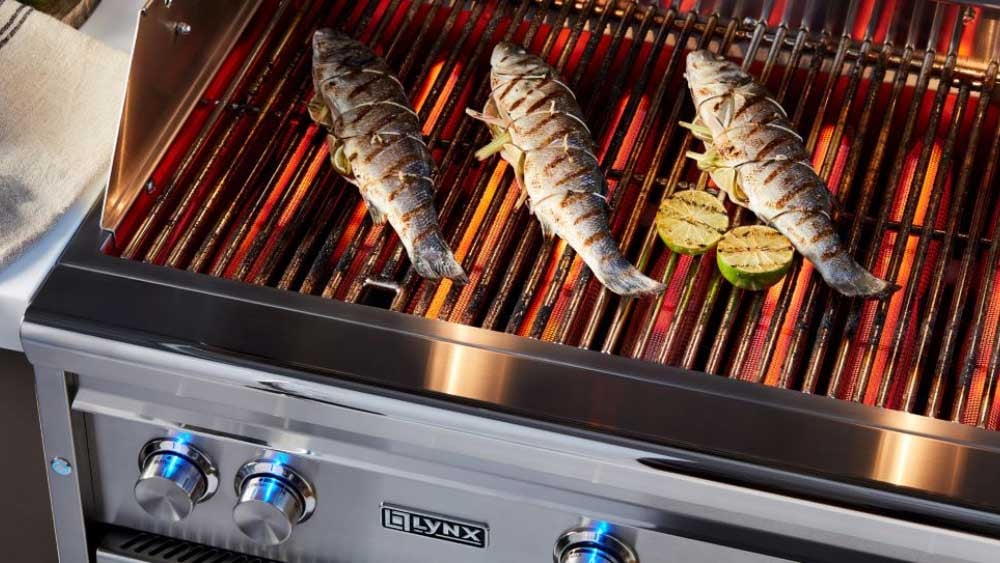
Lynx sells the Trident in three configurations: all-gas, all-sear (all-infrared), and gas-plus-sear. Don't buy the all-sear.
I cook on a gas-plus-sear setup at home. It's a better way to grill. All-sear cooks one way: fast, direct, hot.
Infrared is a focused heat source, and if you're not paying attention, it overcooks the outside before the inside catches up.
Gas burners diffuse heat. You get more margin for error and more flexibility for foods that don't want a hard sear.
The gas-plus-sear configuration gives you both tools. Use the gas burners for most of what you cook, fire the Trident when you want to finish a steak or char something fast.
That's the right way to use this grill.
Lynx Drawbacks: Ceramic Briquette Maintenance and No Marine-Grade
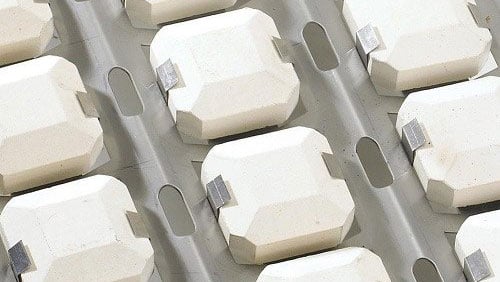
The ceramic briquettes need to be cleaned by hand. You can't flip them for self-cleaning the way Hestan's design allows.
Over time you'll learn to clean them or replace them. It's the maintenance task Lynx owners mention most.
Lynx doesn't offer a true marine-grade option. The standard build is 304 stainless. If you live on the water, this isn't the grill.
Buy Lynx if
You sear steaks more than anything else, you want infrared precision with real temperature control, and you live inland.
Skip Lynx if
You live on the coast, you want wood or charcoal flavor, or you're tempted by the all-sear configuration.
3. DCS Series 9: The Best-Balance Argument
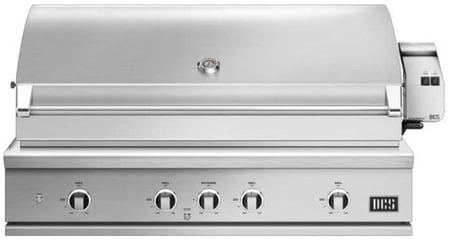
Starting at $7,799. 24,000 BTU dedicated sear burner. Ceramic rod construction.
DCS doesn't lean into any single category, but it's strong and competent across every facet of grilling.
Kalamazoo wins on flavor. Lynx wins on searing. Hestan wins on design. DCS doesn't lead any of them.
What it does is hit competent-to-strong on every category, at a price that's less than half of a Kalamazoo and a few thousand under most Lynx configurations.
For a lot of buyers, that's the right grill. DCS is also one of the original professional grills, right after Lynx, and they've had decades to refine the platform.
How DCS Series 9 Cooks: The Ceramic Rod Design
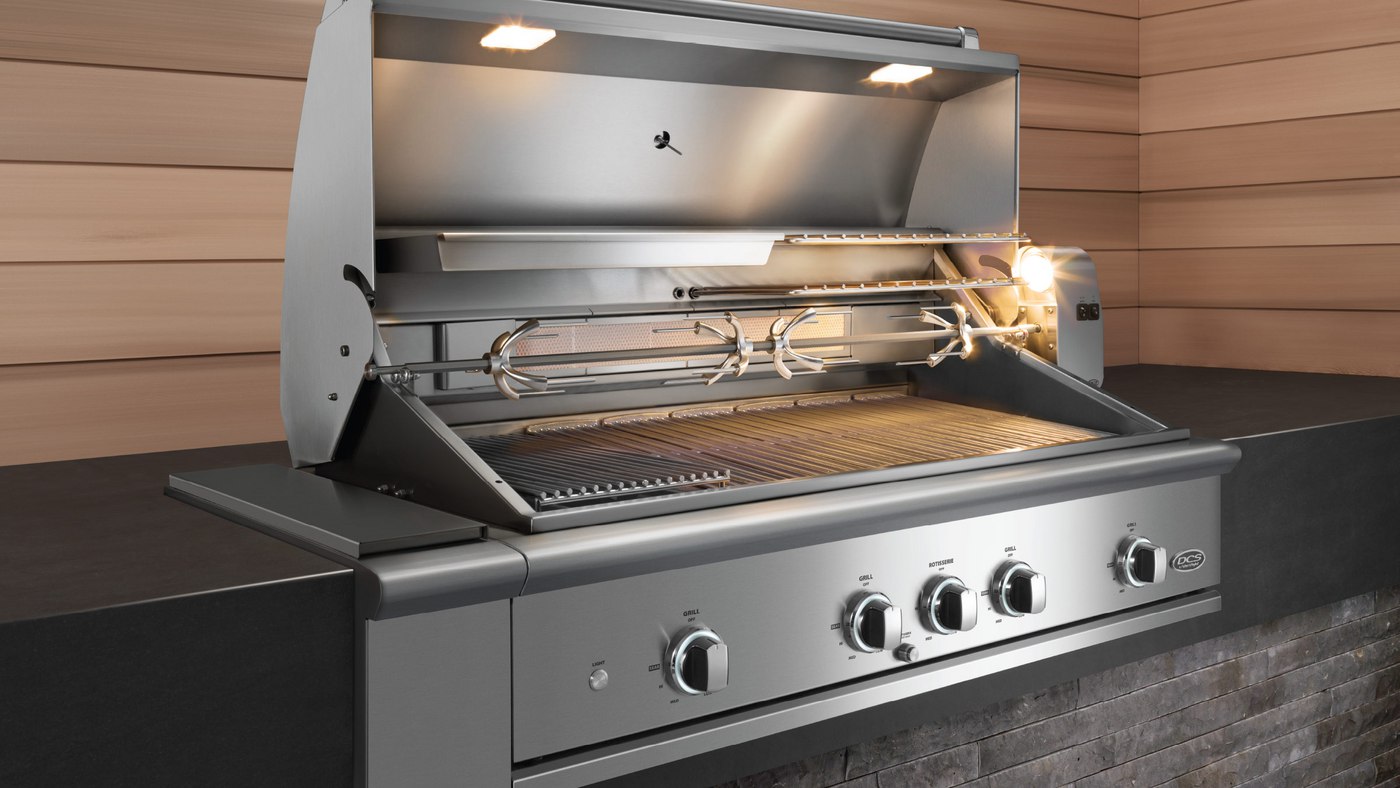
DCS's signature design is the ceramic rods that sit above the burners.
Ceramic rods conduct heat upward toward the food and create a more even cooking surface than open flame.
DCS originally marketed the Series as an "all-sear" grill on the strength of those rods alone.
More recently they added a dedicated 24,000 BTU infrared sear burner and an infrared rotisserie option.
So the current Series 9 gives you ceramic-rod heat distribution across the main grates, plus a real infrared sear when you want it.
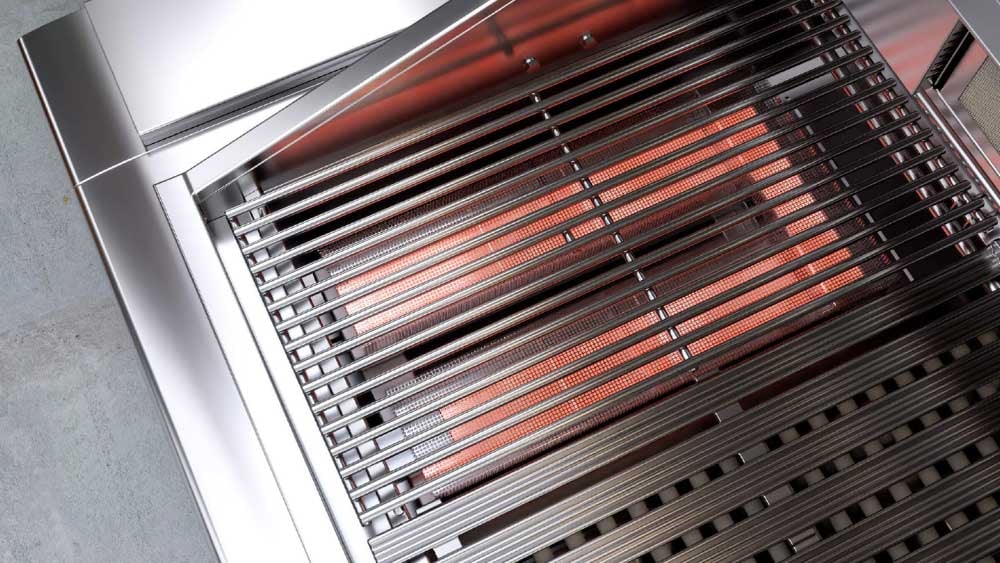
That's a meaningful combination.
It's not the precision of a Lynx Trident or the flavor of a Kalamazoo hybrid, but it's a serious grill that handles steak, fish, vegetables, and rotisserie work without specializing in any one of them.
Shipley has one caveat on the rotisserie. "They have the rotisserie, which is an amazing piece of equipment, but cook it with medium heat because they have so many BTUs in some of these grills that it's almost too hot," he says. "You can get a nice char, but next thing you know, it turns to charcoal." Medium is plenty on the DCS.
Does The DCS Charcoal Basket Actually Work?
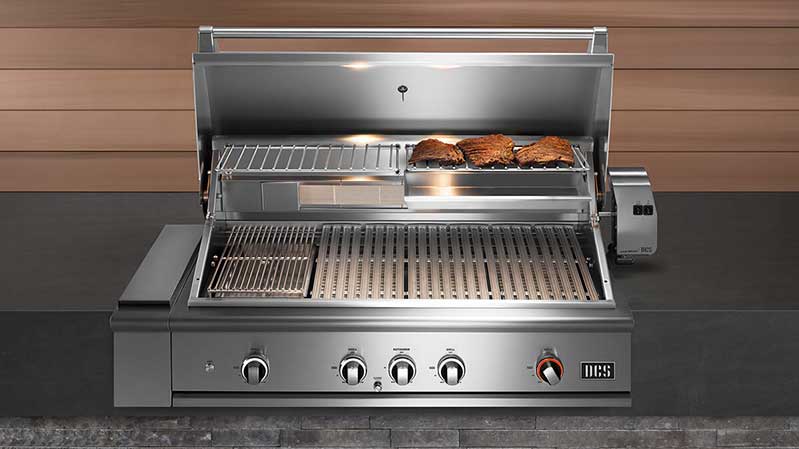
DCS added a charcoal basket accessory a couple of years ago. On paper, that gives you smoke and char flavor in a gas grill.
That's the same problem Kalamazoo's hybrid fire solves. The Kalamazoo hybrid works because the firebox is built around it, deeper than anything else and engineered for natural convection with wood and charcoal.
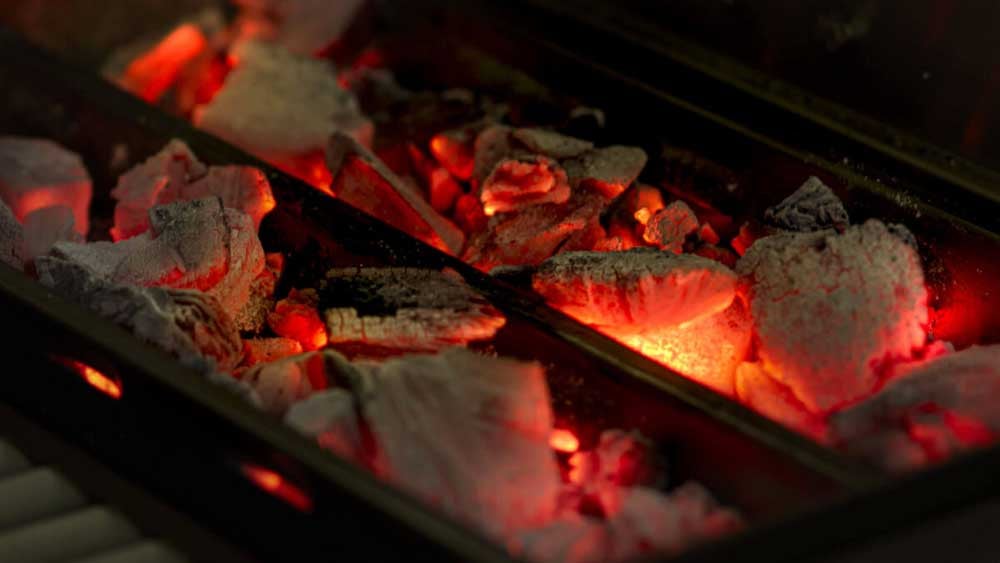
A drop-in charcoal basket in a gas grill is a different mechanical proposition.
The question is whether the food actually picks up the flavor, or whether the basket just adds a little smoke smell without changing how the food tastes.
DCS Series 9 Drawbacks: What It Doesn't Do
DCS doesn't offer an all-sear configuration or a marine-grade build, and there's no color customization.
If a fully infrared grill is what you want, Lynx is the only option in this group.
The burners aren't ceramic, which means they can weather over years of outdoor exposure the way ceramic burners on a Lynx or Hestan won't. Not a dealbreaker, but worth knowing if you're comparing year-10 longevity.
DCS doesn't offer a marine-grade option either. Standard 304 stainless. Don't put one on Nantucket.
And there's no color customization. Stainless only. If your outdoor kitchen design depends on a specific finish, Hestan is the only grill that solves that.
Why DCS Series 9 Is Easier to Service: Modular Construction
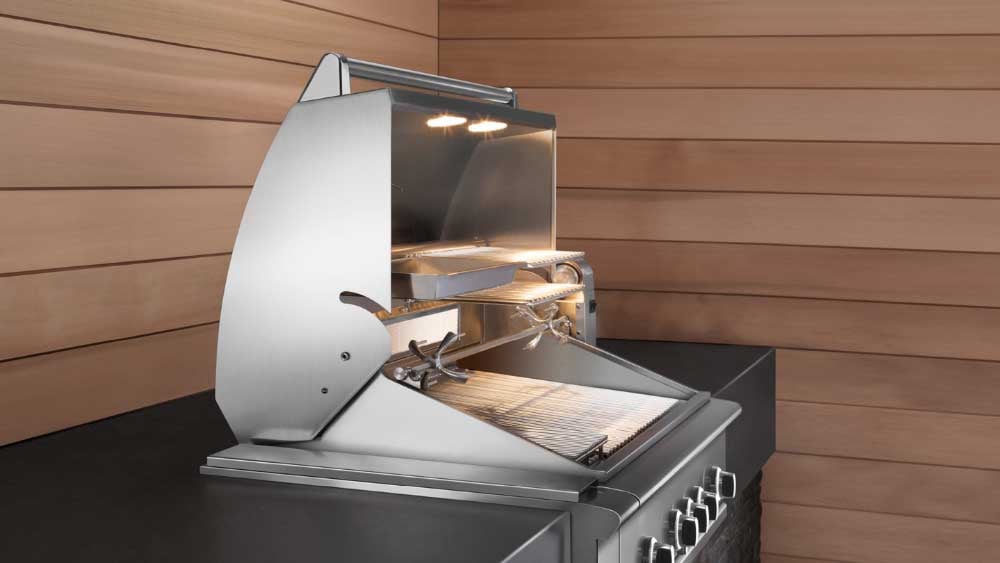
DCS is built from modular components. That sounds like a negative but it's actually a service advantage.
When something fails in year six, you replace the component, not the grill.
Buy DCS Series 9 if
You want a real professional grill that does most things well, you'd rather spend the difference on the rest of your outdoor kitchen, and you live somewhere the standard 304 stainless will hold up.
Skip DCS Series 9 if
You want the best at any single thing (flavor, searing, design), you live on saltwater, or color customization matters to your space.
4. Hestan: The Design Argument
Hestan GMBR42CX2-LP-OR
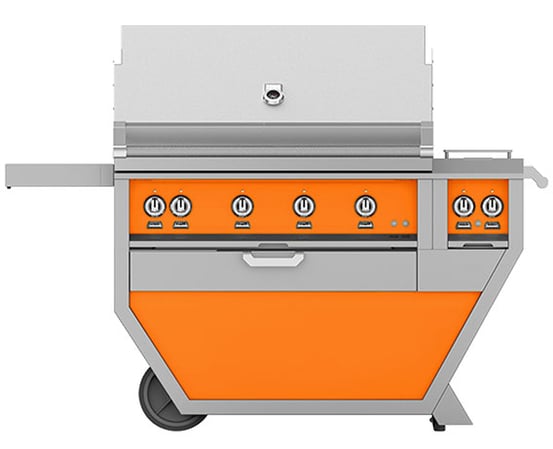
Starting at $6,299. 12 California-inspired colors. Trellis burner construction. Hard to get.
I cook on a Hestan at home. Two 25,000 BTU gas burners plus a sear. It's a serious grill and worth considering.
Whether I'd buy it again is another question. Honestly, I bought mine because it was an odd orange color nobody wanted. I like it now. That's not the strongest endorsement I've ever given a grill, but that's not bad either.
Hestan has also become hard to recommend to most buyers in 2026.
Pricing has climbed faster than the rest of the category and availability has tightened. We don't sell many of them anymore. If you want a Hestan, plan on waiting and plan on paying.
That said, the grill itself does several things well.
Why Hestan Cooks Well: Infrared, Briquettes, and Rotisserie
The infrared sear burner works. It hits the temperatures it claims, and the heat is even across the surface.
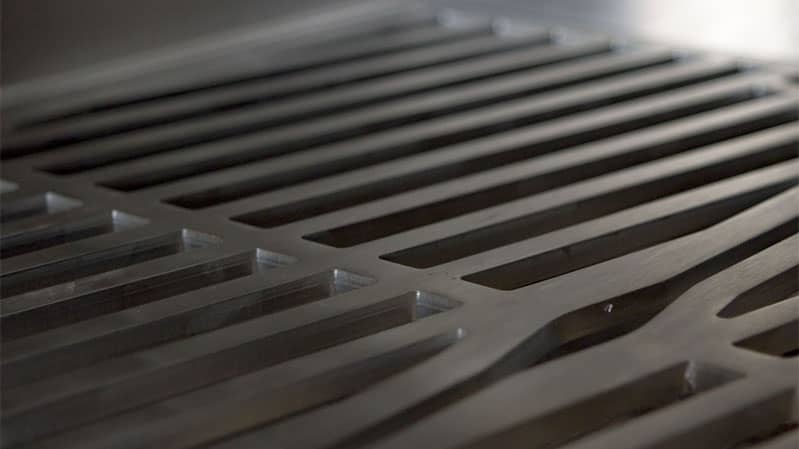
Not the Trident on a Lynx, but a real sear.
The ceramic briquettes flip for self-cleaning. That's the one maintenance advantage Hestan has over Lynx.
Flip the briquettes, fire the grill, and they burn clean. Lynx owners do this by hand. Small thing, but it's the kind of detail that adds up over years of ownership.
The rotisserie handles up to 50 pounds. That's a whole pig, multiple turkeys, or any rotisserie cook most people would attempt.
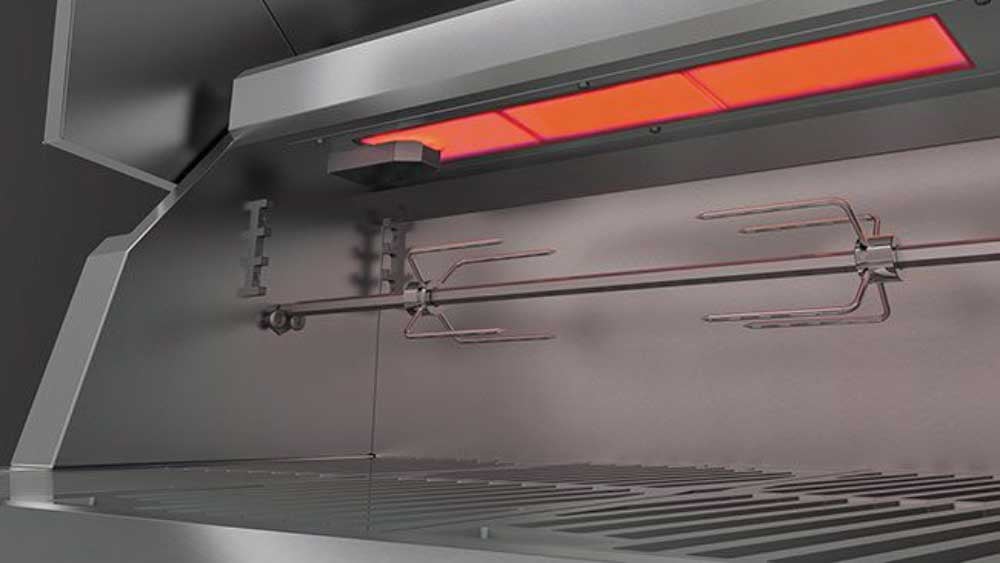
Other grills in this group cap well below that. If you rotisserie often or you host big, this is a meaningful spec.
Why Hestan Wins on Outdoor Kitchen Design
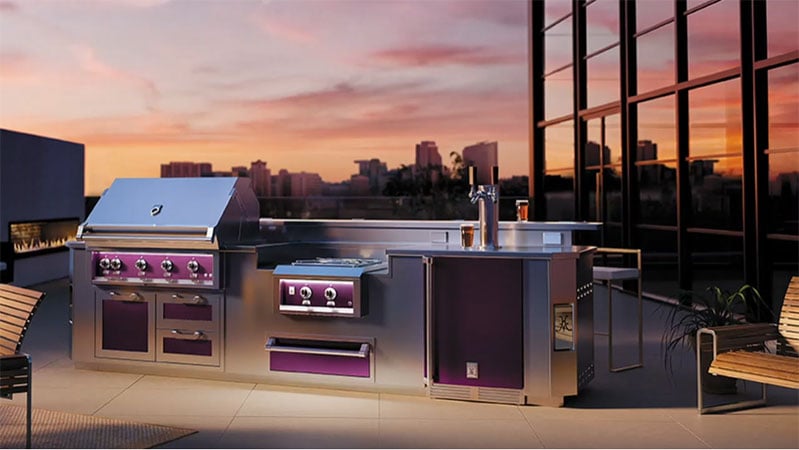
Hestan is the only grill here available in 12 color options, all California-inspired finishes. That sounds like a marketing line until you see one installed.
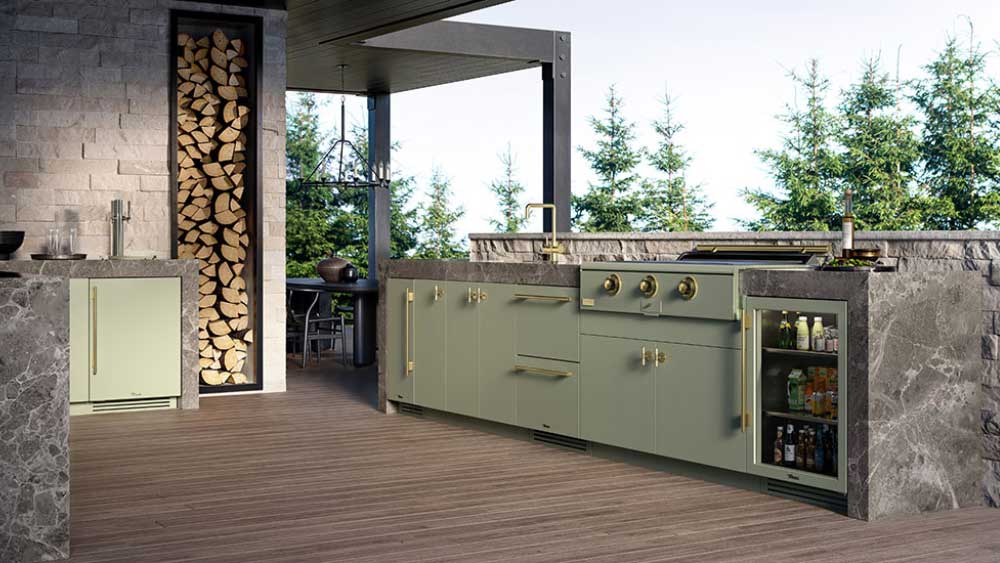
A friend of mine put a Hestan in his Nantucket kitchen. Gray finish, with matching gray access doors underneath, against gray granite on the island.
The whole thing reads as a single designed object instead of a stainless box dropped into a counter.
Stainless almost can't do what that installation does.
If your outdoor kitchen is design-driven, if you're working with a designer or an architect on the space, this is the only grill that gives you that level of finish control.
The Trellis Burner: What Makes Hestan's Construction Different
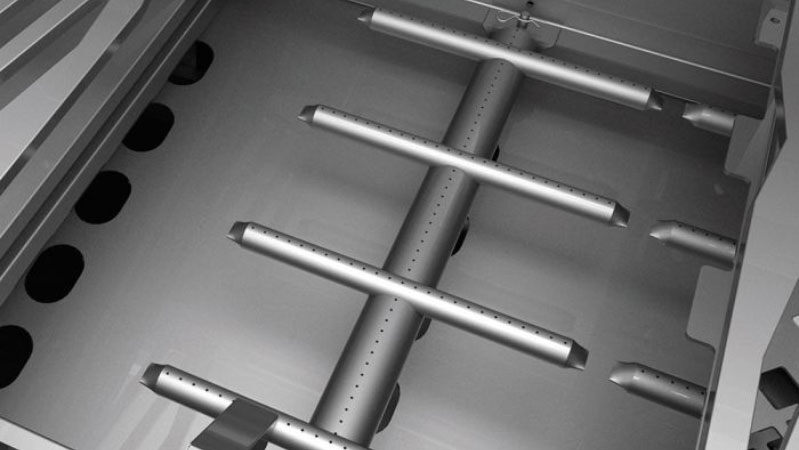
Hestan's burners are made from 321-grade stainless steel, with ports on all four sides.
The 321 alloy is more heat-resistant than the 304 stainless most grills use in their burners, and Hestan claims it outperforms 304 in saltwater testing.
Note that 321 isn't the same as marine-grade 316. True marine-grade stainless is 316. The Hestan story on 321 is real, but if you're putting a grill on Nantucket, this isn't a substitute for the Kalamazoo or Blaze marine-grade builds.
The rotisserie motor is hidden for a cleaner look, and the hood stays in place when partially open, which lets you cook with it cracked.
Hestan Drawbacks: Pricing, Availability, and Burner Port Placement
Pricing has climbed. In 2026 Hestan is closer to Kalamazoo than to its original peer group.
That makes the value proposition harder.
Availability is tight. Custom colors add lead time. Plan for weeks, not days.
The burner ports face upward toward the food. Over time grease drippings can clog them. Not a dealbreaker, but it's the maintenance task Hestan owners deal with that Lynx owners don't.
And on the coast: 321 stainless is heat-resistant but it's not 316 marine-grade. Don't put a Hestan on saltwater.
Buy Hestan if
Your outdoor kitchen is design-driven, color matters as much as performance, and you can wait for the right configuration.
Skip Hestan if
You're price-sensitive, you live on the coast, or you need the grill in the next month.
5. Caliber: The View Argument
True Caliber CRG-36BN00-A~078-H04
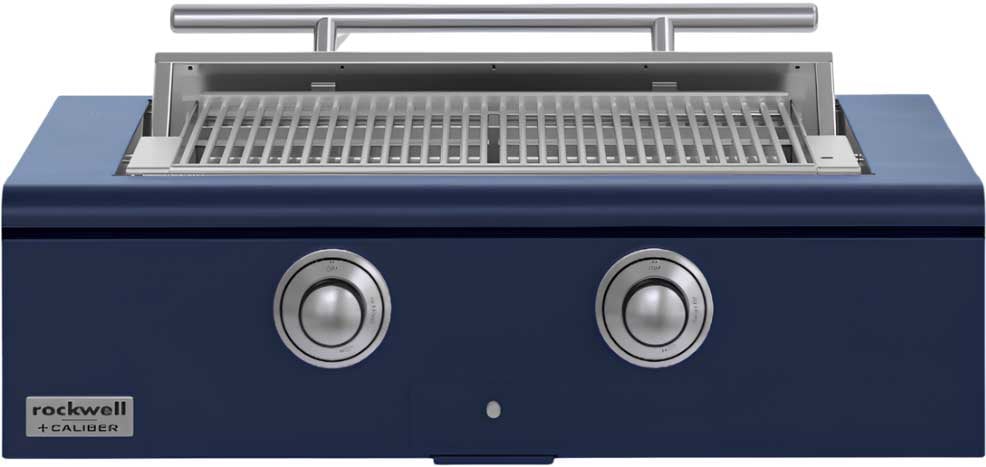
Starting at $5,929. 20,000 BTU Crossflame burners. Nearly 100 finish-and-hardware combinations through True's paint program.
If my friend's Nantucket kitchen taught me anything, it's that design can matter in the right situation. Caliber is built for that situation.
The finishes are more polished than anything else in this guide, with more color combinations than any other grill, and you get a fully disappearing lid. That's the entire argument.
Why Caliber Is Now True Caliber: The 2025 Partnership
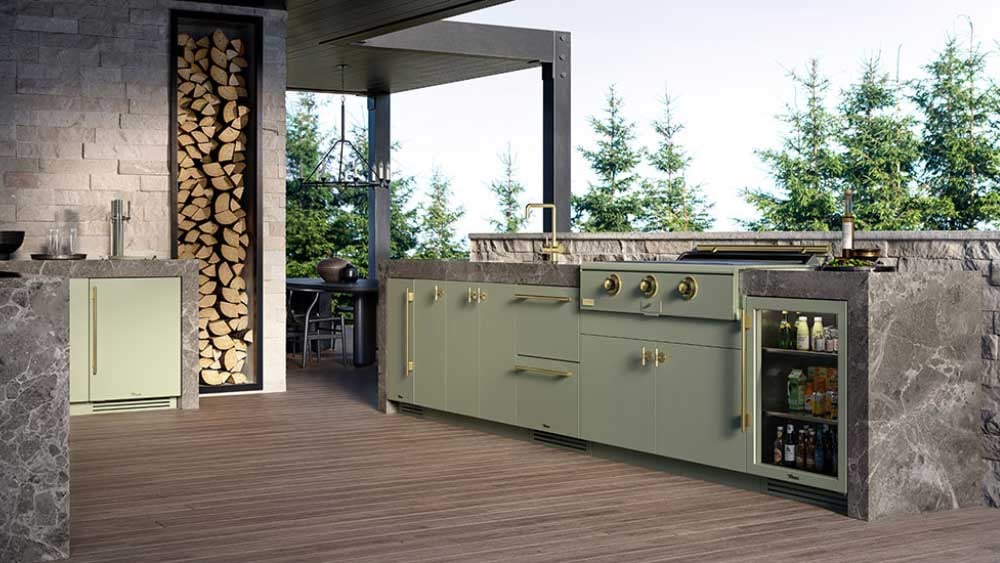
In 2025, Caliber partnered with True Residential, the St. Louis luxury refrigeration company. The brand is officially True Caliber.
True is now the sole manufacturer of Caliber grills. That partnership matters because True brings two things Caliber didn't have on its own: serious sheet metal fabrication and a high-end automotive-style paint program.
The result is a grill finished like a car, not like a kitchen appliance. If you've stood next to a True refrigerator in a showroom, you know the finish.
Now imagine that on a grill, with nearly 100 finish-and-hardware combinations through True's Build Your True program, plus custom automotive-grade color matching for fully bespoke specs.
The Disappearing Lid: Why This Grill Exists
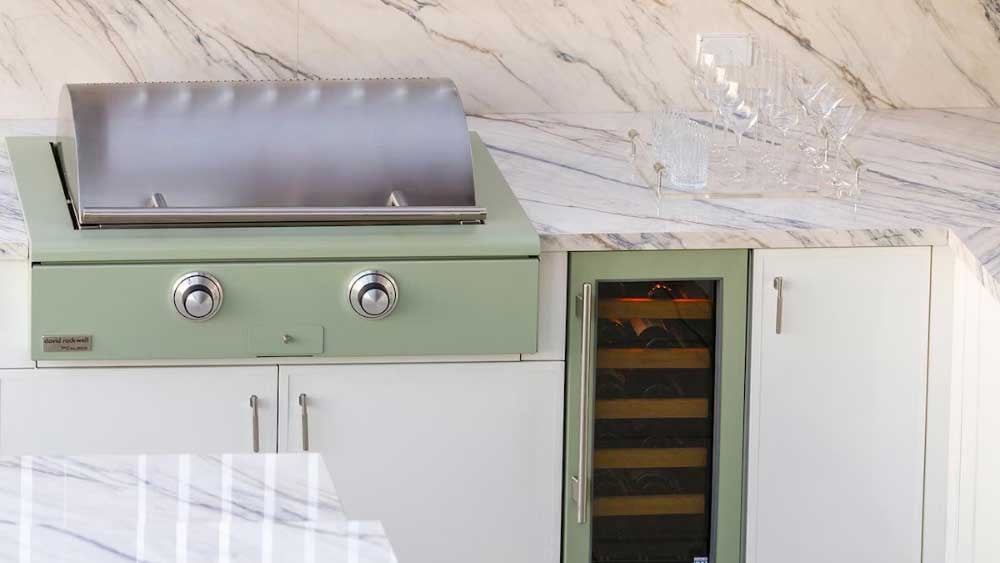
The flagship product is the Rockwell Social Grill, designed by architect David Rockwell. The signature feature is a fully retractable lid that disappears completely when open.
If your outdoor kitchen has a view, the Rockwell lets you enjoy it without a grill cover sitting in the middle of it.
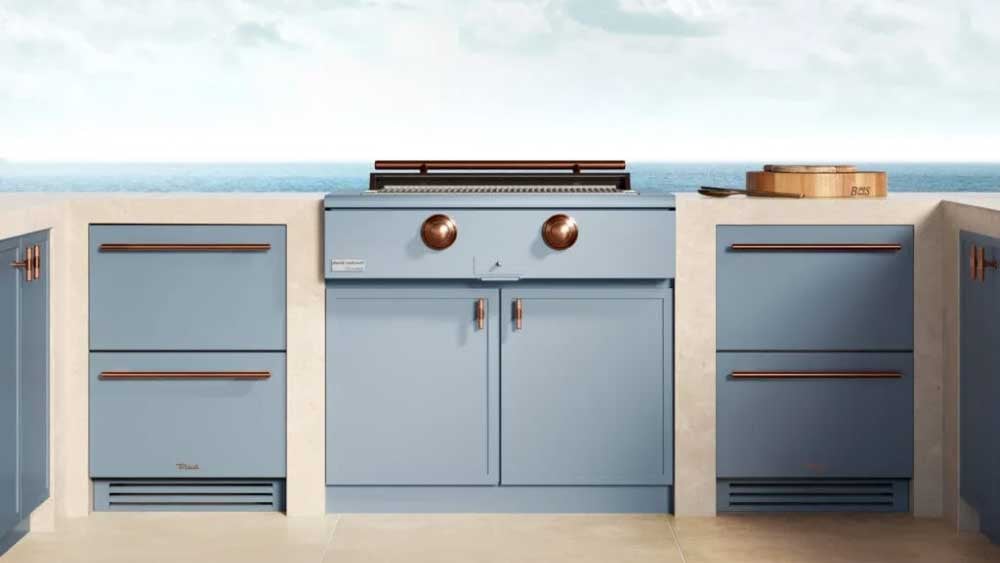
If you entertain and you want the grill to be social rather than a wall between you and your guests, the 360-degree walk-around design solves that.
The Cooking Specs: Less Than The Others, But Real
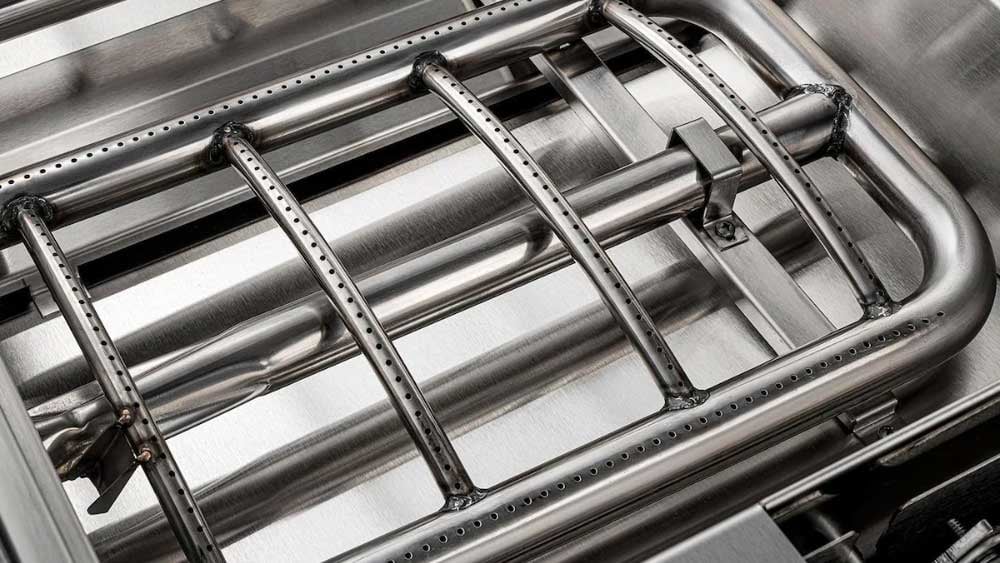
The Crossflame burners output 20,000 BTU each. That's less than the 25,000 to 26,500 BTU you'll find on Kalamazoo, Lynx, Hestan, and DCS.
You'll feel the difference if you cook a lot at peak heat.
But put that number in context. A Weber Summit, which most people think of as a premium grill, runs 8,000 to 10,000 BTU per burner.
Caliber is delivering roughly twice that. You're getting real professional-grade heat output, just not the peak of the category.
The grill also costs meaningfully less than the other four. If design is your priority and you're willing to accept slightly less peak cooking performance, the math works.
Caliber Drawbacks: Service History And Platform Newness
The True Caliber partnership is new. The Rockwell launched in 2025.
We don't have years of service history on it yet, and neither does anyone else. With the other four brands in this guide, we know what fails in year five. With True Caliber, we'll find out.
Buy Caliber if
Your outdoor kitchen has a view you don't want a grill cover blocking, design integration matters more than peak cooking spec, and you want a finish you can't get on any other grill.
Skip Caliber if
You cook serious volume at peak heat, you want a platform with a longer service track record, or you'd rather put the money into the cooking spec than the finish.
What Grills Are Best for Saltwater? Marine-Grade Explained
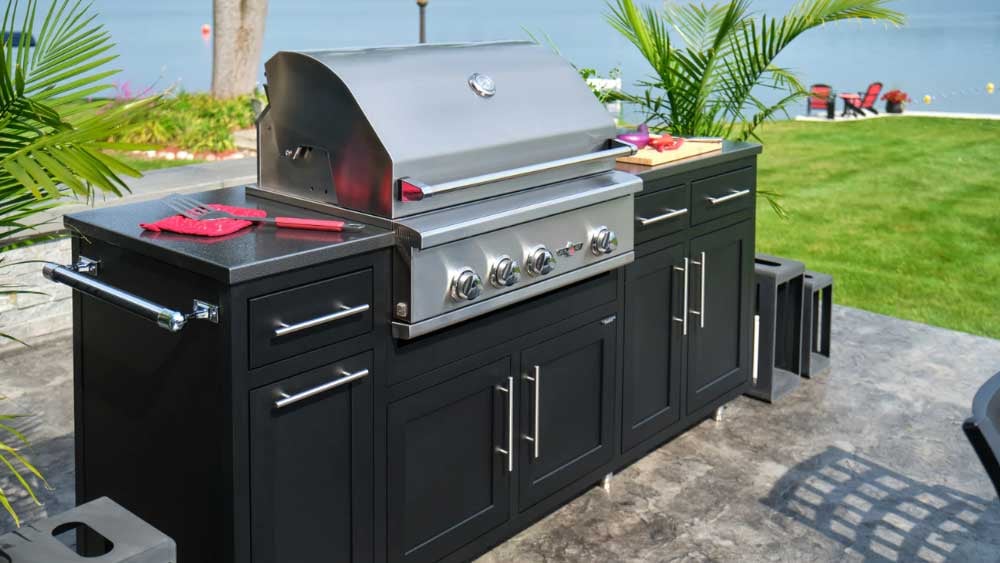
If you live anywhere on the Massachusetts coast, or anywhere within a mile of saltwater, this is the most important section in the article.
The type of grill matters here more than the brand.
What Saltwater Air Actually Does
My grandfather had a house on Nantasket Beach. Every summer I'd watch the salt air eat through anything that wasn't built for it.
Light fixtures, hardware, knobs. Even a Whirlpool French-door refrigerator inside the house rusted. We haven't been there in years, and it's still rusty.
The question isn't whether corrosion happens on the coast. It's how long it takes and what you're willing to replace.
What Yale Has Watched Happen, Up Close
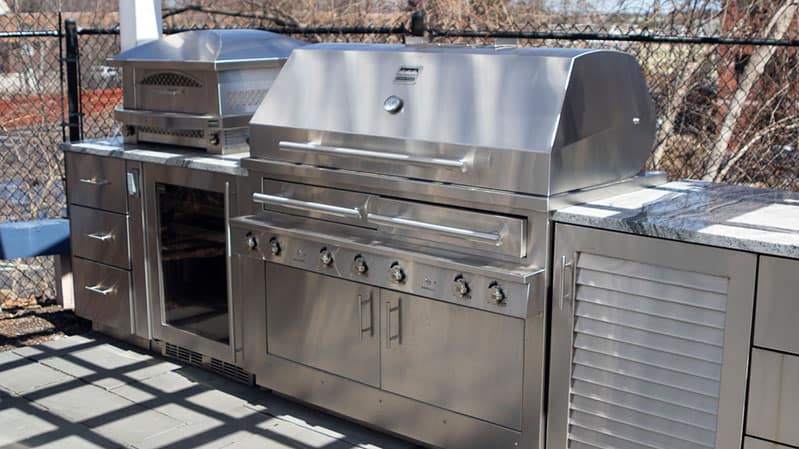
Our original showroom sits off Dorchester Bay, with salt air coming in from the water and exhaust off Route 93. We used to display grills outside.
We had a Kalamazoo marine-grade out there for six to eight years. When we finally moved it, the body was pristine. A little rust had crept in around the knobs. That was it.
For comparison, most standard 304-stainless grills in that same environment show visible pitting and weld corrosion within three to four years.
Marine-grade 316 stainless is not a marketing upcharge. It's the difference between a grill that looks new in year seven and one you're replacing in year four.
The Two Grills Built for the Coast
Only two grills offer a true marine-grade 316 stainless build: Kalamazoo and Blaze.
Kalamazoo Marine-Grade
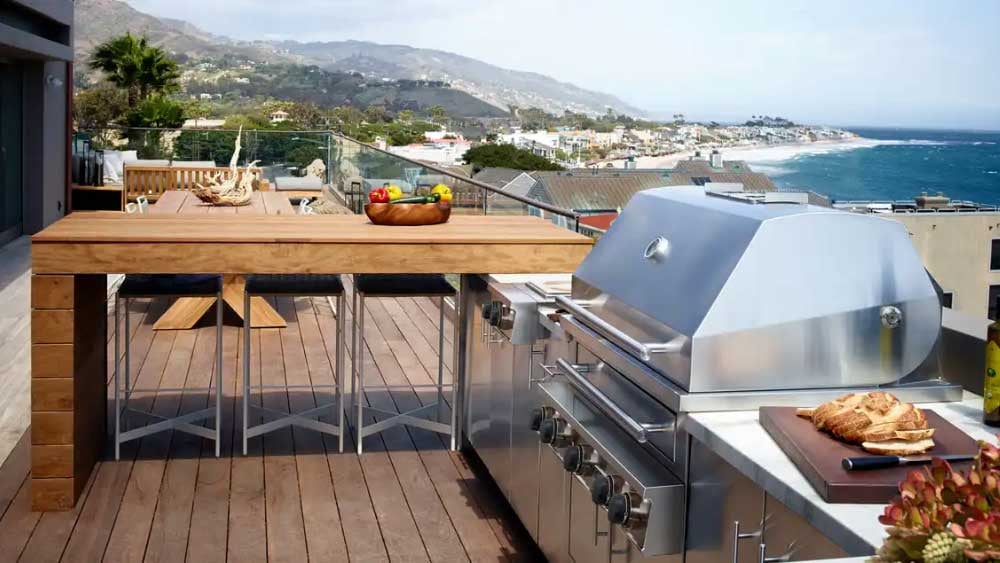
The flagship hybrid in 316 stainless runs $35,000 to $40,000. The most expensive option on the market, and the most credible based on what we've watched survive in coastal conditions.
Blaze Marine-Grade
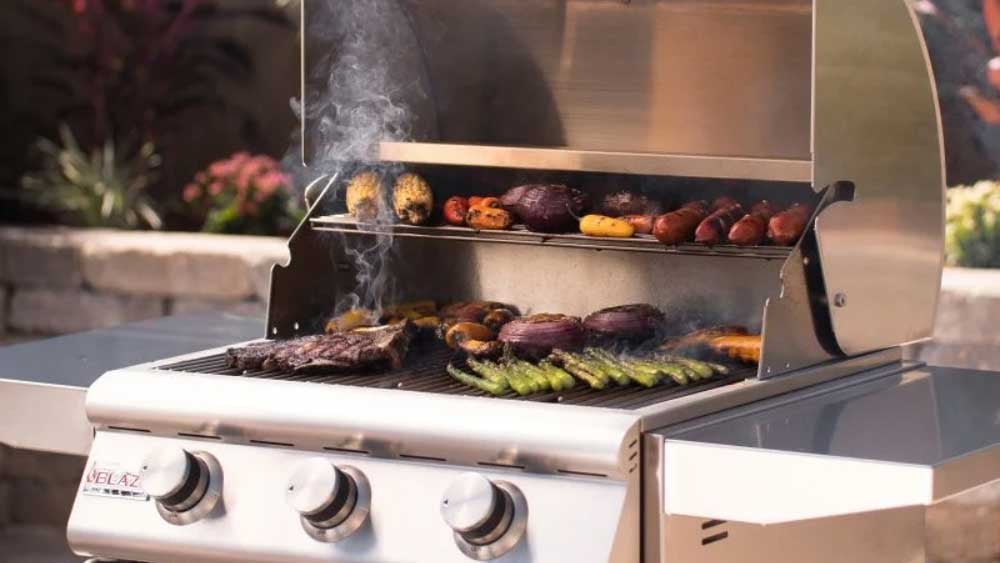
A real 316 stainless build at $5,000 to $10,000. You give up the hybrid fire, the higher BTU output, and the build precision of a Kalamazoo. You get an honest marine-grade grill at a fraction of the price.
Hestan's 321 stainless story is real, but 321 is not 316. Lynx, DCS, standard Caliber, and standard Hestan will rust in a much shorter period on the coast.
What To Do If You've Already Bought the Wrong Grill
Cover it when you're not using it. Rinse it with fresh water regularly. Keep the salt off as much as you can.
If you're starting over and you're on the water, Kalamazoo or Blaze. That's the list.
Still Deciding? Come See Them In Person.
We have showrooms in Boston, Framingham, Hanover, Norton, Hyannis, and Nantucket.
Touch the grates, talk to someone who's installed hundreds of these, and decide with your hands on the grill. Most appointments take 30 minutes.

Conclusion: How to Decide
There is no single best professional grill. There's the grill that fits how you cook, where you live, and what you're willing to spend.
If you want the deepest flavor and you'll actually use wood and charcoal: Kalamazoo Hybrid Fire. It does something the other four can't.
If you sear steaks more than anything else: Lynx with the Trident infrared, in the gas-plus-sear configuration. Don't buy the all-sear.
If you want a real professional grill without the Kalamazoo price: DCS Series 9. Competent across the board, modular for service, less than half the cost of the top of the market.
If your outdoor kitchen is design-driven and you can wait: Hestan, with the honest understanding that pricing and availability have made it harder to recommend.
If your view matters more than your peak BTU output: Caliber, now True Caliber, with the disappearing lid and nearly 100 finish combinations.
If you live on the Massachusetts coast or anywhere within a mile of saltwater: Kalamazoo marine-grade or Blaze marine-grade. Nothing else.
One last thing: The grill is 30% to 40% of the decision. The other 60% to 70% is installing it right, with the proper gas line, delivery on what are very heavy products, and buying it from a company that will show up when the igniters or other parts eventually break.
Additional Resources
Imagine the perfect barbecue experience with the right grill, smoker, griddle. Our BBQ Grill Buying Guide makes this dream a reality. Learn from the best brands like Lynx, Kamado Joe, and Weber.
Download now and make every barbecue a story worth telling. Over 1 million people have read a Yale Guide.
Related Articles:

Why Should You Trust Us?
It seems that every appliance review has nothing but glowing comments about almost every product, yet you read customer reviews and they are almost universally bad.
We are here to fill in the disconnect. We'll give you the best features, and the drawbacks as well, including reliability based on over 33,000 calls performed by our service team just last year. Our goal is to give you ALL the information so you know what's right for you.
Please consider subscribing or adding to the conversation in the comments below. We appreciate you stopping by.