

December 30th, 2025 | 19 min. read
Learn how to find the perfect laundry products with our Compact Laundry Buying Guide

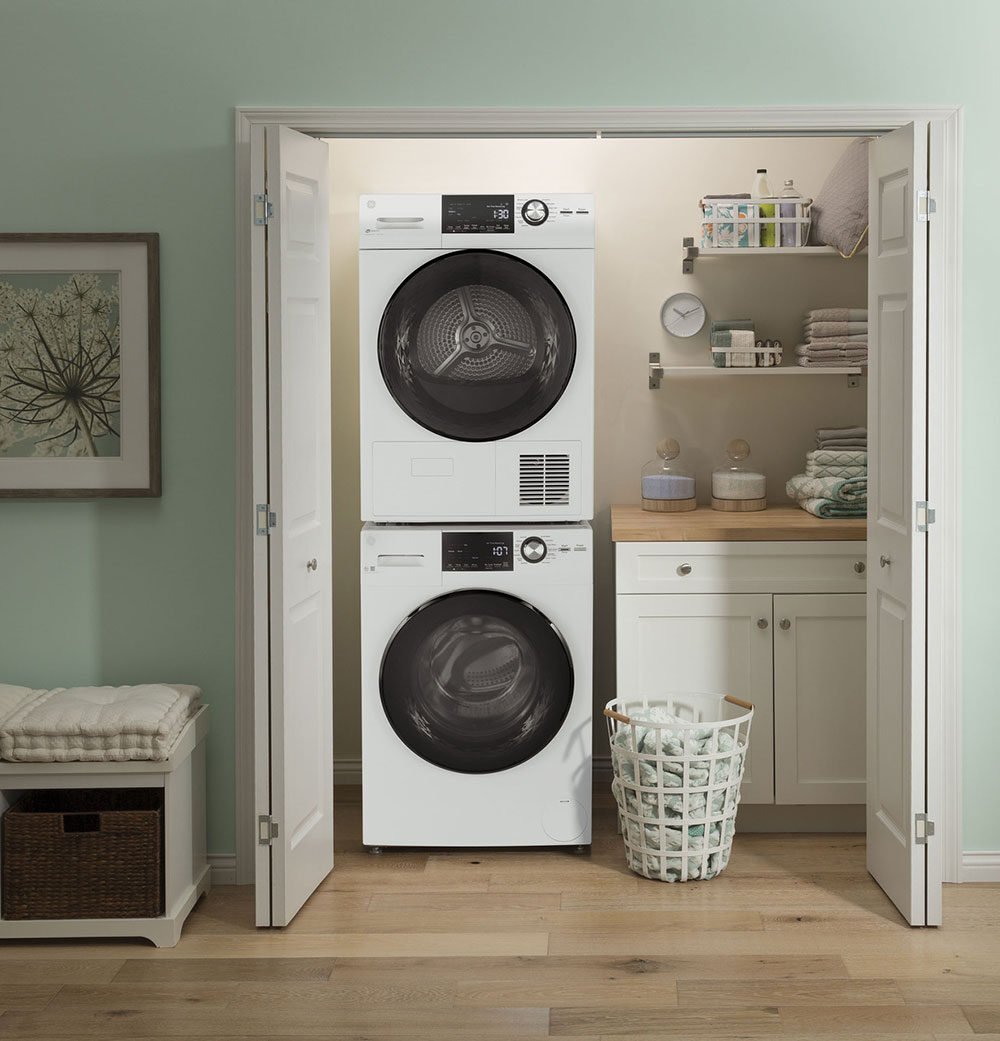
TL;DR: The Best Compact Washers and Dryers of 2026
Compact laundry in 2026 comes down to space, drying system, and service. Most homes should choose a ventless heat pump set, then pick a brand based on what matters most.
Top picks 🏆
- Best overall: Miele WXR 860 + TXR 860WP (best fabric care + dryer reliability)
- Safest, most popular: Bosch 800 (quiet, reliable, easy installs)
- Best value tech: LG (strong reliability + smart features)
- Fastest drying: GE vented, only if you already have a vent
- Combo units: only if a 24-inch pair won’t fit (often wider, deeper, slower)
Reliability snapshot 📊
Washers: LG 4.1%, Bosch 5.2% | Dryers: Miele 6.8% (LG/Bosch close)
Do this first ✅ Measure depth/door swing and confirm local heat pump dryer service.
You’d think compact laundry would be simple: small washer, small dryer, done.
But in 2026, it’s the most confusing category in appliances. Heat pump vs. vented. 120 volts vs. 240. Auto dispensers. Tiny closets. Boston staircases.
Choose wrong, and it won’t fit your space or your lifestyle.
This guide breaks it down. You’ll see what works, what fits, and what fails, backed by real service data from 33,190 homes across New England.
What You Will Learn in This Guide
| What You Will Learn | |
| Compact laundry basics | Dimensions and placement in small spaces |
| Drying systems | Heat pump, vented, and condenser differences |
| Reliability | Real service data from 33,190 calls |
| Brand comparisons | Miele, Bosch, LG, GE, and combo units |
| Installation pitfalls | Depth, doorway clearance, and closet issues |
| Service problems | Why heat pump dryers are harder to repair |
| Other brands | Samsung and Electrolux explained |
| Buying advice | How to match the right set to your home and habits |
📌 Skip Ahead:
- Full Product Reviews
- What Is Compact Laundry?
- Dryer Types Explained: Heat Pump vs. Vented vs. Condenser
- Heat Pump Dryer Repairs: What to Know
- Most Reliable Compact Laundry Brands
- Washer-Dryer Combo Units
- Other Compact Brands to Know
- Key Takeaways
- FAQs
The Best Compact Washers and Dryers of 2026
The Best Overall Compact Laundry Set for 2026: Miele WXR 860 WCS and TXR 860WP
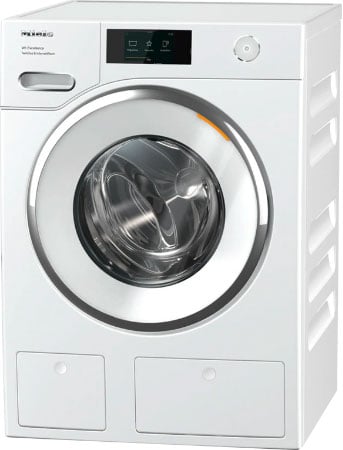
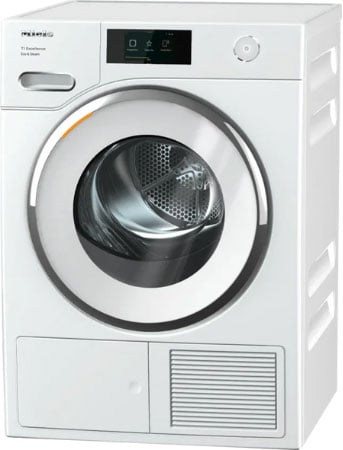
Miele builds over 98 percent of its parts in-house. Nobody else in compact laundry does that.
You feel it in the way the washer handles delicate fabrics and in the precision of the dryer’s moisture sensors.
This is the most complete compact laundry system you can buy.
It’s also the most expensive.
If you want fabric care, durability, and the longest feature list, this set is your top choice.
Miele WXR860 Compact Washer: Key Features
1. Fabric Care Cycles
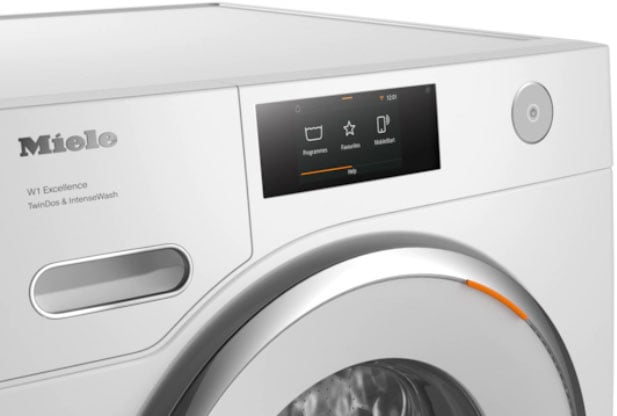
You get 25 specialty cycles, more than any other compact washer. There are settings for silks, denim, outerwear, wool, and athletic fabrics.
Miele’s focus is always fabric life, not just stain removal.
2. Steam Cycle
Steam enters the drum at the end of the wash. It relaxes wrinkles, kills allergens, and cuts down on ironing.
Only Miele, Samsung, and Electrolux offer steam in compact washers.
3. QuickIntenseWash
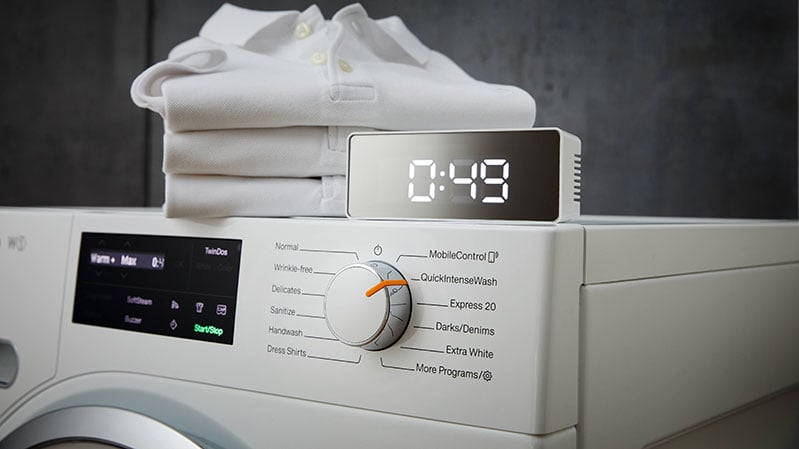
This cycle pulls water from the top and bottom of the drum at the same time, saturating fabrics evenly and speeding up the cleaning process without beating the clothes up.
4. Honeycomb Drum
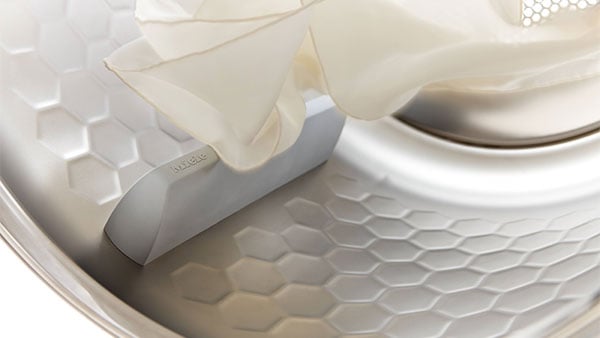
Miele’s honeycomb pattern floats clothes on a thin layer of water, which means less friction, less wear, and better protection for delicate items.
The matching dryer uses a honeycomb drum with smaller perforations to help prevent snagging.
5. Detergent Dispensing Options
Miele is the only compact washer with three detergent systems.
Caplets
Single-use capsules targeted to fabric types.
Miele’s versions include softeners, waterproofing agents, and detergent boosters.The washer releases them automatically at the optimal time.
Tide also makes caplets that work in the machine.
TwinDos
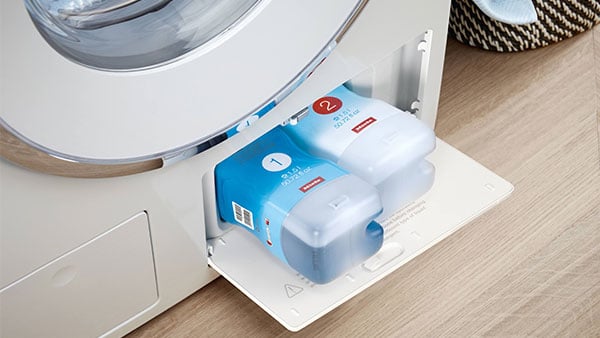
Two built-in cartridges. Phase 1 is the detergent. Phase 2 is the color-safe bleach and enzyme booster.
The system dispenses each at the right time in the cycle for better stain removal. You can load up to 40 washes’ worth and track levels in the Miele app.
Single-Dose Drawer
If you want to use your own detergent brand, you can. The machine adjusts the wash volume automatically.
Note on TwinDos: It’s smart and accurate, but the cartridges are sold only by Miele.
6. High Spin Speed
The washer spins at 1600 RPM. The average front-load washer spins at 1200 RPM.
That extra spin speed pulls out more water. Your clothes come out barely damp, and drying time drops significantly.
Miele TXR860WP Compact Dryer: Key Features
1. Most Reliable Compact Dryer
Miele leads compact dryer reliability by a narrow margin. They only manufacture heat pump dryers and have been doing it since 2017.
LG and Bosch are close behind, but their heat pump lines are newer and still evolving.
2. 120-Volt Heat Pump System
This is unusual. Most compact heat pump dryers use 240 volts.
Miele’s 120-volt system lets you place the dryer in more locations.
Drying time can reach two hours depending on fabrics. That’s normal for heat pumps and balanced by lower energy use.
3. Steam Refresh
Steam in a dryer isn’t about cleaning. It’s about convenience.
If a shirt is wrinkled, toss it in for ten minutes. It comes out smooth and wearable.
4. FragranceDos
This injects a small amount of scent into the drum using a fragrance caplet. Scents include Nature, Cocoon, and Aqua. Each is produced in France.
Whether “Cocoon” smells good is your call.
5. Moisture Sensors
Miele’s moisture-sensing system is the best in the category.
It uses a full-length bar running from the front to the back of the drum.
Most brands use a single sensor point. That is less accurate and can overdry items in mixed loads.
Bosch vs. Miele Compact Dryers: Drying Time
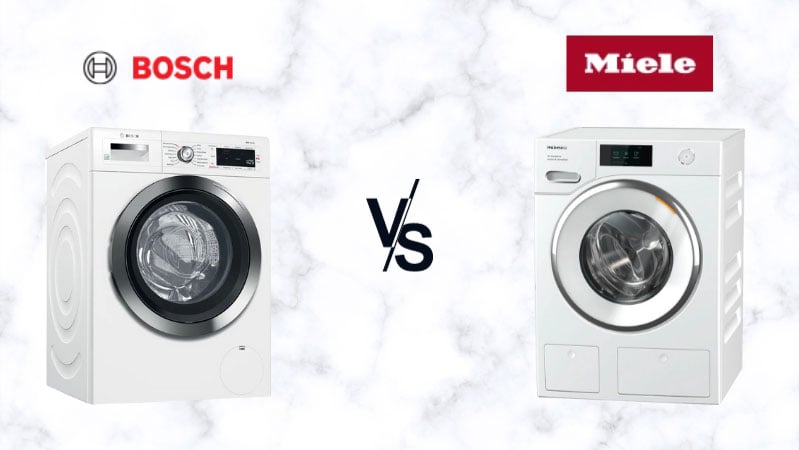
Fun fact: The 120-volt Miele has roughly the same drying time as the 240-volt Bosch.
Why? Miele uses mineral sensors to read your water’s mineral content and adjust the cycle as the clothes dry. It’s more precise, so it doesn’t waste time overdrying.
Dry times can still reach two hours depending on the fabric mix, but you don’t give up speed just because it’s 120 volts.
Pros and Cons of Miele Compact Laundry
Pros
- Best fabric care with 25 cycles
- Honeycomb drums protect delicate items
- Multiple detergent options, including TwinDos
- Excellent moisture sensing
- Best reliability in compact dryers
- 1600 RPM spin speed reduces dryer run time
- 120-volt dryer means easier placement in older homes
Cons
- Most expensive set at $4,899
- TwinDos cartridges are proprietary
- Tariffs will hit Miele hard, adding 15–20% in 2026
🔍 Read More: Differences Between Miele Compact Laundry Models
If You Want Miele Without the Price: WXD160WCS and TXD160WP
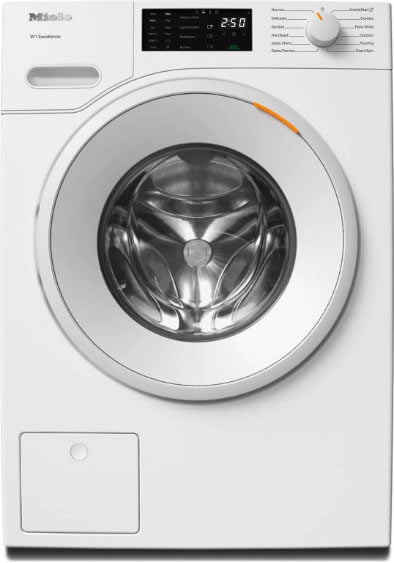
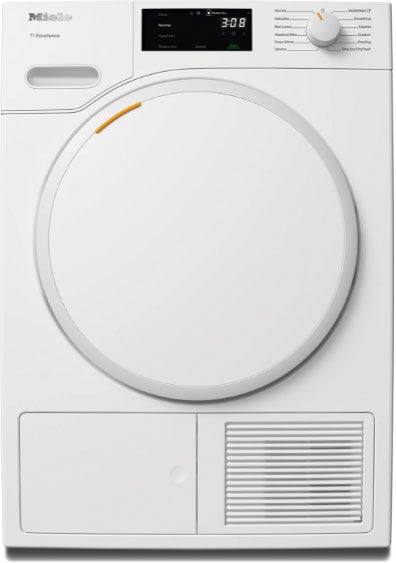
You still get:
- Honeycomb drums
- High spin speed
- Caplet dispensing
- Steam refresh
- FragranceDos
- Same reliability
What you lose:
- QuickIntenseWash
- TwinDos
- Some specialized cycles
You save almost $2,000, making this the best value in the Miele line.
The Most Popular Compact Laundry Set: Bosch WGB246AXUC and WQB245AXUC
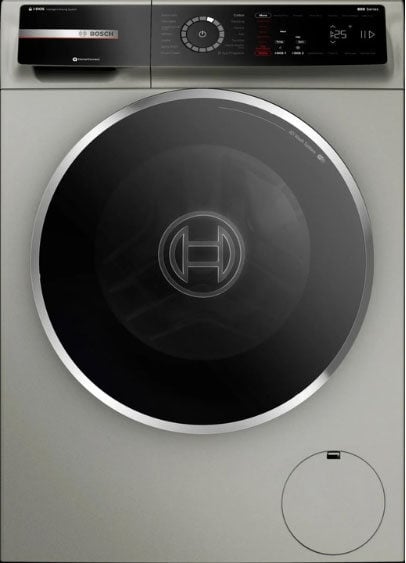
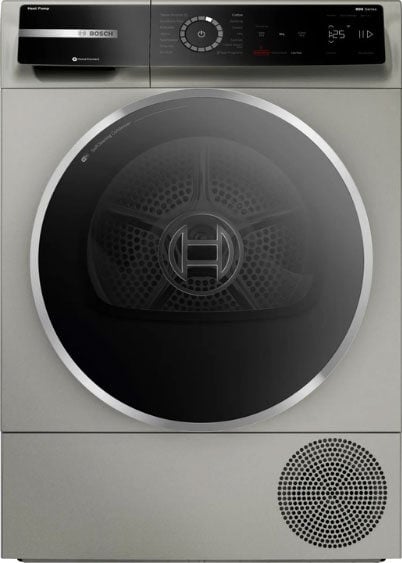
Bosch is the brand you see most in Boston condos and large multifamily projects.
Developers like it because it’s reliable, quiet, and easy to install. Homeowners like it because it’s straightforward and consistent.
Bosch’s newest compact line comes in three tiers:
- 300 Series
- 500 Series
- 800 Series
The 800 Series is the most popular because it adds auto dispense, stain-focused cycles, and upgraded controls.
Bosch Compact Washer WGB246AXUC: Key Features
1. Stain-Specific Wash Cycles
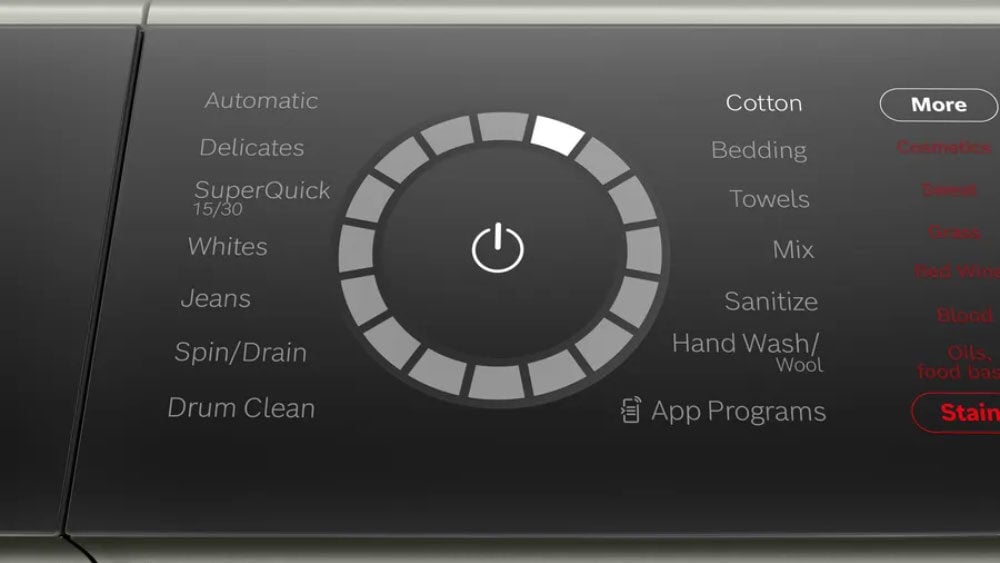
The 800 Series washer automatically adjusts the wash based on the type of stain.
Red wine. Grass. Oil. Blood.
You choose the stain, and the washer handles the rest.
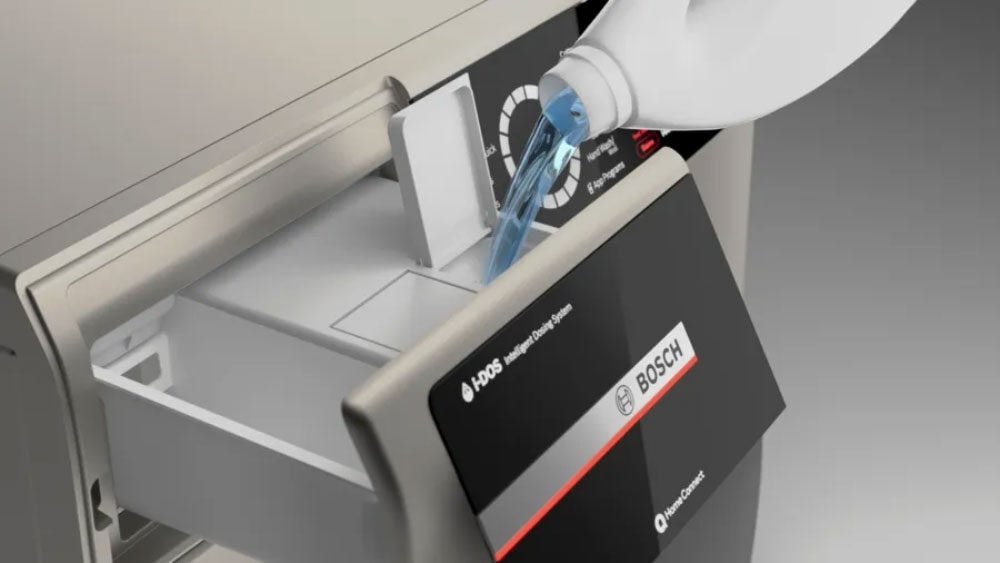
2. Automatic Detergent Dispenser
3. Sound Insulation
Bosch is one of the quietest compact washers you can buy. This matters if the laundry is located in a hallway closet or near a bedroom, which is common in Boston condos.
4. Reliability
Bosch is the second most reliable compact washer brand at 5.2 percent, below the 6.1 percent industry average.
This is based on 33,190 service calls logged by our team last year.
Bosch Compact Dryer WQB245AXUC: Key Features
1. Heat Pump Drying
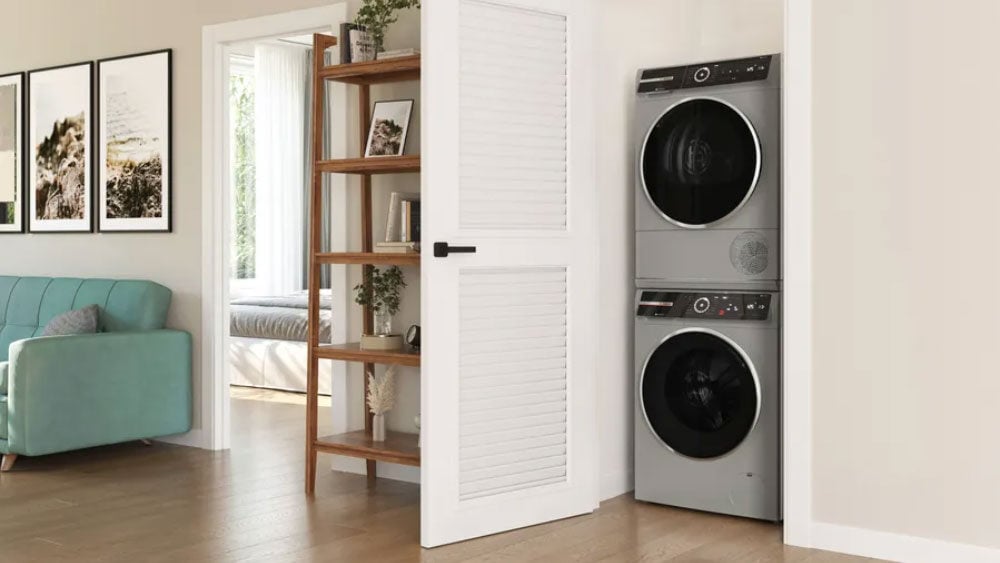
Like Miele and LG, Bosch uses heat pump technology.It’s energy efficient, gentle on clothes, and fully ventless.
2. Self-Cleaning Condenser
This is one of Bosch’s standout features.
Most heat pump dryers require you to clean the condenser manually.
Bosch uses moisture from the evaporator to rinse lint off the condenser during the cycle.
You get consistent performance without extra maintenance.
3. 240-Volt Operation
Bosch uses 240 volts instead of Miele’s 120 volts. In theory, this should produce faster dry times.
In practice, Miele’s mineral-sensing system closes most of the speed gap.
Pros and Cons of Bosch Compact Laundry
Pros
- Most reliable compact washer brand
- Stain-focused cycles for everyday problems
- Quiet
- Strong heat pump performance
- Self-cleaning condenser is a real advantage
- Great choice for condo installs and multifamily units
Cons
- Fewer fabric-care features than Miele
- No honeycomb drum
- Auto dispense is good but not as advanced as TwinDos
- You must add water for the dryer’s steam function
Bosch Verdict
Bosch is the safest overall choice if you want reliability, quiet operation, and strong performance without the premium price of Miele.
It’s the most popular compact laundry set for a reason.
The Independent Compact Set: LG WM1455HWA and DLHC1455W
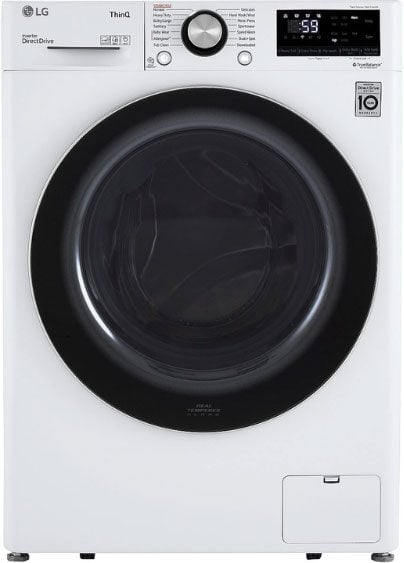
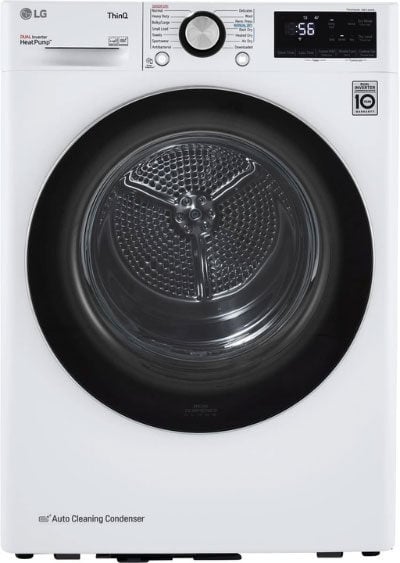
This is LG’s standard compact washer and dryer pair. You get the same brain their full-size machines have, but in a smaller 24-inch cabinet.
LG Compact Washer WM1455HWA: Key Features
1. Capacity and Cycles
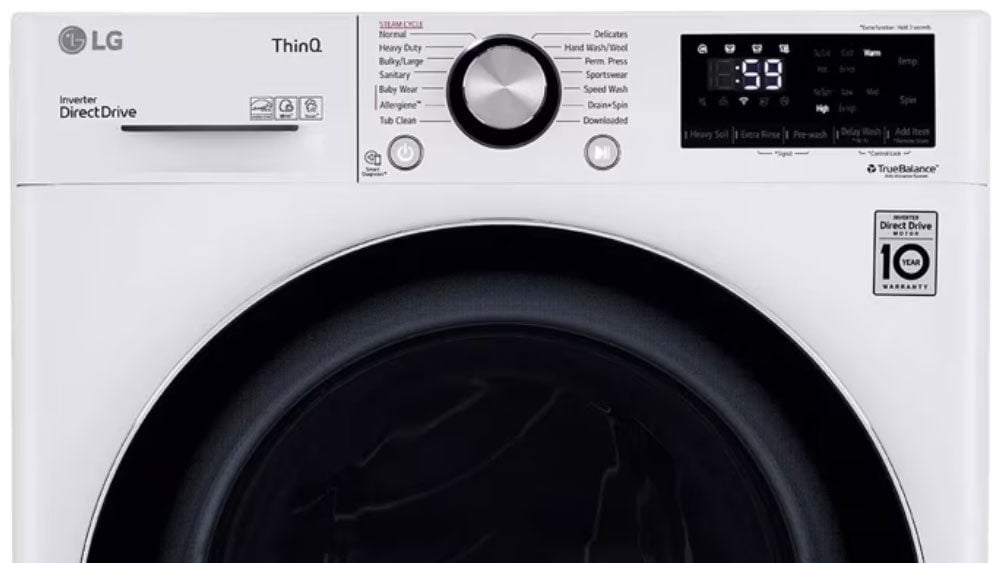
You get a 2.4 cubic foot drum, which is standard for compact washers. There are 14 cycles and nine options, covering most fabric types.
2. LG ThinQ App and Pairing
Once connected, the washer and dryer talk to each other.
Whatever cycle you select on the washer, the dryer automatically adjusts. You don’t have to guess which dry cycle matches the load.
3. AI-Powered Washing
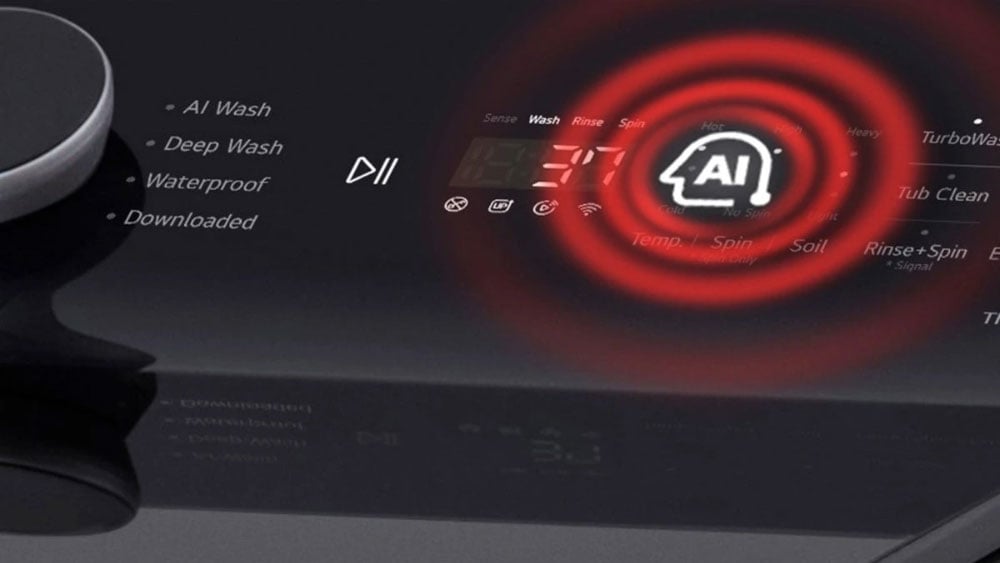
LG senses the fabric type and weight, then adjusts wash motions automatically.
It’s not a gimmick. It prevents overwashing mixed loads and reduces wear.
4. No Automatic Dispenser
LG has auto dispensing on its full-size laundry, but not in the compact line. You need to measure detergent manually.
For most people, this is fine. For heavy users or buyers worried about buildup, auto dispense would still be better.
LG Compact Dryer DLHC1455W: Key Features
1. Heat Pump Drying
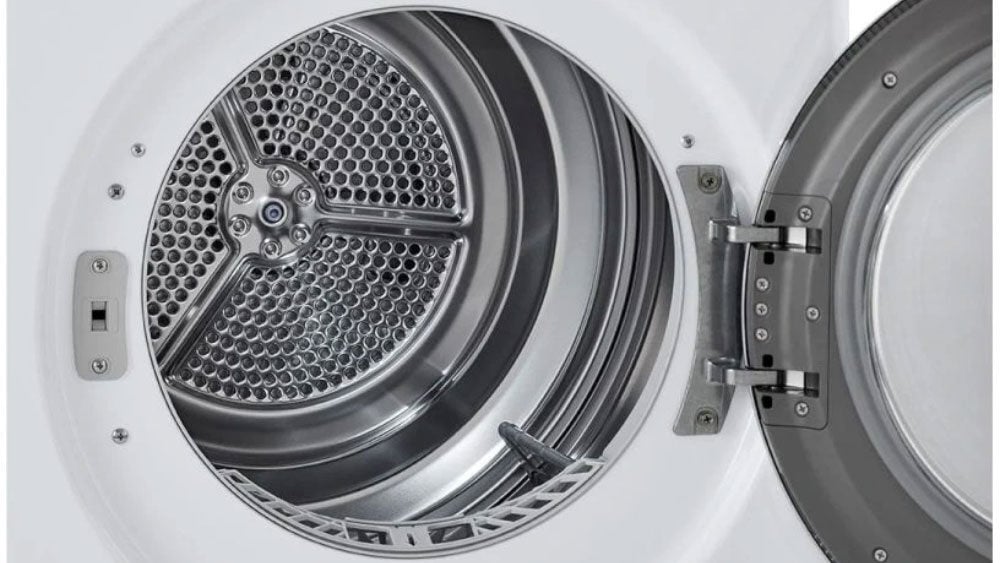
Efficient. Ventless. Lower heat. Safe for condos and closets.
2. 220/240-Volt Power
LG uses 240 volts for faster heat pump operation. It won’t match a vented dryer for speed, but it’s quicker than 120-volt heat pumps without advanced sensors.
3. Self-Cleaning Condenser
Like Bosch, LG flushes lint from the condenser automatically. This keeps performance consistent and cuts down on maintenance.
4. AI Drying Sensors
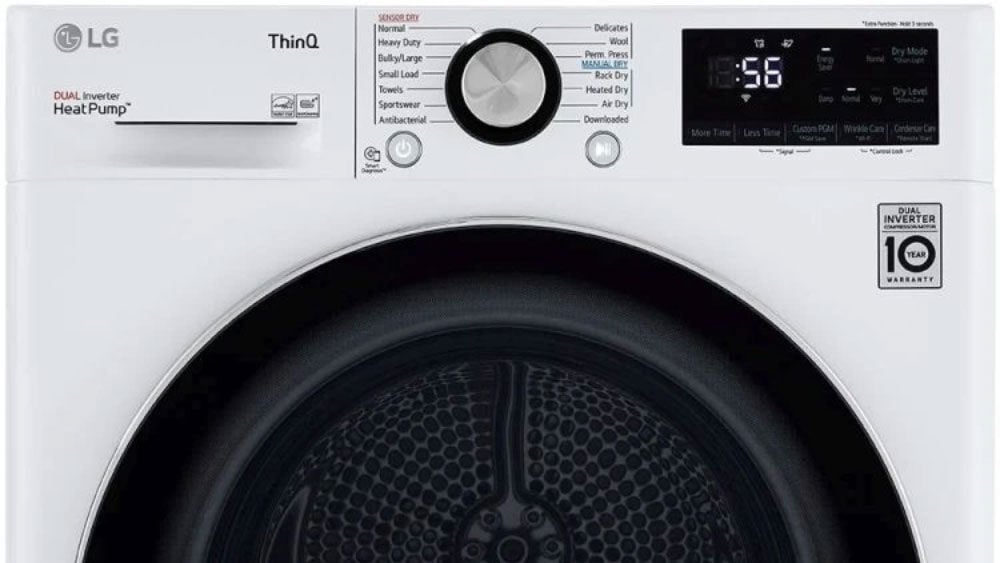
The dryer adjusts time and heat as the load dries. Mixed loads come out more evenly dry than in older heat pump designs.
LG WashTower WKHC152HWA
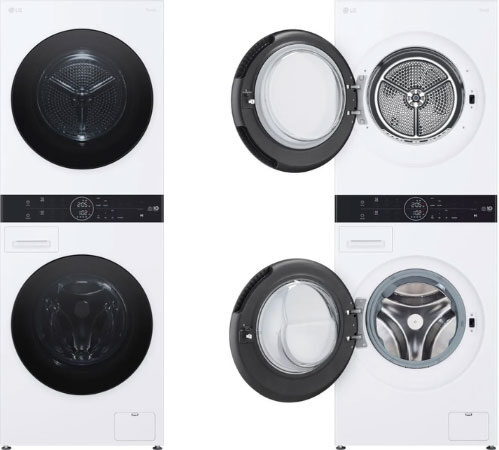
The LG WashTower is worth its own section. The full-size version is one of the most successful laundry products of the last decade.
The compact version brings the same design into a 24-inch footprint.
The big appeal is the center-mounted control panel.
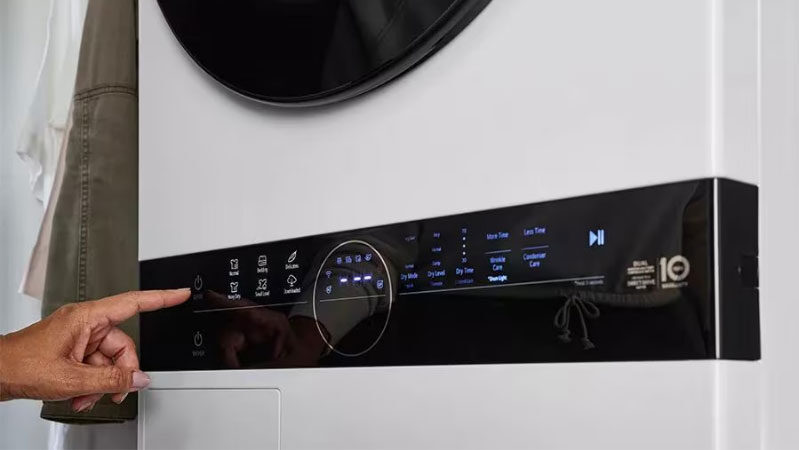
You don’t have to reach for the dryer knobs over your head when the units are stacked.
This matters in tight Boston closets and for anyone under six feet tall.
Key Features of the LG Compact WashTower
1. Reliability
The WashTower inherits LG’s reliability strengths. We logged a 4.1 percent service rate for LG compact washers last year.
2. Turbo360 Technology
Five high-pressure jets push water through the load quickly. A normal cycle can finish in 30 minutes.
3. Cycles and App Options
You get all the expected cycles, plus the ability to add new ones through the ThinQ app.
4. Depth and Installation
Here is the sticking point. The compact WashTower is 24 inches wide, but 26 inches deep. LG’s manual requires four extra inches for installation.
Your real depth is 30 inches. This is a problem in older Boston buildings with narrow doorways and tight landings.
Measure your space carefully.
Pros and Cons: LG Compact Laundry
Pros
- One of the most reliable compact washer brands
- Excellent app features and washer-dryer pairing
- AI washing and drying actually work
- Turbo360 cuts wash time dramatically
- Self-cleaning condenser on the dryer
- WashTower offers easier controls for stacked setups
Cons
- No automatic detergent dispenser
- No steam wash in the compact line
- Dryer requires 220/240 volts
- WashTower depth can be an installation issue in older homes
LG Verdict
LG gives you the most technology for the price. If you want app control, AI washing, and faster cycles without paying Miele prices, LG is your best choice.
Just measure your depth carefully if you’re considering the WashTower.
The Last Compact Vented Dryer: GE GFW148SSMWW and GFD14ESSNWW
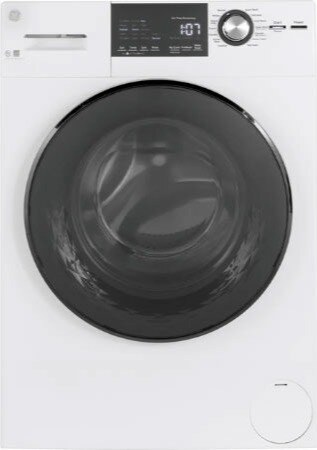
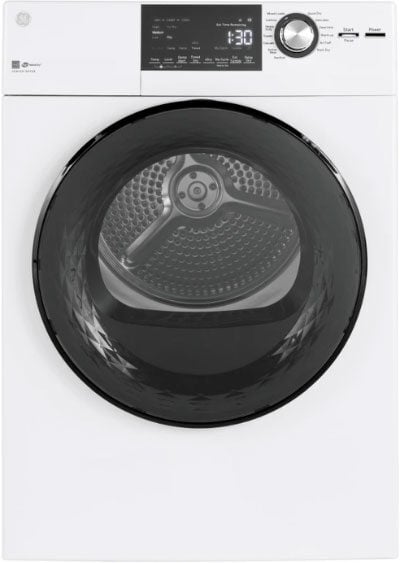
Almost every compact dryer today is ventless. That wasn’t always the case.
Over ten years ago, most compact vented dryers failed the UL fire-containment test. Brands dropped them, and heat pump technology took over.
GE is the only major manufacturer still offering a compact vented dryer. If you already have a working vent and want the fastest dry times, GE is your one choice.
The trade-offs are real, though, and you should weigh them carefully.
GE Compact Washer GFW148SSMWW: Key Features
1. Cycles and Options
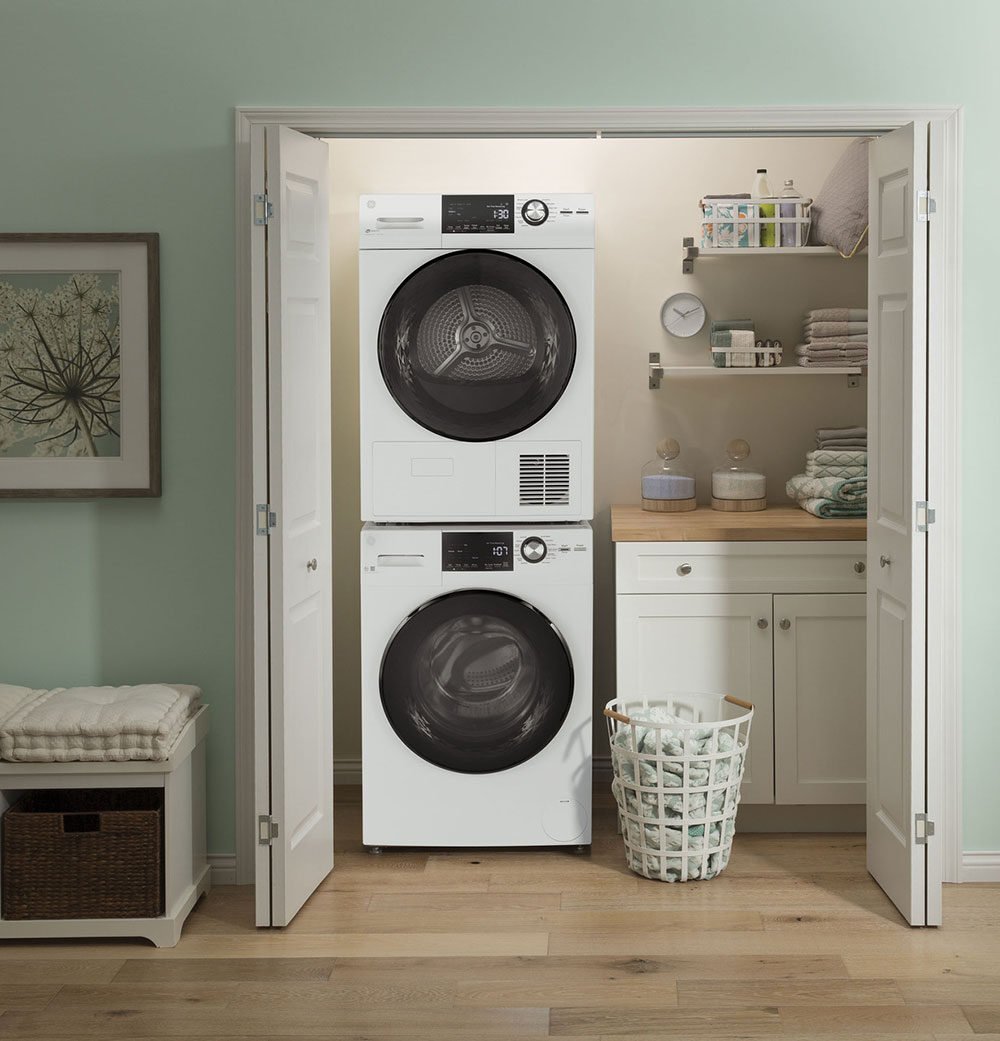
The washer gives you 14 cycles and nine options, covering everything from delicates to heavy soil.
GE also includes steam, which helps with stain removal and allergen reduction.
2. Straightforward Controls
GE’s compact washer isn’t packed with AI like LG or fabric-care features like Miele, but it’s easy to use and familiar for anyone used to traditional laundry.
GE Compact Dryer GFD14ESSNWW: Key Features
1. Vented Drying
This dryer uses room air, heats it with traditional elements, and vents it outside.
It dries faster than any heat pump. If you need speed, this is your best compact option.
2. Higher Operating Costs
A vented dryer pulls conditioned air out of your home. This increases your energy use by $150 to $200 per year in Massachusetts compared to a heat pump.
3. Limited Placement
You must have an existing working vent. No vent means no GE dryer.
4. Price vs. Value
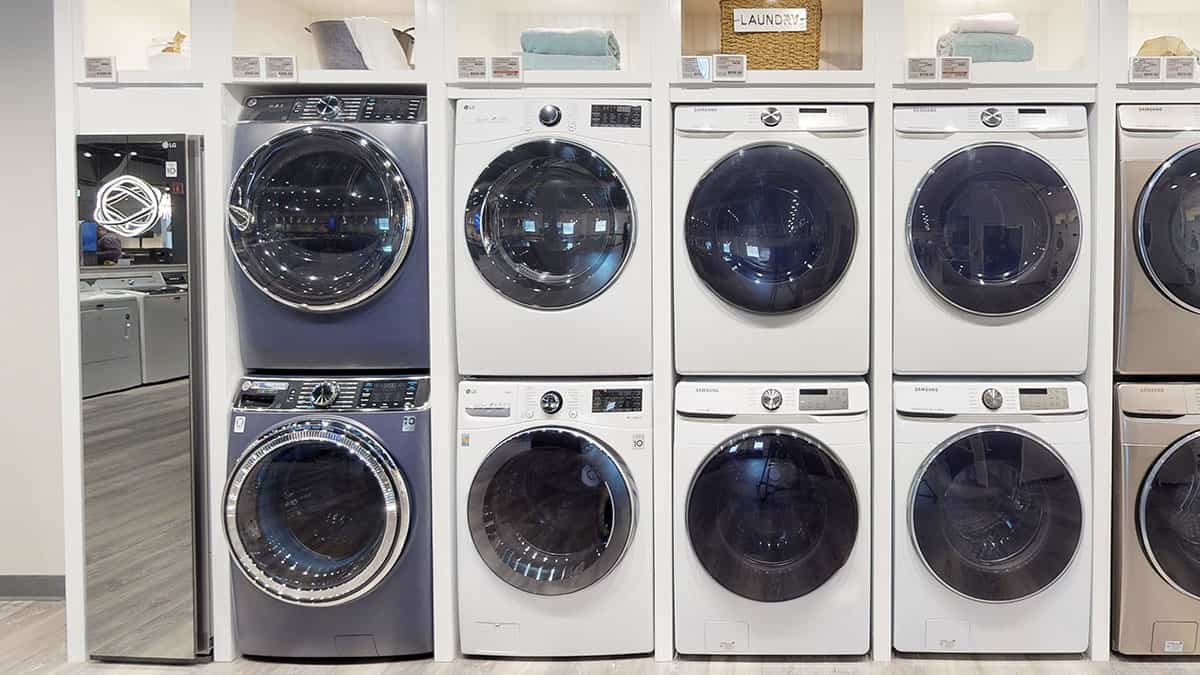
The washer and dryer together cost over $2,000.
But here is the dilemma: a full-size vented set with more features, a larger drum, and faster dry times can be found for about $1,100.
If you have the space, go full-size. If you don’t, this is the only compact vented set available.
Pros and Cons of GE Compact Laundry
Pros
- Only compact vented dryer available
- Fastest dry times in the compact category
- Washer includes steam
- Straightforward controls
- Good option if your vent is already in place
Cons
- Higher annual operating cost
- Not ventless, so placement is limited
- More expensive than full-size vented sets
- Fewer fabric-care features than Miele or Bosch
GE Verdict
Choose GE only if you have a working vent and want the fastest dry times.
If you have the room, a full-size vented set gives you more capacity and better value.
Need Help Choosing Between Bosch, Miele, LG and GE?
Not sure which compact laundry set fits your space? Download the Yale Compact Laundry Buying Guide. You’ll see every model, feature, and reliability rate in one place.
We compare dimensions, dry systems, installation depth, and the service data you won’t find anywhere else.
Worried About Delivery or Installation?
We can deliver many compact washers and dryers within 48 hours.
If you’re replacing a broken unit or working in a tight condo closet, talk to us first so you don’t buy something that won’t fit through your door.
What Is Compact Laundry?
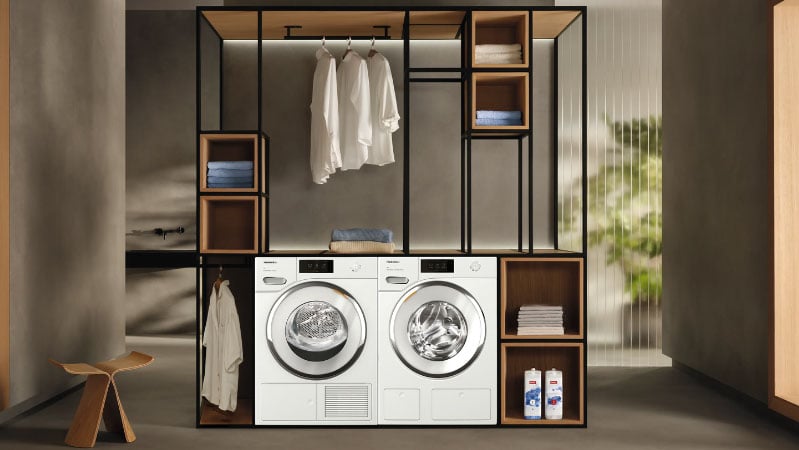
⚡ Quick Answer: Compact laundry is a washer and dryer designed to fit where full-size units cannot, like closets, tight utility rooms, and small condos.
Most compact sets are built around a 24-inch-wide footprint, so space and clearance matter more than features.
Compact washers and dryers are built for small spaces where full-size laundry will not fit.
The standard footprint is about 34 inches tall, 24 inches wide, and 24 inches deep. That is the same width as a dishwasher, and both fit a 24-inch cabinet opening.
Full-size front-load laundry is usually 38 inches tall, 27 inches wide, and up to 34 inches deep. That added depth and width makes full-size laundry impossible in most older Boston condos.
We see compact laundry installed in hallway closets, kitchen cabinets, basement landings, under staircases, and in tight Cape Cod utility rooms.
Key Takeaway: Compact laundry is about space first and features second. Your available width, height, depth, and door swing decide everything.
Heat Pump vs. Vented vs. Condenser: What Is the Real Difference?
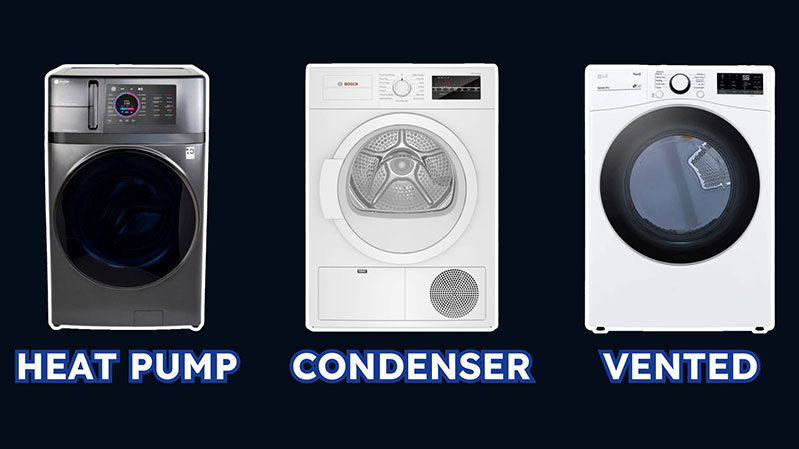
⚡ Quick Answer: Heat pump dryers are the modern standard for compact laundry because they don’t need a vent and use far less energy. Vented dryers are faster but require a working vent, while older condenser dryers tend to dump heat and humidity back into the room.
Condenser Dryers
Years ago, I had a Miele condenser dryer. It pushed warm, humid air back into the room. The closet would feel hot. It worked, but it was not efficient or comfortable.
Condenser drying is older technology and has largely been replaced by heat pumps.
Heat Pump Dryers
Heat pump dryers use a compressor, heat exchanger, and evaporator. It is basically refrigerator technology inside a dryer.
The advantages are clear:
- Your room stays cool.
- Your electric bill drops.
- Installation is easier because no vent is required.
You can save about $100 to $150 a year in Massachusetts if you run a load a day.
If you want the most flexibility in a small space, heat pump is the safest choice.
Vented Dryers
Vented dryers are fast, but they require a working vent.
Most compact vented dryers failed the UL fire containment test over ten years ago, which is why only GE still offers one.
If you have a working vent and want speed, GE is your one option.
Verdict
If you need flexibility, choose heat pump. If you have a working vent and want speed, GE is your one option. If you see condenser dryers, skip them.
🔍 Read more: Vented vs Condenser vs Heat Pump Dryers (2025): Real Costs, Pros & Trade-Offs
The Real Problem: Repairing Heat Pump Dryers
⚡ Quick Answer: Heat pump dryers are efficient and ventless, but repairs can be harder because they use refrigeration-style components. The biggest risk is not the brand, it’s whether qualified service and parts are available where you live.
Heat pump dryers are efficient, flexible, and ideal for condos and tight spaces. They’re also harder to fix.
The technology inside them is the same mix of components you find in a refrigerator:
- Compressor
- Evaporator
- Heat exchanger
Here’s where it gets tricky: refrigerator techs don’t work on dryers, and dryer techs don’t work on refrigeration systems.
It’s a knowledge gap across the whole industry. This is why service availability can matter more than brand.
Before you buy a heat pump dryer, ask two questions:
- Who services heat pump dryers in my area?
- Do they stock parts or wait for factory shipments?
Compact dryers fail less often than full-size laundry, but when they fail, you don’t want to wait weeks for a part or a technician who doesn’t know the system.
🔍 Read more: Should You Buy a Heat Pump Dryer?
What Are the Most Reliable Compact Laundry Brands?
⚡ Quick Answer: Compact laundry reliability is strong overall, but there are clear leaders. For washers, LG and Bosch have the lowest service rates, while Miele leads compact dryers by a narrow margin.
Compact Washer Reliability for 2026
The following service rates are based on a minimum of 100 products sold and a total sample of over 700 products within 12 months.
| Service Rates | |
| LG | 4.1% |
| Bosch | 5.2% |
| Miele | 7.9% |
| Average Service Rate | 6.1% |
Washer Verdict: LG and Bosch are the most reliable compact washers.
Compact Dryer Reliability for 2026
The following service rates are based on a minimum of 100 products sold and a total sample of over 800 products within 12 months.
| Service Rate | |
| Miele | 6.8% |
| LG | 7.1% |
| Bosch | 8.4% |
| Average Service Rate | 7.5% |
Dryer Verdict: Miele is the most reliable compact dryer by a narrow margin. They only manufacture heat pump dryers and have been doing it since 2017.
LG and Bosch are close behind, but their heat pump lines are newer and still improving.
Read More: Most Reliable Compact Washers & Dryers
Combo Washers and Dryers: A New Space-Saving Category
.jpg?width=799&height=450&name=GE-Profile-UltraFast-vs-LE-WashCombo-vs-Samsung-Bespoke-Combo-Washers-Dryers-(1).jpg)
If a 24-inch pair won’t fit, here’s the new alternative: All-in-One Combo Washers & Dryers.
The main advantage is simple: a combo unit plugs into a 120-volt outlet, needs no vent, and handles everything in one machine.
You put your clothes in dirty. You take them out clean and dry. No transferring between a washer and dryer.
That means you can load it before bed and wake up to a finished load, or start a cycle before you leave for work and come home to clean clothes.
For the right home, that convenience is the entire pitch.
The main players today are:
- LG
- GE Profile
- Samsung
Why Combo Units Are Growing Fast
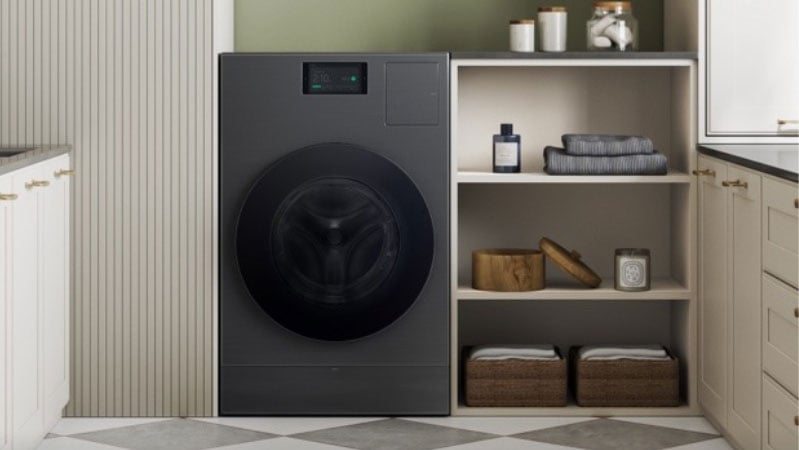
A compact washer and dryer together are 48 inches wide when side by side.
A combo washer and dryeris one machine, so the combined footprint shrinks by nearly 20 inches.
This is a big deal in Boston condos, basement apartments, and Cape cottages where laundry often squeezes into odd closets.
You also get hands-off operation. Put clothes in before bed. Wake up to a finished load. No switching required.
The Trade-Offs You Need to Know
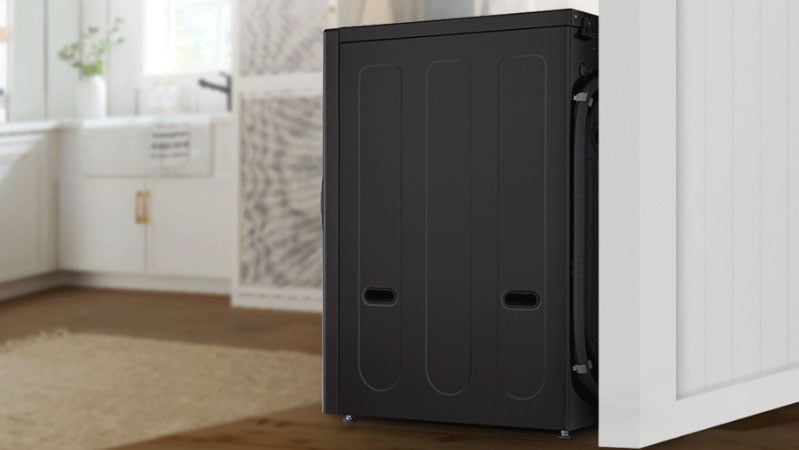
Combo units are not narrow. Most are 27 to 29 inches wide, compared to 24 inches for standard compacts.
Depth can also be an issue. Many combo units run much deeper, up to 13 inches deeper than compact sets.
If you live in an older Boston building with tight turns and narrow hallways, this matters. You must measure every doorway and landing.
Dry times are also longer than a vented dryer. These machines use heat pump drying, which is efficient but takes time.
The biggest risks are fit, depth, and drying time, not the idea of the combo itself.
Reliability and Current Performance
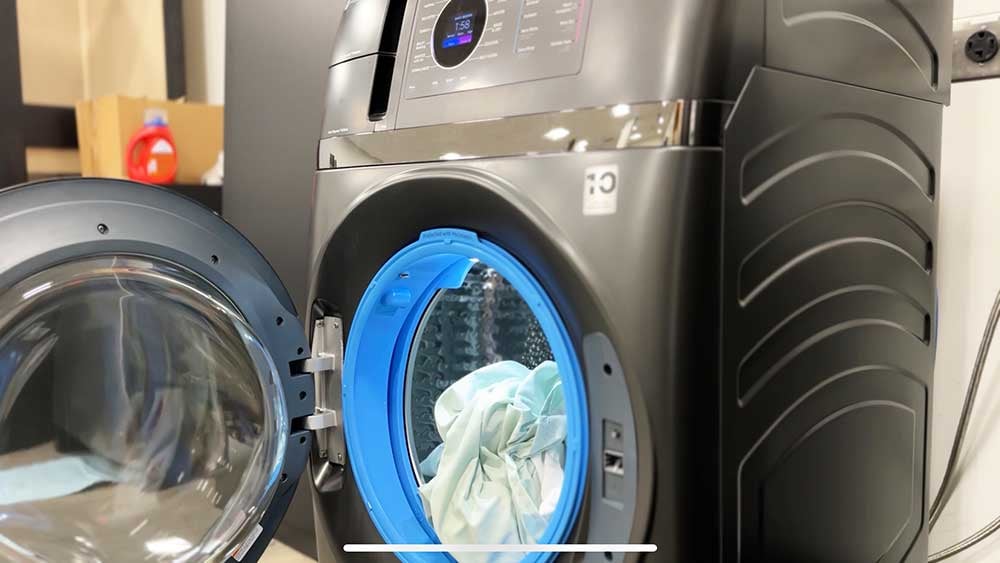
LG and GE Profile have shown strong early reliability based on our service calls.
Samsung has the features, but long-term reliability is still to be determined because the product is newer and Samsung has been inconsistent in compact laundry.
We track this constantly. The numbers will change as more units get installed.
🔍 Read more: Are Combo Washers Dryers Reliable?
Best Use Cases for Combo Units
Combo units make sense when:
- You absolutely cannot fit two machines
- Your laundry closet is too narrow for a 24-inch pair
- You want hands-off washing and drying
- You only do a few loads a week
- You want ventless flexibility
They do not make sense when:
- You do large, frequent loads
- You need fast dry times
- Your space can fit a traditional compact set
- You have a working vent and want a quick, simple dryer
Pros and Cons of Combo Units
Pros
- One machine instead of two
- Ideal for extremely tight spaces
- Heat pump drying is ventless
- Hands-off wash-to-dry convenience
- LG and GE showing good reliability so far
Cons
- Wider than compact sets
- Often much deeper
- Longer dry times
- Harder to service due to combined systems
- Not ideal for large or frequent loads
- Samsung reliability still unproven in this category
Combo Unit Verdict
Choose a combo unit only if you cannot physically fit a 24-inch compact washer and dryer.
The convenience is real, but installation depth and dry times make it a niche solution.
LG and GE are your safest bets this year.
🔍 Read more: GE UltraFast vs. LG WashCombo vs. Samsung Bespoke AI Combo Washers & Dryers
Other Compact Laundry Brands You’ll See Online
You’ll see Samsung and Electrolux when you search for compact laundry. We don’t sell them, but you should still know where they fit.
Both offer interesting features. Both have real trade-offs.
Samsung Compact Laundry
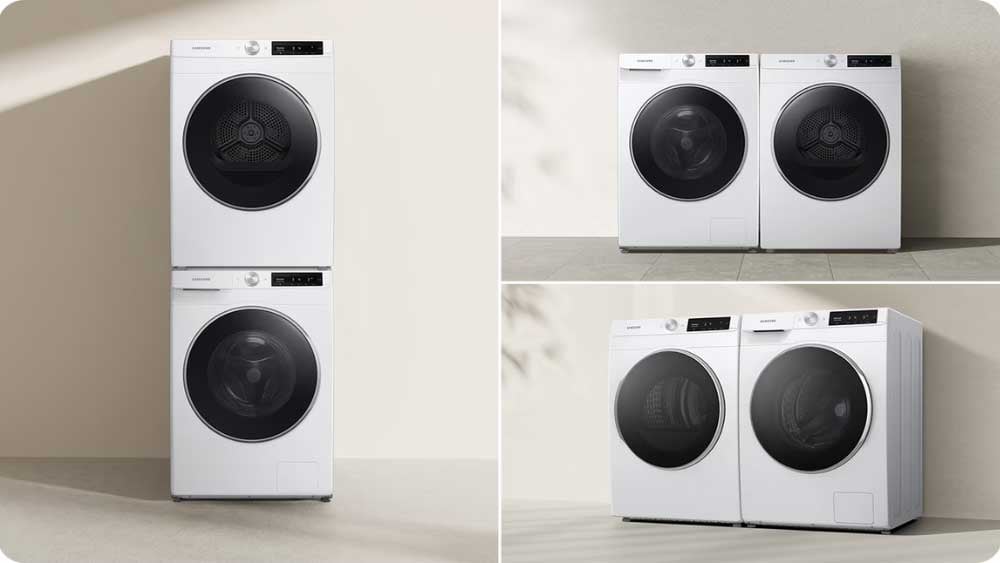
Samsung has good features on paper. Their compact washers usually have steam, lots of cycles, and heat pump dryers. The specs look great.
Here’s the problem: Samsung is feature-rich and support-poor. If you have an issue, it quickly becomes a problem.
Service coverage in New England is inconsistent, especially outside Greater Boston. This makes Samsung a tricky choice.
The products are interesting. They’re even fun to explore. But once something goes wrong, the ownership experience can turn fast.
Samsung Verdict: Good features. Poor support. It’s not a brand you want for compact laundry unless you’re comfortable taking on the service risk.
Electrolux Compact Laundry
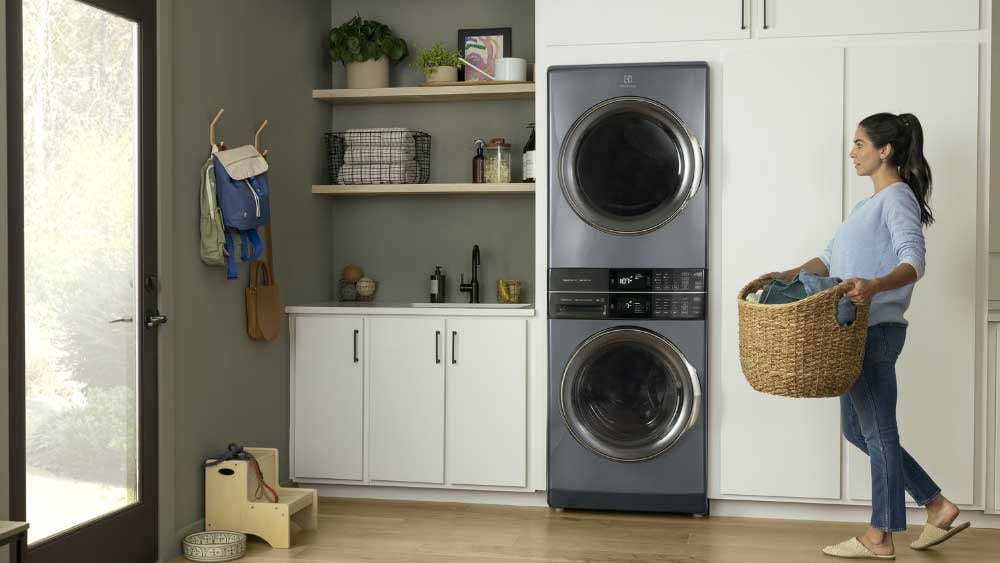
Electrolux built its reputation on full-size front-load laundry. They had some of the best stain removal and fabric care in the category. Those machines are still solid.
Their compact laundry never reached the same level. The washers are made in Italy. The dryers are made in Poland. The designs haven’t changed in 10 to 15 years.
That was true when we sold them, and it’s still true now.
Electrolux compact washers and dryers are decent if you catch a good price. But in terms of features, they don’t match Miele. In terms of reliability and smart design, they don’t match Bosch or LG.
Electrolux Verdict: Decent if discounted, but not competitive with the top compact brands. Good enough for the right price, not a leader in features or updates.
Key Takeaways
Compact laundry looks simple until you try to fit a washer and dryer into a Boston condo closet or a Cape cottage utility room.
The more you learn, the easier the choice becomes.
Here are the points that matter most.
1. Measure Your Space Before You Fall in Love With a Model
A compact set is 24 inches wide, but depth and door swing kill more installs than anything else.
- The LG WashTower needs 30 inches of real depth.
- Some heat pumps run deeper than expected.
- Tight hallways and stair landings matter.
2. The Drying System Decides What You Can Install
- Heat pump is the new standard: ventless, flexible, efficient.
- Vented only works if you already have a vent. GE is the only brand left.
- Condenser is old tech. Skip it.
3. Reliability Is Not Equal Across Brands
- Bosch and LG lead in washer reliability.
- Miele leads in dryer reliability.
- Heat pump dryers are harder to repair, so service coverage matters as much as brand.
4. Fabric Care and Noise Separate the Premium Brands
- Miele protects delicate fabrics better than anyone.
- Bosch is the quietest and the most consistent in condos.
- LG gives you the most technology for the price.
- GE gives you speed only if you have a vent.
5. Combo Units Solve Space Problems, Not Speed Problems
They save width and give you hands-off washing and drying, but they are wider and deeper than people expect.
They are great when space is impossible. Not great for big, frequent loads.
6. Samsung and Electrolux Have Clear Trade-Offs
Samsung has very good features and poor support. Before you buy, check service in your area.
Electrolux looks good and can be decent if discounted, but it doesn’t match Miele, Bosch, or LG in features or updates.
7. Tariffs Will Change Pricing in 2026
Miele will be hit hardest. Expect 15 to 20 percent higher prices next year.
8. Before You Buy a Heat Pump Dryer, Confirm Who Can Repair It
This is the biggest trap in compact laundry today.
A heat pump uses refrigerator components, and not every service team understands both systems.
In summary, compact laundry is all about space, drying system, and service. Once you know those three factors, the brand decision gets easier.
Additional Resources
Download the Yale Compact Laundry Buying Guide with specs, features, and buying tips for every major brand. Well over 1 million people have read a Yale Guide.
Related Articles
Looking for answers about Compact Laundry?
Choosing a new washer and dryer can be a confusing and time-consuming experience. We've taken the pain out of the decision process with our Compact Laundry Buying Guide.
Why Should You Trust Us?
It seems that every appliance review has nothing but glowing comments about almost every product, yet you read customer reviews and they are almost universally bad.
We are here to fill in the disconnect. We'll give you the best features, and the drawbacks as well, including reliability based on over 37,000 calls performed by our service team just last year. Our goal is to give you ALL the information so you know what's right for you.
Please consider subscribing or adding to the conversation in the comments below. We appreciate you stopping by.
A Note About Pricing
Pricing on this blog is for reference only and may include time sensitive rebates. We make every attempt to provide accurate pricing at time of publishing. Please call the stores for most accurate price.
Topics:
