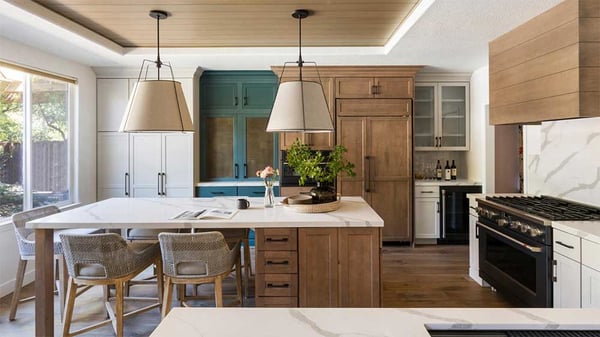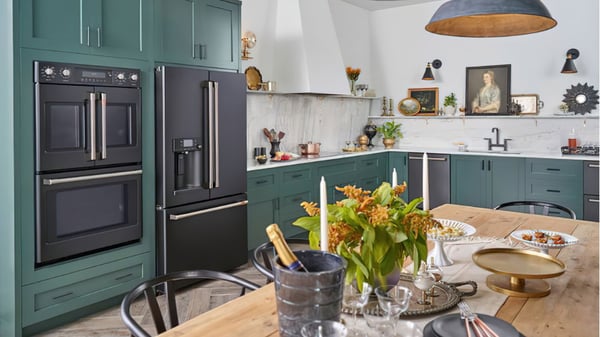

We're known for selling high-end appliances. That's mostly because many stores and box stores don't.
But expensive isn't always the right call. Some of the best values in our showroom cost a fraction of what you'd expect to spend.
Here are five inexpensive appliances I'd still put in my own home, along with the trade-offs you should know before you buy.
In This Article:
Should You Buy the Least Expensive Front-Load Washer?
The WM3400 is one of the least expensive front-load washers you can buy. It's also one of the easiest to recommend.

At 4.5 cubic feet, it holds as much as most popular front loads. It spins at 1,300 RPM, the same as LG's better models. So your clothes are drier.
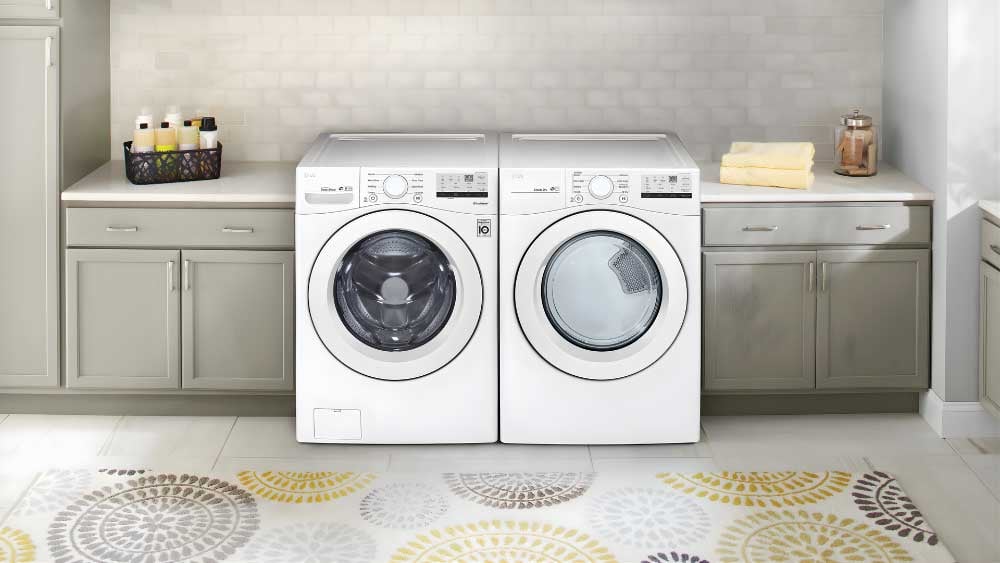
You also get plenty of cycles and options, far more than our parents ever had.
In our service data, LG front-load washers are the most reliable in the category at a 2.7% service rate.
What You Give Up (and Why It Doesn't Matter)
There's no steam to loosen dirt or refresh clothes. You probably don't use it anyway.
There's no Wi-Fi, either. Plenty of people worry about their washer getting hacked, and I understand that.
With this model, you're paying for the capacity and performance you'll actually use, and skipping the features you might not.
🔍 Read More: Most Reliable Front-Load Washers
Is the Bosch 100 Series Dishwasher Worth It?
I'd never have recommended last year's Bosch 100 Series. It had a plastic tub on the bottom, a lighter door, and no leak-protection system.

This year's lineup runs about $729 to $949 depending on which model you choose, and all of them have a stainless tub, a heavier door, and Bosch's leak-detection system.
You'll find five models in the series: the SHE41CM2N, SHE41CM6N, SHE41CM5N, SHV41DB3N, and SHX41EB5N.
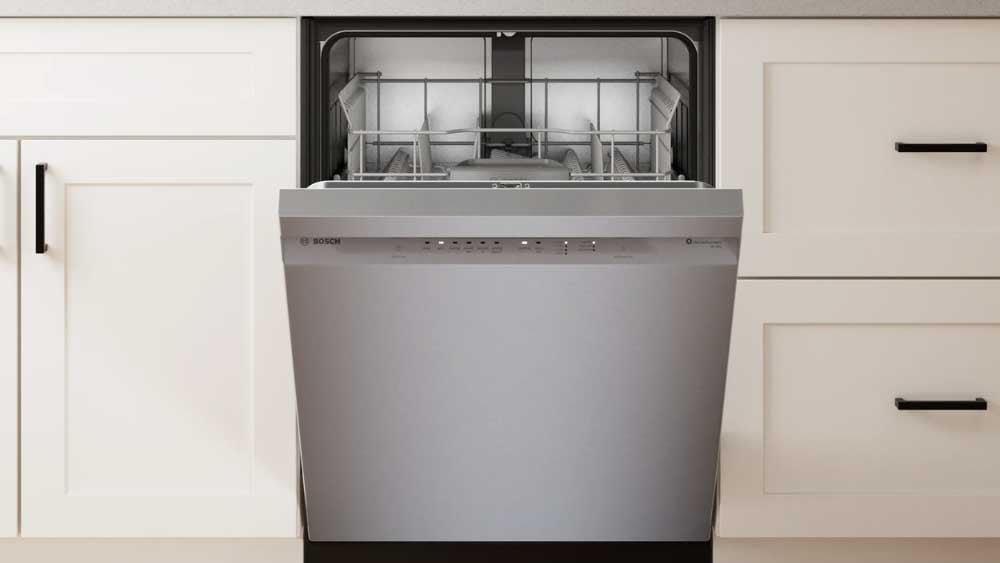
It's inexpensive, and it's reliable. In our service data, Bosch sits near the top of the dishwasher rankings behind Bosch Benchmark and Miele.
Miele is first, but Miele dishwashers start around $1,500.
What About GE and Whirlpool?
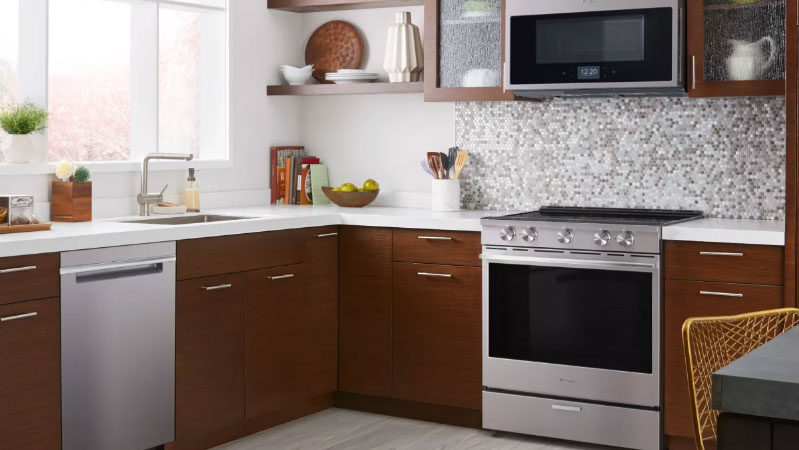
GE and Whirlpool make good dishwashers too. You'll find solid options in the high $500s.
Bosch is a little more reliable, though, and worth the extra $100 or so.
🔍 Read More: The Best Bosch Dishwashers for 2026
Should You Buy a Top-Mount Refrigerator Instead of a French Door?
Everybody wants a French door now, with water and ice through the door. And everybody complains when that water and ice dispenser breaks.
A simple top-mount refrigerator is inexpensive and fairly reliable. At 30 inches wide, you're getting about 20-21 cubic feet of capacity.

I grew up with a 23-cubic-foot top-mount in a family of five. They may be out of style, but they still work.
Prefer Not to Bend Down for the Crisper?
If you don't want to bend down for your fruits and vegetables, a bottom-mount does the same job for $100 to $200 more.
Either way, your food stays cold at a much lower price than a French door.
One trade-off worth knowing. You can't get top-mounts, or most bottom-mounts, in the larger 33-inch and 36-inch widths. Their max capacity is 21 cubic feet versus up to 30 cubic feet in French-door models.
🔍 Read More: Most Reliable Counter-Depth Refrigerators
Do You Really Need an Induction or High-BTU Range?
The Electric Range
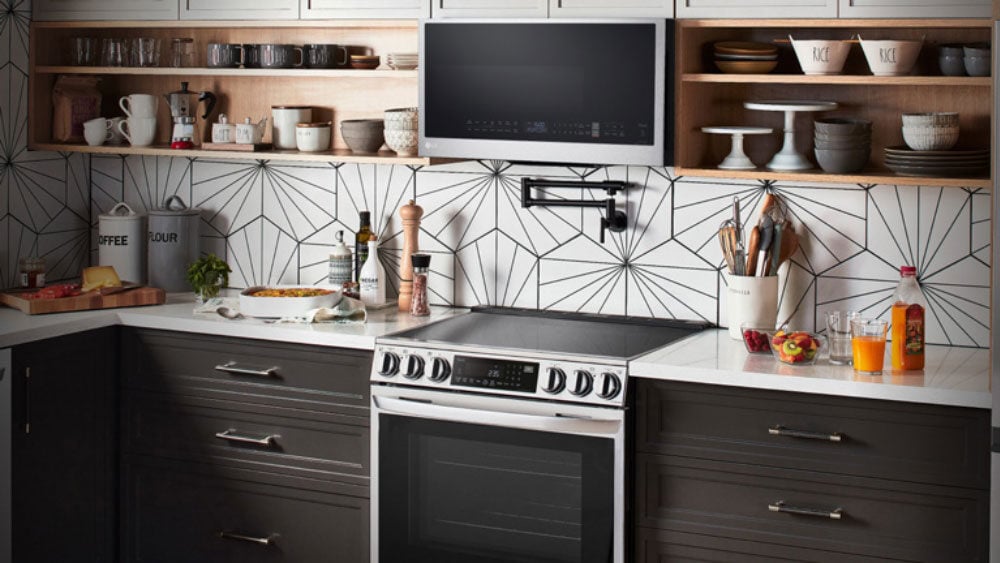
A good LG induction runs about $2,000. It heats faster, simmers better, and cleans easier.

But if you already have electric, there's nothing wrong with a basic electric range. It heats up, simmers, and cooks your food.
You can get a decent electric range for about $799, less than half the price of a good induction range.

Induction does heat faster with a lower simmer. It's easier to clean, easier to vent, and more child-safe.
The Gas Range
The same idea applies to gas.
An LG front-control range with two 20,000 BTU power burners runs about $2,000.
A freestanding LG with the controls on the back gives you a 17,000 BTU power burner for about $849. That's less than half the price.

My mom cooked just fine on 8,000 BTU burners her whole life.
🔍 Read More: Induction vs. Gas Cooking
When Does a Top-Load Washer Make Sense?
This is the one product on the list I don't love. I'd still recommend it in the right situation.
I think top-load washers use too much water and too much energy. But they work, they're simple, and they're easy to fix.
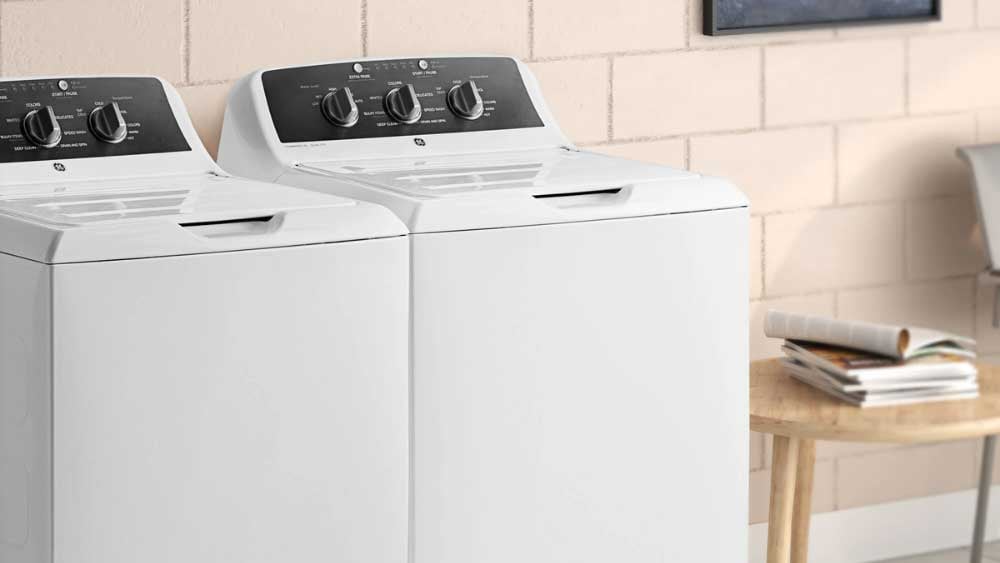
That makes them ideal for rentals and in-law units.
The $599 LG front-load washer we opened with will save you money on water and energy, and it holds more.
But front loads are more expensive to fix.
A traditional top-loader is cheaper to buy and easier to fix. The capacity isn't as good as the LG, but it's still bigger than what my mom had. And she was washing for a family of five.
🔍 Read more: Front Load vs. Top Load Washers
How Can You Save Money With Store-Brand Appliances?
Here's a bonus tip. The Hotpoint top-loader runs about $499. It's made by GE, just with a different label.

Same with Whirlpool. You can buy a Whirlpool-made washer for less under the Amana name.
That trick works across a lot of appliance categories and manufacturers, not just washers.
How Should You Choose an Inexpensive Appliance?
Expensive doesn't always mean better, and inexpensive doesn't mean cheap. Every appliance on this list does the core job well for a fraction of the price.
The most important question isn't the sticker price. It's whether you can get the appliance fixed when it breaks.
Buy the brand that can be serviced best in your area. We service what we sell: just over 33,000 service calls last year, and that's in a small area.
Additional Resources
Download the Yale Appliance Buying Guide covering all topics of appliances. Over 1.5 million people have read a Yale Guide.
Related Articles:

Why Should You Trust Us?
It seems that every appliance review has nothing but glowing comments about almost every product, yet you read customer reviews and they are almost universally bad.
We are here to fill in the disconnect. We'll give you the best features, and the drawbacks as well, including reliability based on over 33,000 calls performed by our service team just last year. Our goal is to give you ALL the information so you know what's right for you.
Please consider subscribing or adding to the conversation in the comments below. We appreciate you stopping by.