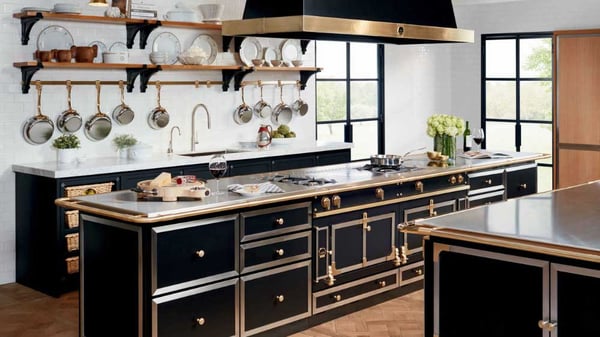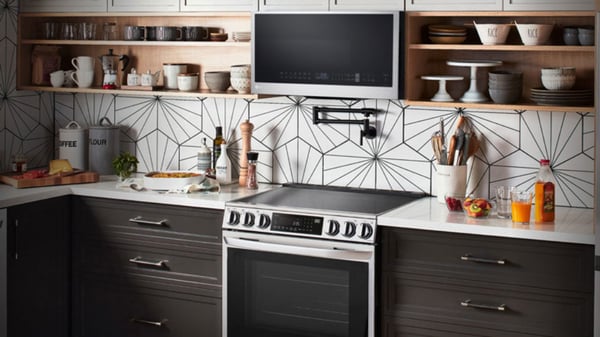


This is a real quote from September 1997, back when I was still selling appliances instead of teaching you how to buy them.

If you're pricing a kitchen right now, you've probably guessed that everything costs twice what it used to.
That's a reasonable thing to believe, and it's roughly what inflation would predict. It's also not what happened.
We've been selling appliances in Boston for more than 100 years, which means we occasionally get to check our own homework.
This quote came off our own letterhead, so the 1997 numbers here aren't estimates or industry averages. They're what we charged.
In This Article
- Quick Answers
- What Was on a 1997 Luxury Kitchen Quote?
- Have Appliance Prices Really Gone Up Since 1997?
- What Happened to Trash Compactors and Downdrafts?
- Which Appliances Got Cheaper in Real Terms?
- How Expensive Are Luxury Appliances Now?
- Why Did Luxury Appliances Rise So Much Faster?
- What Does This Actually Mean When You're Buying?
- Common Mistakes When Comparing Old Appliance Prices to New Ones
- Bottom Line
- Frequently Asked Questions

What Was on a 1997 Luxury Kitchen Quote?

A customer walked that quote into our Dorchester showroom recently.
The letterhead still said Yale Electric Sales Co., because we were selling lighting fixtures and electrical supplies alongside the appliances back then.
It was a full luxury kitchen. A Sub-Zero fridge, a Thermador cooktop, a Dacor oven, a Bosch dishwasher and a trash compactor. Total price: $9,596.55.
You'd guess every appliance on here costs about twice as much today, keeping pace with 108% inflation. It doesn't.
Have Appliance Prices Really Gone Up Since 1997?
Today, that same kitchen runs about $32,000. That's well over inflation, which would have put it around $20,000.
So inflation explains about $10,000 of that increase. It doesn't explain the other $12,000.
And that $12,000 is almost all refrigerator and oven. Everything else on the quote either kept pace or fell behind.
Here's what that means for buying appliances today.
What Happened to Trash Compactors and Downdrafts?
Two line items on that quote wouldn't survive a modern order, and both are worth understanding before you plan a kitchen.
Trash Compactors

Back when I was a boy in Needham, the KitchenAid 18-inch compactor was perhaps one of my best friends.
When told to take out the garbage, I would just press the on button.
That compactor would just remove all the air and save me a day from taking all that trash down the stairs, outside, into the garage.
It was particularly handy in winter. I still hate winter.
Now that compactor is no longer being made in 18 inches, and we don't really sell that many in 15-inch, mostly because of recycling.
With recycling, you can't justify the benefits of the compactor.
Downdrafts
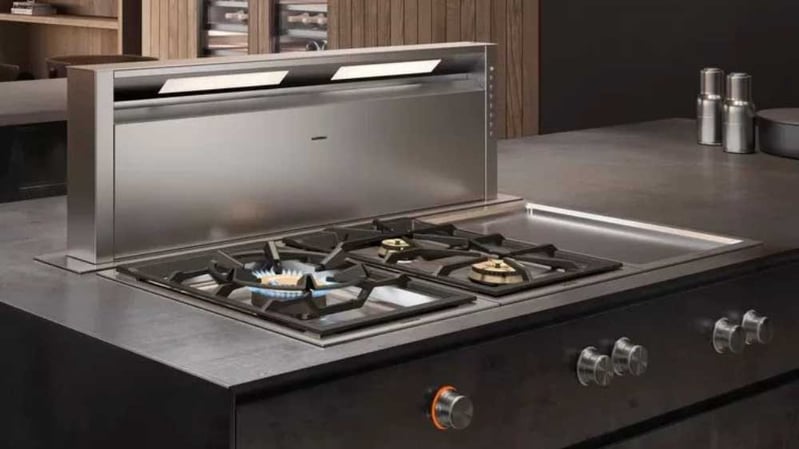
That quote carried $705 of downdraft ventilation, a Thermador intake plus a remote 600 CFM cabinet blower.
I have to admit we sold a lot of these way back when, but that was before power burners.
Homes today are much more airtight, so bad ventilation keeps all that exhaust in your house longer.
So most orders don't include a compactor, and they get a good overhead hood instead of a downdraft.
🔍 Read more: Recirculating Downdraft Vents: Why They Don't Work and How to Choose the Best Kitchen Range and Range Hood
Now let's talk about what you're going to buy.
Which Appliances Got Cheaper in Real Terms?
Bosch Dishwashers, 1997 to Now
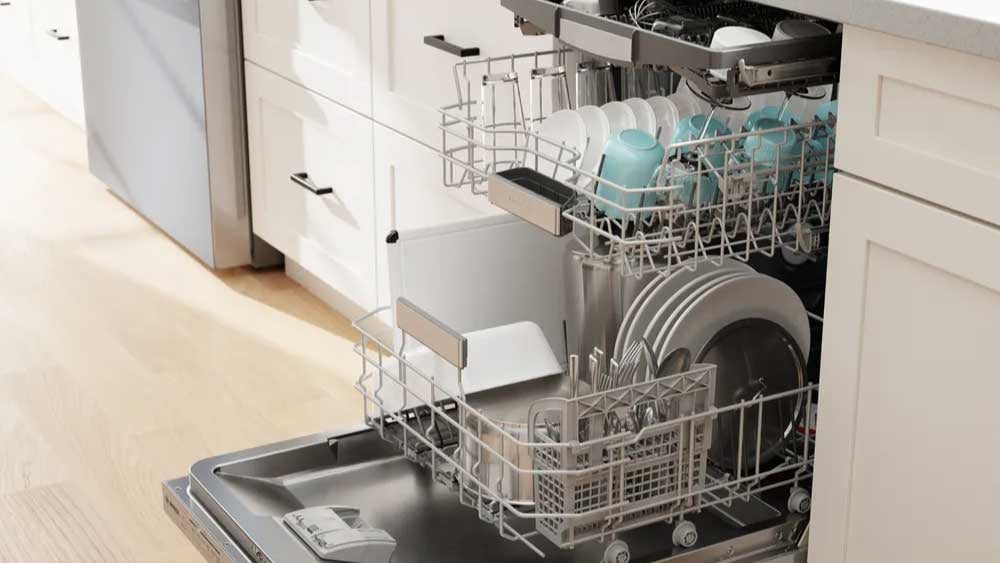
Let's start with the dishwasher. In 1997, that Bosch was $760.
The equivalent Bosch today, with more cycles and better drying, runs about $1,000. That's only a 32% increase.
Inflation over the same 29 years was 108%. If that dishwasher had just kept pace, it would cost about $1,580 now.
You can also still buy a genuinely good LG, KitchenAid or Samsung for under $1,000 today.
🔍 Read more: The Best Bosch Dishwashers: Ratings, Reviews and Prices
Front-Load Washers
Same with washers and dryers, though neither one was on this particular quote.
That old Maytag Neptune front loader was one of the first front loaders, and it was $999 back then.
Today you can get a bigger LG for as low as $699 on sale, and it doesn't create mold, mildew, and stink the way the Neptune did.
🔍 Read more: The Best Front-Load Washers
Counter-Depth Refrigerators
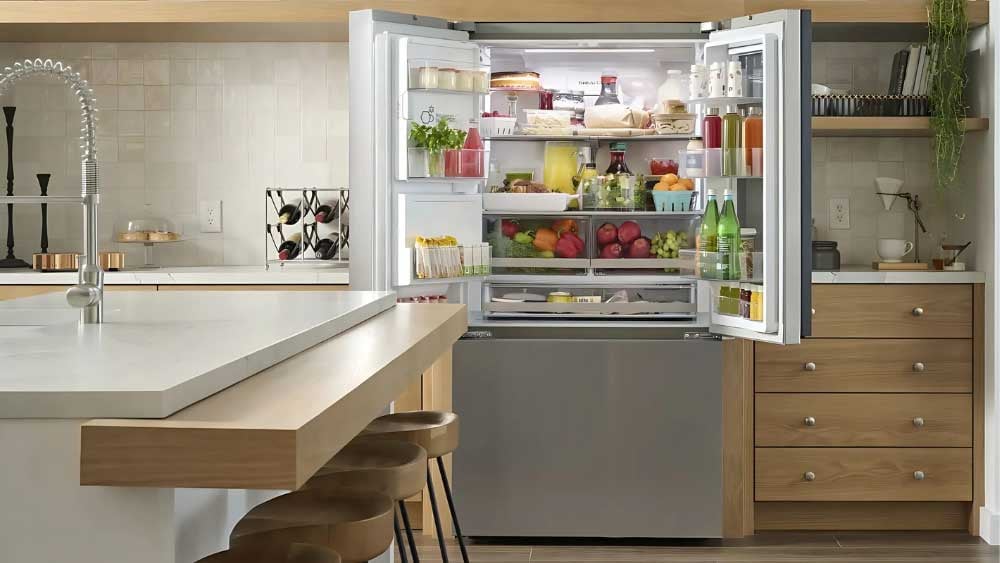
Counter-depth refrigerators tell the same story. When I started at Yale Appliance, an Amana counter-depth ran about $1,500.
Today, you can buy a counter-depth LG with six more cubic feet for about $1,699. That's basically the same price, 29 years later.
One honest caveat, because most people don't look at this one closely.
The Sub-Zero on the 1997 quote was a built-in, and an LG counter-depth isn't the same class of product. It's the same footprint, not the same appliance.
Dishwashers, refrigerators, and washers and dryers are commodity appliances.
A handful of companies build millions of them a year, and that scale keeps the price down, even as the product sometimes gets better.
An affordable luxury kitchen package from GE, Samsung or LG is still price-competitive with what we sold in 1997. Yes, even after tariffs.
🔍 Read more: How to Buy an Affordable Kitchen Appliance Package for $2,000 to $10,000
How Expensive Are Luxury Appliances Now?
Wall Ovens
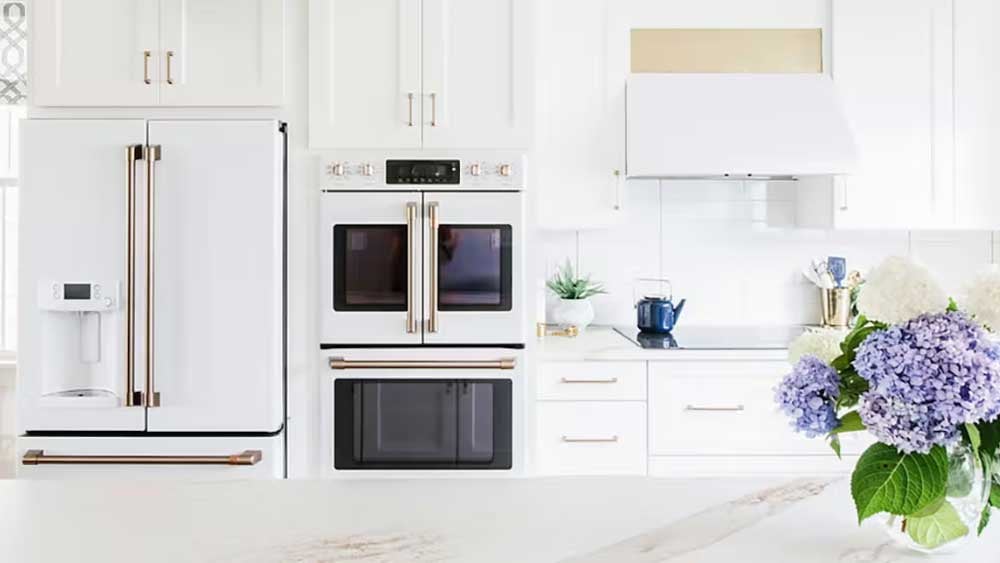
That Dacor was top of the line back in 1997, at $2,768.55.
Today a comparable double wall oven with the same features, like convection and full electronics, costs about $3,000.
That's from a commodity label like LG, Samsung, or a GE.
Adjusted for inflation, that 1997 Dacor would be a $5,759 oven today, so the commodity double oven is close to half its real price.
Want the premium version, with intuitive controls and better convection? You're not looking at $3,000 anymore.
You're spending $10,000 for a luxury model from Wolf or Miele.
🔍 Read more: The Best Double Wall Ovens
Gas Cooktop Prices
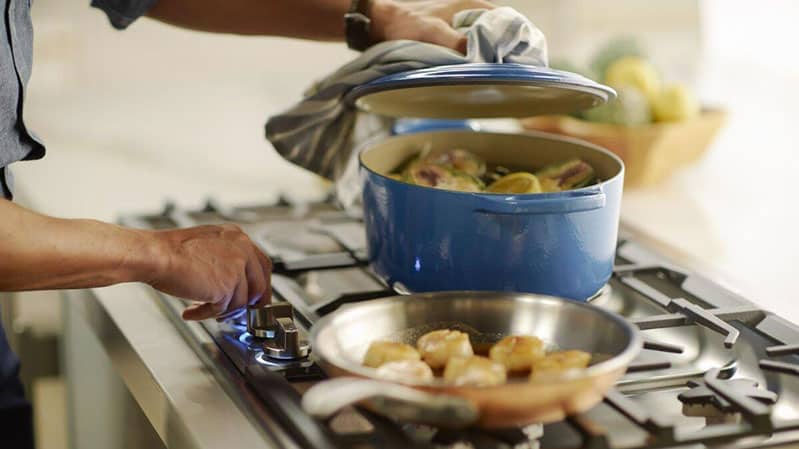
Thermador actually kept pace with inflation on a gas cooktop, with better power and another simmer burner.
But you can buy almost the identical 1997 cooktop from the same company with the Bosch label for about $1,500.
🔍 Read more: The Best 36-Inch Gas Cooktops: Reviews, Ratings and Prices
What Does a Sub-Zero Cost?

But Sub-Zero's the clearest example in the luxury space. That $3,780 unit in 1997 is now about $17,000, so it's clearly outpaced inflation.
But they also built a genuinely better product, with better shelving, better temperature control, better crispers, and even a NASA-inspired air cleaner with better filtration.
Across the board, plan on $15,000 to $20,000 for refrigerator brands like True, Thermador, Sub-Zero, or BlueStar.
🔍 Read more: Is a Sub-Zero Refrigerator Worth It? Prices and Reviews
Why Did Luxury Appliances Rise So Much Faster?
Sub-Zero is also a niche manufacturer. That means more exposure to supply chain problems.
They're not pumping out millions of units in nearly automated factories, and they don't have that scale.
Compare that to Bosch. They build millions of dishwashers at their New Bern, North Carolina plant alone.
That volume is why a 2026 Bosch dishwasher costs 32% more than a 1997 one instead of 108% more.
So this isn't really about luxury getting greedy. It's about what mass production does to a price, and how few of these premium units actually get built.
What Does This Actually Mean When You're Buying?
What does this mean for you? You can shop well and land great appliances for under $10,000.
But the niche manufacturers aren't semi-affordable anymore.
That's not a fun thing for an appliance dealer to say out loud, but it's true.
If your budget is under $10,000, that's a real kitchen with real features, not a compromise.
We run more than 33,000 service calls a year with 35 technicians, so we see what happens to these machines after the sale. The commodity tier has genuinely improved.
You're paying for better brands with real features. But there's a bigger price premium today than there was 29 years ago.
🔍 Read more: How to Choose the Best Premium Kitchen Appliance Package for $20,000 to $30,000
Common Mistakes When Comparing Old Appliance Prices to New Ones
Forgetting what a dollar was worth. On paper, a dishwasher going from $760 to $1,000 looks like a price increase.
In real life it's a price cut, because a 1997 dollar is worth about two of today's.
Comparing two appliances that aren't the same appliance. A built-in Sub-Zero and a counter-depth LG fit the same hole in your cabinets and almost nothing else.
The trick is matching the class first, then the price.
Assuming the category still exists. Two of the seven items on our 1997 quote, the compactor and the downdraft, are basically gone.
A price history only helps you where the product survived.
Bottom Line
Appliance prices have gone up, but not in the direction you'd probably guess.
Ordinary appliances got cheaper in real terms. The best appliances got a lot more expensive.
That's what a 29-year-old quote from our own files actually says.
The cheap end got cheaper and the top end ran away, so the gap between a good kitchen and the best kitchen is wider than it's ever been.
If you're shopping the commodity tier, your money goes further than it did in 1997.
If you're shopping the top tier, it goes a lot less far, and that step up deserves more thought than it used to.
Did that kind of increase surprise you? It kind of surprised me.

Additional Resources
Download the Yale Appliance Buying Guide covering all topics of appliances. Over 1.5 million people have read a Yale Guide.
Related Reading
- 2026 Appliance Price Increases: How to Buy Smart in Boston, the Cape, and Southern New England
- Luxury vs. Upscale Appliances: What's Worth the Upgrade?
- How Much Does a Luxury Kitchen Cost in 2026?
- How Much Does a Stylish Kitchen Really Cost in 2026?
- The Best Luxury Appliance Brands: Reviews and Ratings

Why Should You Trust Us?
It seems that every appliance review has nothing but glowing comments about almost every product, yet you read customer reviews and they are almost universally bad.
We are here to fill in the disconnect. We'll give you the best features, and the drawbacks as well, including reliability based on over 33,000 calls performed by our service team just last year. Our goal is to give you ALL the information so you know what's right for you.
Please consider subscribing or adding to the conversation in the comments below. We appreciate you stopping by.