You are planning a kitchen, and every showroom and magazine is showing you something new. Some of these products are terrific. Very few are right for every kitchen.
Induction now boils water in a quarter of the time a gas burner takes. Color appliances are back. Laundry no longer needs a vent.
Each one also comes with a catch, from a bigger electrical circuit to a harder repair.
We sell, deliver, install and service appliances across Massachusetts, southern New Hampshire and Rhode Island. We run more than 33,000 service calls a year with 35 of our own technicians. That repair side is where we see which trends hold up.
We recently covered these trends in a live webinar with two independent designers. This article pulls together what we discussed, plus our service data.
Meet the Designers:
Meg McSherry runs Meg McSherry Interiors, a design firm in Newton, Massachusetts. Her team works throughout the East Coast, on everything from decorating-only projects to renovations and new builds.

Lauren Winsor is the founder of House of Winsor Interiors, a construction management and interior design firm in East Greenwich, Rhode Island. Her team manages projects across Rhode Island, southeastern Massachusetts and coastal Connecticut.

What You'll Learn:
- Why so many new appliances are not right for every kitchen
- The seven biggest kitchen appliance trends for 2027, and the catch with each one
- What to check before you buy a trending appliance
- The mistakes that cost you the most, and the questions webinar attendees asked most
Why Aren't the Newest Kitchen Appliances Right for Every Kitchen?
I sold induction cooktops in the 1980s, and then they disappeared. Induction is back now, and the reason is partly regulation.
Ten Massachusetts towns, including Brookline, Cambridge and Lexington, now restrict fossil fuel in new construction and major renovations. Induction has taken over at the high end.
Induction is the better burner.
The question is whether the rest of your kitchen can support it: the wiring, the ventilation and the service.
That same question applies to every trend below.
What Are the Biggest Kitchen Appliance Trends for 2027?
The seven trends below are the ones we expect to shape kitchens in 2027. Each section covers what the trend is, who it fits, and what to watch out for.
1. Induction Cooking Is Back, and More Powerful
How Powerful Is Induction Now?
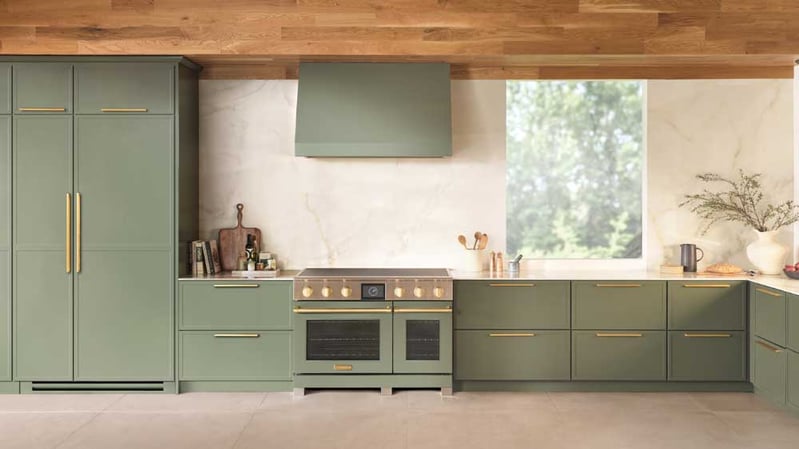
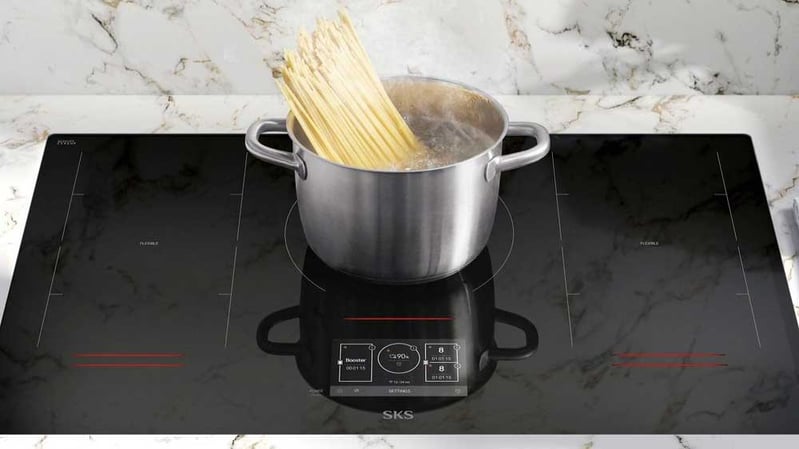
The standard induction burner just a few years ago was 3,700 watts. That alone outperforms a 25,000 BTU burner on a BlueStar, one of the most powerful gas ranges you can buy.
The newest burners go much further. SKS now offers a single 7,000-watt element. BlueStar reaches 7,400 watts on its 48-inch range by bridging two 3,700-watt zones under one pan.
To see what that means, we timed it.
A 7,000-watt induction burner boiled a gallon of water in 3 minutes 27 seconds.
A 23,000 BTU gas burner took 13 minutes 30 seconds.
Read More: Induction vs. Gas Cooking (2026): The Pros and Cons Before You Switch
What Are the Pros and Cons of Induction?
Induction works by magnetic heat. The burner heats the pan, and the pan cooks the food. That is why your cookware has to be steel or iron, so it attracts the magnet.
What Are the Electrical Requirements of Induction?
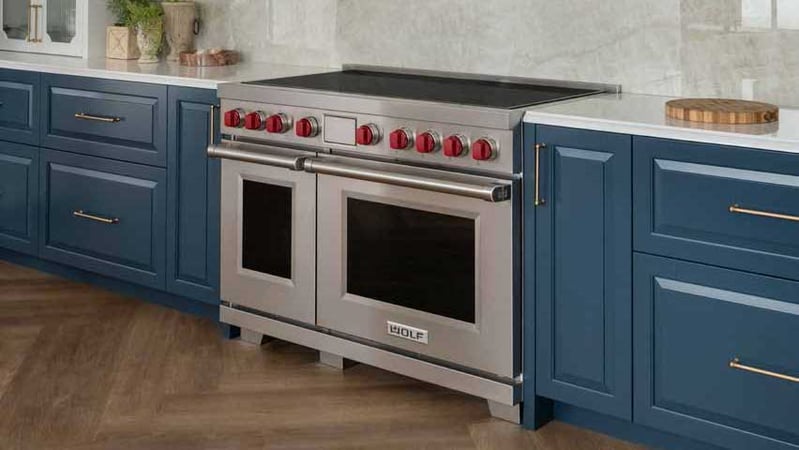
Induction ranges need a 50-amp, 240-volt circuit. The Wolf 48-inch induction range needs 100 amps, which means two 50-amp circuits.
We had a client whose gas range pulled 12 amps. After she switched to a 48-inch Wolf induction, her load jumped to 100 amps.
Check your electrical panel before you fall in love with a range.
There is a Massachusetts upside, too. Because induction runs cooler than gas, it often pairs with a lower-CFM hood (CFM is how much air a hood moves per minute). In some homes, that avoids an expensive make-up air system.
Is Induction Better Than a Dual Fuel Range?

Induction is the better cooktop. However, a dual fuel range (gas burners over an electric oven) may still give you more cooking options.
The SKS 48-inch range shows how far dual fuel has gone. It combines gas burners and induction with sous vide (precision water-bath cooking) on the cooktop, plus a steam-combi oven below.
Read More: Dual Fuel vs. Induction Ranges (2026): Which Should You Buy?
Watch how induction and dual fuel compare burner for burner, and what each one gives up.
How Reliable Is Induction?
Induction cooktops are among the more reliable cooking appliances we service. Their category runs a 5.0% first-year service rate, compared with 8.3% across all appliances we sell.
Induction ranges run higher, at 8.7%, because they add an oven and more electronics. Our most reliable induction ranges article breaks down each brand.
2. Battery-Assisted Induction Cooktops
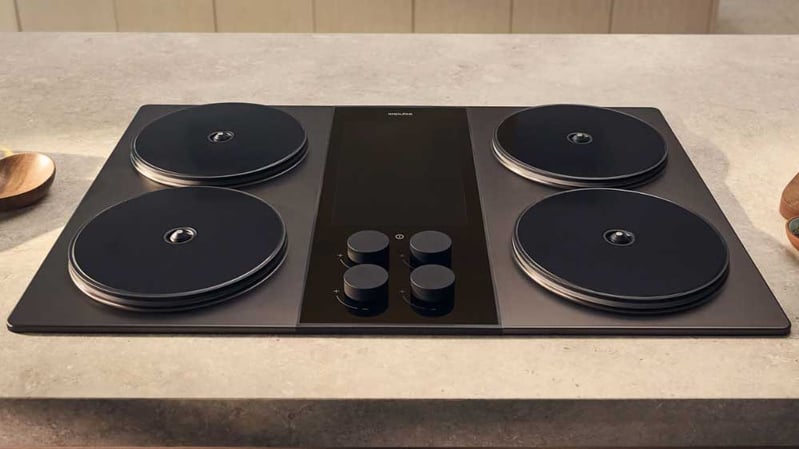
The newest twist on induction stores power in a built-in battery. The battery lets the cooktop draw far more power than a standard outlet can supply.
Impulse, the best-known example, rates each burner at 10,000 watts.
In our testing, one burner boiled about a liter of water in under 40 seconds.
That is faster than any cooktop we sell.
What battery induction gets right is installation. It plugs into the same 120-volt outlet your gas range uses. You cap the gas line and plug it in, with no new circuit.
It also comes with caveats worth knowing, according to Impulse's own manuals:
- The 30-inch cooktop weighs about 160 pounds with the battery
- Wi-Fi is required to use it
- The warranty is 3 years on the cooktop and 10 years on the battery, with labor at your cost
- Impulse can deny a claim if the cooktop has been offline for most of the time you have owned it
Battery ranges are arriving too. They plug into a standard 120-volt outlet, so you don't have to rewire. The battery also keeps them cooking during a blackout.
However, for a similar price, you can buy a Miele with steam assist or a Wolf with convection. Both have better features.
The trade is simple: you skip the electrician, and you give up features and a proven repair record.
We are watching this category, and we expect more products in it. We are not selling it yet.
Read More: Impulse Induction Cooktop Review (2026): The Most Interesting Stove I Can't Recommend Yet
3. Heat Pump Laundry and All-in-One Washer-Dryers
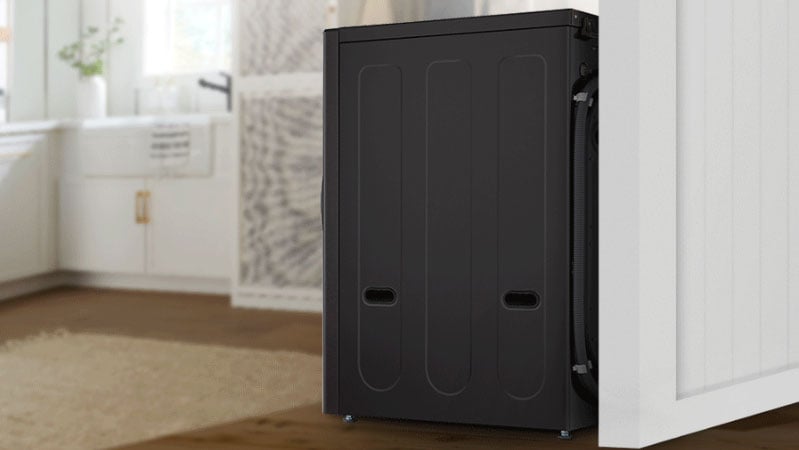
All-in-one combos, like the LG WashCombo and GE Profile UltraFast, wash and dry in one drum. A heat pump dries the clothes without a vent.
We expected combos to replace side-by-side pairs. There are real advantages:
- Efficiency: Electric rates in Massachusetts are high, and a heat pump uses far less power than a standard electric dryer.
- Power: It runs on 120 volts, like a regular outlet.
- Placement: No vent means it can go anywhere you have water and a drain.
- Convenience: You put dirty clothes in, and they come out clean and dry.
What Is the Catch With All-in-One Washer-Dryers?

The first catch is time. In our own tests, a load of mixed colors took 2 hours 17 minutes on the LG and 2 hours 51 minutes on the GE.
With a separate pair, you move one load to the dryer and start the next wash.
An all-in-one cannot do that, so a busy household falls behind.
Heat pump drying also leaves clothes less hot and toasty than a dryer with heating elements.
Service is the other catch. All-in-one combos run a 12.4% first-year service rate, well above the 8.3% average for all appliances. GE Profile runs 9.3% and LG runs 13.5% (the LG figure includes its WashTower).
A heat pump is essentially a refrigeration system inside a dryer.
Most dryer technicians cannot repair a sealed refrigeration system, and most refrigeration technicians do not repair dryers.
Read More: GE Profile UltraFast vs. LG WashCombo vs. Samsung Bespoke AI Combo Washers & Dryers
Where Heat Pump Laundry Works Best

Heat pumps make the most sense in compact laundry from brands like Miele and Bosch. Compact washers spin at up to 1,600 RPM, much faster than most full-size washers. The clothes go into the dryer with far less water left in them.
If you are shopping for compact laundry, a heat pump dryer is worth considering.
Compact pairs cost more and hold less, so they suit closets and small homes.
4. Personal and Integrated Refrigeration
When I started in the 1980s, the kitchen was a separate room. Open floor plans changed that.
In my own kitchen, a two-drawer beverage refrigerator sits a short walk from the main fridge. It holds my daughter's Poppi sodas. She gets her own without asking me, and they stay out of the main refrigerator.
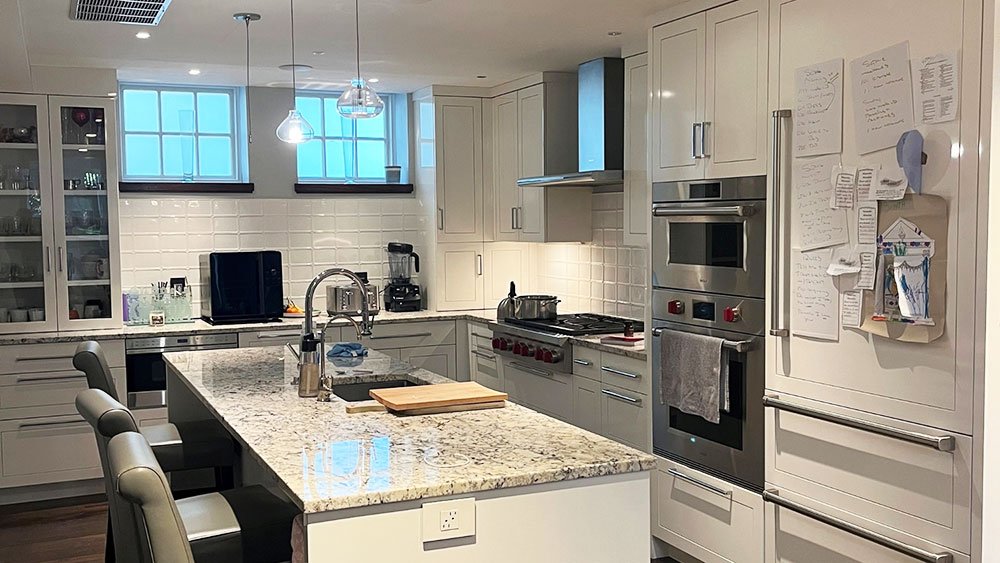
You can now put cold storage exactly where you use it:
- Refrigerator drawers in an island or near the cooking area
- Beverage centers for sodas, sparkling water and beer
- Columns for a separate refrigerator, freezer and wine storage
- Convertible zones that switch between refrigerator and freezer
- Large integrated refrigerators, like the SKS 48-inch six-door and the Thermador 42-inch, that disappear behind cabinet panels
What Should You Know Before Buying an Integrated Refrigerator?
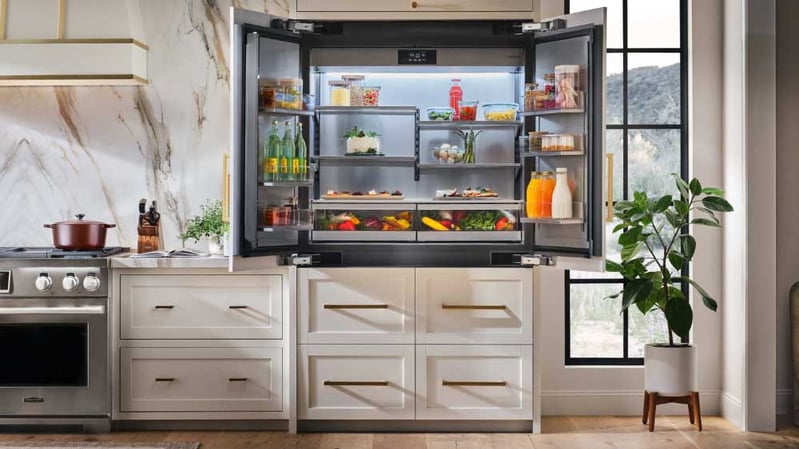
Integrated (built-in, panel-ready) refrigerators are complex appliances with multiple cooling zones, installed inside custom cabinetry. Panels are also harder to install on a refrigerator than you might expect.
You get less cubic footage because of the shallow depth. You also pay more per cubic foot for an integrated refrigerator than for any other type.
Read Integrated Refrigerators: Why You Should Think Twice and our list of the best integrated refrigerators.
Watch how counter-depth, built-in and integrated refrigerators compare on installation and service.
Can a Refrigerator Be the Focal Point?
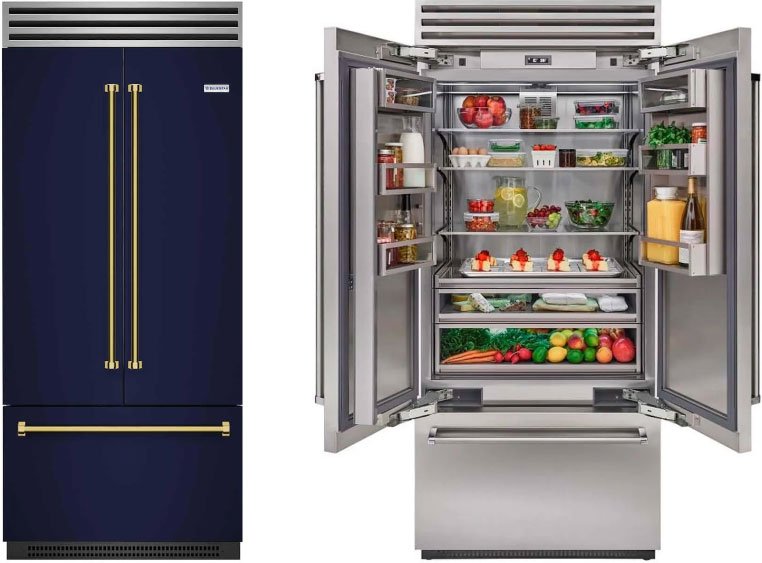
Yes, and that was rarely possible even a few years ago. True offers its refrigerators in 16 finishes with six hardware options. BlueStar offers more than 1,000 colors.
If you want the refrigerator to match your cabinetry exactly, a custom color is the safer path. Lauren Winsor put it this way during the webinar: "What you don't want is it to be just off enough that it looks like you made a mistake."
5. Kitchen Appliances with Custom Finishes
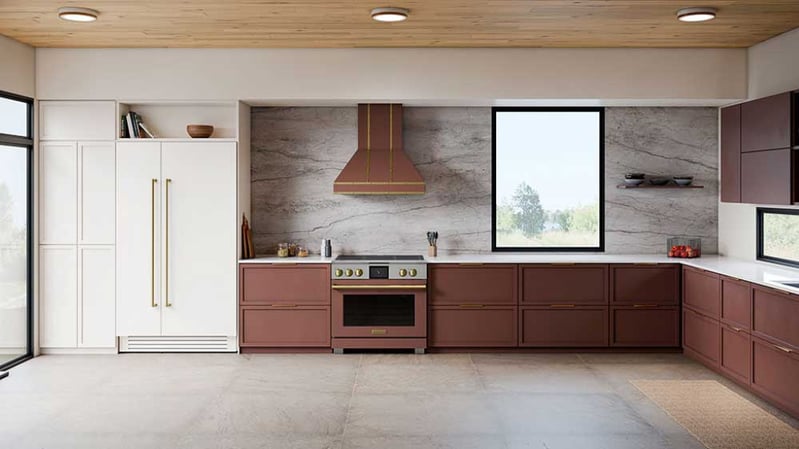
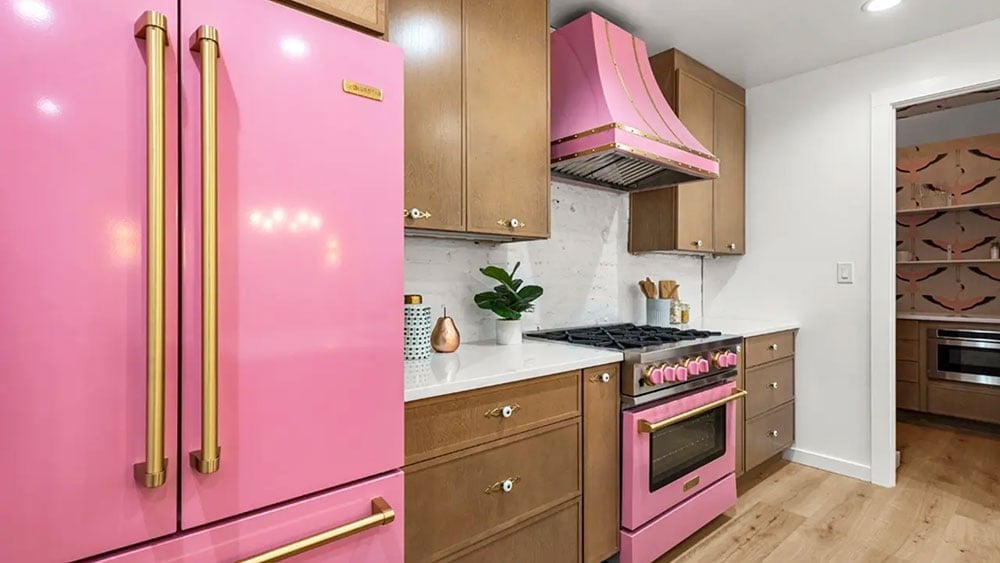
When I started in the 1980s, a range in a nice color meant a range from France. You no longer need a La Cornue to get color.
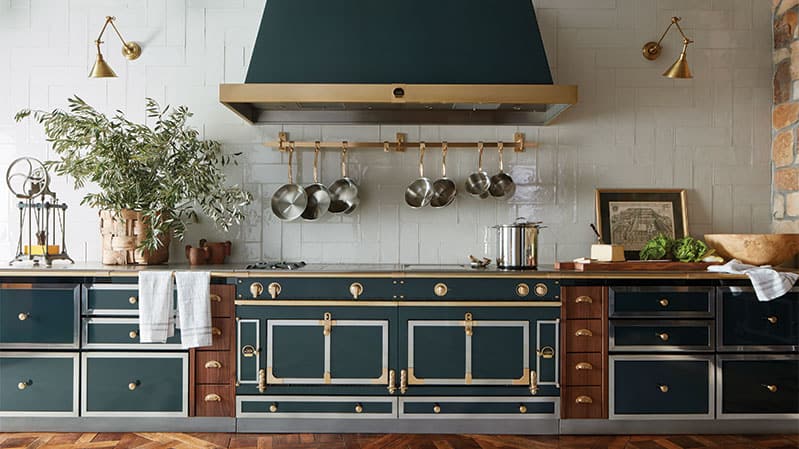
About 75% of the BlueStar ranges we sell are ordered in a custom color (as of 2026).
That means a color other than stainless steel, often with matching trim and handles.

Color now comes at lower prices too. Café offers four finishes and six hardware styles, including a matte white with brushed brass that is very popular right now. KitchenAid offers its commercial-style ranges in nine colors, at a lower price than BlueStar.
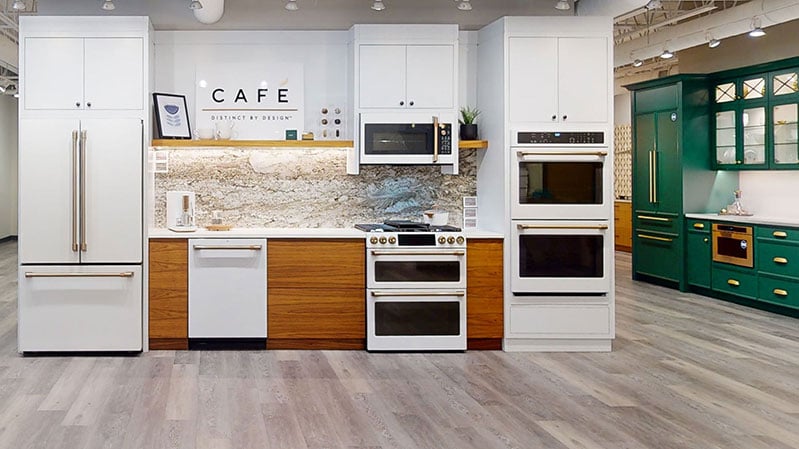
Which Appliance Brands Offer the Most Colors?
Color counts vary by product type, so treat the table below as a range-and-refrigerator guide.
Some brands we do not sell, like Bertazzoni and other Italian imports, also offer 10 to 20 colors.
How Much Color Is Too Much?
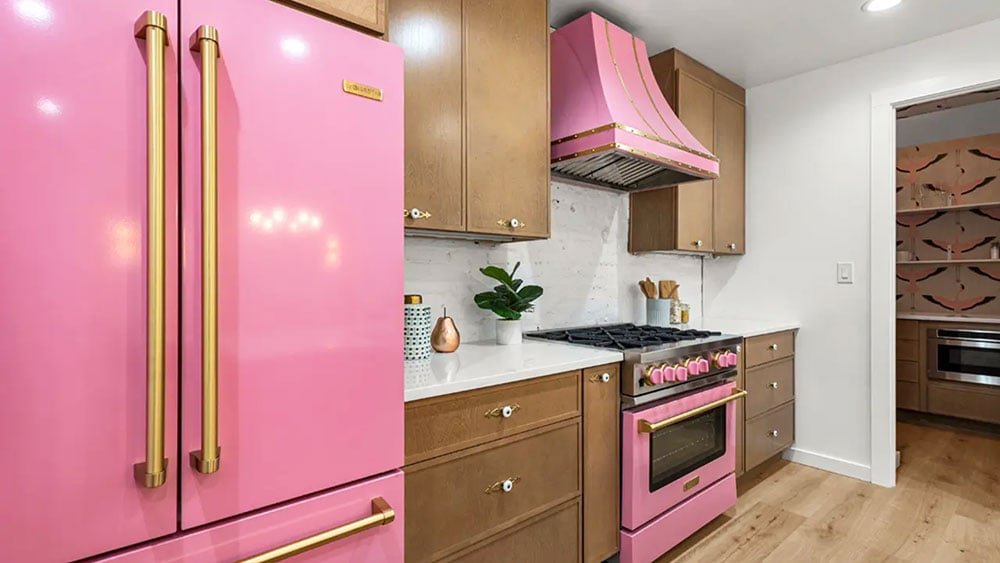
Years ago, I designed showroom displays with whole kitchens in burgundy and brass, green, or blue.
Over time, a kitchen done entirely in one bold color looks dated.
Our recommendation is a pop of color, like one statement range, rather than a whole kitchen in one shade. Meg McSherry offered a fix for an all-pink impulse during the webinar: "Do pink somewhere else in your kitchen." Your counter stools, for example, can go without an electrician.
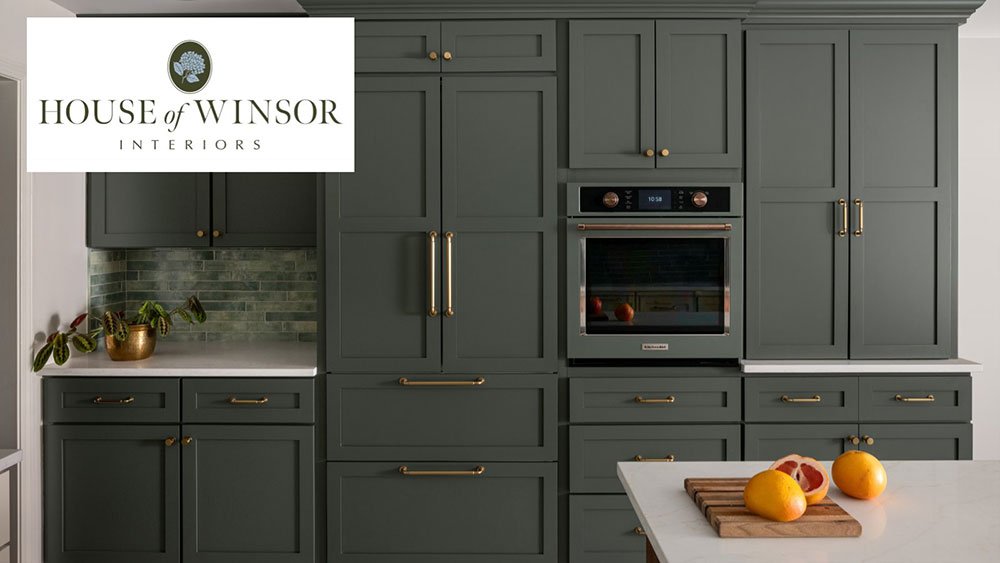
Read More: The Best Kitchen Appliance Brands for Color
6. New Downdraft Ventilation
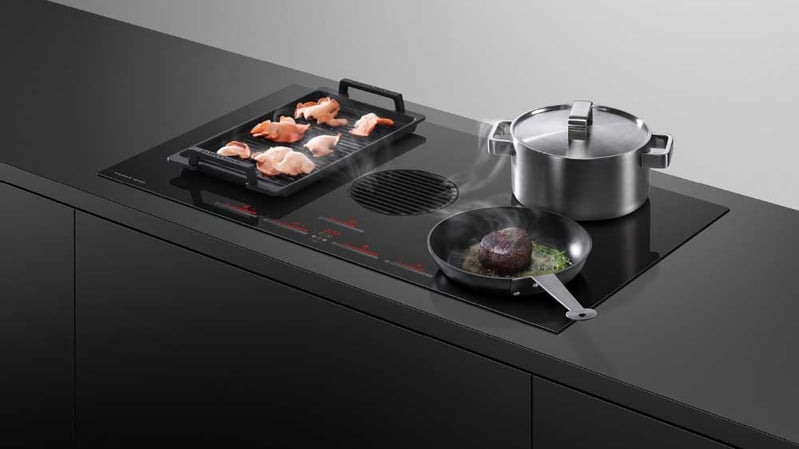
New ventilation designs are coming, including the Fisher & Paykel Series 9 CID364DTB4. It is an induction cooktop with a downdraft vent built into its center, for about $6,949 (2026).
If you have been to our webinars, you know we are not big downdraft fans. Smoke and steam rise.
A downdraft pulls them down, against their natural direction, with no capture area.
Every elbow in the duct reduces airflow, and so does a longer duct run. The CID364DTB4 moves 413 CFM. A proper overhead hood for a 36-inch cooktop typically runs 600 to 900 CFM.
Do Downdraft Vents Actually Work?
Restaurants answer that question for us. They hang a big hood over the cooking surface, and the smoke goes straight up.
I once ate at a Benihana in Boca Raton where the downdrafts could not keep up with the big griddles. You could see the smoke at the light fixtures, and everyone left smelling like dinner.
A few months ago, I was in a Las Vegas restaurant that used downdrafts, and it was nearly smokeless. I had never seen that before.
Whether the newest downdrafts can do in a home what older ones never could remains to be seen.
If you are considering one, ask for a live demonstration first.
Read More: The Best Downdraft Ranges and Cooktops for 2026
What Makes Any Hood Work?
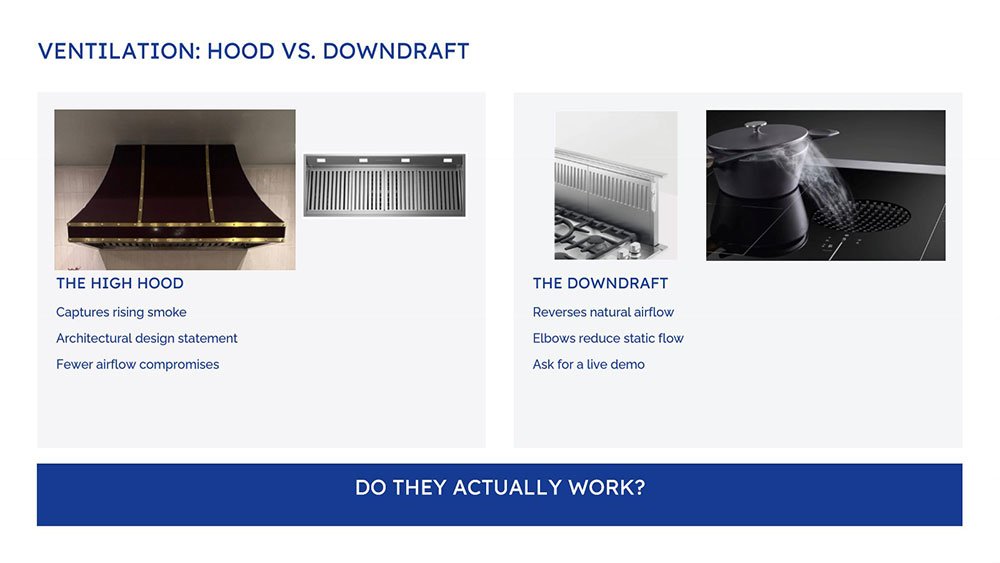
Whatever style you choose, wood or stainless, the hood has to cover the front burners. An over-the-range microwave is only about 15 to 16 inches deep, which leaves your front burners uncovered.
Ceiling vents struggle too, because smoke dissipates before it reaches the ceiling. Do what restaurants do: cover the front burners, choose a sensible CFM for how you cook, and vent straight up or straight back.
7. Appliance Service: The Trend Nobody Shops For

The biggest trend in appliances is the shortage of people who can repair them.
There are only about 31,000 home appliance repairers in the entire United States, according to the 2024 Census American Community Survey. Appliances are becoming more complicated. They need more service, yet fewer technicians are available. Very few training programs exist to bring new technicians in.
The problem is not that appliances have become that much less reliable. Everyone has a horror story.
The real problem is that fewer people are out there fixing them.
That matters even more with new technology. A heat pump dryer puts a refrigeration system inside a dryer. Induction and battery cooktops are full of electronics. Each one takes a specialized technician, and many areas have trouble getting a gas igniter fixed on time.
We train our own technicians for this reason.
Read More: Why Appliance Repairs Take Weeks in New England and Why We Are Hiring Technicians
What Should You Check Before You Buy a Trending Appliance?

Before you order any of the trends above, run through four checks:
- Verify your circuit. Confirm whether the appliance needs a 120-volt outlet or a 240-volt circuit, and how many amps. Ask an electrician before you order, not after.
- See the airflow work. If you are considering a downdraft, ask for a live demonstration with real cooking.
- Set realistic drying expectations. A heat pump combo takes hours, not minutes. Decide whether that fits your household before you give up a separate pair.
- Confirm service in your area. Ask the dealer who repairs this brand near you, how long the wait is, and whether they service what they sell.
If you have never cooked on induction, try it on a live display before you buy.
What Mistakes Should You Avoid With New Appliance Trends?
- Buying the trend before checking the house: A 48-inch induction range can mean a panel upgrade. Price the electrical work along with the appliance.
- Building a first-generation product into custom cabinetry: If it fails and nobody can fix it, there may be no replacement that fits the opening.
- Choosing a downdraft for looks alone: If you cook with high heat, a downdraft will struggle, and smoke ends up in your kitchen.
- Mixing metal finishes in the same sightline: Shiny black next to new stainless rarely looks purposeful. Meg McSherry's advice is to keep all the appliance metals the same.
- Painting the whole kitchen one bold color: A full kitchen in one color dates faster than one statement piece.
Bottom Line: Buy the Trend That Fits Your Kitchen
Induction is the better burner, color is easier to buy than ever, and heat pumps make laundry possible almost anywhere.
None of that matters if your house cannot power it, vent it, or get it fixed.
Start with how you cook and live, then choose the appliances. A good designer can help you work out what you actually need. Stainless steel remains the default for good reason, and a single pop of color goes a long way.

Why Should You Trust Us?
It seems that every appliance review has nothing but glowing comments about almost every product, yet you read customer reviews and they are almost universally bad.
We are here to fill in the disconnect. We'll give you the best features, and the drawbacks as well, including reliability based on over 33,000 calls performed by our service team just last year. Our goal is to give you ALL the information so you know what's right for you.
Please consider subscribing or adding to the conversation in the comments below. We appreciate you stopping by.