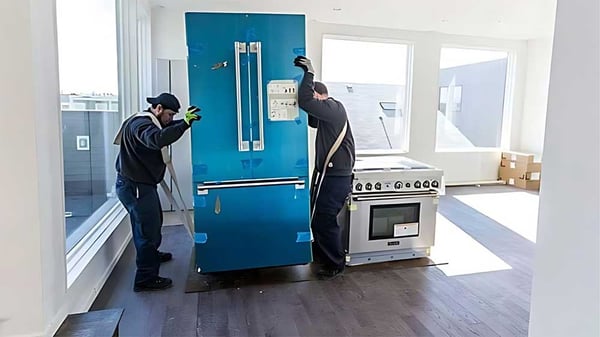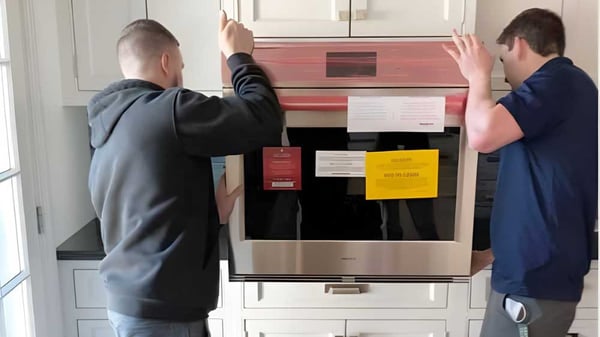



TL;DR: Why Appliance Delivery Is Harder Than You Think in 2026: Boston, Cape Cod, and Nantucket
Appliance delivery problems in New England are usually predictable and have more to do with your home and location than the appliance, like traffic, stairs and landings, ferry delays, and electrical readiness for induction. The best way to avoid delays and 30–40% restocking fees is to have the full delivery path and utilities professionally measured and verified before you buy.
You probably think appliance delivery fails because of the appliance, or because someone does not feel like hauling a refrigerator up to the third floor of a walk-up in Cambridge.
That is usually not the reason.
Delivery fails because of where you live.
I have lived in Boston since 2004. I grew up in Needham. I spend time at my parents’ place on the Cape. We opened a showroom on Nantucket.
Each of those places has its own delivery problems, and none of them show up on a spec sheet.
In this article, I will walk you through what actually causes delivery problems in New England and what you can do ahead of time to avoid them.
It matters because most local, national, and internet retailers will charge you 30 percent when you get it wrong.
What You Will Learn in This Article
This guide shows you why delivery problems happen and what you can do ahead of time to prevent them.
The goal is simple: avoid delays, surprises, and expensive mistakes.
- Why delivery problems are predictable if you know what to look for
- How timing matters more than distance on the Cape and Nantucket
- When a crane is unavoidable in Boston
- Why laundry and refrigeration fail in older homes
- What converting from gas to induction really costs in Massachusetts
- How to avoid 30 percent restocking fees
- Why professional measurement prevents most delivery problems
📌 Skip Ahead:
- Delivery Problems in New England
- Traffic and Delivery Delays
- Nantucket and Ferry Issues
- Boston Stairs, Landings, and Cranes
- Laundry Fit Problems in Older Homes
- Electrical and Induction Upgrades
- Restocking Fees and How to Avoid Them
- Final Takeaway
- What to Do Next
Where Does Appliance Delivery Break Down in New England?
⚡Quick answer: Delivery problems in New England are predictable once you know what to look for. Most issues have nothing to do with the appliance and everything to do with access, timing, or utilities.
Common Delivery Problems by Area
| What Usually Goes Wrong | |
| Boston and Cambridge | Narrow stairs, tight landings, cranes, and buildings never designed for modern appliances |
| Cape Cod | Timing. Miss a window and you wait days or weeks |
| Nantucket | Ferries cancel. If it is not on the island, nothing moves |
| Older suburbs like Needham | Appliances are deeper than the homes were designed for |
| New and renovated homes | Electrical is not ready for induction |
How Does Traffic Throw Off Appliance Delivery Schedules?
⚡ Quick Answer: Traffic is often the first issue that disrupts appliance delivery, especially in metro areas. When traffic stacks delays, install windows tighten and schedules slip.
Let’s start with traffic, because this applies to any metropolitan area and it is usually the first thing that throws delivery off.
I live in the South End. I am exactly one exit from JFK and Columbia Road, Exit 13 on 93. It is less than five miles. On a good day, that four-mile trip takes about 22 minutes.
In Boston, it can take an hour to get to Boston from Boston.
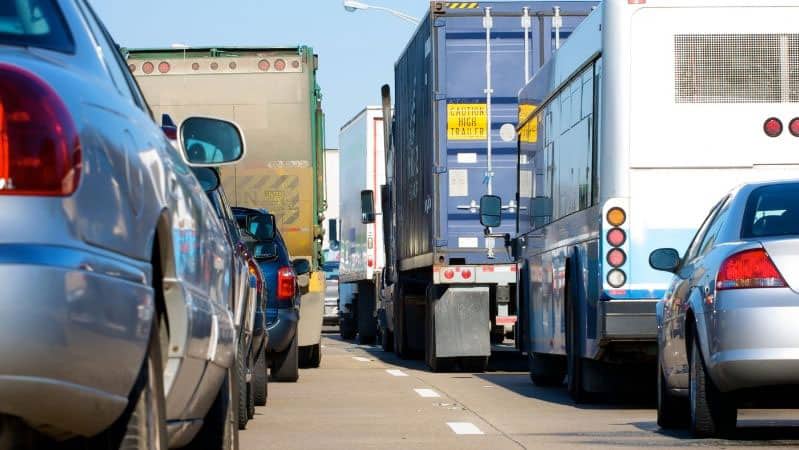
That affects every delivery. Schedules slip. Install windows tighten. One delay stacks into the next.
We try to mitigate some of that. We give you an app so you can track the truck in real time. It helps, but traffic is traffic.
That is why our trucks leave before 6 a.m. If they do not, they get stuck going into Boston, north of the city, or to the Cape in the summer.
Cape Cod is a different version of the same problem.
My daughter goes to summer camp on Fridays. I pick her up early so we can make it to the Cape.
If I pick her up at noon, the drive is manageable. If she wants to stay later, that trip can turn into three hours just getting over the Bourne Bridge.
🔍 Read more: How to Avoid the 4 Biggest Appliance Delivery Nightmares
Why Does Nantucket Make Appliance Delivery So Much Harder?
⚡ Quick Answer: Nantucket delivery depends on ferries, and when they cancel, projects stall. If it is not on the island, nothing moves, and trades still bill for their time.
Nantucket adds all the joys of Boston traffic, plus basically a moat around an island. We have a store there now.
One day I was supposed to go over and the ferry got canceled because of mechanical issues. My options were simple. I could not go, so I did not go.
That is fine for me.
It is not fine if you are waiting on a refrigerator, or a plumber, or an electrician standing in your kitchen with nothing to install.
That is before you even factor in weather. In the winter, the ferry shuts down quickly.
When that happens, nothing moves.
That is why service levels on Nantucket have always been miserable.
Everyone relies on the ferry to bring everything over, except for us.
We bought a warehouse on Nantucket because if your plumber and electrician are sitting around, they are still going to bill you for their time.
So the ferry cannot be our excuse either.
So that is my rant on traffic. It is challenging in our area.
Now let’s talk about actually delivering into your home, because a lot of the really bad problems happen when you try to deliver 21st-century appliances into an 18th-century city.
Why Do Stairs, Landings, and Cranes Matter So Much in Boston?
⚡ Quick Answer: Many Boston buildings were not designed for modern appliances, so stairs and landings can make delivery impossible without a crane. Measuring the entire path, not just the opening, is what prevents most surprises.
In my apartment in the South End years ago, there was no chance the appliances were going up the stairs.
The stairs were not wide enough, and even when they were, the landings were not.
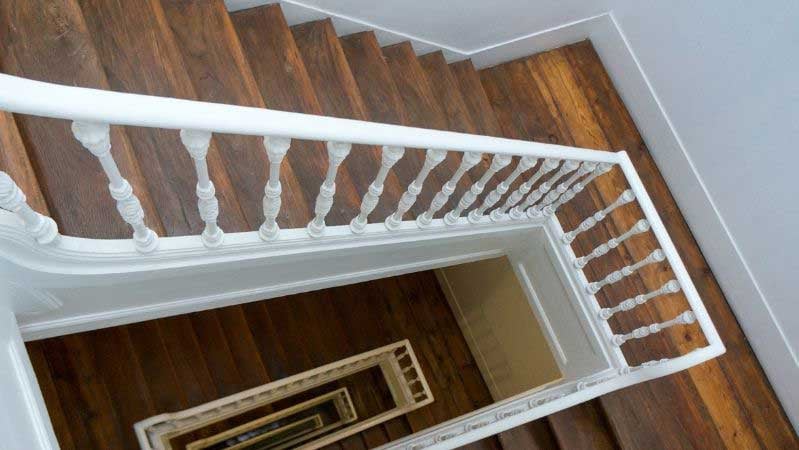
You cannot turn a refrigerator on most Boston landings, especially in brownstones. So I needed a crane.
That meant permits, scheduling, and coordination. We used Titan Crane, but that was just the start. You still need delivery people to take the appliances off the crane.
Then you need plumbers and electricians who will not touch the appliances but will install them. Everyone has to show up at the same time.
If it is not coordinated, the whole day falls apart.
It was such a headache that when I moved across the street, I changed the plan completely. I put the kitchen in the basement.
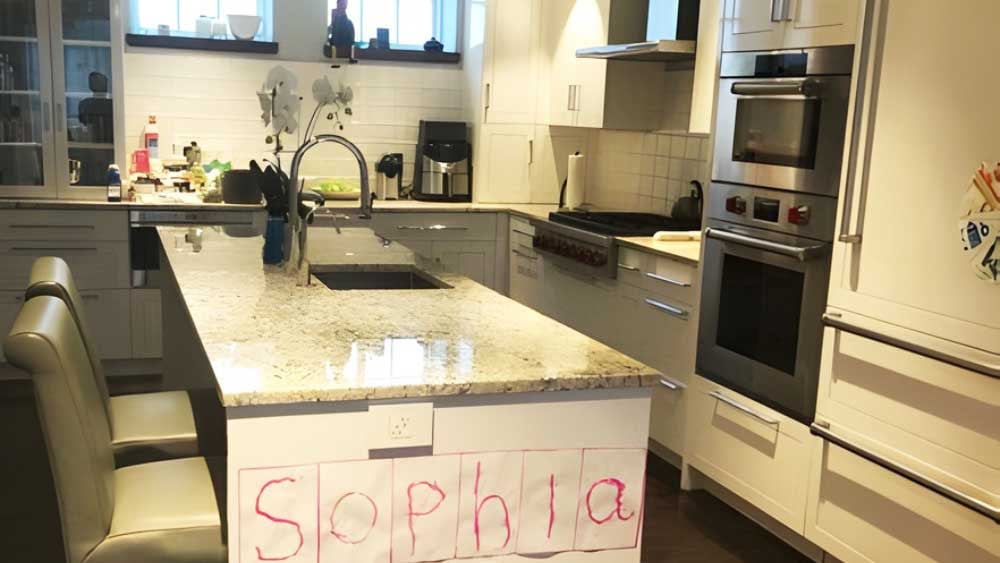
A lot of people do that in the South End.
There are trade-offs in how you live in the space.
When I had a small child, maybe having the kitchen higher up would have made sense so the first floor could be more of a play area.
I am not qualified to tell you how to design your life in a blog post.
What I can tell you is this: when the kitchen went in the basement, delivery was simple. They rolled everything straight in. No crane. No coordination.
Same appliances. Completely different outcome.
That is why measuring matters. Not just the opening, but the stairs, the landings, the front doorway, and the final spot. Boston was designed for horses, not Sub-Zero refrigerators.
🔍 Read more: What To Do When Your Appliance Purchase Goes Horribly Wrong (From a Retailer Who’s Seen It All)
Why Does Laundry Cause So Many Delivery Problems in Suburban Homes?
⚡ Quick Answer: Modern washers and dryers are deeper than older machines, and many basements and laundry rooms were not designed for that change. Measure the full path, not just the laundry space, so you do not find out on delivery day.
Laundry causes just as many problems, especially in the suburbs.
I grew up in Needham. My parents had a set of Maytag washers and dryers that lasted close to 20 years. They were shallow machines. They fit the basement the way it was designed.
That basement was built for laundry that no longer exists.
Modern washers and dryers are much deeper. What used to be a 26-inch machine is now closer to 30 to 34 inches. On paper, that does not sound like much.
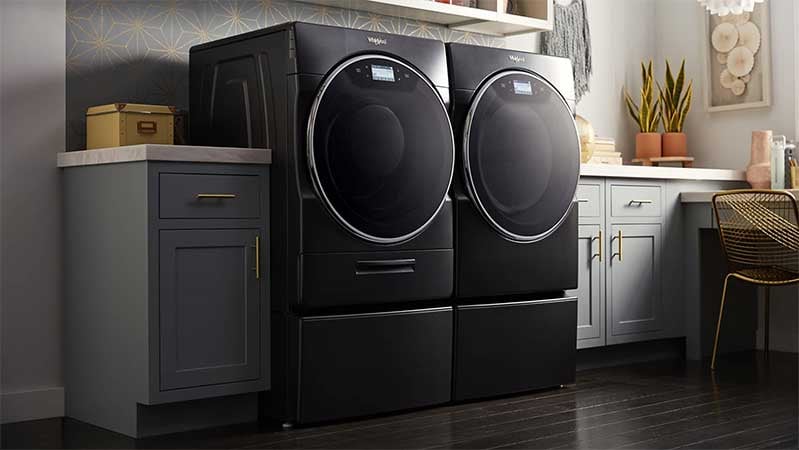
In a real basement, it is the difference between a door opening and a door hitting the machine.
We see this some of the time. The appliance fits the space, but it does not fit the path, the door swing, the clearance for the hookups, or the stairs on the way down.
You assume laundry has not changed. Rightfully so. Unfortunately, it has.
That is why measuring the laundry room alone is not enough. You have to measure the stairs, the turns, the doorways, and how the machine actually sits once it is connected.
Older suburban homes were not designed for today’s laundry. If you plan for it ahead of time, it is manageable. If you do not, delivery day is when you find out.

Why Do Electrical and Induction Requirements Cause Delivery Problems in Massachusetts?
⚡ Quick Answer: Many homes are wired for gas ranges, not induction, and upgrades can be expensive and time-consuming. Induction is not the problem, but not planning for the electrical work is.
Electrical is becoming another version of the same problem.
One of our clients thought she was grandfathered for a 60-inch gas range in Brookline.
Turns out the city thought differently and made her update her 60-inch gas range to induction.
Of course, there is no 60-inch induction range, so she had to put two 30-inch induction ranges next to each other.
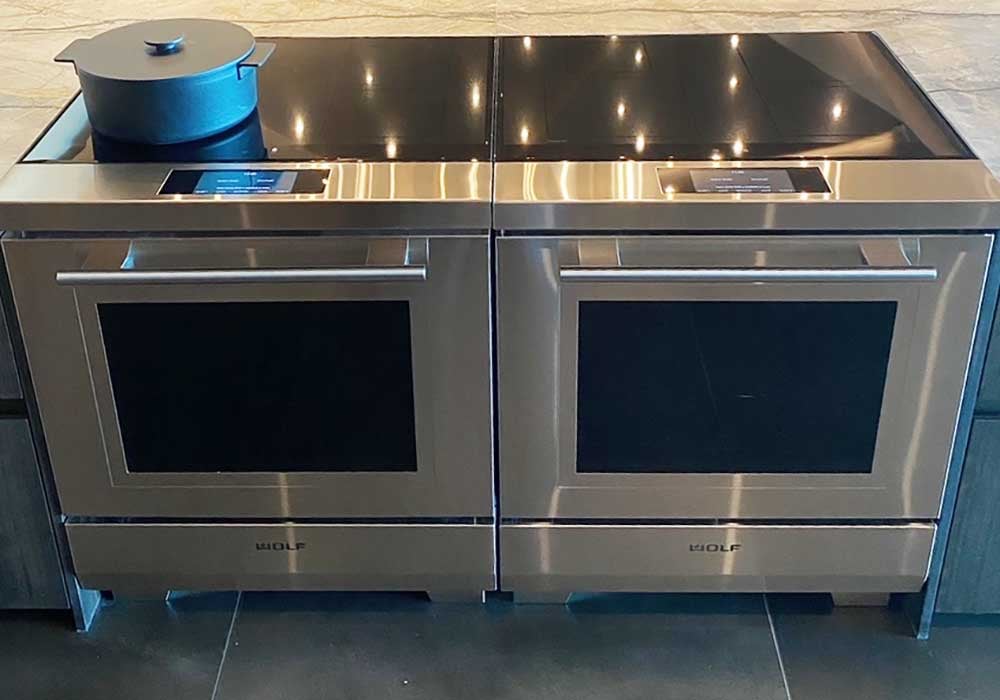
So instead of 12 amps, she now needed 100, as well as new wiring, and she needed to upgrade her already new electric service from 12 amps to 100, from 120 to 220 volt outlets.
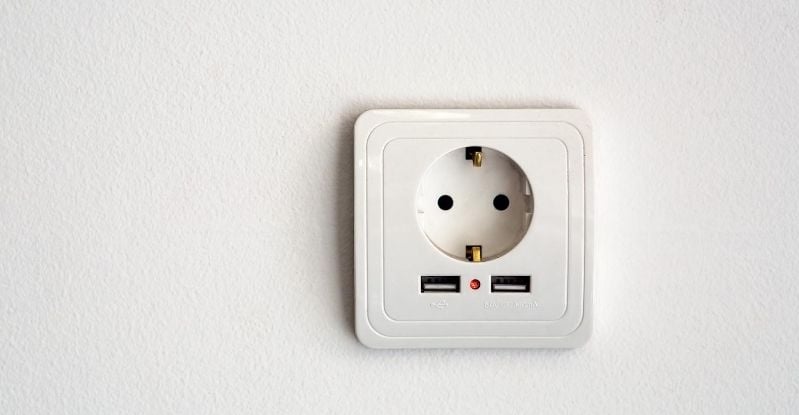
That changed her electrical load by 8X. Ouch.
Massachusetts is changing. In many new homes, in many areas, gas is no longer an option. And Boston used to be a gas market. Most old homes were set for gas ranges.
You had 120 volts and 12 amps at the location. That worked fine for gas.
Induction is different. It is 240 volts and anywhere from 40 to 50 amps, depending on the cooktop. That is not a small change.
To do it right, you need an electrician to upgrade the circuit and the panel. You need a plumber to cap the gas line properly.
You need new wiring back to the panel, and you need enough capacity to support it.
In Boston, if you can even get an electrician, that work typically costs $3,000 to $4,000. That is before you buy the appliance.
Induction is not the problem. Not planning for induction is.
🔍 Read more: Before You Buy Any Appliance in Massachusetts in 2026, Do These 3 Things First
Why Do Restocking Fees Hit So Hard?
⚡ Quick Answer: Many retailers charge 30 to 40 percent when an appliance does not fit, and that penalty adds up fast. The best protection is having the store verify the space, path, and hookups before you buy.
This is where mistakes get expensive.
Most retailers charge 30 to 40 percent when something does not fit. Local stores. National chains. Online sellers.

Thirty percent on a Sub-Zero refrigerator is real money.
Here is the remedy.
Before you buy, or as a condition of the sale, have someone from the store come out and look at what you actually have.
Have them measure. Have them take pictures. Have them see the stairs, the landings, the door swings, and the hookups.

If there is a problem later, the store owns it, not you.
And yes, I know what you are thinking. We do not charge restocking fees. We do charge a redelivery fee.
A truck, a crew, warehousing, and a schedule still cost money. But we do not charge you 30 percent on a product you are returning.
Final Verdict
⚡ Key Takeaway: Most delivery problems are predictable, but people often do not look closely until delivery day. Professional measurement, including the full path and utilities, is the simplest way to avoid costly surprises.
Most delivery problems are predictable if you know what to look for. The issue is that most people do not look closely until delivery day.
- They measure the opening, but not the path.
- They assume gas, but do not check the electrical.
- They trust timing without really understanding traffic.
- They plan the appliance, not the house.
That is when the surprises show up. And that is when restocking fees, delays, and rework get expensive.
The simplest way to avoid most of this is professional measurement. Not just the space where the appliance goes, but the entire path it takes to get there: stairs, landings, door swings, electrical, and final clearances once everything is hooked up.
It is not about buying a different appliance. It is about planning for the one you want.
In New England, delivery is not an afterthought. It is part of the project. If you plan for it early, delivery is usually uneventful. If you do not, delivery day makes the decision for you.
That is the difference between a smooth install and a long, expensive lesson.
What Should You Do Next?
⚡ Quick Answer: If you are stuck mid-project or want to avoid delivery mistakes, contact us or visit a showroom. We can help you plan delivery and installation, and we deliver within 48 hours across Greater Boston, from Worcester to Provincetown.
Need Help With a Delivery Issue?
If you are stuck, confused, or mid-project, give us a call. We deliver appliances within 48 hours across Greater Boston, from Worcester to Provincetown.
Want to Get It Right the First Time?
Visit one of our six showrooms. We can help you navigate these mistakes and deliver within 48 hours if you are in a bind.
Additional Resources
In a world full of choices, our Appliance Buying Guide is not just information; it's a decision-making tool tailored for you. Featuring the top 10 FAQs, detailed specs, and tutorials, this guide has helped over a million people. Download it for free and choose appliances like a pro!
Related Articles:
- What You Should Expect From an Appliance Delivery
- Before You Buy Any Appliance in Massachusetts in 2026, Do These 3 Things First
- 4 Major Appliance Delivery Problems Nobody Ever Tells You About
- 6 Odd Yet Effective Tips to Choose an Appliance Store
- How Long Will It Take to Have My Appliances Delivered?

Why Should You Trust Us?
It seems that every appliance review has nothing but glowing comments about almost every product, yet you read customer reviews and they are almost universally bad.
We are here to fill in the disconnect. We'll give you the best features, and the drawbacks as well, including reliability based on over 33,000 calls performed by our service team just last year. Our goal is to give you ALL the information so you know what's right for you.
Please consider subscribing or adding to the conversation in the comments below. We appreciate you stopping by.