

If you have read a single appliance review online, you already know the refrain.
Modern appliances supposedly fail because they are "all cheap electronics now." It sounds right, so almost nobody checks it.
We can check it. We complete more than 33,000 service calls a year, so we see what actually breaks and what does not. When we pulled the numbers, the popular story fell apart.
Here is what you will learn:
- Whether appliances with more electronics really break down more often
- What our wall oven service data shows about feature-heavy models
- How often control boards actually fail, and who pays when they do
- The real problem with high-tech appliances, and how to protect yourself before you buy
In this Article

Do Appliances With More Electronics Break Down More Often?
A wall oven is a good test case.
A double wall oven runs a large control panel that manages two ovens, mounted right where the heat is, which is exactly the setup people expect to fail.
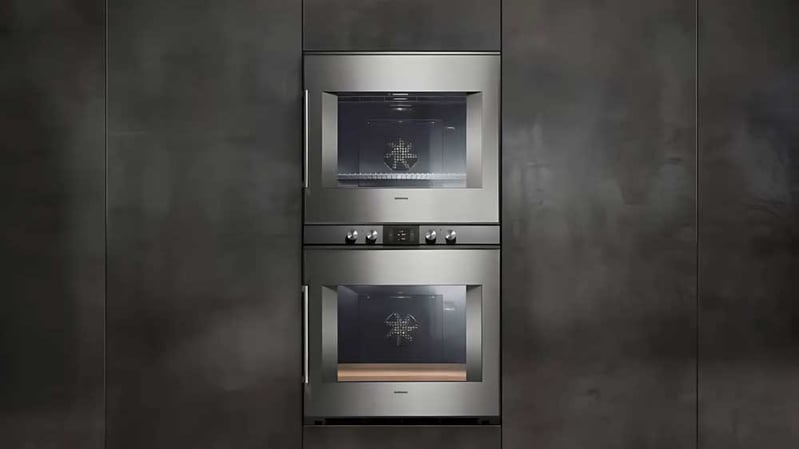
If electronics were the weak link, the loaded models would be the first to land on our service schedule.
They are not.
What Wall Oven Service Rates Actually Show
Here is the first-year service rate for the wall oven brands we sell, best to worst. Lower is better. Each brand cleared a minimum of 100 units on a sample of more than 1,000 wall ovens.
Wall ovens do need service a little more often than the typical appliance, but that is true whether the oven is simple or loaded with features.
So the extra electronics are not the story. For the full picture, see our most reliable appliance brands rankings.
The Most Feature-Heavy Ovens Are Not the Least Reliable
Look at where the feature-rich brands land.
Café leads the entire category at 8.8%, and its ovens carry a full smart-control suite, app connectivity, and guided modes.
Miele, which layers in steam, a full touchscreen, and more than 100 guided recipes, comes in at 9.6%. A more basic Bosch oven sits right next to it at 9.7%.
In other words, the loaded Miele and the simpler Bosch are within a tenth of a point of each other.
If circuitry were the enemy, those two would not be neck and neck. A few brands we carry, including Wolf, are consistently among our most reliable, though we do not publish service rates for them.
The pattern holds across the category: feature count does not predict which wall ovens need service.
How a brand engineers and builds the oven matters far more than how many electronics it packs in.
Are Microwaves Reliable Even With All Those Electronics?
Think about what a microwave, a microwave drawer, or a speed oven actually is.
It is a sealed box of high-voltage electronics and controls, run hard, often several times a day.
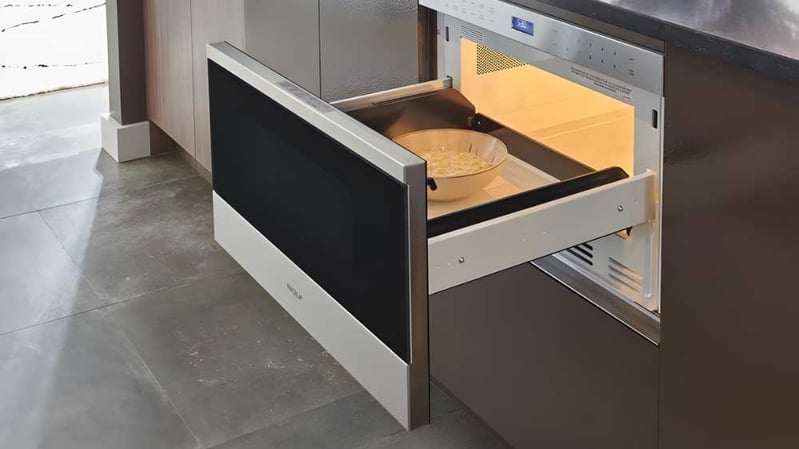
By the "electronics kill appliances" logic, it should be the least reliable appliance you own. In practice, it is closer to the opposite.
I can offer my own house as a small example. Since moving in during 2017, I have had exactly one service call on my microwave drawer, across years of daily use.
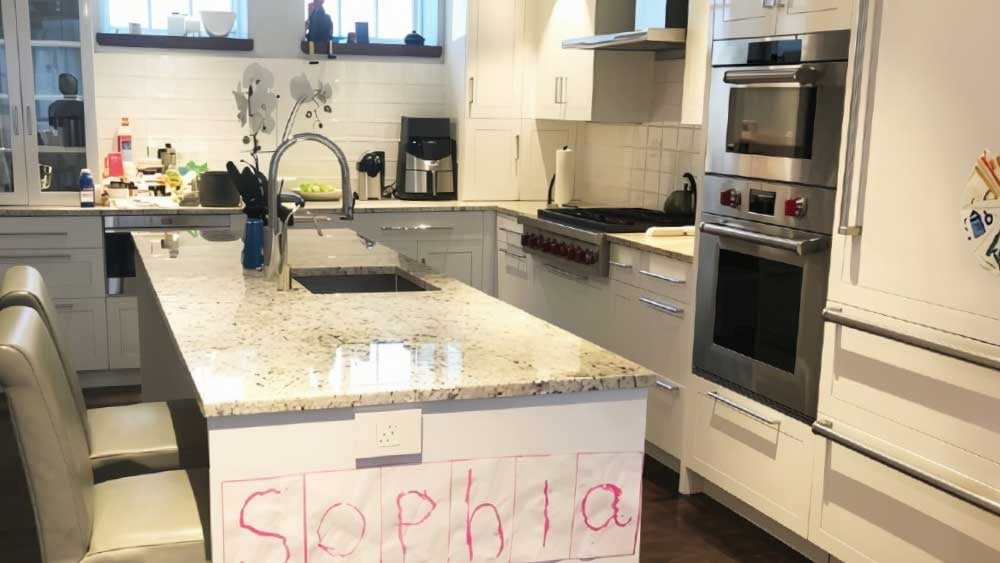
That tracks with what our technicians see: microwaves earn their keep and mostly stay off our schedule, electronics and all.
One note of transparency: microwaves are not yet part of the reliability data we publish by brand, so treat the point above as service-floor experience rather than a published rate. We are working to add the category.
Do Control Boards Fail as Often as the Internet Says?
The fear is understandable. A control board sounds expensive and final, like a totaled car.
The reality is that a board is a replaceable part, not a reason to scrap the appliance.
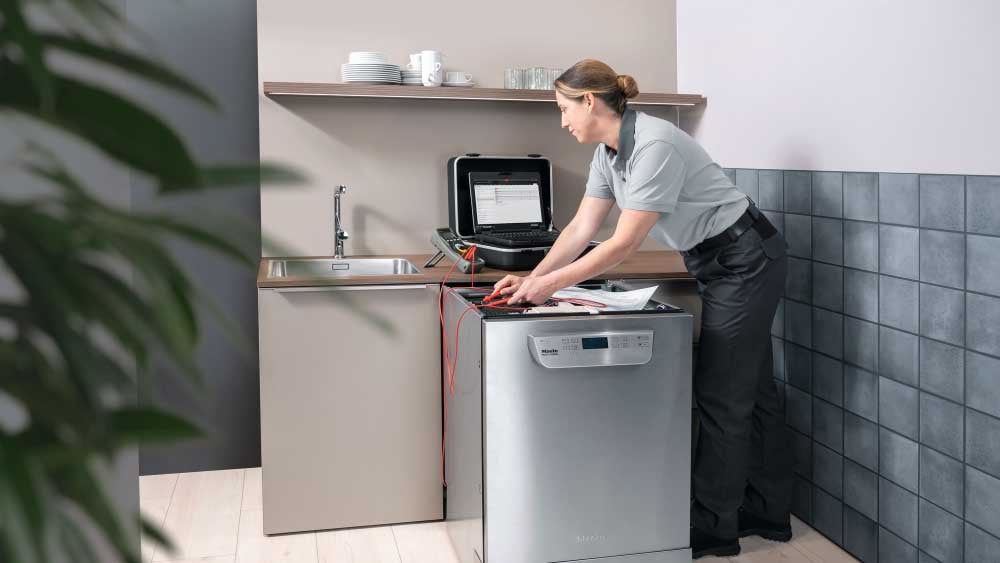
When one fails on a newer unit, the manufacturer's warranty typically pays for the replacement, so your out-of-pocket cost is often nothing.
Even out of warranty, the math usually favors repair.
Our rule of thumb is to replace an appliance only when the repair runs past roughly 30 to 35 percent of what you paid for it.
A single board rarely crosses that line on a mid-tier or premium oven. And any replacement part our own technicians install carries a 5-year warranty, which is well beyond the 90 days most repair shops offer.
So What Is the Real Problem With Appliance Electronics?
This is the part buyers almost never plan for, and it is the one that actually hurts.
You can order the replacement board, and you should, rather than replacing a whole oven. What you often cannot do is find a technician to diagnose the fault and install it.
Parts Are Available. A Qualified Technician Might Not Be.
Many of the premium brands people covet do not employ a single service technician in your region. They build a beautiful appliance and leave service to whoever they can find locally.
When something goes wrong, you are on your own to track down an independent who knows that specific brand, has the diagnostic tools, and can get the part programmed and installed.
In plenty of areas, that person does not exist, or is booked out for weeks. This is why we say service is half the product. A brilliant oven you cannot get fixed is not much of a bargain.

There Is No Loaner for Your Oven
We all expect appliance trouble to work like car trouble.
Your car breaks, you drop it at the shop, they hand you a loaner, and life goes on. Appliances do not work that way.
There is no loaner oven. When your oven is down, you are not cooking, sometimes for months while you wait on a technician.

I run a service company, and even I am not immune. A few winters ago my gas fireplace failed in November, and the soonest appointment I could book was January 10, more than seven weeks out.
The visit was 350 dollars just to walk in the door, before parts and labor. That fireplace was the main heat source for my first floor, so I ended up fixing it myself.
If the person who does this for a living gets stuck waiting seven weeks, imagine the wait without a service relationship in place.
How to Protect Yourself Before You Buy a High-Tech Appliance
Do these three things before you order:
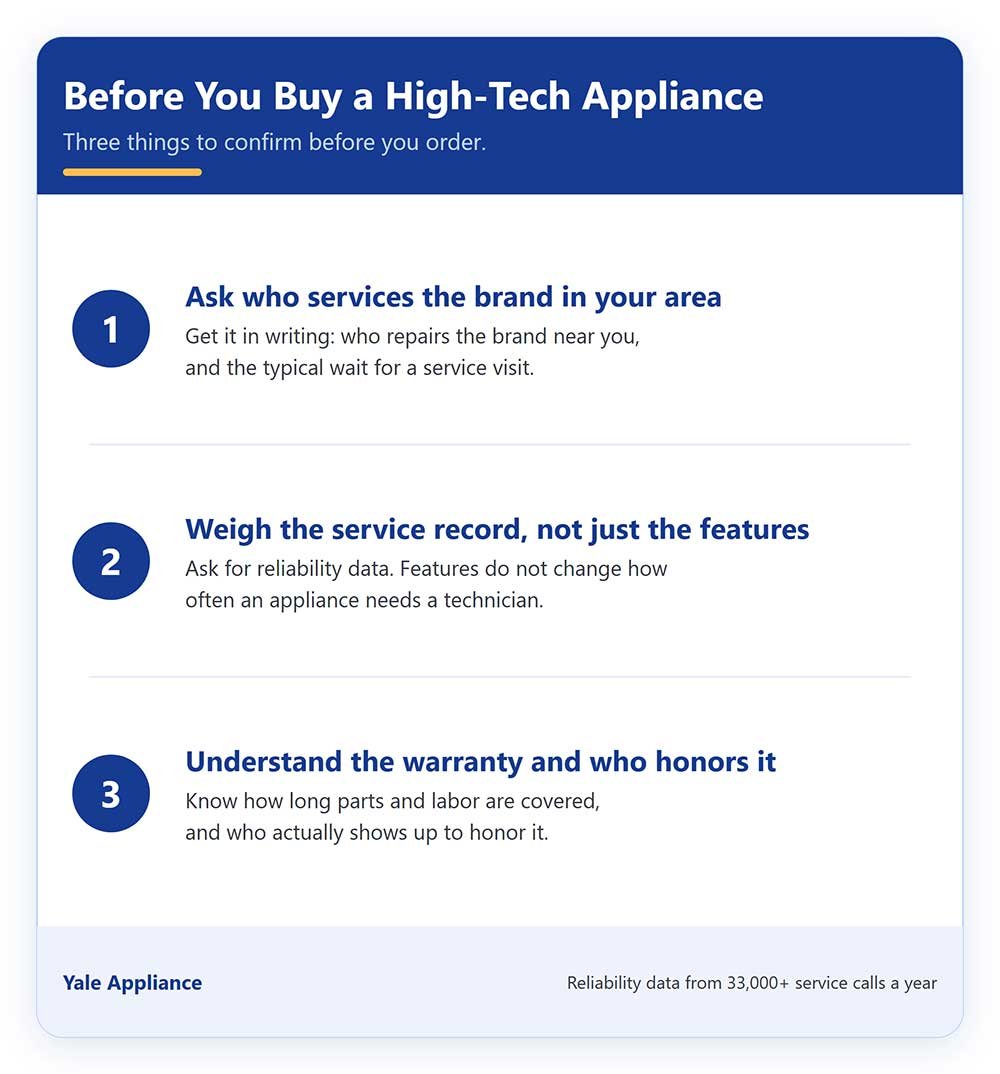
1. Ask Who Services the Brand in Your Area
Call the dealer and ask directly: if this fails in year two, who comes to fix it, and how quickly? A brand with a real service network behind it is worth more than a slightly flashier one with no one to stand behind it.
2. Weigh the Service Record, Not Just the Feature List
Features are easy to love on the showroom floor. Ask for reliability data before you commit, and give real weight to it. We publish first-year service rates by brand for exactly this reason, and no feature list changes how often an appliance needs a technician.
3. Understand the Warranty and Who Honors It
A 5-year parts warranty from the company installing the part is very different from a 90-day shop guarantee. Confirm the coverage, and confirm that the people honoring it are the ones you will call. You can reach our own service and repair team directly.
Common Mistakes Buyers Make About Appliance Electronics
- Blaming the electronics instead of the brand. The number of features does not predict failures. Engineering and build quality do. Judge the specific brand's record, not "electronics" as a category.
- Assuming a control board means a totaled appliance. A board is a part. On a newer unit it is usually covered, and even out of warranty a repair rarely justifies replacing the whole oven.
- Shopping features and ignoring service. The most common regret we see is a customer who bought on features alone and then spent weeks hunting for anyone who could fix the appliance. Check service availability first.
The Bottom Line on Appliance Electronics

Electronics are not killing your appliances.
The data shows the most electronics-heavy models holding their own, and often leading their category.
The honest risk is on the back end: when something breaks, the shortage of qualified in-home service, not the failure itself, is what leaves you without a working kitchen.
So shop the appliance you want. Then, before you buy, make sure someone can fix it.
Additional Resources
Before you buy, get the facts. Download the Appliance Buying Guide trusted by 1,000,000+ homeowners. Real reliability data from actual service calls.
Related Articles:

Why Should You Trust Us?
It seems that every appliance review has nothing but glowing comments about almost every product, yet you read customer reviews and they are almost universally bad.
We are here to fill in the disconnect. We'll give you the best features, and the drawbacks as well, including reliability based on over 33,000 calls performed by our service team just last year. Our goal is to give you ALL the information so you know what's right for you.
Please consider subscribing or adding to the conversation in the comments below. We appreciate you stopping by.