


TL;DR: The 48-Inch Refrigerator Replacement Nightmare
Replacing a 48-inch refrigerator is a project, not a purchase. The six most common failures are delivery path, configuration mismatch, electrical placement, plumbing alignment, panel fit, and old unit disposal. If you stay with the same brand, expect one to two weeks. If you switch brands, expect three to six weeks once you factor in electrical work, new panels, and cabinet modifications.
Replacing a 48-inch refrigerator sounds simple, but it is not.
Most replacements fail before the refrigerator even makes it into the kitchen.
We install over 11,000 appliances a year, and many of those are built-in refrigerators. The problems are almost always the same.
It is not the refrigerator. It is everything around it: delivery, fit, electrical, panels, and removal.
At 600 to 800 pounds, this is not plug-and-play. If you do not plan it right, it turns into a project.
Here is how to avoid that.
📌 Skip Ahead:
What Are the 6 Things That Go Wrong Most?
⚡ Quick Answer: The six most common failures are delivery path, configuration mismatch, electrical placement, plumbing alignment, panel fit, and refrigerant disposal. Most of these can be prevented with a pre-delivery site check and a careful spec sheet review.
| What Goes Wrong | What You Should Do | |
| Delivery | It does not fit through doors or around turns | Measure the entire path |
| Configuration | The new unit installs differently | Compare specs, not width |
| Electrical | The outlet is in the wrong spot | Follow the spec sheet exactly |
| Plumbing | The water line leaks or does not line up | Check the location and condition |
| Panels | They do not fit or get damaged | Assume you will need new ones |
| Recyling | Improper refrigerant handling | Ask how it will be disposed of |
Think of this as your checklist before you buy.
Will a 48-Inch Refrigerator Fit Through Your Door?
⚡ Quick Answer: Most failed replacements stop at the front door or the first tight turn, not at the cabinet. Measure the entire delivery path, including staircases, ceiling height, and landings, before you order.
This is where most jobs fail, not at the cabinet, but at the front door or the first turn.
You are not just measuring width. You are dealing with:
-
Staircases
-
Ceiling height
-
Tight turns
-
Flooring
I ran into this myself in my South End Boston apartment. The stairs and landings were too tight, and a 36-inch Sub-Zero would not make it up. We had to crane it in.
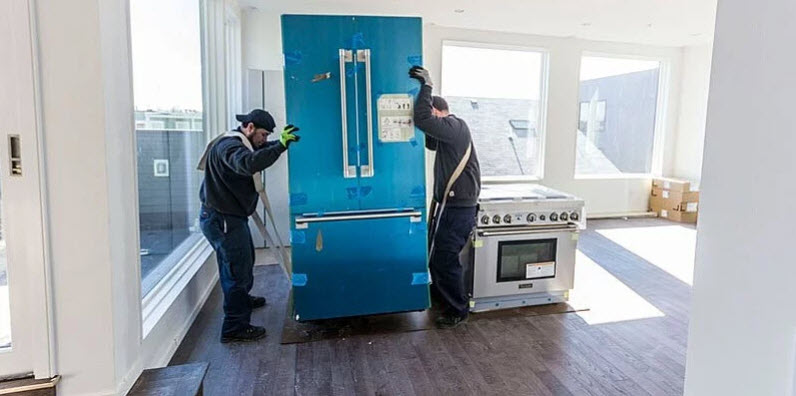
Most people do not think about that until the refrigerator shows up and stops in the hallway.
There is another issue. Even if your old refrigerator fit, the new one might not.
Things change over time:
-
An island gets added
-
Flooring is installed around the unit
-
Cabinets get tighter along the path
Now the original path is gone.
What to Do
-
Measure the entire path, not just the opening
-
Check the tightest turn, not the widest space
-
Have someone experienced review it before delivery
In Boston, we often remove doors or railings. Before we opened a store with a warehouse on Nantucket, you had to coordinate the ferry, delivery, installation, and removal, making it a week-long process.
Pro Tip: If the refrigerator sits too long before installation, it can indent the floor. Set it on a 4 x 8 sheet of melamine, or similar material, to spread the weight.
🔍 Read more: Why Appliance Delivery Is Harder Than You Think in 2026
Why Doesn't "48-Inch" Mean It Will Fit in the Same Cabinet?
⚡ Quick Answer: Forty-eight inches is a size, not a standard. Sub-Zero uses a top compressor, while Thermador and SKS use a bottom compressor with a completely different installation. Same width, different cabinet work, different panels, different venting.
This is the second biggest mistake people make.
Many assume all 48-inch refrigerators install the same way. They do not.
If your current unit is older, it is probably a Sub-Zero with a top compressor. That used to be the standard.
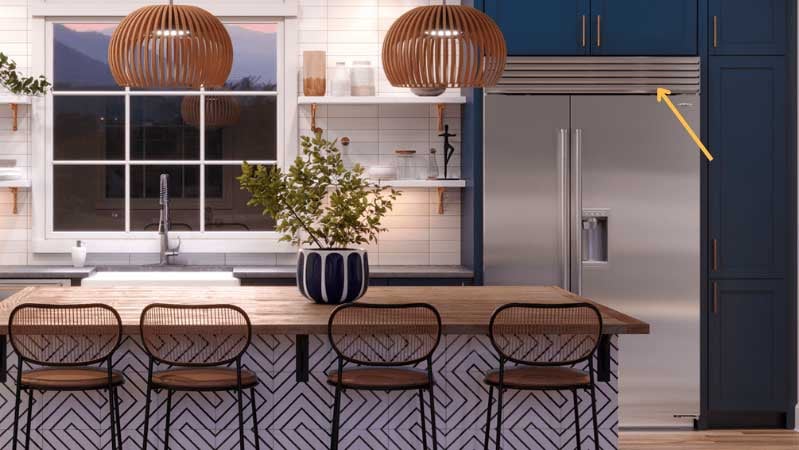
Now, you usually have two main types:
-
Top compressor: Sub-Zero, True
-
Bottom compressor or integrated: Thermador, SKS
The width may be the same, but the installation can be completely different.
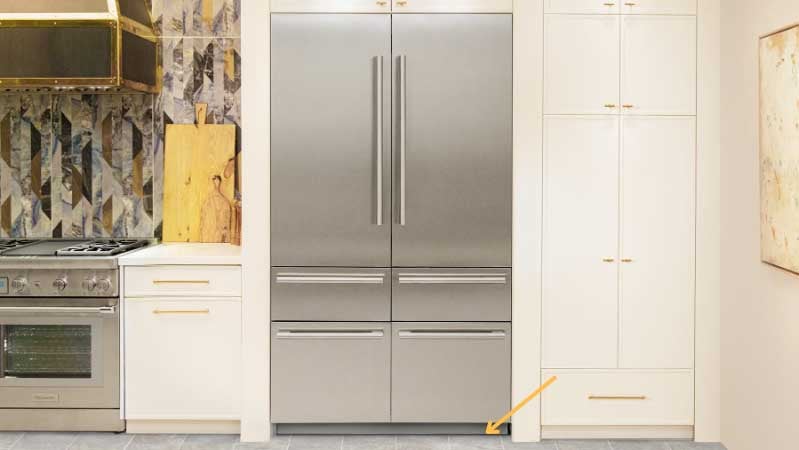
What changes:
-
How it sits in the cabinet
-
How it is secured
-
Panel sizing
-
Venting
-
Clearances
They are not interchangeable.
What to Do
-
Identify what you have now
-
Compare installation specs, not just dimensions
-
If you want the easiest swap, stay with the same configuration
-
If you switch, expect changes to cabinets, panels, and installation time
🔍 Read more: Best 48-Inch Counter-Depth Refrigerators
What Stops the Install at the Last Minute?
⚡ Quick Answer: Electrical and plumbing mismatches are the most common last-minute install killers. Sub-Zero places the outlet in the upper right. Most other brands place it lower. If you are switching brands, plan to have an electrician move the outlet before delivery day.
This is where installs get stuck: electrical and plumbing. It is not complicated, but it is easy to get wrong.
Different brands place connections in different spots. Sub-Zero is a good example. The outlet is usually in the upper right, while most other brands place it lower.
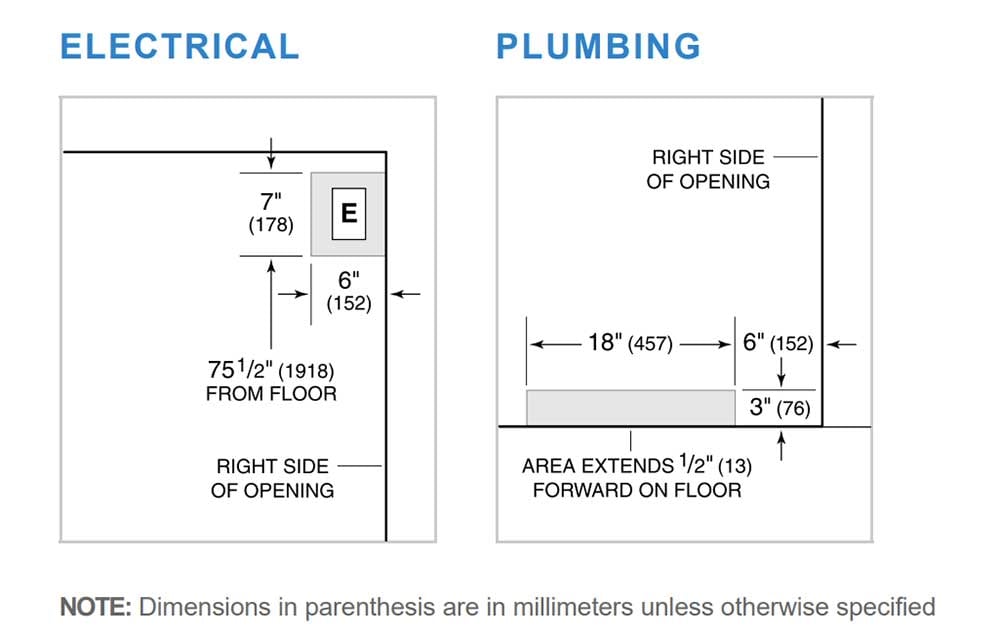
That alone can stop an installation.
What goes wrong:
-
The outlet is in the wrong location
-
The cord does not reach
-
The outlet is blocked
-
The water line does not line up
-
The old water line leaks when moved
What to Do
-
Check the spec sheet before delivery
-
Compare it to your current setup
-
Plan to move the outlet if you are switching brands
-
Make sure the water line is in the right spot and in good condition
If you are switching brands, you will likely need an electrician. Better to handle that before delivery, not while the refrigerator is sitting in your kitchen.
Pro Tip: At Yale, our installation teams cannot run new electrical or modify water lines. That is a licensed electrician or plumber job. If you need that work done, schedule it before your delivery date, not after.
Why Are Panels the Most Expensive Mistake in a Replacement?
⚡ Quick Answer: Panels are custom cabinetry. Different brands use different sizes, reveal spacing, and mounting systems. If you switch brands, assume your existing panels will not fit. New custom panels can cost $2,000 to $5,000 or more depending on the cabinet maker, and lead times can add weeks to the project.
This is where the job often gets expensive.
If your refrigerator is paneled, you are dealing with custom cabinetry. Those panels are not universal.

Different brands have different:
-
Sizes
-
Reveal spacing
-
Mounting systems
Even within the same brand, it is not always an exact match.
Then there is the condition of the panels themselves. Older panels can dry out, and we have seen them crack during removal.

What goes wrong:
-
Panels do not fit the new unit
-
Panels break during removal
-
New panels do not match the existing cabinetry
-
The original cabinet maker is gone
Now it is not just a refrigerator project. It is a kitchen project.
What to Do
-
Assume your panels will not fit if you change brands
-
Check panel specs before buying
-
Have panels removed carefully
-
Plan for replacements
Your Options
-
Stay with the same brand and hope the sizing works
-
Rebuild the panels
-
Switch to stainless and avoid paneling
Panels look great. They are the hardest part of the job.
🔍 Read more: Integrated Refrigerators: Why You Should Think Twice Before Buying
What Happens to Your Old Refrigerator?
⚡ Quick Answer: Older refrigerators contain refrigerants that must be properly recovered under EPA regulations. Ask your dealer how the old unit will be disposed of and whether they handle refrigerant recovery in-house.
Most people just want it gone. But this part matters.
Older refrigerators can contain refrigerants that need to be properly recovered. They cannot just be released.
What goes wrong:
-
Improper handling
-
No refrigerant recovery
What to Do
-
Ask what happens after removal
-
Make sure the refrigerant is handled correctly
At our Norton facility, we built recycling into the process. Not every company does.
How Long Does a 48-Inch Refrigerator Replacement Take?
⚡ Quick Answer: A same-brand, stainless steel swap with no electrical or panel changes can be done in one to two weeks from purchase to installation. A brand switch with new panels, electrical work, and cabinet modifications typically takes three to six weeks, sometimes longer if custom panels have a lead time.
Here is a realistic timeline based on what we see at Yale.
Same Brand, Same Configuration (Best Case)
| Timeline | |
| Purchase and scheduling | 1 to 3 days |
| Pre-delivery site check | Same week |
| Delivery and installation | 1 to 2 hours for stainless, half a day for paneled |
| Total | 1 to 2 weeks |
Switching Brands or Configuration (Typical Case)
| Timeline | |
| Purchase and spec comparison | 1 to 3 days |
| Pre-delivery site check (trip estimate) | Within the first week |
| Electrician to move outlet | 1 to 2 weeks (schedule early) |
| Panel ordering and fabrication | 2 to 6 weeks depending on cabinet maker |
| Delivery and installation | Half a day to a full day |
| Total | 3 to 6+ weeks |
The panel lead time is usually what stretches the project. If your original cabinet maker is no longer available, finding someone to match existing cabinetry adds even more time.
One more thing. At Yale, we offer a pre-sale trip estimate with a trained installer. They come to your home, measure the path, check the cabinet, verify electrical and plumbing, and quote the job with itemized pricing before you commit. That step alone prevents most of the problems in this article.
🔍 Read more: Appliance Installation Fit Guide (2026)
Final Takeaway
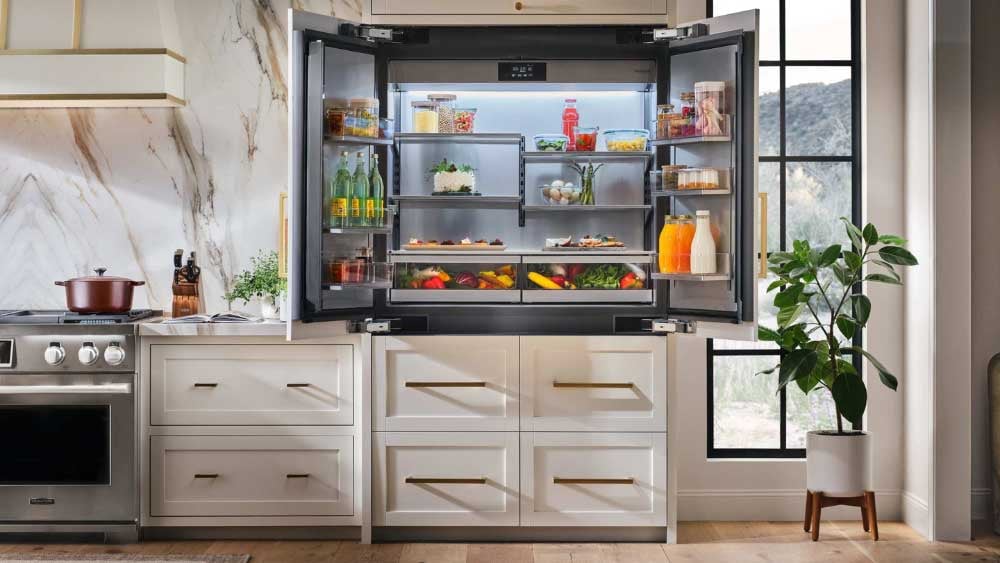
This is not a product purchase. It is a project. Replacing a 48-inch refrigerator is not a simple swap. It is a coordination job involving delivery, fit, electrical, plumbing, panels, and removal.
If you plan it right, it goes smoothly. If you do not, it turns into a problem fast.
One last tip: Pay as much attention to delivery and installation as you do to the refrigerator itself. Always check the delivery reviews for every store in your area.
🔍 Read more: What To Do When Your Appliance Purchase Goes Horribly Wrong
Additional Resources
Download the Yale Appliance Counter-Depth Refrigerator Buying Guide with features, specs, and inside buying tips for regular, pro, and integrated counter-depth refrigerators. Well over 1 million people have read a Yale Guide.
Related Articles:

Why Should You Trust Us?
It seems that every appliance review has nothing but glowing comments about almost every product, yet you read customer reviews and they are almost universally bad.
We are here to fill in the disconnect. We'll give you the best features, and the drawbacks as well, including reliability based on over 33,000 calls performed by our service team just last year. Our goal is to give you ALL the information so you know what's right for you.
Please consider subscribing or adding to the conversation in the comments below. We appreciate you stopping by.